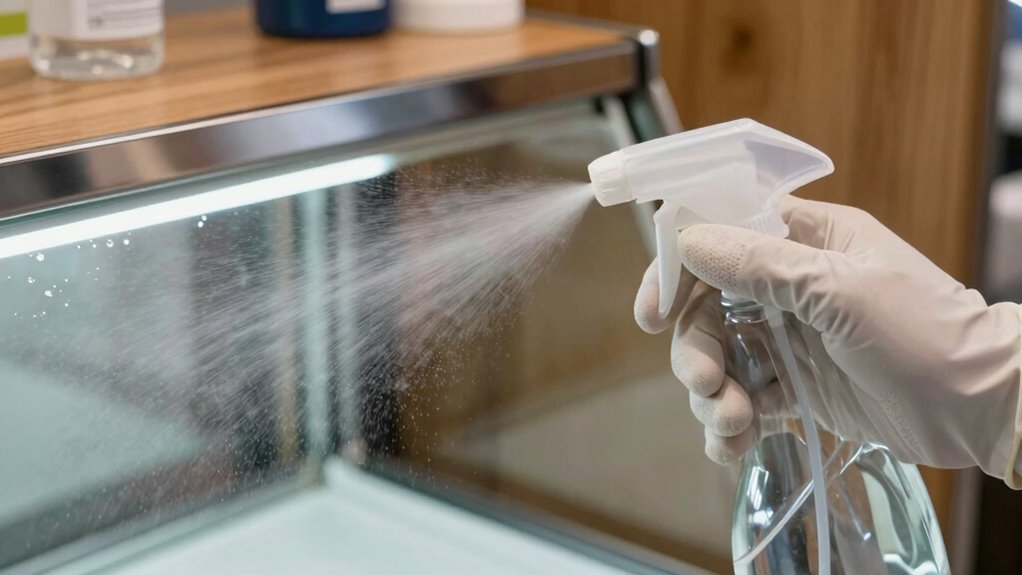
Spraying disinfectants directly on sensitive surfaces like wood, electronics, antique furniture, painted walls, or porous fabrics can cause permanent damage, including warping, discoloration, or corrosion. Instead, use damp cloths, wipes, or recommend cleaning methods tailored to each material. Avoid spraying in crevices or onto delicate finishes. If you want to learn safer, effective ways to disinfect without risking damage, keep exploring the best techniques for your surfaces.
Key Takeaways
- Avoid spraying disinfectants on delicate surfaces like wood, marble, electronics, glass, and painted walls to prevent damage.
- Do not spray directly on antique furniture, vintage textiles, or porous materials that can absorb chemicals and deteriorate.
- Refrain from spraying near electronics, as chemicals can cause corrosion, short circuits, or internal damage.
- Never spray disinfectants on coated or painted surfaces, which may peel, discolor, or warp from chemical exposure.
- Use wipes or damp cloths instead of sprays for fragile surfaces to ensure safe, effective cleaning without harm.
Why Spraying Disinfectants Can Damage Sensitive Surfaces
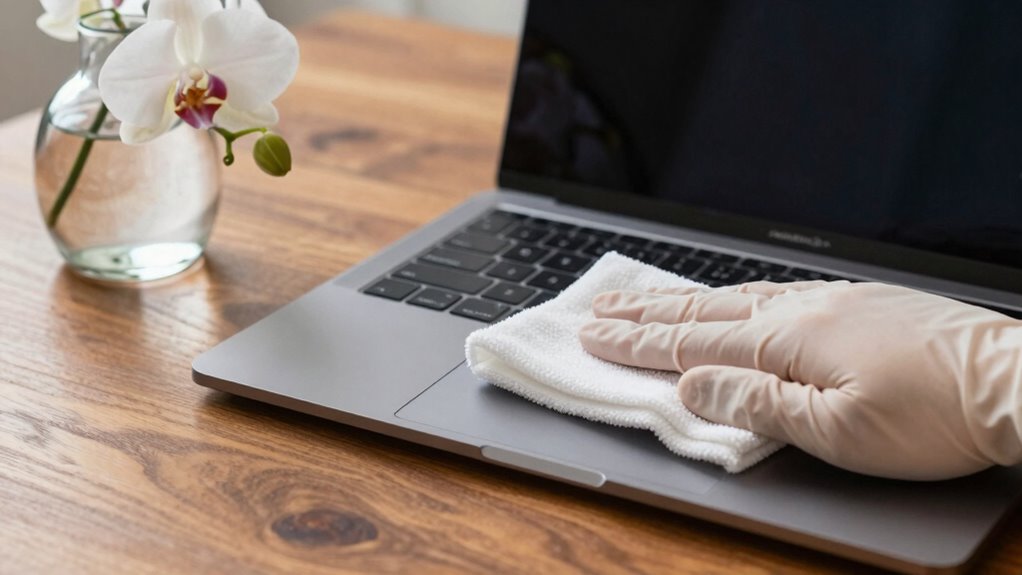
Spraying disinfectants directly onto sensitive surfaces can cause lasting damage because many chemicals are too harsh for materials like wood, marble, or electronics. These chemicals can break down surface coatings, leading to discoloration, deterioration, or warping over time. Standard disinfection protocols often overlook the fragility of certain surfaces, risking irreversible harm. Additionally, chemical compatibility is crucial because some disinfectants can react adversely with specific surface materials, exacerbating damage. Instead of spraying, you should use appropriate cleaning methods tailored to each material. For example, gentle wipes or specific cleaners are safer options that preserve the integrity of delicate surfaces. Understanding the composition of surface coatings helps you choose the right disinfectant and application method. Being aware of material sensitivities is essential to prevent unintended damage. Recognizing surface material properties ensures that your cleaning practices are both effective and safe. Additionally, testing on small areas can help prevent widespread damage and confirm suitability before full application. By following proper protocols, you protect your surfaces from damage while maintaining a clean, hygienic environment.
Common Household Materials You Should Never Spray Directly
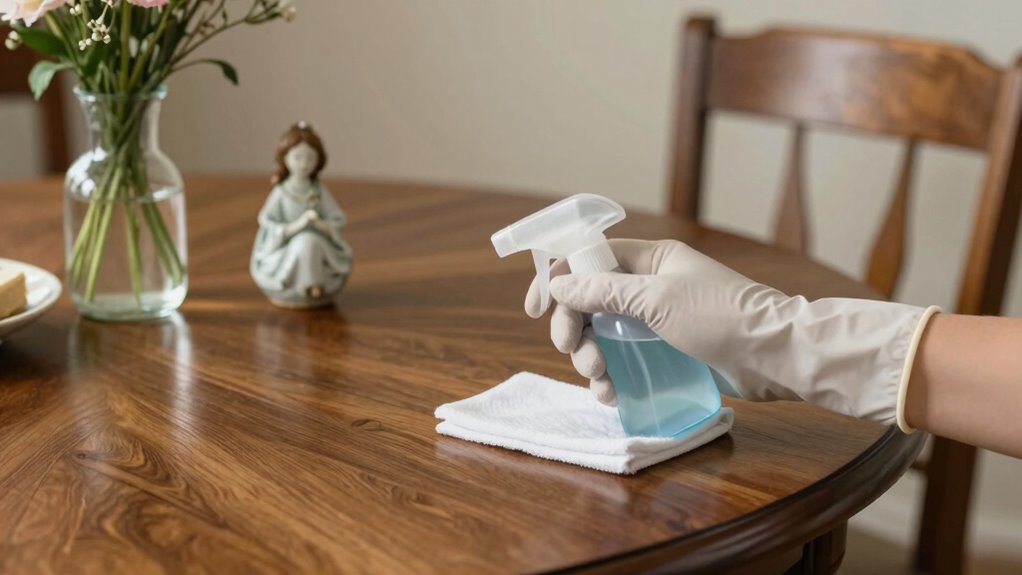
Spraying disinfectants directly onto certain household materials can cause damage or unintended reactions. Fragile surfaces like wood, painted walls, or electronics are especially vulnerable. Always check labels and avoid applying chemicals directly to prevent costly damage or chemical reactions. For example, cycling gear maintenance emphasizes the importance of proper cleaning methods to preserve your equipment’s integrity. Additionally, understanding household material sensitivities can help you choose the safest cleaning practices for various surfaces. Being aware of material reactions can further prevent accidental damage caused by improper disinfection techniques. Incorporating environmentally friendly cleaning practices can also minimize harmful impacts on your indoor air quality, ensuring a healthier living space. Recognizing indoor air quality factors can also guide you to safer cleaning choices that minimize airborne pollutants.
Fragile Surface Damage
While disinfectants are effective at killing germs, spraying them directly on delicate household surfaces can cause damage. Glass surfaces can become cloudy or develop streaks if exposed to harsh chemicals repeatedly. Surface sensitivity is an important factor to consider when choosing cleaning methods, as some materials are more vulnerable than others. Proper cleaning techniques can help preserve the integrity of delicate surfaces and prevent unintended harm. For example, using a gentle cleaning method can minimize the risk of damage. Painted walls are also vulnerable; the disinfectant can strip paint, causing peeling or discoloration over time. These materials are sensitive to certain chemicals and require gentle cleaning methods. Instead of spraying directly, use a soft cloth dampened with a diluted solution or mild soap. Always test a small, inconspicuous area first. Protect your fragile surfaces by avoiding direct contact with disinfectants and opting for safer cleaning techniques. Incorporating humidity control can also help reduce the need for frequent disinfectant use, preserving your surfaces’ integrity while keeping your home hygienic. Additionally, proper ventilation can help disperse airborne chemicals, decreasing the risk of surface damage.
Chemical Reactions Risk
Even if you take care to avoid damaging delicate surfaces, using disinfectants on certain household materials can trigger unwanted chemical reactions. Some surfaces lack surface compatibility with specific chemicals, risking discoloration, corrosion, or deterioration. For example, spraying disinfectants on electronics, marble, or wood finishes can cause adverse reactions, compromising their integrity. To guarantee chemical safety, always check product labels for surface compatibility before applying disinfectants. Avoid mixing chemicals or using harsh cleaners on sensitive materials, as reactions like bubbling, staining, or weakening can occur. Being aware of the potential for chemical reactions helps you protect your belongings and maintain a safe environment. Additionally, understanding floating on water can guide you in selecting appropriate cleaning methods for water-safe surfaces. Recognizing surface material properties is essential to prevent unintended damage when disinfecting. Always consider chemical interactions when choosing cleaning products to prevent unexpected reactions and preserve your surfaces. Moreover, being aware of household material sensitivities ensures you choose the safest cleaning approach for each surface. Being knowledgeable about common household materials can further help you avoid damaging reactions during cleaning.
How Spraying Can Harm Your Electronics and Tech Devices
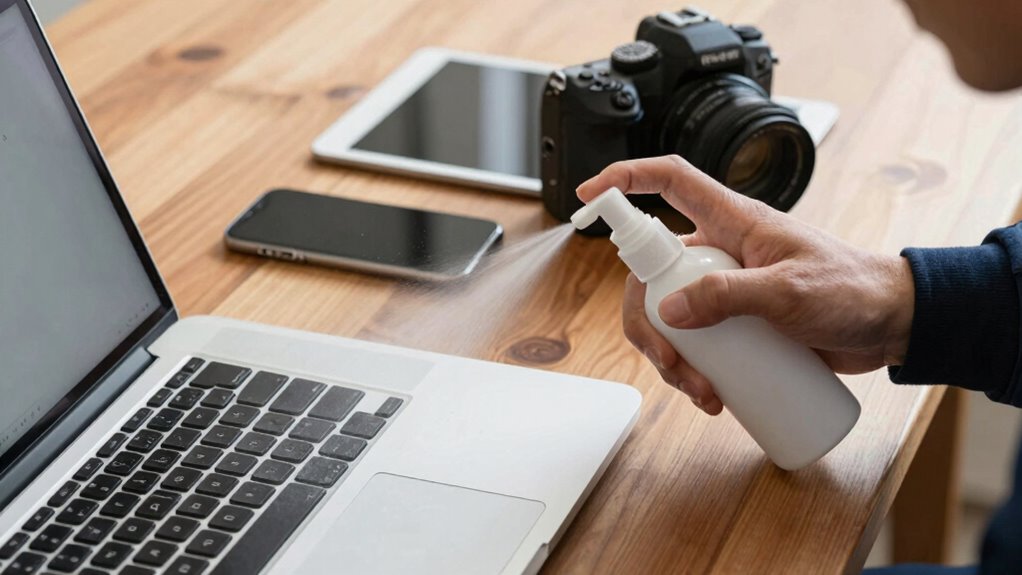
Using sprays on your electronic devices can cause more harm than you might realize. Electronics are highly sensitive; spray corrosion can develop quickly when liquids seep into ports, buttons, or screens. This damage isn’t always visible immediately but can impair functionality over time. To visualize this, imagine:
| Surface Area | Potential Damage | Effect |
|---|---|---|
| Charging ports | Corrosion from moisture | Connectivity issues |
| Screens | Residue buildup | Touch sensitivity loss |
| Internal circuits | Short circuits from liquid intrusion | Device failure |
| Buttons | Sticky or unresponsive parts | Reduced usability |
Your electronic sensitivity makes them vulnerable. Avoid spraying directly, and opt for safer cleaning methods to prevent long-term damage. Additionally, proper cleaning techniques can help maintain device longevity and performance, especially when dealing with liquid intrusion. Employing protective covers can further reduce the risk of damage from accidental sprays or spills, as they act as a barrier to liquid exposure and help preserve device integrity.
Why Antique and Wooden Furniture Are Vulnerable to Spray Damage
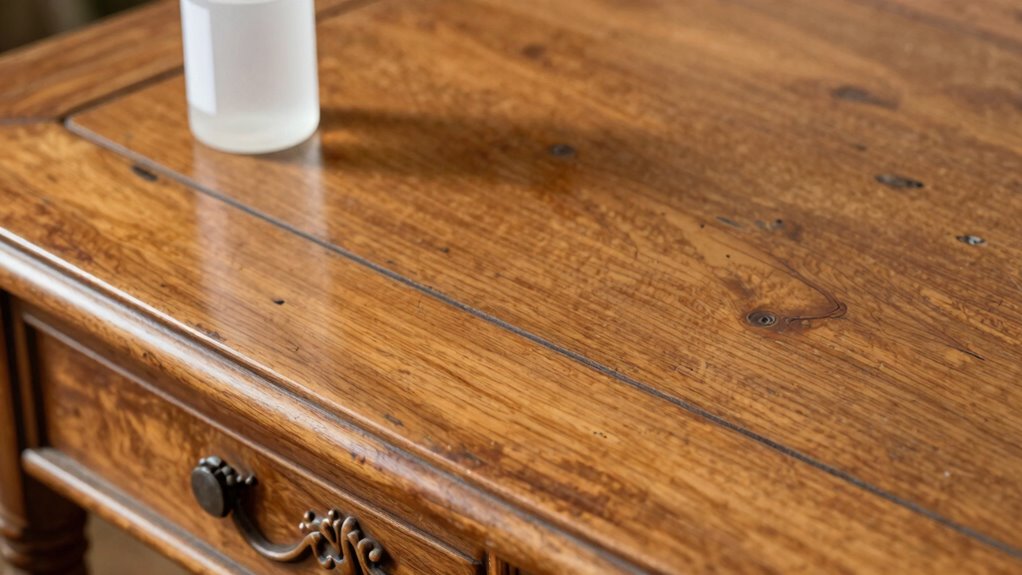
Spraying disinfectants directly onto antique and wooden furniture can cause irreversible damage because these materials are highly porous and absorb liquids easily. This absorption can lead to warping, staining, and deterioration, undermining your efforts in antique preservation. Liquids seep into the wood, disrupting its natural finish and weakening its structure over time. Many modern disinfectants contain chemicals that react poorly with wood, causing discoloration or surface damage. Using spray treatments on antique furniture also risks damaging delicate finishes or finishes that are difficult to restore. Proper wood treatment involves gentle cleaning methods that preserve the integrity of the material. Avoid spraying disinfectants directly, opting instead for soft cloths or specialized cleaning solutions designed for wood, ensuring your furniture remains beautiful and intact for generations.
Protecting Delicate Fabrics and Textiles From Disinfectant Sprays
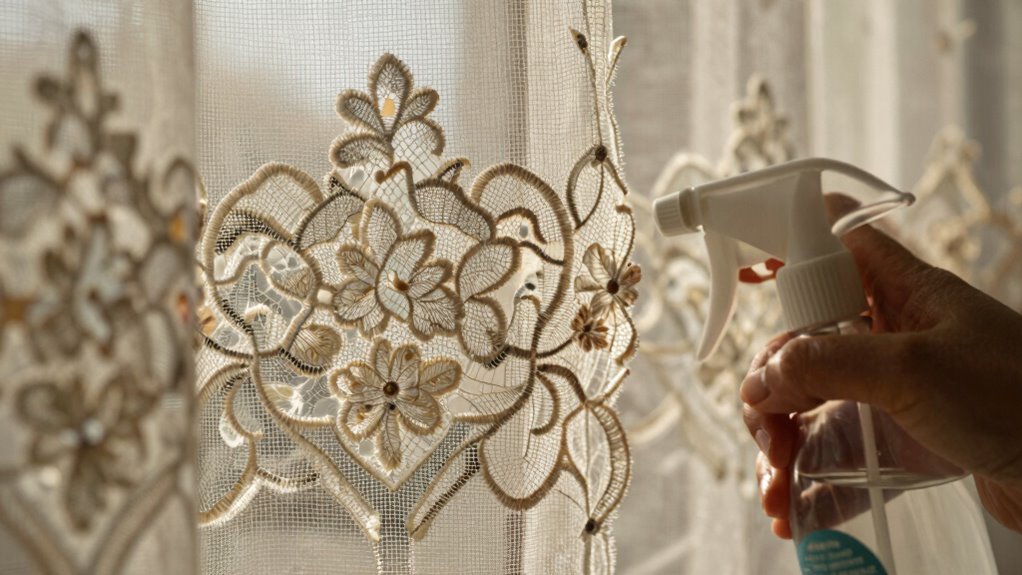
Because delicate fabrics and textiles are highly susceptible to damage from harsh chemicals, handling disinfectant sprays with care is vital. To guarantee fabric protection, avoid spraying disinfectants directly onto textiles, especially those made of silk, wool, or vintage materials. Instead, opt for surface cleaning methods or use disinfectant wipes designed for textiles. When necessary, dilute disinfectants according to manufacturer instructions to minimize potential harm and maintain textile safety. Always test a small hidden area first to check for colorfastness or damage. Using gentle cleaning solutions and applying disinfectants carefully helps preserve the integrity of your fabrics while maintaining hygiene. Remember, protecting delicate textiles requires attention to detail to prevent permanent damage caused by inappropriate disinfectant use.
Surfaces That Need Special Disinfection Methods
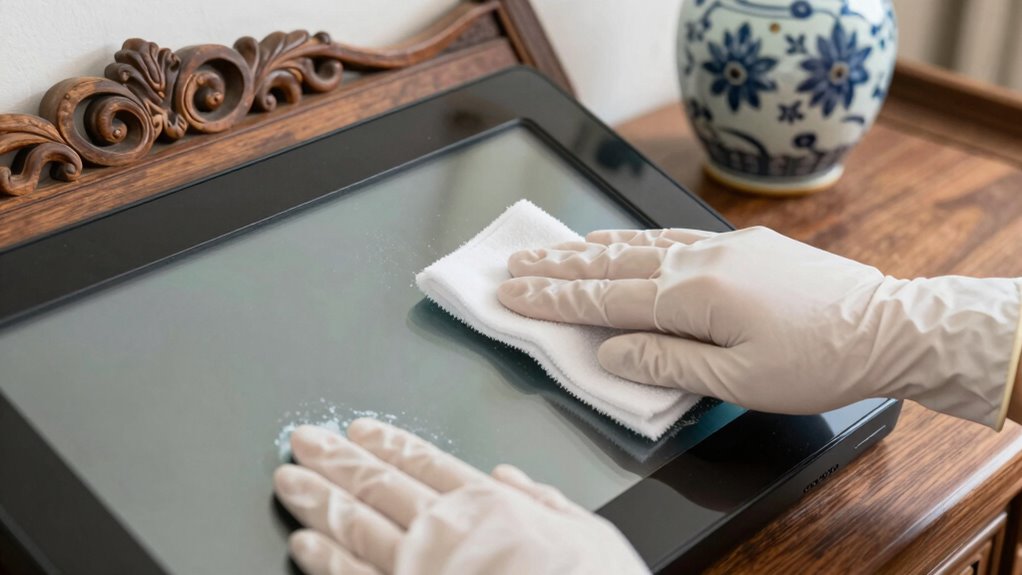
Certain surfaces demand more than standard disinfectant methods to guarantee thorough sanitation without causing damage. You must use specialized techniques to protect sensitive items like electronics and antiques. For example:
- Electronics: Avoid spraying disinfectants directly; instead, use alcohol-based wipes or microfiber cloths to prevent moisture damage and ensure electronics safety.
- Antique furniture: Harsh chemicals can harm delicate finishes. Use gentle, non-abrasive cleaners and soft cloths to preserve the integrity of antique preservation.
- Glass and mirrors with special coatings: Regular sprays may damage coatings, so opt for damp cloth cleaning instead of direct spraying.
Tips for Safely Disinfecting Without Spraying
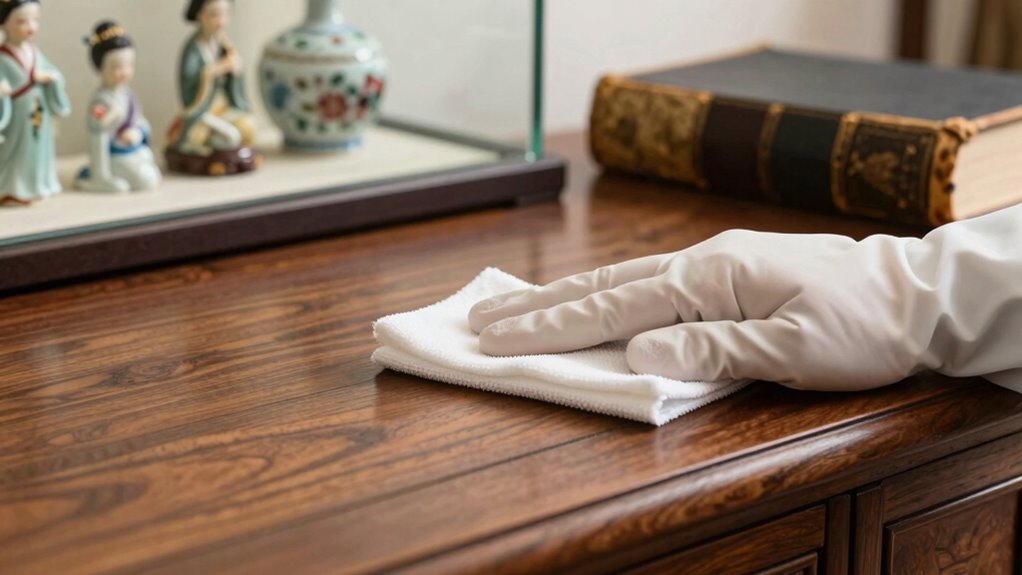
When disinfecting without spraying, make sure to use the right disinfectants for the job to guarantee effectiveness. Avoid spraying delicate surfaces, as liquids can cause damage, and instead, opt for wiping with a clean cloth. This approach keeps surfaces safe while still thoroughly disinfecting.
Use Appropriate Disinfectants
Are you choosing the right disinfectant for safe and effective cleaning? Selecting the correct product is vital to avoid damage and guarantee surface compatibility. Here are three tips to guide you:
- Check labels for surface compatibility—use disinfectants approved for specific materials like plastics or wood.
- Opt for EPA-registered disinfectants proven effective against pathogens.
- Avoid harsh chemicals on delicate surfaces, such as electronics or painted finishes.
Avoid Spraying Delicate Surfaces
To safeguard fragile surfaces like electronics, painted finishes, or antique furniture, it’s crucial to avoid spraying disinfectants directly onto them. Spraying can cause aerosol contamination, which may settle into tiny crevices or beneath surface layers, leading to residue buildup. This residue can be difficult to remove and may damage delicate finishes over time. Instead, opt for a damp cloth or a wipe to apply disinfectants gently. This method minimizes the risk of excess liquid seeping into sensitive areas, reducing potential harm. Be especially cautious with electronics and painted surfaces, as they are more vulnerable to damage from over-saturation. By avoiding direct spraying, you help preserve the integrity of your delicate surfaces while still maintaining proper hygiene.
Opt for Wiping Instead
Using a damp cloth or wipe to disinfect surfaces offers a safer alternative to spraying, especially for delicate items. Wiping helps control chemical exposure and preserves air quality by reducing airborne particles. Instead of aerosols, focus on these surfaces:
- Electronic devices like keyboards and remotes, which can be damaged by sprays.
- Soft furnishings, such as curtains or upholstery, that can absorb chemicals.
- Wooden furniture, which may discolor or degrade with spray disinfectants.
Wiping minimizes the risk of inhaling fumes and prevents potential damage caused by sprays. It also allows you to target specific areas more precisely, ensuring thorough cleaning without compromising air quality or exposing yourself to unnecessary chemicals. Keep it simple, safe, and effective.
Choosing the Right Disinfectant for Different Materials
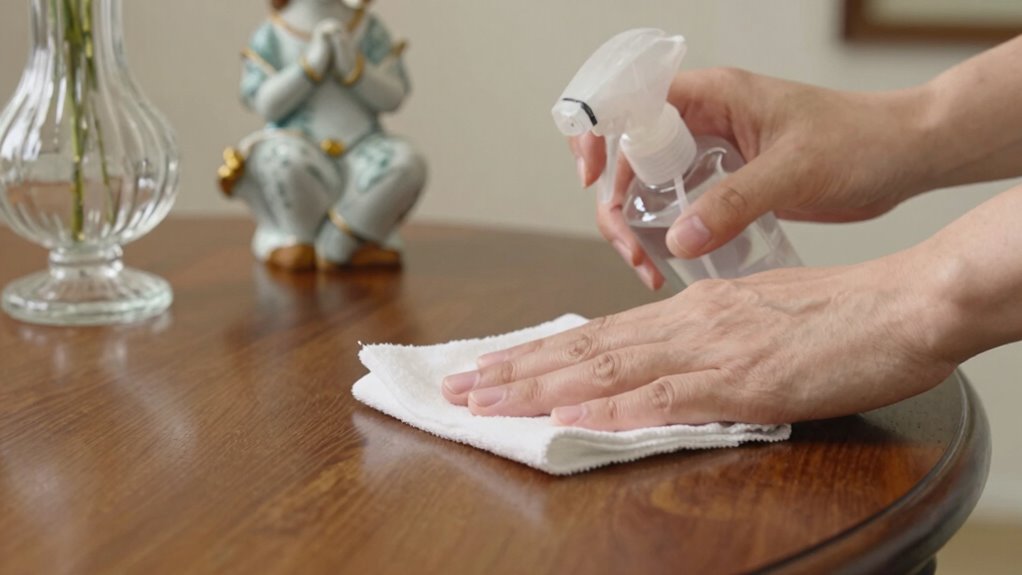
Choosing the right disinfectant for different materials is essential to effectively eliminate germs without damaging surfaces. You need to take into account surface coatings and material compatibility to prevent deterioration. For example, some disinfectants can erode plastics or dull painted surfaces, so always check labels for compatibility. Delicate materials like wood or leather require gentler options, such as alcohol-based solutions, to avoid warping or discoloration. Hard, non-porous surfaces like stainless steel or tile typically tolerate stronger disinfectants, but it’s still wise to verify. Using the wrong disinfectant can cause permanent damage, reducing the lifespan of your surfaces. Always read manufacturer instructions and test a small area first if you’re unsure. Proper selection ensures hygiene without compromising the integrity of your surfaces.
When and How to Use Spray Disinfectants Properly
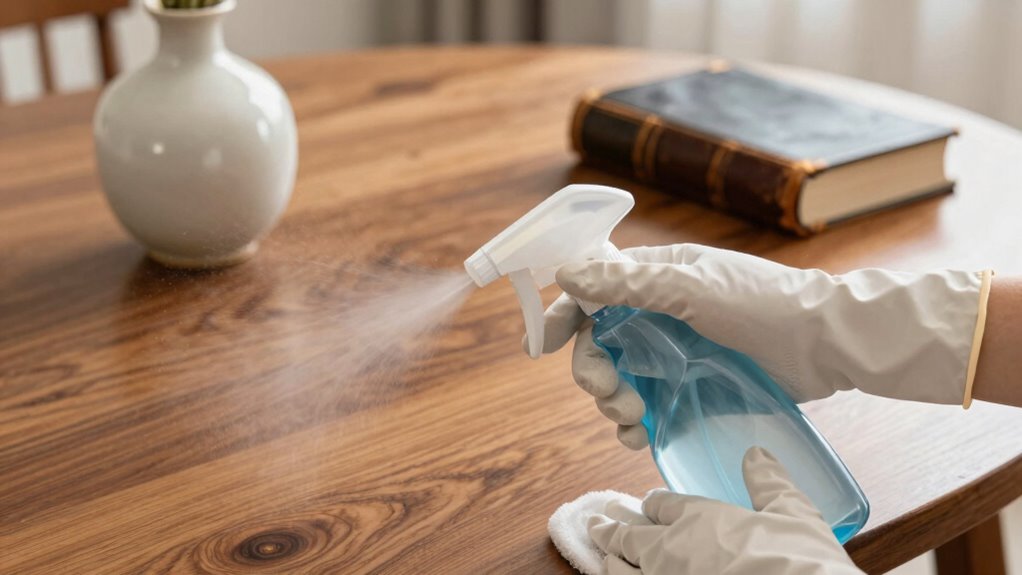
Properly applying spray disinfectants guarantees you eliminate germs effectively without harming your surfaces. To do this, consider these key points:
- Assess Surface Porosity – Non-porous surfaces like glass or metal tolerate sprays better, while porous materials may absorb chemicals and get damaged.
- Check Chemical Stability – Use disinfectants with stable formulas that won’t break down quickly or become less effective over time.
- Timing and Technique – Spray until surfaces are visibly wet, then let the disinfectant sit for the recommended contact time before wiping or drying.
Alternative Cleaning Methods to Keep Your Surfaces Safe

You can keep your surfaces safe by using gentle cleaning techniques that avoid harsh chemicals. Natural disinfectants like vinegar or hydrogen peroxide are effective substitutes when used correctly. Regularly maintaining your surfaces ensures they stay clean and reduces the need for frequent disinfecting.
Gentle Cleaning Techniques
When it comes to maintaining clean surfaces, gentle cleaning techniques offer an effective way to remove dirt and germs without causing damage. These methods protect delicate surfaces while ensuring hygiene. Consider ultrasound cleaning, which uses high-frequency sound waves to dislodge dirt from intricate objects without harsh chemicals. Steam sterilization is another powerful technique, utilizing high-temperature steam to sanitize surfaces safely and efficiently. Additionally, soft cloths and microfiber mops can trap dirt without scratching. By incorporating these methods, you reduce the risk of damage and avoid the pitfalls of aggressive cleaning. These gentle approaches are especially valuable for sensitive surfaces, electronics, or historic materials, helping you keep your environment safe and preserved.
Natural Disinfectants Usage
Have you considered using natural disinfectants as a safer alternative to chemical cleaners? They can effectively sanitize surfaces without damaging delicate materials. When applying natural disinfectants like vinegar or hydrogen peroxide, good ventilation strategies are essential to prevent buildup of fumes and ensure safety. Keep in mind that surface porosity influences how well natural agents work; porous surfaces may absorb disinfectants, reducing their effectiveness. For smoother, non-porous surfaces, natural disinfectants can be highly effective when used properly. Always test a small area first to avoid potential damage. Using natural options not only minimizes chemical exposure but also supports a healthier indoor environment. Combining natural disinfectants with proper ventilation offers a safe, eco-friendly way to keep your surfaces clean without risking damage.
Proper Surface Maintenance
To maintain your surfaces effectively and safely, exploring alternative cleaning methods can be a practical approach. Proper surface maintenance focuses on surface preservation and material safety, ensuring longevity without damage. Here are three effective methods:
- Use microfibre cloths for gentle cleaning that traps dirt without scratching delicate surfaces.
- Apply mild soap and water for routine cleaning, avoiding harsh chemicals that can degrade materials.
- Incorporate natural solutions like vinegar or baking soda for eco-friendly, non-abrasive cleaning.
These methods help protect your surfaces from damage while maintaining cleanliness. By choosing appropriate cleaning practices, you preserve the integrity and appearance of your surfaces, reducing the need for frequent replacements and ensuring a safer environment.
Frequently Asked Questions
Are There Eco-Friendly Disinfectant Options That Don’t Require Spraying?
Yes, you can choose natural cleaning and chemical-free options like vinegar, baking soda, or lemon juice, which are eco-friendly disinfectants that don’t require spraying. These alternatives are safe for most surfaces and effective against germs when used properly. You simply apply them with a cloth or sponge, making them a great sustainable choice for disinfecting without causing damage or exposing yourself to harsh chemicals.
How Can I Disinfect Surfaces Without Risking Damage?
Think of disinfecting like handling delicate glass—it requires gentle care. To avoid damage, opt for disinfectants that are compatible with your surfaces, considering material sensitivities. Use wipes or soft cloths instead of sprays when possible, and choose eco-friendly options that minimize harmful chemical reactions. Always test a small area first, and follow manufacturer instructions to prevent harm while maintaining effective cleanliness.
What Are Safe Alternatives to Spray Disinfectants?
You can use alternatives like microfiber cloths dampened with water or mild soap solutions to disinfect surfaces safely. Vinegar and hydrogen peroxide are natural options that minimize chemical residues and allergy concerns. Regularly cleaning with these methods avoids damage caused by spray disinfectants. Always test a small area first, and guarantee proper ventilation. These techniques keep your surfaces clean without risking chemical buildup or allergic reactions.
Can Overusing Sprays Cause Long-Term Surface Damage?
Yes, overusing sprays can cause long-term surface damage. Repeated application leads to chemical buildup, which can weaken materials and cause degradation over time. You might notice surfaces becoming discolored, brittle, or peeling. To prevent this, use disinfectants sparingly and follow manufacturer instructions. Opt for gentler cleaning methods when possible, and regularly assess surfaces for signs of damage to maintain their integrity and appearance.
How Do I Identify Surfaces That Shouldn’T Be Sprayed?
Think of your surfaces as delicate dance partners—know their rhythm. To identify surfaces you shouldn’t spray, check material sensitivity and surface identification. Avoid spraying electronics, wood with a fragile finish, or painted surfaces that can peel like dried leaves. Look for labels or consult manufacturer guidelines. When in doubt, test a small hidden area first, ensuring your disinfectant doesn’t turn your surface into a fragile, crumbling masterpiece.
Conclusion
Remember, spraying disinfectants is like walking a tightrope—you need balance to protect your surfaces without causing harm. By understanding which materials are vulnerable and opting for safer cleaning methods, you can keep your home disinfected and damage-free. Think of it as caring for a delicate garden; with gentle attention and the right tools, your surfaces will thrive and stay beautiful. Always choose wisely and handle disinfectants with care to preserve your home’s integrity.