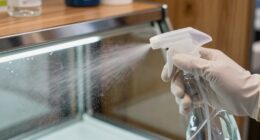
Electrostatic sprayers are highly effective for quick, thorough surface disinfection by evenly coating hard-to-reach spots with charged droplets. They save time and reduce chemical waste, making them ideal for large or busy spaces. However, their effectiveness depends on proper use, disinfectant choice, and safety measures. While not always necessary for small or simple tasks, they can be a game-changer in demanding environments—discover if they’re the right fit for your cleaning needs.
Key Takeaways
- Electrostatic sprayers provide rapid, even coverage ideal for hard-to-reach and complex surfaces, enhancing disinfection efficacy.
- They use less disinfectant and reduce chemical waste, supporting environmental safety and cost-efficiency.
- Proper training and compatible disinfectants are essential to maximize safety and effectiveness.
- For small or simple spaces, traditional methods may suffice; electrostatic sprayers excel in large or complex areas.
- Overuse or improper application can cause safety risks and environmental impact, making them a powerful but not always necessary tool.
How Do Electrostatic Sprayers Work?

Electrostatic sprayers work by charging liquid droplets as they pass through a high-voltage electrostatic field. This process, known as electrostatic charging, causes each droplet to carry an electrical charge. When you activate the sprayer, it uses spray atomization to break the solution into fine droplets. These charged droplets are attracted to surfaces with opposite charges or neutral areas, ensuring even coverage. Because of the electrostatic charging, the spray wraps around objects, reaching hidden or hard-to-access spots. This improves efficiency and reduces waste. The spray atomization creates a mist of tiny particles, making it easier for the charged droplets to spread uniformly. Proper grounding techniques are also essential to maximize safety and effectiveness during operation. Incorporating efficient atomization processes can further enhance coverage and reduce product consumption. Additionally, understanding regional flavor profiles can help optimize the effectiveness of disinfectant applications in different environments. Overall, the combination of electrostatic charging and spray atomization ensures thorough, targeted application of disinfectants or coatings.
What Are the Main Benefits of Using Electrostatic Sprayers?

One of the main benefits of using electrostatic sprayers is their ability to provide thorough and even coverage in less time than traditional methods. This electrostatic coverage guarantees that surfaces are evenly coated, reducing missed spots and increasing efficiency. You’ll find that the sprayers distribute disinfectant or cleaning solutions more effectively, saving you time and effort. Additionally, their battery life is designed to last through extended usage, so you don’t have to worry about frequent recharging during large cleaning tasks. This makes them ideal for quick, all-encompassing sanitizing. Furthermore, system monitoring tools can help track the performance and battery life of your sprayers to optimize their use. An environmental benefit is that they often use less disinfectant while maintaining high effectiveness. Proper disinfectant application also ensures safety and compliance with health standards. Proper technique and training are essential for maximizing the benefits of electrostatic sprayers and ensuring safety. Overall, electrostatic sprayers enhance cleaning effectiveness by delivering consistent, complete coverage with less effort and downtime. That’s why many consider them a valuable tool for maintaining cleanliness efficiently.
Are Electrostatic Sprayers Effective Against Germs and Viruses?

Are electrostatic sprayers truly effective against germs and viruses? They can be, but results depend on factors like chemical reactions and proper application. Here’s what you should know:
- The electrostatic charge helps droplets wrap around surfaces, improving coverage and contact with germs and viruses. Surface coverage is significantly enhanced by this technology, leading to more efficient disinfection.
- The effectiveness relies on using disinfectants that react chemically with pathogens, neutralizing them quickly.
- User convenience allows for rapid, thorough spraying, reducing missed spots and increasing germ elimination.
- Consistent application and correct disinfectant choice are key to ensuring that germs and viruses are effectively eradicated.
- Proper technique and understanding of disinfectant chemistry can maximize the germ-killing power of electrostatic sprayers.
What Are the Limitations and Safety Considerations?

While electrostatic sprayers offer many benefits, they also have limitations and safety considerations that you should be aware of. Chemical hazards are a primary concern; improper use or mixing of disinfectants can lead to harmful fumes or skin irritation. It is crucial to follow manufacturer instructions carefully to prevent accidents. Additionally, without proper user training, you might misuse the device or apply chemicals unevenly, reducing effectiveness and increasing risks. Over-spraying or missed spots can also cause unnecessary chemical exposure to you and others. Always wear appropriate personal protective equipment and ensure adequate ventilation during use. Recognizing these safety considerations helps you prevent accidents and ensures the sprayers are used effectively and safely, minimizing risks related to chemical hazards and improper handling. Proper disinfectant selection is also essential to avoid adverse health effects and ensure compatibility with the sprayer. Moreover, understanding industry standards can guide safe and effective application practices. Being aware of user training requirements can further help in achieving safe and efficient usage of electrostatic sprayers. Additionally, ensuring heat management during operation can prevent device overheating and potential safety hazards.
When Should You Use an Electrostatic Sprayer Instead of Traditional Cleaning?

Use an electrostatic sprayer when you need to reach difficult or hard-to-access surfaces quickly. It’s especially helpful when rapid disinfection is essential, saving time compared to traditional methods. If surfaces are tricky to clean manually, this technology can be a game-changer. Additionally, electrostatic sprayers can help improve indoor air quality by reducing airborne dust and microbes more effectively. Their ability to provide thorough coverage ensures that disinfectants reach all nooks and crannies, making them particularly valuable in high-traffic or sensitive environments. Moreover, the disinfection process benefits from uniform application, enhancing overall effectiveness. Implementing electrostatic technology can also help reduce the spread of germs, contributing to a healthier environment. Recognizing the importance of effective cleaning techniques can guide you in choosing the right approach for your space.
Surface Accessibility Challenges
Electrostatic sprayers excel when cleaning surfaces that are difficult to reach or have complex geometries, where traditional methods struggle to guarantee thorough coverage. Limited reach and surface coverage are common challenges with manual cleaning, especially on intricate fixtures or hidden corners. Using electrostatics helps overcome these issues by ensuring even distribution of disinfectants in hard-to-access areas. Consider these situations:
- Surfaces behind equipment or furniture
- Overhead fixtures or ceiling fans
- Multiple surfaces with intricate shapes
- Crowded or cluttered environments
In such cases, electrostatic sprayers provide better coverage, reaching areas traditional cleaning might miss. They make disinfecting more efficient, saving time and effort while ensuring comprehensive sanitation. When surface accessibility is an issue, electrostatic technology offers a clear advantage. Additionally, understanding the importance of surface compatibility can help optimize the use of electrostatic sprayers for different environments. Recognizing disinfectant effectiveness and its compatibility with various surfaces ensures safer and more efficient cleaning outcomes. Moreover, selecting the appropriate testing accuracy ensures the sprayers deliver the correct disinfectant doses for optimal performance.
Rapid Disinfection Needs
When rapid disinfection is essential, electrostatic sprayers are often the best choice over traditional cleaning methods. They quickly cover large areas, reaching hard-to-access spots, and reduce chemical residues left behind. Use them in high-traffic spaces like schools, hospitals, or gyms where swift, thorough sanitation is vital. They also minimize environmental impact by using less disinfectant compared to manual wiping. Consider this table:
| Situation | Benefit of Electrostatic Sprayers | Key Concern |
|---|---|---|
| Emergency outbreaks | Fast, uniform coverage | Chemical residues |
| Large spaces requiring quick turnaround | Reduced disinfection time | Environmental impact |
| Sensitive environments | Less physical contact, less disruption | Proper equipment handling |
| High-touch area sanitation | Effective at reaching all surfaces | Chemical overuse |
Choose electrostatic sprayers for rapid, efficient, and environmentally conscious disinfection when time is limited. Additionally, proper equipment handling ensures safety and effectiveness during use.
How Do Cost, Safety, and Ease of Use Influence Your Choice?

Cost, safety, and ease of use are key factors that can substantially influence your choice of electrostatic sprayers. These considerations affect your budget, training requirements, and long-term maintenance.
- Maintenance costs impact your ongoing expenses, so check how easy it is to service and replace parts.
- Safety features are essential to protect users and prevent accidents during operation.
- Ease of use ensures you don’t need extensive user training, saving time and resources.
- Simpler models often require less setup and are more intuitive, making them ideal for quick deployment.
Balancing these factors helps you select a device that fits your needs without overextending your budget or compromising safety. Your choice should prioritize cost-effectiveness and user-friendliness for smooth operation.
Do Electrostatic Sprayers Live Up to Their Promises, or Are Simpler Methods Enough?

Electrostatic sprayers promise better coverage and efficiency than traditional methods, but do they truly deliver on these claims? Cost, safety, and environmental impact also influence whether they’re worth the investment compared to simpler options. Let’s examine if they live up to their promises or if basic sprayers get the job done just as well.
Effectiveness Compared To Traditional Sprayers
Electrostatic sprayers often promise more efficient and thorough coverage than traditional methods, but their actual effectiveness can vary depending on the situation. They excel in covering hard-to-reach areas and reducing chemical waste, which benefits chemical safety and minimizes environmental impact. However, their advantages aren’t always clear-cut. Consider these points:
- Electrostatic sprayers often deliver better coverage in complex spaces compared to traditional spray bottles.
- They can reduce chemical usage, supporting safer handling and less environmental contamination.
- Effectiveness depends on proper technique and maintenance; misuse can diminish results.
- In some cases, traditional sprayers are sufficient, especially for small or simple applications without the need for electrostatic charge.
Ultimately, while electrostatic sprayers can be more effective, they aren’t always necessary for every task.
Cost and Accessibility Factors
While electrostatic sprayers can deliver superior coverage and reduce chemical waste, their higher price tags and limited equipment availability can make them less accessible for some users. Budget limitations often prevent small businesses or homeowners from investing in this technology. Additionally, equipment availability varies regionally, making it harder to find reliable sources. Consider the following comparison:
| Aspect | Conventional Sprayers | Electrostatic Sprayers |
|---|---|---|
| Cost | Lower initial cost | Higher price point |
| Access | Widely available | Limited availability |
This disparity highlights that, despite their benefits, electrostatic sprayers may not be practical for everyone. For those on a tight budget or in areas with limited supply, traditional methods might still be the better choice.
Safety and Environmental Impact
Are electrostatic sprayers truly safer and more environmentally friendly than traditional methods? While they reduce chemical residues on surfaces, concerns about environmental pollution remain. You should consider these points:
- They can minimize chemical runoff, but improper use may still lead to environmental contamination.
- Fine mist particles can drift, potentially affecting nearby ecosystems.
- Reduced chemical usage lowers residue buildup, but residues can still linger if not applied correctly.
- The production and disposal of sprayers contribute to environmental pollution, offsetting some benefits.
Frequently Asked Questions
How Long Does the Electrostatic Charge Last During Use?
The electrostatic charge typically lasts for the duration of your spray session, usually around 10 to 20 minutes, depending on the sprayer model and settings. The charge duration, or electrostatic lifespan, remains strong as long as the device is functioning properly and the battery is charged. Once the battery depletes or the device turns off, the electrostatic charge dissipates quickly, so continuous use helps maintain ideal coverage.
Can Electrostatic Sprayers Be Used on All Surface Types?
You can’t paint all surfaces with a broad brush, so electrostatic sprayers aren’t suitable for every material. Surface compatibility and material restrictions matter; some surfaces, like soft fabrics or electronics, may be damaged or less effectively disinfected. Always check manufacturer guidelines before use. Think of it as fitting a square peg in a round hole—use the right tool for the right surface to get the best results without causing harm.
Are There Environmental Concerns With Electrostatic Spraying?
You should consider the environmental impact of electrostatic spraying before using it. These sprayers can cause chemical runoff, which may contaminate soil and water sources. While they are effective for thorough coverage, improper application or overuse increases risks to the environment. Always follow manufacturer guidelines and use eco-friendly disinfectants to minimize chemical runoff and reduce environmental concerns. Responsible use helps protect your surroundings and promotes sustainable cleaning practices.
How Often Should Electrostatic Sprayers Be Calibrated?
You should calibrate your electrostatic sprayers regularly, ideally according to the manufacturer’s recommended calibration frequency, which is often every 1 to 3 months. Incorporate calibration into your maintenance schedule to guarantee peak spray performance and safety. Regular calibration helps maintain consistent coverage, reduces waste, and ensures effective disinfection. Always follow the specific guidelines provided with your sprayer to keep it functioning correctly and prevent potential issues.
Do Electrostatic Sprayers Require Special Training to Operate Safely?
Yes, you do need special training to operate electrostatic sprayers safely—because who wouldn’t want to master the art of spraying without turning your workspace into a chemical wonderland? Following safety protocols and user training isn’t just recommended; it’s essential. With proper instruction, you’ll avoid accidents, ensure effective coverage, and keep everyone safe, turning what seems like a high-tech toy into a powerful, safe cleaning tool.
Conclusion
In the end, electrostatic sprayers are like a powerful paintbrush, quickly coating surfaces with a vibrant shield of protection. But remember, they’re not magic wands—sometimes, simple cleaning methods are just as effective. Use them wisely, like a trusted tool in your cleaning arsenal, and know that the right choice depends on your needs. Whether they’re your shining knight or just an extra boost, make sure they fit your cleaning quest.