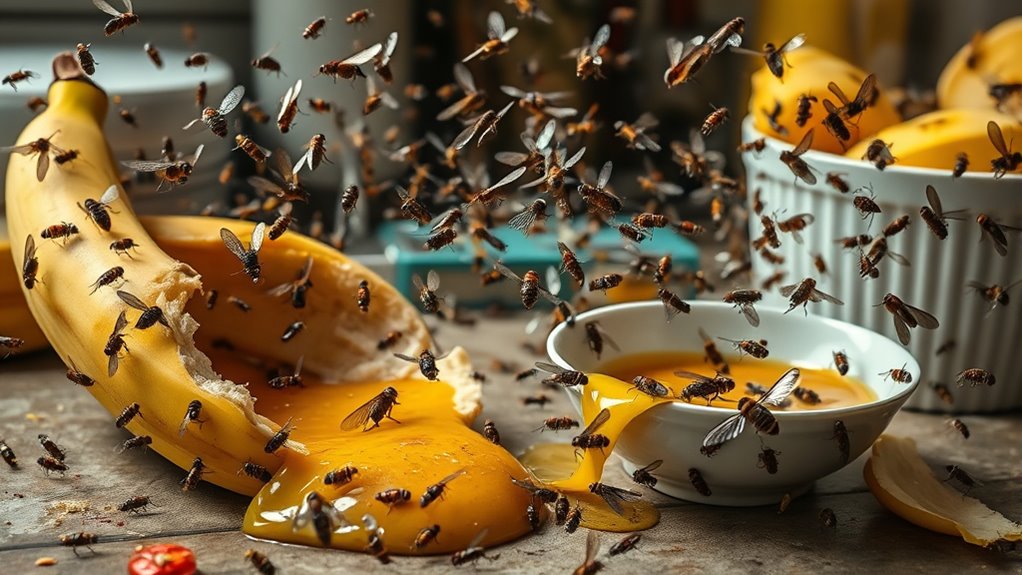

To stop a fruit fly invasion, start by identifying and cleaning their favorite moist, fermenting sources. Remove overripe or spilled fruit, rinse trash cans, and empty compost bins regularly. Seal or store fruits in the refrigerator to prevent attracting flies. Use traps with apple cider vinegar and dish soap near problem areas to catch the adult flies. Focus on eliminating these breeding spots first; you’ll discover more effective tips if you continue exploring.
Key Takeaways
- Identify and remove fermenting fruits, rotten produce, and spilled sugary liquids from your home.
- Regularly clean trash cans, compost bins, and damp sponges to eliminate breeding sites.
- Seal or cover compost and store fruits in the refrigerator to prevent attracting flies.
- Use homemade or commercial bait traps with vinegar and dish soap to catch adult fruit flies.
- Act quickly to disrupt the reproductive cycle by eliminating breeding sources before populations grow.
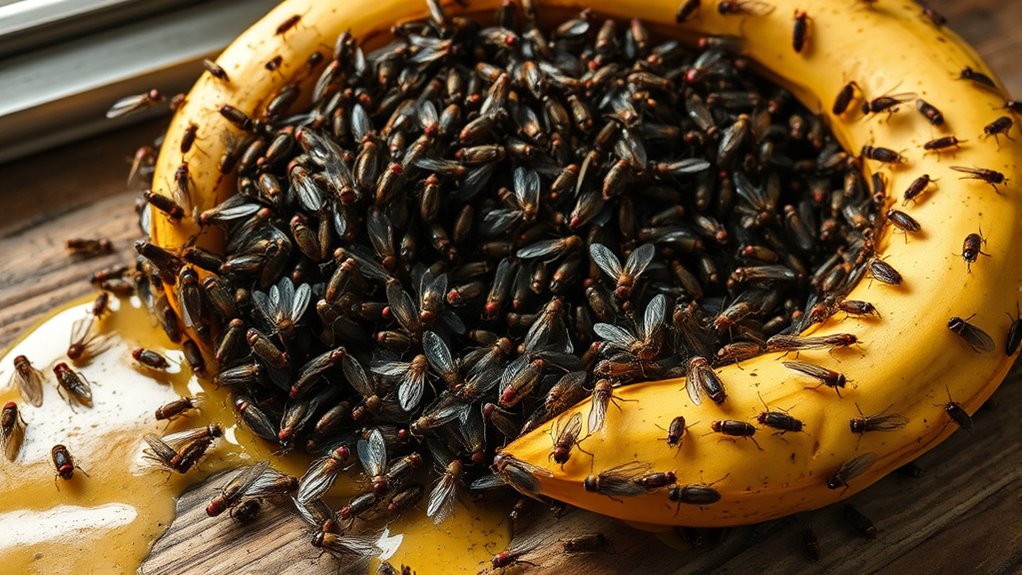
Have you ever wondered where fruit flies come from? These tiny pests seem to appear out of nowhere, but their origins are closely tied to their breeding habits and the attractants that lure them in. Fruit flies are attracted to fermenting foods, overripe fruit, and other organic matter, making your kitchen a perfect breeding ground. Once they find a suitable source, they lay their eggs on or near rotting produce, and within a day or two, tiny larvae hatch, feeding on the decaying material. This rapid reproductive cycle means that a small infestation can quickly turn into a full-blown invasion if the breeding sites aren’t eliminated. Automation in pest control technologies are increasingly used to monitor and manage infestations more effectively.
Understanding their breeding habits is essential to controlling them. Fruit flies prefer moist, fermenting environments where they can lay their eggs safely. They’ll often breed in trash cans, compost bins, or even damp mops and sponges if these aren’t cleaned regularly. Their eggs are minuscule and difficult to see, which makes early detection challenging. Once they begin breeding, their population can multiply exponentially in just a week, so acting swiftly is vital. Removing their breeding sites disrupts their life cycle and helps prevent further infestation.
Controlling fruit flies involves removing breeding sites like trash, damp sponges, and compost bins quickly.
The attractants and baits play a significant role in both attracting fruit flies and trapping them. They are drawn to the smell of fermenting fruit or sugary liquids, which is why ripe fruit left out on countertops or compost bins attract them. Commercial attractants and homemade baits—such as apple cider vinegar with a few drops of dish soap—are highly effective at luring these pests. The vinegar mimics their preferred fermenting environment, and the dish soap breaks the surface tension, causing the flies to drown when they land on the bait. Placing these traps near problem areas can help catch adult flies and reduce their population.
To keep fruit flies at bay, you need to be diligent about cleaning and removing attractants. Dispose of overripe fruit promptly, rinse out trash cans regularly, and clean up any spills of sugary liquids. Cover or seal compost bins and store fruits in the refrigerator whenever possible. Using attractants and baits strategically can also help you monitor and reduce their numbers. Remember, controlling fruit fly sources isn’t just about catching adults; it’s about eliminating the breeding sites and attractants that sustain their life cycle. By paying attention to their breeding habits and effectively using baits, you can keep these pests from turning your home into their breeding ground.
Frequently Asked Questions
How Long Do Fruit Flies Typically Live Indoors?
Indoor fruit flies typically live for about 40 to 50 days. Their lifespan depends on factors like temperature and availability of food. As an owner, you might notice their presence for a few weeks if you don’t eliminate their breeding sources. Keep in mind that indoor fruit flies reproduce rapidly, so addressing the source quickly can help reduce their lifespan and prevent a recurring infestation.
Are Fruit Flies Harmful to Humans or Pets?
Fruit flies aren’t harmful to humans or pets directly, but they can pose health risks by contaminating food and spreading bacteria. If you have pets, these tiny insects might trigger allergies or irritate their respiratory systems. To keep everyone safe, focus on maintaining cleanliness and removing potential breeding sites. By doing so, you safeguard your household’s health and ensure pet safety, preventing fruit fly infestations from becoming a bigger problem.
Can Fruit Flies Infest Outdoor Compost Piles?
Imagine your outdoor compost as a tempting feast for fruit flies, inviting them to set up camp. Yes, they can infest outdoor compost piles if they find rotting fruit and organic waste. To prevent this, keep your compost well-maintained with proper aeration and cover it tightly. Regularly cleaning your outdoor compost and using fruit fly prevention methods will keep these unwelcome guests at bay, protecting your yard.
What Natural Remedies Effectively Repel Fruit Flies?
You can effectively repel fruit flies using natural remedies like DIY traps and essential oils. Create traps with apple cider vinegar and a few drops of dish soap to attract and drown them. Additionally, use essential oils like peppermint, lemongrass, or eucalyptus by diffusing or applying them around your kitchen. These methods are safe, eco-friendly, and help keep fruit flies at bay without harsh chemicals.
How Quickly Can a Fruit Fly Infestation Develop?
Think of a fruit fly infestation as a ticking clock—within just a few days, it can escalate from a tiny spark to a blazing fire. Fruit fly breeding is rapid; eggs hatch in 24-30 hours, and larvae develop quickly. The infestation timeline can be as short as a week if conditions are ideal, so catching and cleaning sources early is key to stopping these pests before they take over your space.
Conclusion
By keeping your sources clean, you hold the power to crush the fruit fly invasion before it takes over your home. Think of these tiny pests as an unstoppable army—cleanliness is your secret weapon to stop them in their tracks. Don’t underestimate the impact of small actions; they can prevent an infestation from turning your kitchen into a fruit fly battleground. Stay vigilant, stay clean, and keep those sources fruit fly-free for good.