When choosing between garment steamers and steam irons, consider your fabric types and finishing preferences. Steamers are gentle and ideal for delicate or layered fabrics like silk, while irons provide a crisp, polished look on sturdy textiles such as cotton or linen. Steamers are more convenient for quick touch-ups and safer for fragile garments, but irons can straighten stubborn wrinkles faster. To optimize your wardrobe care, you’ll discover more tips for selecting the best tool for each fabric and occasion.
Key Takeaways
- Steam irons provide direct heat and pressure for crisp, polished finishes on sturdy fabrics like cotton and linen.
- Garment steamers gently relax fibers, making them ideal for delicate, layered, or textured fabrics such as silk and chiffon.
- Irons heat quickly and are suitable for quick touch-ups, while steamers take longer but are safer for fragile textiles.
- Steamers are easier to maneuver and safer for beginners, reducing risk of fabric damage compared to irons.
- Cost, maintenance, and durability vary; steamers are generally more affordable and low-maintenance than steam irons.
What Are Garment Steamers and Ironing Devices?
Garment steamers and ironing devices are two popular tools used to remove wrinkles and refresh clothing, but they work in different ways. Garment steamers utilize hot steam to relax fabric fibers, making it easier to smooth out wrinkles without direct contact. They’re ideal for fabric care because they’re gentle and suitable for delicate materials. On the other hand, steam irons press clothes with a heated flat surface, applying pressure to flatten creases. This method is often preferred for more precise garment maintenance, especially on thicker fabrics like denim or linen. Both tools help keep your wardrobe looking crisp and fresh, but choosing the right one depends on your fabric types and maintenance preferences. Understanding their differences helps you select the best tool for your clothing care routine. Understanding fabric types is essential to choosing the most appropriate garment care device. Additionally, considering fabric maintenance techniques can help extend the life of your clothes. For example, some fabrics respond better to gentle steaming, which preserves their texture and color, and knowing proper ironing speeds can prevent damage to delicate textiles. Incorporating knowledge of fabric care strategies can further optimize your garment preservation efforts.
How Do Garment Steamers and Steam Irons Work?
You might wonder how garment steamers and irons actually work. Both use heat to remove wrinkles, but they do so differently: steamers generate hot vapor that relaxes fabric fibers, while irons press directly with heated plates. Understanding how each heats and distributes heat to fabrics helps you choose the right tool for your clothes. Additionally, knowing about fabric care techniques can help you maintain your clothing and accessories in optimal condition, especially if you have body jewelry that requires special handling. Proper fabric maintenance can extend the lifespan of your garments and keep them looking their best. For example, choosing the appropriate heat setting is essential to prevent damage, which is why understanding heat distribution is beneficial. trusted local services can help you find professional garment steaming or pressing assistance if needed.
Heating Mechanism Explained
Understanding how garment steamers and steam irons generate heat is key to choosing the right tool for your needs. Both devices rely on a heating element that converts electrical energy into thermal energy through thermal transfer. In steam irons, the heating element warms the soleplate directly, creating high heat for pressing fabrics. Garment steamers, however, heat water to produce steam, which is then released to relax fabric fibers. The table below highlights their differences:
| Feature | Steam Iron | Garment Steamer |
|---|---|---|
| Heating Element | Direct contact with soleplate | Heats water for steam production |
| Thermal Transfer | Conduction through soleplate | Heat transferred via steam |
| Heat Distribution | Even across soleplate | Focused on steam release |
| Temperature Control | Precise settings | Less control, depends on steam |
| Primary Heat Use | Pressing and shaping | Relaxing fibers, de-wrinkling |
Fabric Contact and Distribution
While both garment steamers and steam irons rely on heat to remove wrinkles, their methods of fabric contact and distribution differ markedly. Steam irons make direct contact with the fabric, allowing for precise pressure that smooths out wrinkles and alters fabric texture. This contact provides even wrinkle distribution, especially on sturdy or thick fabrics. In contrast, garment steamers don’t touch the fabric directly; instead, they release steam that penetrates fibers gently. This method is ideal for delicate or layered fabrics, ensuring even wrinkle distribution without flattening texture. The difference in contact means steam irons offer targeted smoothing, while steamers provide a more uniform, gentle treatment, preserving fabric texture while relaxing wrinkles throughout the garment. Additionally, storage options like portable steamers and compact irons enhance convenience, especially when traveling or handling different fabric types. Moreover, understanding the fabric compatibility of each device helps prevent damage and achieve better results. Furthermore, fabric type plays a crucial role in selecting the appropriate steaming method for optimal care and longevity. Recognizing the heat settings suitable for various fabrics can also help prevent accidental damage during the steaming process.
Which Fabrics Are Best for Steamers or Irons?
Certain fabrics respond better to steamers or irons, making it important to choose the right tool for each material. Durable fabrics like denim, canvas, and heavy cotton stand up well to both steaming and ironing, but they often benefit from the pressure and heat of an iron to achieve crispness. Delicate fabrics such as silk, chiffon, and lace have lower fabric durability and require gentler treatment; steamers are ideal here because they provide effective wrinkle removal without direct contact that could damage the fibers. Additionally, textile flexibility varies—stiffer fabrics like linen respond well to the stretching and smoothing power of an iron, while more flexible materials benefit from steaming to preserve their natural drape. Knowing these characteristics helps you select the best method for each fabric type.
How Do Results and Finishes Differ Between Steaming and Ironing?
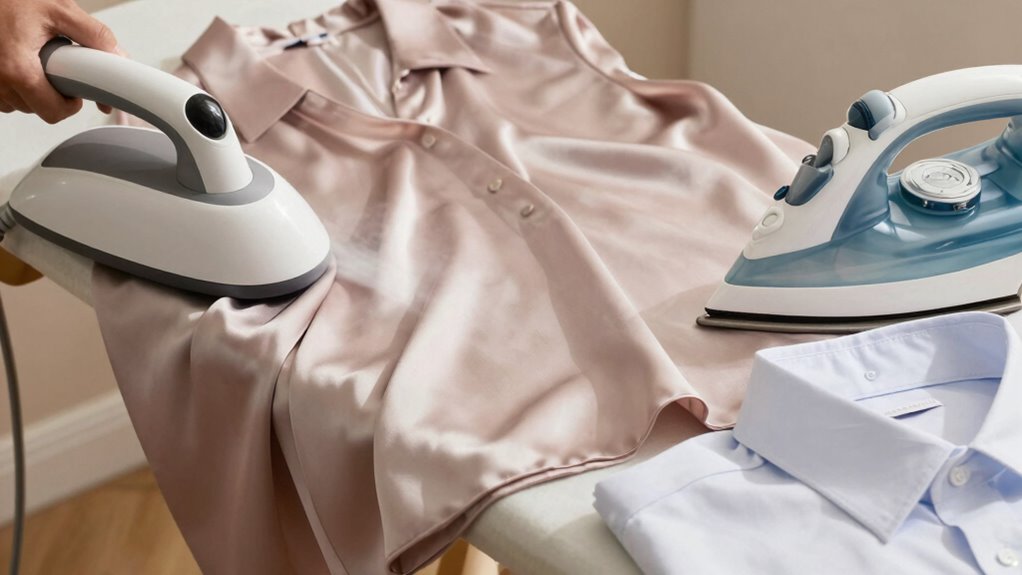
When you choose between steaming and ironing, the results and finishes you achieve can vary considerably. Steaming often leaves fabrics with a softer appearance and a natural fabric shine, enhancing their overall look without creating a stiff finish. It’s excellent for reducing shallow wrinkles and maintaining delicate fibers. Ironing, on the other hand, tends to produce a crisper, more polished finish, with a deeper reduction in wrinkle depth. The heat and pressure from an iron smooth out fabric fibers more thoroughly, giving your garments a crisp, professional look. If you want a gentle, natural finish, steaming is your best option. Additionally, understanding the different fabric types can help you choose the best method for each garment. Recognizing the fabric care guidelines can further ensure you select the optimal technique to preserve your clothing’s quality. For delicate or sensitive fabrics, using the appropriate temperature settings can prevent damage and extend the lifespan of your garments. Properly technique selection can also make a significant difference in achieving the desired finish and maintaining fabric integrity, especially when considering the exfoliating properties of glycolic acid for skin care.
Which Tool Is Faster and More Convenient to Use?
When choosing between a garment steamer and a steam iron, you’ll notice differences in setup time, with steamers often ready faster. Steam irons typically smooth out wrinkles more quickly on tough fabrics, but steamers are easier to handle for quick touch-ups. Consider which tool fits your routine to find the most convenient and efficient option. Additionally, proper water usage can impact the overall performance and maintenance of your steaming tools. Using the right water conservation practices helps to extend the lifespan of your equipment and reduces waste. Understanding the essential oils for fabric care may help maintain your garments and extend their lifespan, especially when combined with proper fabric maintenance techniques.
Setup Time Comparison
Steam irons typically heat up quickly and are ready to use within a few minutes, making them a convenient choice for quick touch-ups. They often have straightforward setup processes, requiring you to fill the water reservoir and turn them on. Steam irons also tend to be compact, so appliance storage is simple, saving space in your laundry area. In contrast, garment steamers usually take longer to heat up, as they need to generate steam from water in a tank, which can take several minutes. This longer setup time can be less convenient if you’re in a hurry. Additionally, steam irons are designed with fabric safety in mind, allowing you to iron directly without risking water spills. Overall, if you prioritize quick setup and easy storage, a steam iron might be your better choice.
Speed of Wrinkle Removal
While both garment steamers and steam irons effectively remove wrinkles, steam irons generally work faster for quick touch-ups because they can be heated and ready to use almost immediately. Ironing applies direct pressure and heat, smoothing out fabric wrinkles quickly, which is especially helpful when you need fabric softness and a crisp look fast. Steam irons are effective at breaking the wrinkle memory in fabrics that tend to hold creases, making them ideal for quick fixes. Garment steamers, on the other hand, often take longer to produce smooth results because they rely on steam to relax fibers gradually. If speed is your priority, especially for fabrics prone to wrinkle memory, a steam iron typically offers a quicker, more convenient solution.
Ease of Use
Choosing between a garment steamer and a steam iron often depends on how easy and quick they are to operate. A steamer generally offers more user comfort, as it requires less setup and maneuvering, making it ideal for quick touch-ups. Steam irons might take longer to heat up and require precise movements, especially on different fabric textures. Steamers are lighter and easier to handle, reducing fatigue during use. Conversely, irons can be more effective on stubborn wrinkles but may feel more cumbersome.
- No heat settings needed for steamers, simplifying operation
- Easier to maneuver around complex fabric textures
- Less physical effort, boosting user comfort
- Quicker to use for light, everyday steaming tasks
Is a Garment Steamer Safer and Easier Than an Iron?
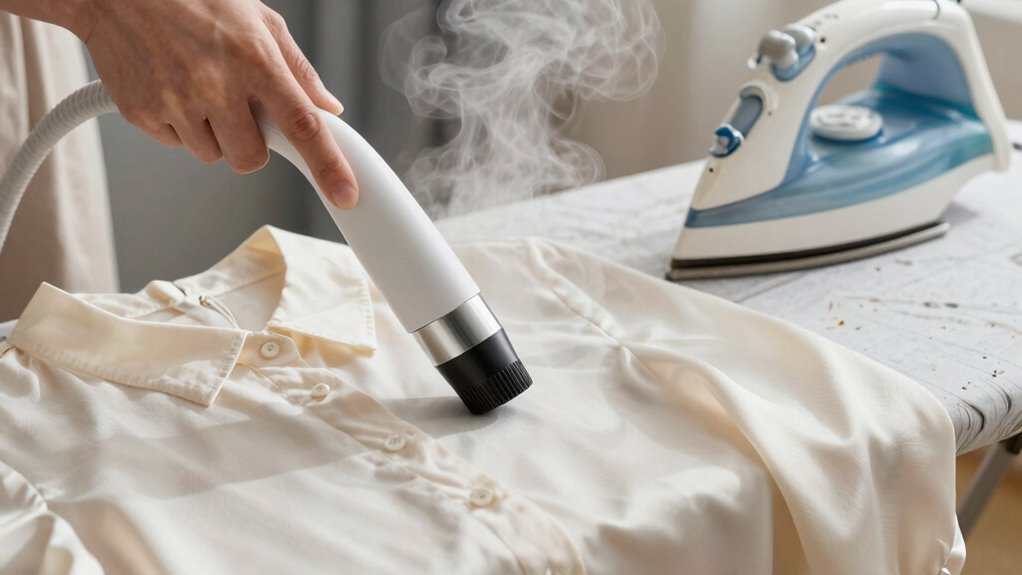
A garment steamer is generally safer and easier to use than a traditional iron, especially for beginners or those concerned about accidents. With a steamer, you avoid the risk of burning or damaging delicate fabrics, making fabric safety a top advantage. Steamers work at lower temperatures, reducing the chance of scorch marks or unwanted fabric shine. They also minimize chemical exposure since they don’t require ironing sprays or starches that can contain harmful chemicals. Plus, steamers are simpler to operate, with fewer settings and less manual effort needed. This makes them more accessible for quick touch-ups or for those with limited mobility. Overall, a garment steamer provides a safer, more straightforward way to keep your clothes crisp without risking damage or exposure to chemicals.
What Are the Costs and Maintenance Needs of Each?
Garment steamers typically have lower upfront costs and require less maintenance than steam irons, making them a budget-friendly choice for many users. When considering a cost comparison, steamers often need fewer parts replaced and less frequent repairs. Their simple design means less to maintain over time. Steam irons may have higher initial prices, especially for models with advanced features, and require regular descaling and soleplate cleaning. Maintenance requirements for steamers usually involve refilling water tanks and occasional descaling, while irons need more thorough cleaning and soleplate care. Additionally, steamers tend to be more durable with fewer moving parts, reducing long-term expenses. Overall, if you’re looking for an economical option with minimal upkeep, a garment steamer is generally more cost-effective.
When Should You Choose a Steamer Over an Iron: and Why?
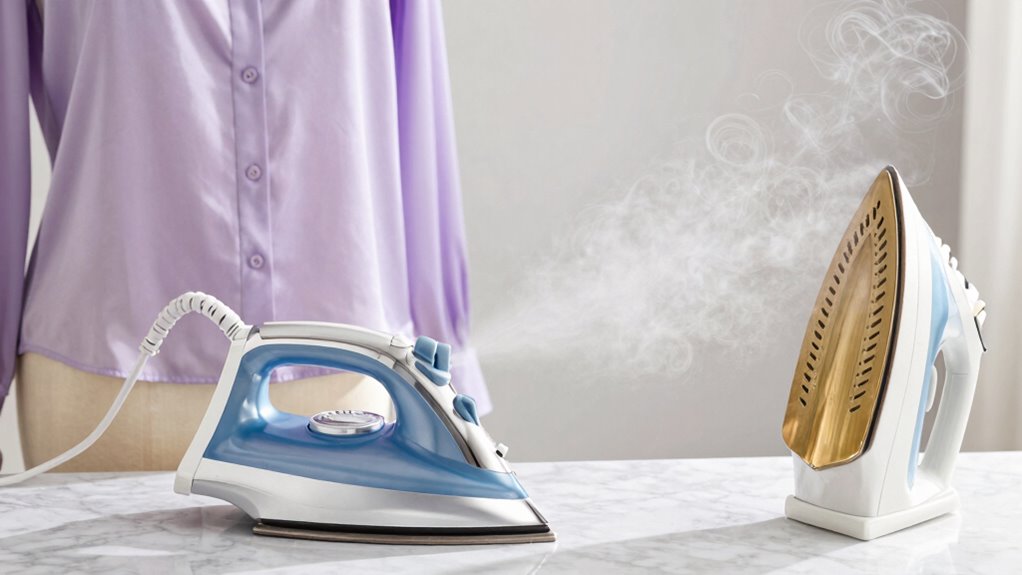
You should opt for a steamer over an iron when you’re dealing with delicate fabrics that can be damaged by direct heat or pressure. Steamers are gentler, helping preserve fabric integrity and preventing wear and tear. They’re especially useful for materials like silk, chiffon, or lace, where high heat can cause harm. Additionally, steamers excel at stain removal, loosening dirt and wrinkles without aggressive scrubbing. They’re quick and easy to use on hanging garments, saving you time and effort. If you want to maintain the fabric’s quality and appearance, a steamer offers a safer, more effective option. For routine touch-ups or delicate textiles, choosing a steamer ensures your clothes stay in top condition while achieving a crisp, fresh look.
How Do You Pick the Right Garment Care Tool for Your Wardrobe?
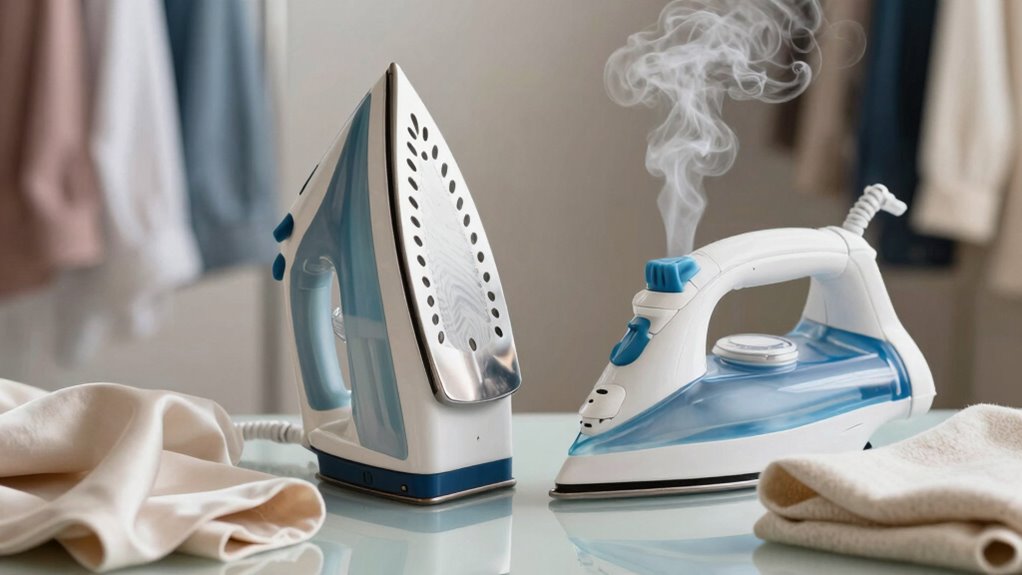
Choosing the right garment care tool depends on understanding your wardrobe’s specific needs and fabric types. For delicate fabrics like silk or chiffon, a steamer is gentler and prevents damage. For sturdier materials like denim or linen, a steam iron with higher heat and pressure might be more effective. Consider fabric durability when selecting a tool, ensuring it matches the clothing’s requirements. Also, do a price comparison to find options that fit your budget without sacrificing quality.
- Think about the fabric’s delicacy and durability before choosing
- Compare the long-term costs of a steamer versus an iron
- Assess how often you need to use the device
- Match the tool’s features to your wardrobe’s fabric types for ideal care
Final Tips: Making the Best Choice for Your Clothes
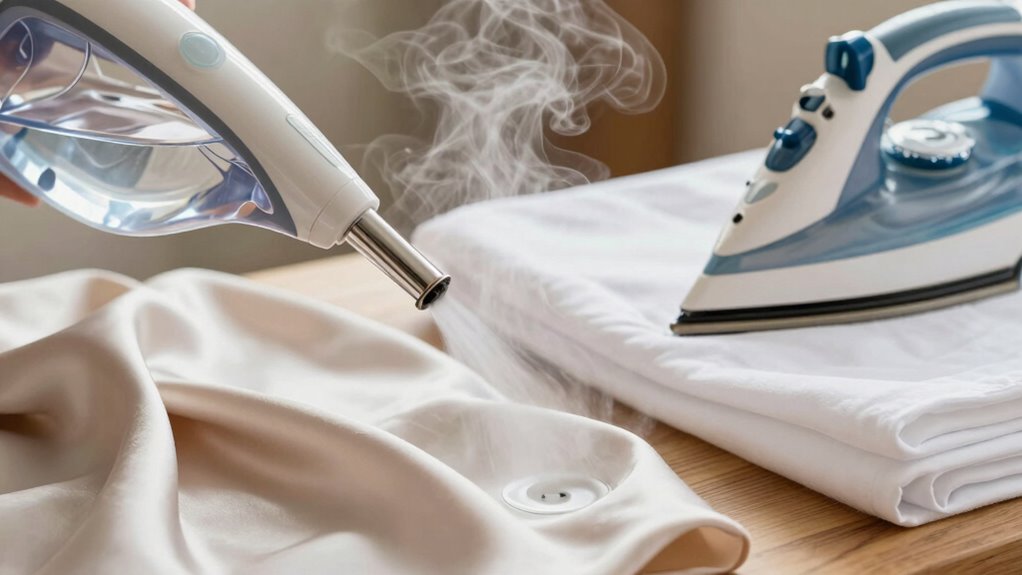
To make the best choice between a garment steamer and a steam iron, consider how often you’ll use it and the types of fabrics in your wardrobe. For delicate fabrics like silk or lace, steamers are gentle and quick, providing fabric softening without risking damage. Ironing suits heavier or stiffer fabrics like linen or cotton, where precise creases matter. Energy efficiency varies: steam irons generally use more energy, but deliver faster results on thick fabrics. Use this table to guide your decision:
| Fabric Type | Best Tool | Fabric Softening | Energy Efficiency |
|---|---|---|---|
| Delicate (silk) | Steamer | High | Moderate |
| Heavy (denim) | Iron | Low | High |
| Wrinkle-prone | Steamer | High | Moderate |
| Linen | Iron | Low | High |
| Everyday wear | Depends on fabric | Varies | Varies |
Frequently Asked Questions
Can Garment Steamers Effectively Remove Stubborn Wrinkles?
Yes, garment steamers can effectively remove stubborn wrinkles, especially for fabric rejuvenation. Their high-temperature steam penetrates deep into fibers, loosening fabric creases and making wrinkles disappear. While they work well on delicate or complex fabrics, for very stubborn wrinkles or crisp creases, steamers might need to be used with extra time or combined with light pressing. Overall, their wrinkle removal effectiveness makes them a handy tool for quick touch-ups.
Do Steam Irons Damage Delicate Fabrics More Than Steamers?
Think of your delicate fabrics as fragile flowers; steam irons can sometimes be the harsh wind that damages them more than gentle steamers. Steam irons may pose a higher risk to fabric safety, especially with sensitive materials, making them more prone to burning or shining. For effective wrinkle removal without risking damage, you might prefer steamers, which are gentler and safer for delicate fabrics.
Are Steamers Suitable for Professional or Commercial Use?
Yes, steamers are suitable for professional or commercial use, especially professional-grade steamers and commercial garment steamers. You can rely on these devices to handle large volumes, deliver consistent steam performance, and quickly refresh fabrics. They’re designed for durability and efficiency, making them ideal for busy environments like retail stores, hotels, or tailoring shops. With the right equipment, you’ll streamline your workflow and maintain high-quality garment presentation.
How Long Does Each Device Typically Last With Regular Use?
With regular use, a quality garment steamer typically lasts 1 to 3 years, depending on maintenance and usage frequency. Steam irons tend to be more durable, often lasting 3 to 5 years with proper care. To maximize device durability, follow maintenance requirements like descaling and cleaning regularly. Proper storage and avoiding overuse also help extend each device’s lifespan, ensuring you get the most out of your investment.
Can Steamers Be Used on All Types of Clothing and Accessories?
Did you know steamers are safe for over 90% of fabrics? You can confidently use them on delicate silks, wool, and even accessories like curtains and upholstery. Their fabric compatibility makes them versatile, allowing you to refresh and de-wrinkle various materials without damage. Plus, accessory versatility means you can easily switch between garments and household items, making steamers a convenient choice for all your fabric care needs.
Conclusion
Choosing between a garment steamer and an iron depends on your fabric types and lifestyle. Did you know that over 70% of professional stylists prefer steamers for quick touch-ups? Both tools have their strengths—steamers are great for delicate fabrics and convenience, while irons deliver crisp, polished finishes. Assess your wardrobe needs and maintenance preferences carefully to make the best choice. Ultimately, investing in the right device keeps your clothes looking their best and extends their lifespan.