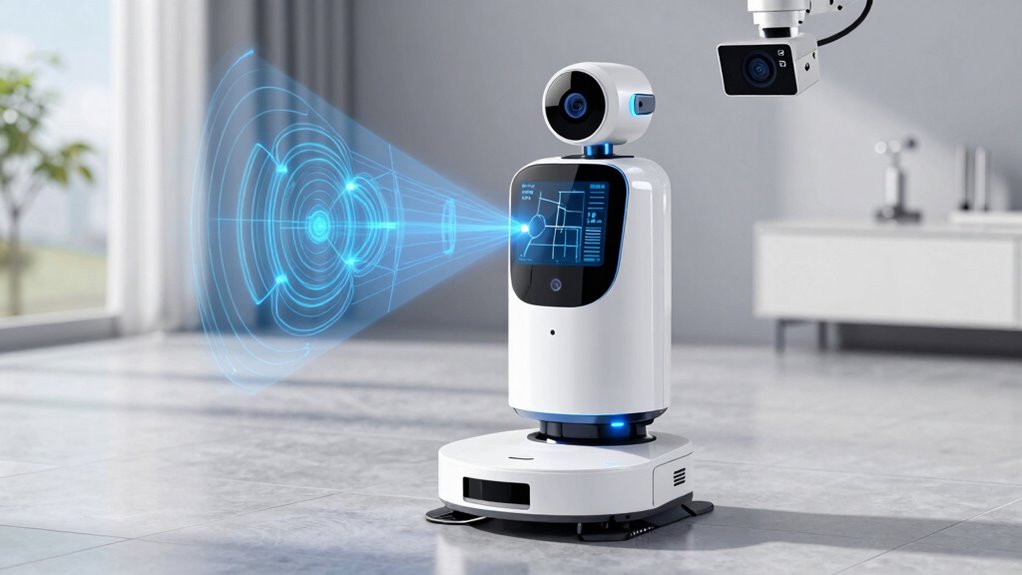

Using LiDAR and cameras helps your robot clean better by providing accurate environmental data and visual context. When these sensors are combined through effective data fusion, your robot can map spaces precisely, avoid obstacles, and identify dirt or clutter more efficiently. Proper calibration, placement, and synchronization are key for maximum performance. These tech advancements and good maintenance ensure your robot works smoothly. Keep exploring how these innovations can make your cleaning smarter and more effective.

Get cleaning gear delivered free with Prime
- Fast, free delivery on millions of items
- Prime Video, Amazon Music and more included
- Member-only deals all year
Key Takeaways
- Combining LiDAR and camera data creates a comprehensive environmental model for better navigation.
- Proper sensor calibration and synchronization ensure accurate mapping and obstacle detection.
- Strategic sensor placement enhances data quality and coverage for more effective cleaning paths.
- Advanced data fusion techniques improve obstacle avoidance and thorough area coverage.
- Regular maintenance and updates sustain sensor performance, ensuring consistent cleaning efficiency.
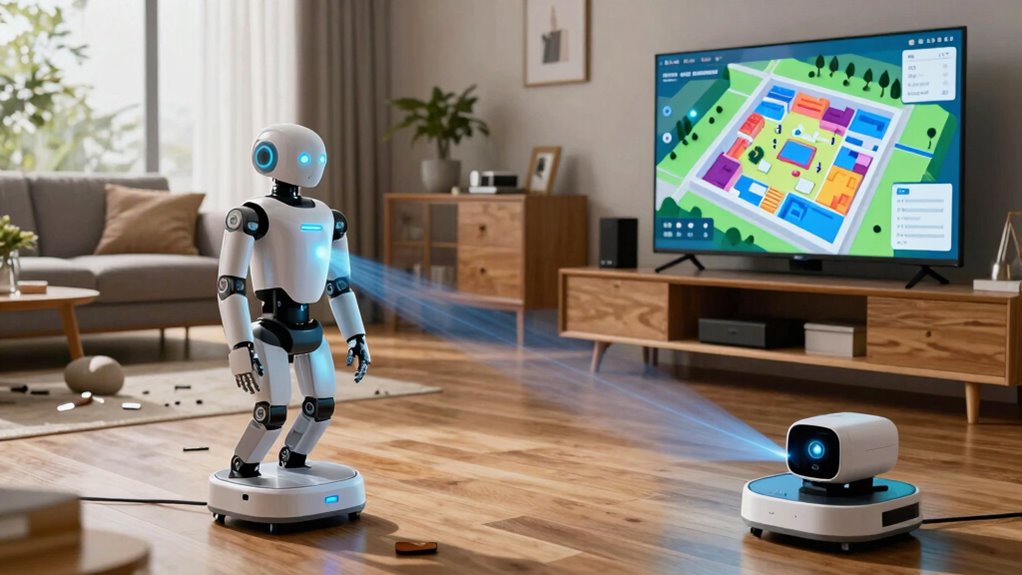
Data fusion is the process of combining data from multiple sensors to create a thorough picture of the environment. Think of it as teamwork: LiDAR offers detailed three-dimensional information about surroundings, while cameras provide visual context, textures, and colors. When you fuse these data streams, your robot can better interpret its environment, identifying obstacles, recognizing objects, and understanding spatial relationships. This combined view allows the robot to plan cleaner paths, avoid obstacles more intelligently, and adapt to changing conditions. For instance, if the LiDAR detects an obstacle but the camera confirms it’s a piece of furniture, the robot can decide to navigate around it more smoothly. Without effective data fusion, the robot might get confused or make inefficient decisions, wasting time and energy. Proper integration also relies on calibration accuracy, ensuring that sensor data aligns correctly for effective fusion. Additionally, sensor synchronization is crucial to make sure that data from different sensors corresponds to the same moment in time, further improving the robot’s perception. Furthermore, understanding the importance of sensor placement can significantly enhance the quality of data collected and fused. Regular maintenance and testing of sensor systems also help in maintaining sensor reliability, which is vital for consistent performance. In addition, advancements in sensor technology continue to push the boundaries of what robots can perceive and accomplish.
The quality of your robot’s mapping and cleaning performance hinges on how well these systems are calibrated and integrated. When sensors are properly aligned and their data is fused effectively, your robot gains a more accurate, real-time understanding of its environment. This leads to better obstacle avoidance, more complete coverage, and ultimately, a more thorough clean. On the other hand, neglecting calibration or failing to implement robust data fusion can cause errors—missed spots, repeated paths, or collisions—that reduce efficiency.
In essence, the secret to a robot that cleans better isn’t just in having high-tech sensors but in how you maintain and integrate them. Regular sensor calibration keeps data truthful, while smart data fusion combines the strengths of each sensor type. Together, they empower your robot to navigate complex spaces confidently, clean more thoroughly, and adapt swiftly to any changes in its environment. That’s how advanced mapping technology directly translates into a cleaner, smarter home or workspace.
As an affiliate, we earn on qualifying purchases.
Frequently Asked Questions
How Do Robots Prioritize Areas to Clean First?
You can help a robot prioritize areas to clean first by understanding its cleaning patterns and sensor accuracy. The robot uses sensors to detect dirt, debris, and obstacles, guiding its cleaning path efficiently. It often starts with high-traffic or dirty zones, guaranteeing those areas are cleaned thoroughly first. By focusing on sensor accuracy, it guarantees no spots are missed, optimizing cleaning time and effectiveness.
Can These Sensors Operate Effectively in All Lighting Conditions?
These sensors can’t operate effectively in all lighting conditions due to sensor limitations and lighting challenges. Bright sunlight can cause glare, making it hard for cameras to see clearly, while low light or darkness can hinder sensor accuracy. You might notice the robot struggling in dim rooms or outdoor areas with intense sunlight. To improve performance, consider using sensors designed to handle diverse lighting or adding dedicated lighting sources.
What Is the Maintenance Required for Lidar and Cameras?
You’ll need to regularly check sensor calibration to guarantee accuracy, especially after impacts or rough use. Keep the hardware durable by cleaning lenses and sensors gently with a soft cloth, avoiding harsh chemicals. Periodic inspections help spot dust or debris that can impair performance. Replacing worn-out parts or recalibrating sensors maintains reliability, so your robot’s sensors stay precise, helping it clean efficiently even after long hours of operation.
How Do Robots Handle Dynamic Obstacles During Cleaning?
You’ll find that robots handle dynamic obstacles during cleaning by using obstacle detection systems that respond in real-time. They continuously perform sensor calibration to guarantee accuracy, allowing quick adjustments when new objects appear. When an obstacle is detected, the robot pauses or reroutes itself to avoid collisions. This process ensures efficient cleaning without getting stuck or causing damage, keeping your space tidy even with moving furniture or pets.
What Is the Cost Difference Between Lidar and Camera-Based Systems?
The cost difference between LiDAR and camera-based systems is huge—LiDAR can be ten times pricier! You’ll find LiDAR offers superior sensor accuracy, creating detailed maps that boost cleaning efficiency. Camera systems are more budget-friendly but might struggle with precise obstacle detection. A thorough cost analysis shows that while LiDAR costs more upfront, its accuracy can save you money long-term by preventing accidents and improving cleaning precision.
As an affiliate, we earn on qualifying purchases.
Conclusion
While LiDAR and cameras each bring unique strengths, neither alone guarantees a spotless clean. You might rely on detailed maps for precision or visual data for adaptability, yet combining both creates a smarter, more responsive robot. It’s like having sight and intuition working in harmony—one guides, the other adapts. Ultimately, the best cleaning robots don’t choose between sensors; they blend them, proving that the right combination turns simple tools into powerful solutions.
robot mapping and navigation kit
As an affiliate, we earn on qualifying purchases.
As an affiliate, we earn on qualifying purchases.
sensor calibration tools for robots
As an affiliate, we earn on qualifying purchases.
As an affiliate, we earn on qualifying purchases.
Halloween Picks
halloween
As an affiliate, we earn on qualifying purchases.