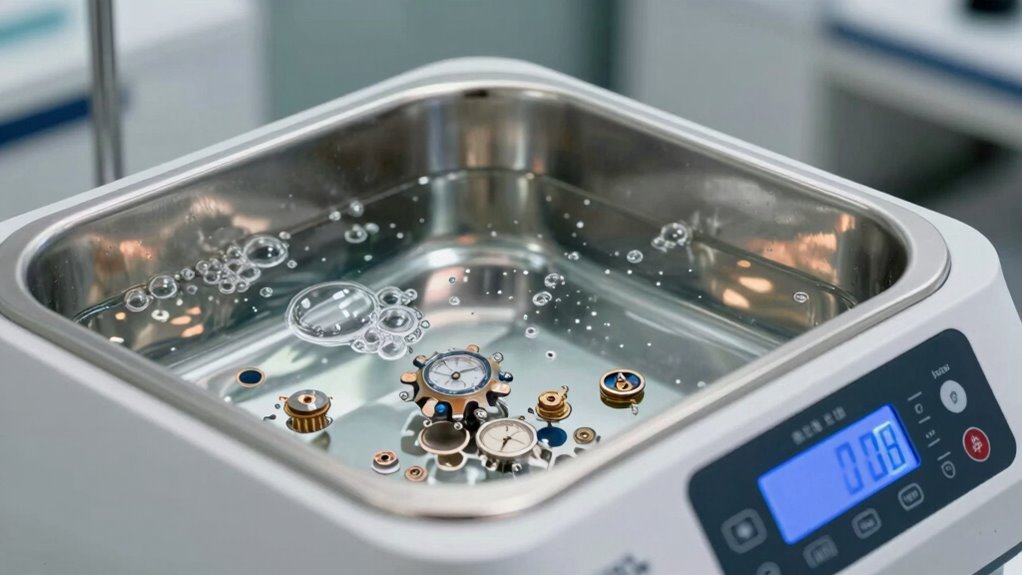
Ultrasonic cleaners use sound waves to create cavitation bubbles that dislodge dirt and grime from objects. The frequency determines whether the cleaning is gentle or more powerful—higher frequencies suit delicate items, while lower ones are better for tougher grime. Tank size affects how many or large items you can clean at once and influences cleaning efficiency. Understanding these aspects helps you choose the right setup; look further to learn more about optimizing your ultrasonic cleaning results.
Key Takeaways
- Higher frequencies (80-130 kHz) provide gentle, precise cleaning suitable for delicate items, while lower frequencies (20-40 kHz) deliver stronger cavitation for tough dirt.
- Lower frequencies generate larger, more powerful cavitation bubbles, enhancing cleaning for coarse contaminants; higher frequencies produce smaller bubbles for fine cleaning.
- Tank size influences cleaning efficiency, with larger tanks allowing longer cycles and processing bigger or multiple objects simultaneously.
- Properly matching tank size and frequency ensures thorough cleaning without damaging sensitive materials or reducing equipment lifespan.
- The combination of frequency and tank size affects cleaning speed, safety, and effectiveness based on the item’s material and contamination level.
How Ultrasonic Cleaners Use Sound Waves to Remove Dirt
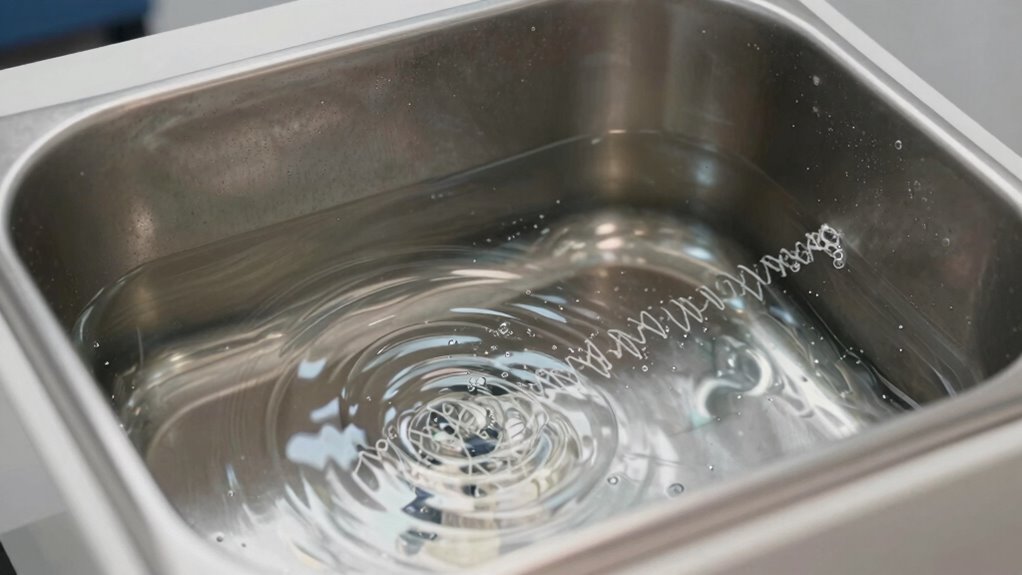
Ultrasonic cleaners work by generating high-frequency sound waves that create tiny bubbles in the cleaning solution. These ultrasonic waves produce rapid vibrations that cause cavitation, forming millions of microscopic bubbles. When these bubbles collapse, they release a burst of energy capable of dislodging dirt, grease, and grime from surfaces. This process markedly enhances cleaning efficacy, reaching into hard-to-access areas and removing stubborn particles without damaging delicate objects. The ultrasonic wave’s energy penetrates even tiny crevices, ensuring a thorough clean. As a result, ultrasonic cleaning is highly effective for jewelry, electronic components, and medical instruments. You’ll find that this method provides a deep, consistent clean, making it superior to traditional scrubbing or soaking in many cases.
What Is Ultrasonic Frequency and Why Does It Matter?

Have you ever wondered how the frequency of sound waves impacts the cleaning process? Ultrasonic wave frequency determines how effectively dirt and grime are dislodged. Higher frequencies produce more delicate, precise cleaning, while lower frequencies generate stronger cavitation bubbles that scrub tougher contaminants. Here’s why it matters:
- It influences cleaning efficiency for different materials
- Affects the size and intensity of cavitation bubbles
- Determines the balance between gentle and aggressive cleaning
- Helps match the ultrasonic cleaner to specific cleaning needs
- The ultrasonic wave frequency directly impacts the size and behavior of cavitation bubbles, which are essential for effective cleaning. Choosing the correct frequency can also help prevent damage to sensitive items during cleaning processes. Additionally, understanding ultrasonic cleaning principles can guide users in selecting optimal settings for various applications. Proper knowledge of ultrasonic frequency and its effects can improve overall cleaning outcomes and extend the lifespan of your equipment. Recognizing how frequency adjustments influence cleaning results allows users to optimize their device for specific tasks.
Understanding ultrasonic wave frequency helps you maximize your cleaner’s performance and achieve spotless, streak-free results every time.
How Different Frequencies Affect Cleaning Effectiveness
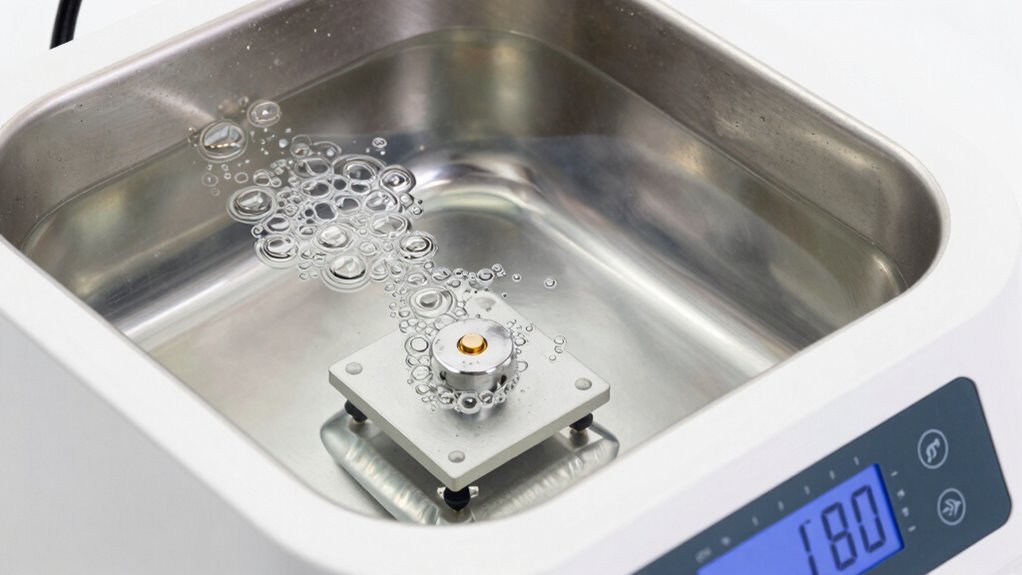
Different ultrasonic frequencies influence cavitation power, affecting how well your items get cleaned. Lower frequencies produce stronger cavitation for coarse cleaning, while higher frequencies are gentler and better for delicate materials. Understanding these differences helps you choose the right setting to avoid damage and optimize cleaning results. Additionally, selecting the appropriate ultrasonic frequency can extend the lifespan of your gear and ensure thorough maintenance. The frequency also impacts the effectiveness of cleaning, making it essential to match the setting to your specific cleaning needs. Properly adjusting the tank size can further increase the cleaning efficiency by ensuring adequate coverage and preventing overcrowding. Using the correct ultrasonic cleaning parameters tailored to your items can significantly improve overall performance and longevity.
Frequency and Cavitation Power
The frequency at which an ultrasonic cleaner operates directly influences the size and intensity of cavitation bubbles, which are responsible for dislodging dirt and grime. Lower frequencies (around 20-40 kHz) produce larger, more powerful cavitation bubbles, ideal for heavy cleaning tasks. Higher frequencies (around 80-130 kHz) generate smaller bubbles, offering greater cleaning precision and smoother results on delicate items. Additionally, higher frequencies tend to reduce noise, making operation more comfortable. Consider these points:
- Lower frequencies excel at removing stubborn dirt and grime quickly
- Higher frequencies improve cleaning precision for delicate objects
- Increased cavitation power at lower frequencies may cause more noise
- High-frequency operation minimizes noise and enhances cleaning finesse
- Cavitation dynamics at different frequencies impact overall cleaning effectiveness and surface safety.
Choosing the right frequency balances cleaning power with noise reduction and precision needs.
Fine vs. Coarse Cleaning
Lower frequencies produce larger cavitation bubbles with greater energy, making them highly effective for coarse cleaning tasks that require the removal of stubborn dirt, grease, or debris. Ultrasonic frequency plays a key role here; lower frequencies, typically around 25-40 kHz, generate stronger cavitation, ideal for heavy-duty cleaning. Conversely, higher frequencies—above 80 kHz—produce smaller bubbles that create gentler, more precise cleaning, suitable for delicate items. Your tank capacity also influences effectiveness; larger tanks accommodate more extensive or multiple items, but the frequency determines the intensity of cleaning. For deep, coarse cleaning, choose a lower ultrasonic frequency combined with an appropriate tank size to ensure thorough removal of tough contaminants without damaging sensitive materials.
Material Compatibility Limits
Choosing the right ultrasonic frequency is essential because it directly impacts how well the cleaner works with various materials. Different frequencies affect material compatibility, especially regarding chemical resistance and temperature limits. Higher frequencies are gentler, suitable for delicate items like plastics and electronics, but may struggle with stubborn grime. Lower frequencies produce more aggressive cavitation, ideal for tougher materials like metals, but risk damaging sensitive surfaces. Be aware of chemical resistance to prevent degradation during cleaning. Also, consider temperature limits to avoid warping or weakening materials. Material properties play a crucial role in determining the appropriate settings for different items. Additionally, understanding the frequency range helps optimize cleaning efficiency while protecting sensitive materials from potential damage. Paying attention to piercing material compatibility ensures the ultrasonic cleaner’s effectiveness without compromising the integrity of the jewelry or body accessories. Moreover, selecting the proper ultrasonic parameters can enhance the overall cleaning process while ensuring material safety. Recognizing how sound wave behavior interacts with different materials allows for more precise and effective cleaning outcomes.
How Tank Size Influences Cleaning Capacity and Versatility
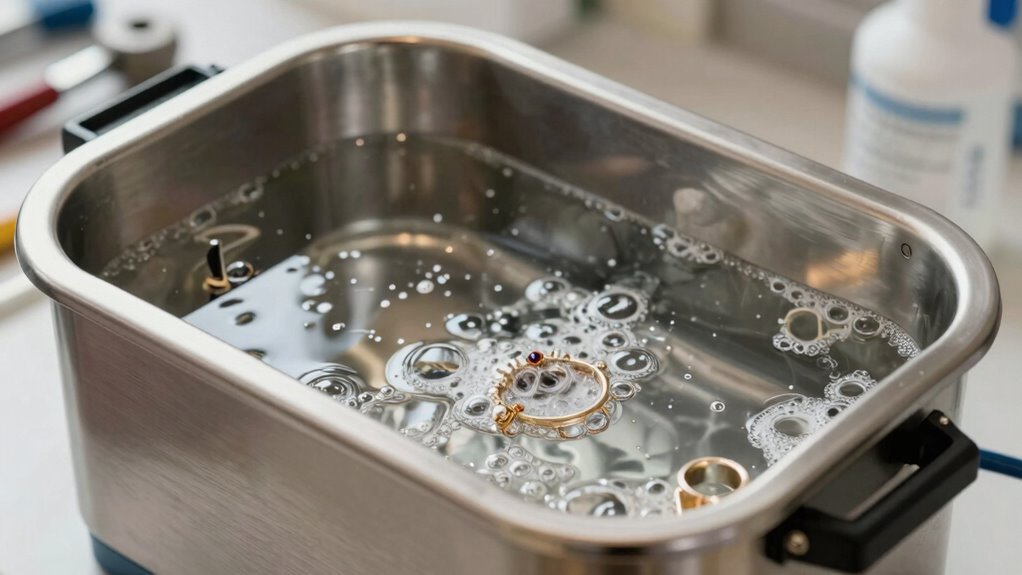
Tank size plays an essential role in determining an ultrasonic cleaner’s cleaning capacity and versatility. A larger tank allows you to clean bigger or multiple items simultaneously, increasing efficiency. However, bigger tanks may produce higher noise levels, so consider noise when selecting a size. Proper tank dimensions can also impact the overall durability and performance of the ultrasonic cleaner. Additionally, tank size influences chemical volume requirements, affecting the effectiveness of certain cleaning solutions. Larger tanks often support longer cleaning cycles, which can improve cleaning results for stubborn contaminants. Moreover, the size-to-capacity ratio is crucial for maintaining optimal ultrasonic energy distribution and ensuring consistent cleaning performance. The table below highlights key factors:
| Tank Size | Cleaning Capacity | Versatility |
|---|---|---|
| Small | Limited to small items | Ideal for delicate items |
| Medium | Moderate capacity | Suitable for multiple objects |
| Large | High capacity | Best for larger or many items |
Choosing the right tank size balances capacity, noise levels, and chemical compatibility, optimizing your cleaning process.
How to Pick the Best Ultrasonic Frequency for Your Items
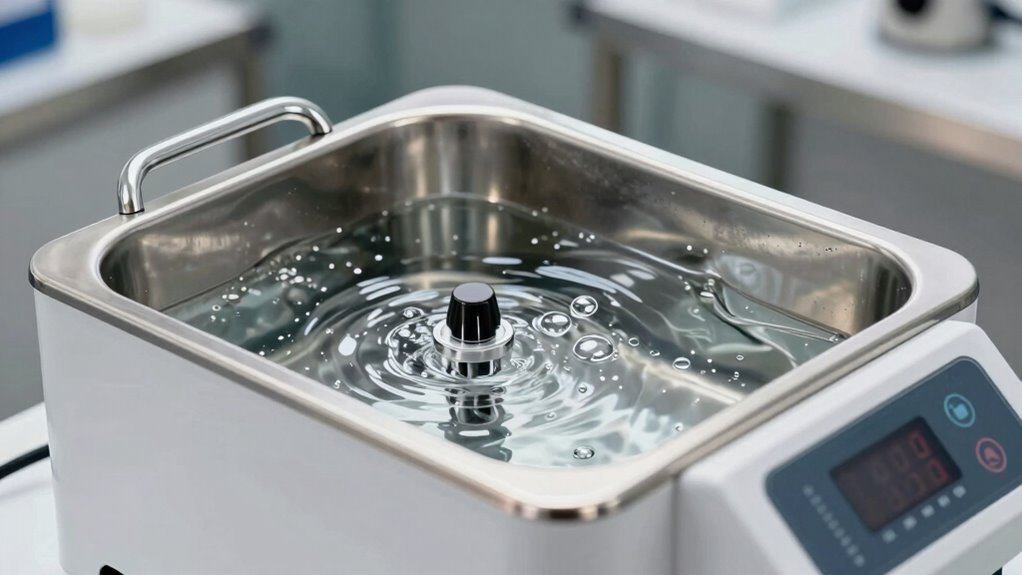
Choosing the right ultrasonic frequency depends on the material you’re cleaning and the effect you want to achieve. Different frequencies work best for delicate items versus tougher materials, so understanding this balance is key. Consider both material compatibility and the frequency range to get the best cleaning results. Additionally, selecting the appropriate electrical power can influence cleaning efficiency and duration. To optimize performance, it’s also important to understand how ultrasonic wave propagation varies with frequency, affecting how thoroughly items are cleaned. Furthermore, wave propagation characteristics are influenced by the frequency, which impacts how effectively energy is transferred through the cleaning solution. Recognizing how ultrasonic frequency interacts with different materials can help you tailor your cleaning process for optimal results.
Material Compatibility Considerations
Selecting the right ultrasonic frequency is essential because different materials respond differently to various sound waves. You need to contemplate material limitations and chemical interactions to prevent damage. Higher frequencies may be too gentle for sturdy metals but ideal for delicate objects like jewelry or electronics. Conversely, lower frequencies can clean heavy grime but risk damaging fragile items. Be mindful of:
- Material limitations, such as glass or plastic that may crack under certain frequencies
- Chemical interactions, where cleaning solutions could react negatively with sensitive materials
- Porous or soft materials that might absorb sound waves and degrade
- Coatings or finishes that could peel or wear off with improper frequencies
Understanding these factors helps you select a frequency that effectively cleans without compromising your items’ integrity. Always check material compatibility before choosing your ultrasonic settings.
Frequency Range & Effect
Finding the right ultrasonic frequency is essential because different items respond best to specific sound wave ranges. Frequency tuning allows you to target the unique properties of each object, maximizing cleaning efficiency. Lower frequencies, around 20-40 kHz, produce larger cavitation bubbles with greater force, ideal for heavy-duty cleaning of stubborn dirt or metal parts. Higher frequencies, above 80 kHz, generate smaller bubbles that provide a gentler clean, suitable for delicate items like jewelry or electronics. Acoustic resonance plays a key role in this process, as matching the frequency to the item’s characteristics enhances cleaning action. By understanding the effects of various frequencies, you can select the ideal setting to ensure thorough, safe cleaning tailored to your specific needs.
How to Choose the Right Tank Size for Your Items and Volume
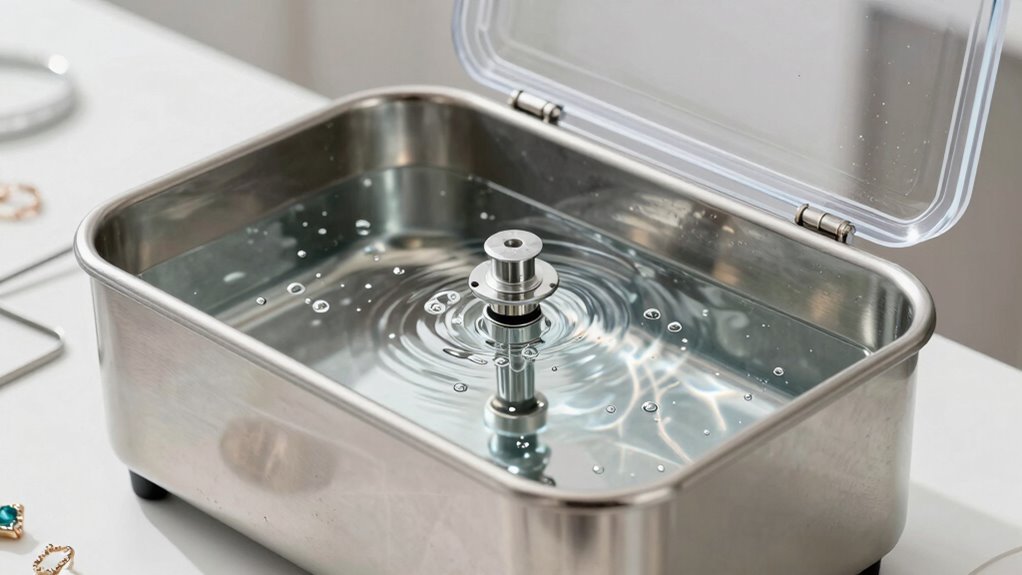
When determining the right tank size for your ultrasonic cleaner, it’s essential to contemplate the size and volume of the items you’ll be cleaning. A larger tank allows for more items or bigger objects, ensuring ultrasonic waves reach every surface effectively. To select the best size, consider:
- The maximum size of your items
- The volume of items you’ll clean regularly
- Space available in your cleaning area
- The amount of cleaning chemicals needed
Choosing the right tank size ensures ideal ultrasonic wave distribution and effective cleaning. A tank that’s too small may cause overcrowding and ineffective cleaning, while a tank that’s too large wastes chemicals and energy. Proper sizing supports efficient cleaning and prolongs equipment life, making it a critical factor in your ultrasonic cleaning setup.
How Frequency and Tank Size Impact Cleaning Speed and Safety
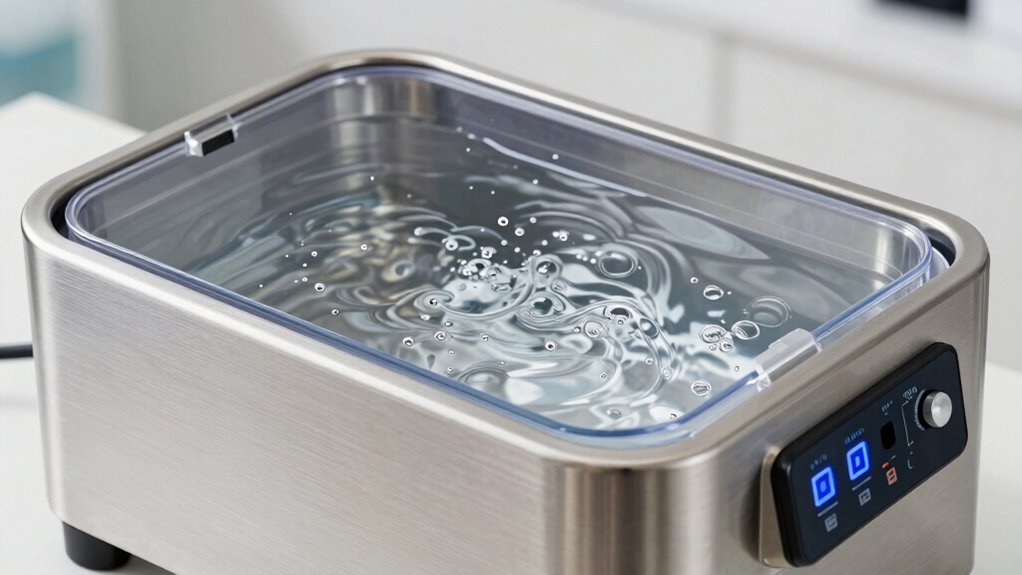
The frequency setting of an ultrasonic cleaner directly influences how quickly and thoroughly your items are cleaned, while tank size determines the space available for effective ultrasonic wave distribution. Higher frequencies, around 80-120 kHz, produce smaller cavitation bubbles that clean delicate items faster but may require precise frequency calibration for ideal results. Lower frequencies, like 40 kHz, create larger bubbles, which are better for heavy-duty cleaning but can pose safety risks if not used carefully. Tank size impacts cleaning speed because larger tanks hold more items, but if too big for your cleaning solution, it can reduce efficiency. Proper frequency calibration ensures consistent cleaning performance and safety, preventing damage to items or cleaning solutions. Balancing frequency and tank size optimizes both cleaning speed and safety.
Common Mistakes to Avoid When Choosing an Ultrasonic Cleaner

When selecting an ultrasonic cleaner, you might overlook important factors like size compatibility, which can lead to inefficient cleaning or damage. Ignoring how frequency affects cleaning performance can also cause poor results or equipment issues. Additionally, neglecting regular maintenance can shorten your cleaner’s lifespan and reduce its effectiveness over time.
Overlooking Size Compatibility
Choosing an ultrasonic cleaner without considering size compatibility can lead to frustrating results. A size mismatch causes capacity constraints, making it impossible to clean larger items or multiple objects simultaneously. If you don’t check the tank size, you risk damaging parts or failing to clean thoroughly. Be aware that too small a tank limits what you can process, while an oversized cleaner wastes energy and space. To avoid these pitfalls, consider:
- Ensuring the tank fits your largest items comfortably
- Matching the tank size to your typical workload
- Avoiding cleaners with insufficient capacity constraints
- Verifying the dimensions before purchasing
Ignoring Frequency Effects
Ignoring frequency effects can substantially compromise the cleaning performance of your ultrasonic cleaner. When you overlook the importance of frequency, you risk ineffective cleaning or damage to delicate items. Many fall into the trap of frequency ignorance, assuming all settings are equal. Additionally, tank size oversight can worsen results, as mismatched frequencies may not penetrate deeply or evenly. Here’s a quick comparison:
| Frequency Range | Ideal Use | Common Mistakes |
|---|---|---|
| 20-40 kHz | Heavy-duty cleaning | Ignoring this range |
| 40-80 kHz | Precision cleaning | Overlooking frequency effects |
| Above 80 kHz | Delicate items | Tank size oversight |
Understanding these factors ensures you select the right frequency for your needs, avoiding common mistakes that hinder performance.
Neglecting Maintenance Needs
Neglecting maintenance needs can substantially reduce your ultrasonic cleaner’s efficiency and lifespan. Failing to clean the tank, change the solution regularly, or follow the manufacturer’s guidelines can cause buildup and damage. This oversight impacts cost considerations, as repairs or early replacements become inevitable. Additionally, neglecting upkeep can harm your brand reputation if your equipment underperforms or breaks down during critical tasks. To avoid these issues, make certain you:
- Regularly clean the tank and transducers
- Change cleaning solutions as recommended
- Inspect for signs of wear or damage
- Follow the manufacturer’s maintenance schedule
Tips to Maintain and Optimize Your Ultrasonic Cleaner
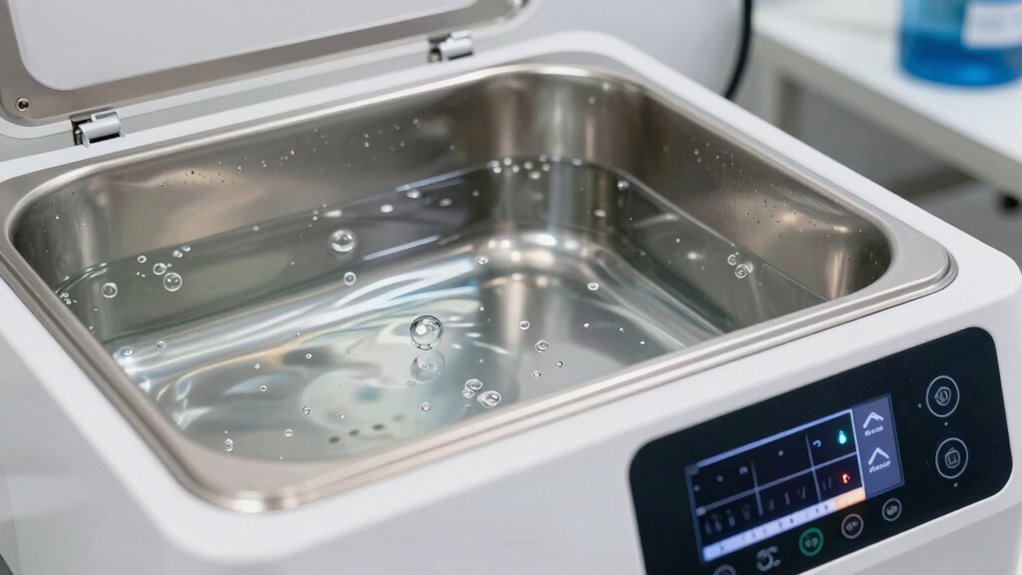
To keep your ultrasonic cleaner functioning at its best, regular maintenance and proper usage are essential. Start by regularly checking the cleaning chemistry; using the right solutions enhances ultrasonic cavitation, ensuring effective cleaning without damaging items. Change the cleaning solution frequently to prevent residue buildup that can reduce cavitation efficiency. Always follow manufacturer instructions for cleaning and drying your device, and inspect the tank for signs of wear or corrosion. Keep the transducers clean and free from debris, as buildup can diminish cavitation intensity. Avoid overloading the tank, which hampers ultrasonic waves’ ability to reach all surfaces. With consistent care, your ultrasonic cleaner will operate ideal , providing thorough cleaning and extending its lifespan. Proper maintenance guarantees peak performance and reliable results.
Key Features to Consider When Buying an Ultrasonic Cleaner
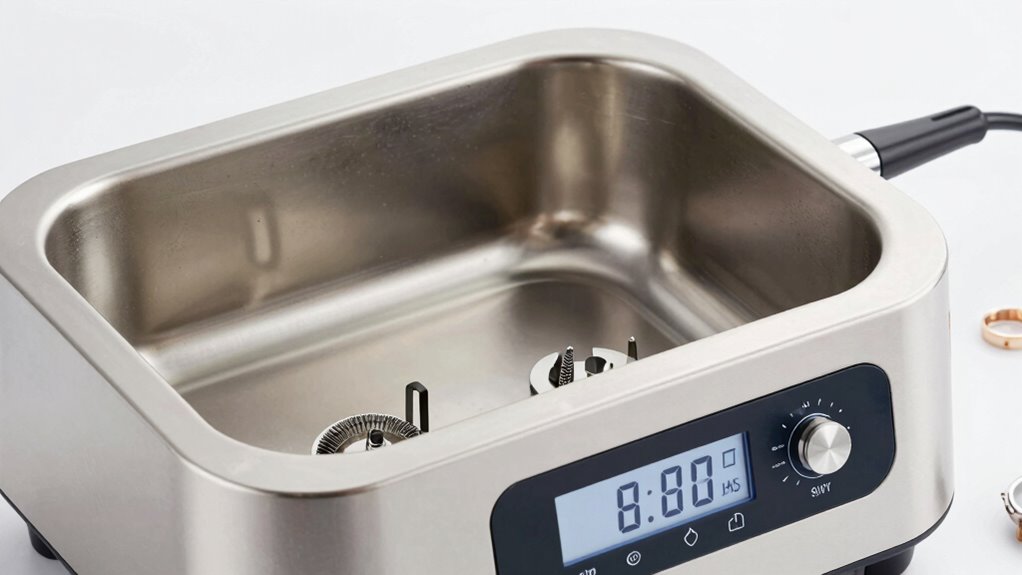
When choosing an ultrasonic cleaner, understanding its key features can help you select the right model for your needs. Focus on aspects like the user interface, which should be intuitive and easy to operate, especially if you’re new to ultrasonic cleaning. Consider the compatibility and efficiency of cleaning chemicals—some models work better with specific solutions. Tank size is vital; make sure it fits your items comfortably without overcrowding. Also, check for adjustable settings that control cleaning time and frequency for tailored results. In the end, look for features like digital displays and safety features that enhance usability and reliability. These key features will guarantee you get an ultrasonic cleaner that’s effective, user-friendly, and suited to your cleaning tasks.
Frequently Asked Questions
How Does Ultrasonic Frequency Affect Delicate Versus Heavy-Duty Cleaning Tasks?
You’ll notice that lower ultrasonic frequencies, around 25-40 kHz, deliver more power, making them ideal for heavy-duty cleaning tasks like removing tough grime or grease. Higher frequencies, such as 80-120 kHz, provide gentler, more precise cleaning, perfect for delicate items. Proper frequency tuning, combined with thoughtful tank design, guarantees peak performance for each task, preventing damage and maximizing cleaning efficiency.
Can Tank Size Influence the Energy Efficiency of an Ultrasonic Cleaner?
Yes, tank size can influence the energy efficiency of your ultrasonic cleaner. A properly sized tank made from good tank material guarantees ideal energy transfer, reducing waste. Using the right cleaning solution also helps maximize efficiency, as it enhances ultrasonic waves. When you choose a tank that fits your items well, you use less energy, saving costs and improving cleaning performance.
Is There an Optimal Frequency for Cleaning Specific Materials Like Jewelry or Electronics?
Think of ultrasonic cleaning like tuning a guitar; the right frequency makes your strings sing. For jewelry, a mid-range frequency around 40 kHz offers ideal material compatibility, gently cleaning without damage. Electronics benefit from slightly higher frequencies, around 80 kHz, to make certain delicate components aren’t harmed. Frequency optimization is key to effectively cleaning different materials, so always adjust settings based on what you’re cleaning to achieve the best results.
How Does Changing Tank Size Impact the Cleaning Cycle Duration?
Changing the tank size affects your cleaning cycle duration by altering the tank capacity, which influences how long it takes for ultrasonic waves to evenly reach all items. A larger tank may extend the cleaning speed because it takes more time to circulate the cleaning solution thoroughly, while a smaller tank generally results in quicker cycles. Adjusting the tank size helps optimize cleaning efficiency based on your specific needs.
Are Larger Tanks Always Better for High-Volume Cleaning Needs?
Like a well-oiled machine, bigger isn’t always better for high-volume cleaning. Larger tanks can hold more items, but they demand sturdier tank material and a proper cleaning solution to guarantee efficiency. If the tank material isn’t durable or the cleaning solution isn’t suitable, your equipment’s performance suffers. Choose a size that matches your needs, balancing capacity with quality, rather than just going for the biggest option.
Conclusion
Selecting the right ultrasonic frequency and tank size transforms tedious cleaning into a swift, satisfying success. By balancing boldness with precision, you’ll banish dirt and debris effortlessly. Remember, choosing wisely prevents problems and prolongs performance. With the perfect pairing, you’ll enjoy efficient, effective, and enjoyable cleaning experiences every time. Embrace the essentials, energize your efforts, and elevate your cleaning game to new heights. Clean confidently, knowing you’ve made the clever choice!