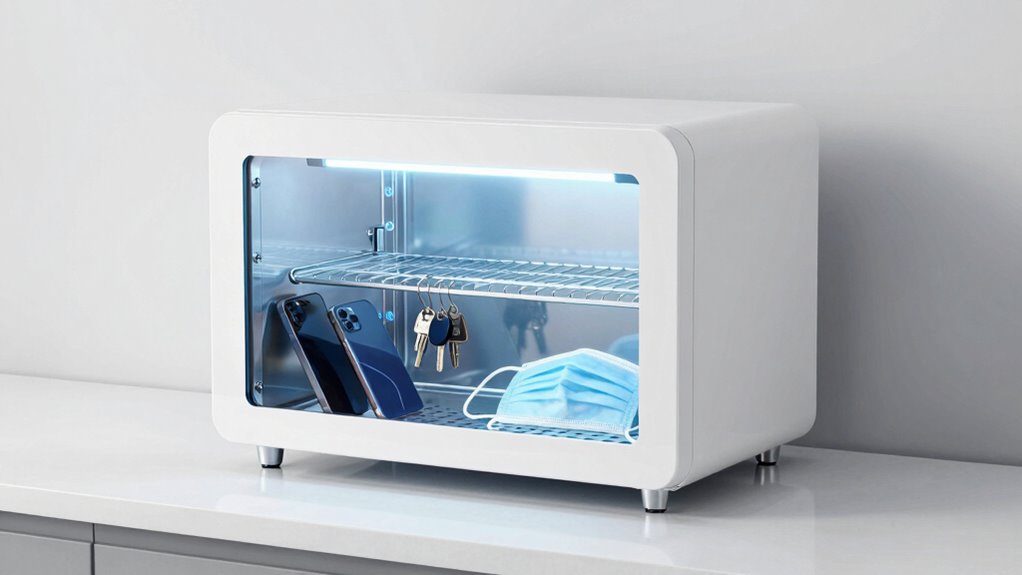
UV sanitizer cabinets use ultraviolet light at around 254 nm to kill germs by damaging their DNA or RNA, making bacteria and viruses unable to reproduce. They work best on smooth, non-porous surfaces like plastics, glass, and some metals, but can’t fully penetrate shadows, cracks, or textured areas. Keep in mind, proper exposure time and item placement are key. To learn more about what they can and can’t do, explore the details ahead.
Key Takeaways
- UV sanitizer cabinets effectively sterilize surfaces of items like plastic, glass, and metal, provided UV light reaches all areas without shadows.
- They cannot disinfect porous, textured, or shadowed surfaces, as UV light penetration is limited and dirt may shield microbes.
- Proper exposure time and item placement are essential for effective sanitization; insufficient duration reduces germ-killing efficacy.
- UV cabinets do not sanitize heavily soiled or chemically contaminated items; manual cleaning is necessary beforehand.
- They are safe for many materials but can damage certain plastics or fabrics over prolonged UV exposure.
How Do UV Sanitizer Cabinets Kill Germs and Bacteria?
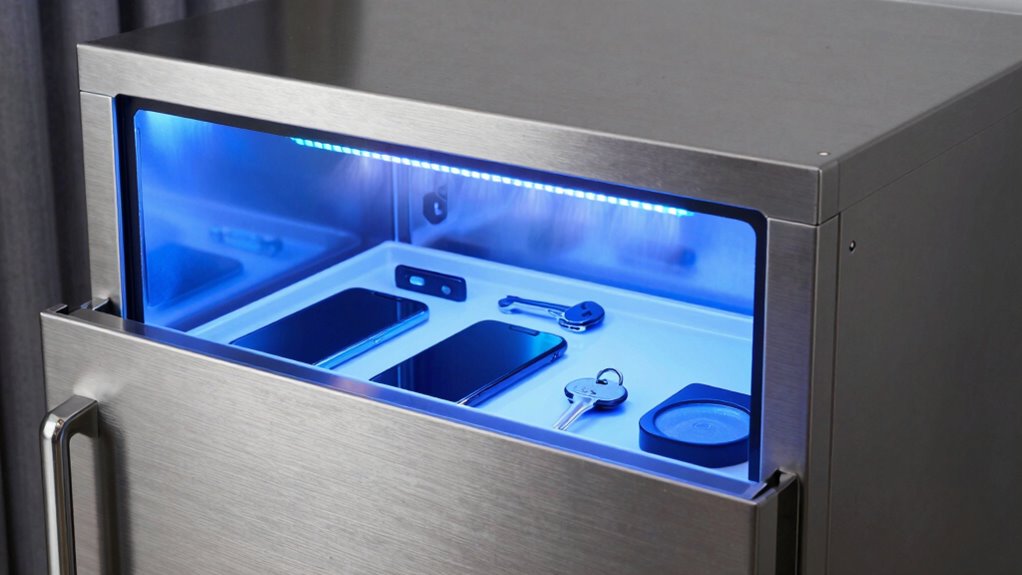
Have you ever wondered how UV sanitizer cabinets effectively eliminate germs and bacteria? It all comes down to UV penetration and germicidal wavelength. When you place items inside, the UV light emits at a specific germicidal wavelength, usually around 254 nanometers. This wavelength penetrates the cell walls of microorganisms, disrupting their DNA or RNA. As a result, their ability to reproduce and infect is halted. The UV light’s penetration depth ensures that even hidden bacteria are targeted, making the process effective. Unlike chemical disinfectants, UV light kills germs without leaving residue. The penetration depth of UV light plays a crucial role in reaching microorganisms that may be embedded in surfaces or crevices. Proper exposure time and UV dosage are essential factors that influence the effectiveness of sterilization. Additionally, ensuring proper airflow and item placement inside the cabinet maximizes the UV exposure to all surfaces. Understanding the technology behind UV sterilization can help optimize the sanitization process. Recent advances in UV germicidal technology have improved the efficiency and safety of these cabinets. So, by exposing surfaces to the right germicidal wavelength, UV sanitizer cabinets destroy bacteria and viruses quickly and efficiently, keeping your items sanitized and safe.
Which Items Are Safe and Effective to Sanitize in UV Cabinets?
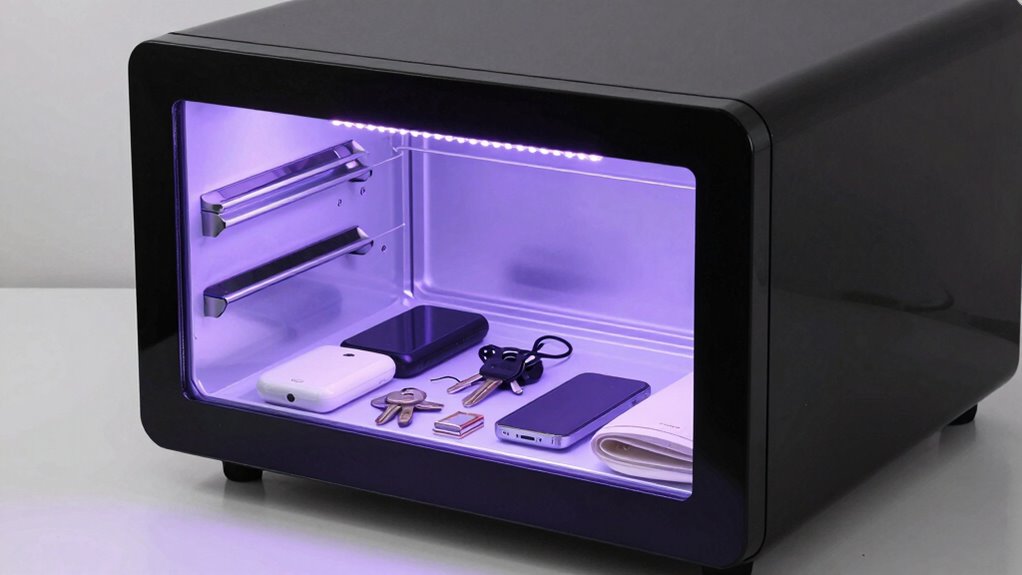
UV sanitizer cabinets are effective at disinfecting a variety of items, but not everything is suitable for this method. You should only sanitize items that can handle UV exposure without damage and won’t pose safety risks. Electronics safety is vital; avoid placing delicate gadgets that could be harmed by UV light or heat. Additionally, consider chemical compatibility—items with sensitive surfaces or residues may degrade or become unsafe. Use the following table to assess items for UV sanitization:
| Item Type | Safe to Sanitize | Notes |
|---|---|---|
| Plastic items | Yes | Ensure chemical compatibility |
| Glassware | Yes | No electronics or heat-sensitive parts |
| Electronic devices | Limited | Confirm electronics safety |
| Metal objects | Yes | Avoid coatings or chemical residues |
Always verify item suitability before sanitizing. Understanding UV safety precautions helps ensure that only appropriate items are sanitized and that safety is maintained throughout the process. Properly understanding UV light safety is essential for preventing accidents and ensuring effective disinfection. Being aware of UV light penetration can help determine how thoroughly different materials will be sanitized. It’s also important to remember that UV exposure limits are necessary to prevent damage to sensitive items and ensure user safety. Additionally, being aware of material compatibility ensures that items won’t be compromised during the sanitization process.
What Affects the Effectiveness of UV Sanitizer Cabinets?
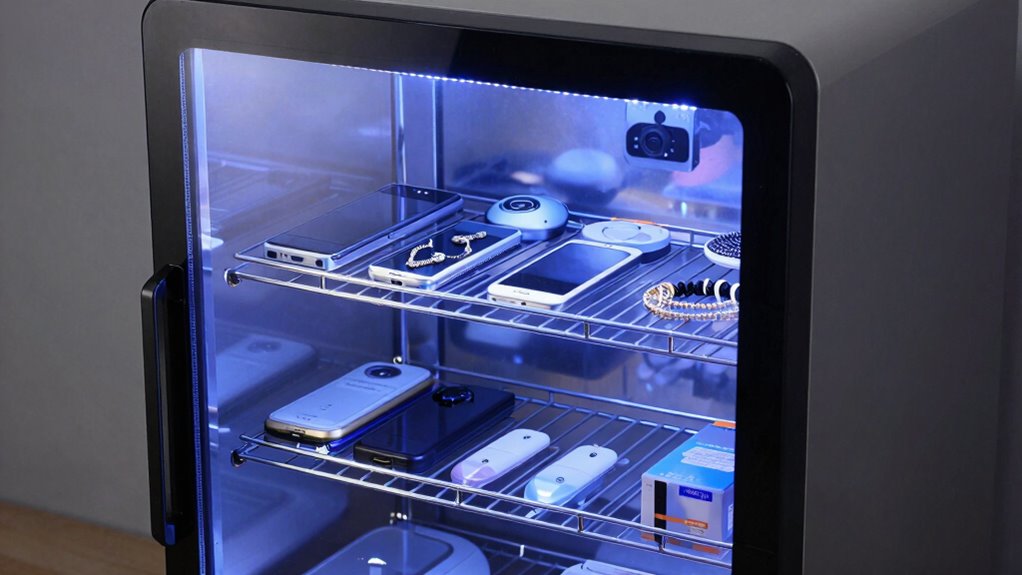
To get the best results from your UV sanitizer cabinet, you need to ensure a few key factors. Proper device placement ensures UV light reaches all surfaces, while light intensity and exposure time directly impact how effectively germs are eliminated. Paying attention to these points helps maximize the cabinet’s sanitizing power. Additionally, understanding the early warning signs of breast cancer can aid in timely detection and treatment. Regularly inspecting the device for any UV light malfunctions ensures consistent performance and safety. Ensuring your device has the necessary UV light intensity is essential for effective sanitization. Moreover, technological advancements in UV sanitation are continually improving device effectiveness and safety features. Recognizing UV light safety precautions is important to prevent accidental exposure and ensure safe use of the device.
Proper Device Placement
Proper device placement is essential for maximizing the effectiveness of UV sanitizer cabinets. You should carefully consider device positioning to guarantee UV light reaches all surfaces. Place items with multiple angles or complex shapes so that UV rays can access every area. Use a well-organized rack arrangement to prevent overlapping, which can cast shadows and reduce sanitization. Avoid stacking objects too tightly, as this can block UV exposure. Instead, space items evenly, allowing the light to reach all surfaces. Keep in mind that some items may require repositioning during the cycle to ensure thorough coverage. By paying attention to device positioning and rack arrangement, you improve the chances of achieving ideal sanitization results every time. Additionally, understanding DIY safety tips can help prevent accidents during maintenance or setup.
UV Light Intensity
The effectiveness of UV sanitizer cabinets largely depends on the intensity of the UV light they emit. Higher UV light intensity ensures better UV light penetration, allowing the germ-killing rays to reach surfaces more effectively. The UV light wavelength plays a critical role; shorter wavelengths (around 254 nm) are most effective for germicidal purposes. To maximize sanitation, guarantee your cabinet emits a consistent, strong UV light. Keep in mind that the light’s intensity can diminish over time, so regular maintenance and bulb replacement are essential. Proper device design also influences UV light distribution, enhancing overall effectiveness. Additionally, the environmental impact of tissue paper highlights the importance of choosing eco-friendly materials for related craft projects. Proper device design also influences UV light distribution, enhancing overall effectiveness.
Exposure Duration
While strong UV light intensity is essential for effective sterilization, the amount of time surfaces are exposed to UV light also considerably impacts the sanitization process. Longer exposure durations improve germ eradication by giving UV rays more time to damage microbial DNA and RNA. If you rush the process with a short exposure, some germs may survive, reducing overall effectiveness. The ideal exposure duration varies depending on the UV light’s strength and the surface’s material, but generally, a few minutes are sufficient for thorough sanitization. Consistent, adequate exposure time guarantees maximum germ eradication, making your UV sanitizer cabinet more reliable. Additionally, adequate exposure time is crucial for ensuring that the UV light penetrates all surface crevices, especially on complex objects with hard-to-reach areas. This helps to prevent microbial survival in hidden spots that could otherwise compromise safety. Proper exposure duration is also important for preventing potential damage to certain sensitive materials that could occur with prolonged UV exposure, ensuring safety for your items. Moreover, proper timing allows for optimal energy use, preventing unnecessary waste of power during the sanitization process. Failing to allow enough time could leave harmful microbes behind, compromising the safety of your sanitized items. To maximize efficiency, it’s important to calibrate your device according to the UV light’s strength and the specific surfaces being treated.
Items UV Cabinets Can’t Disinfect Effectively
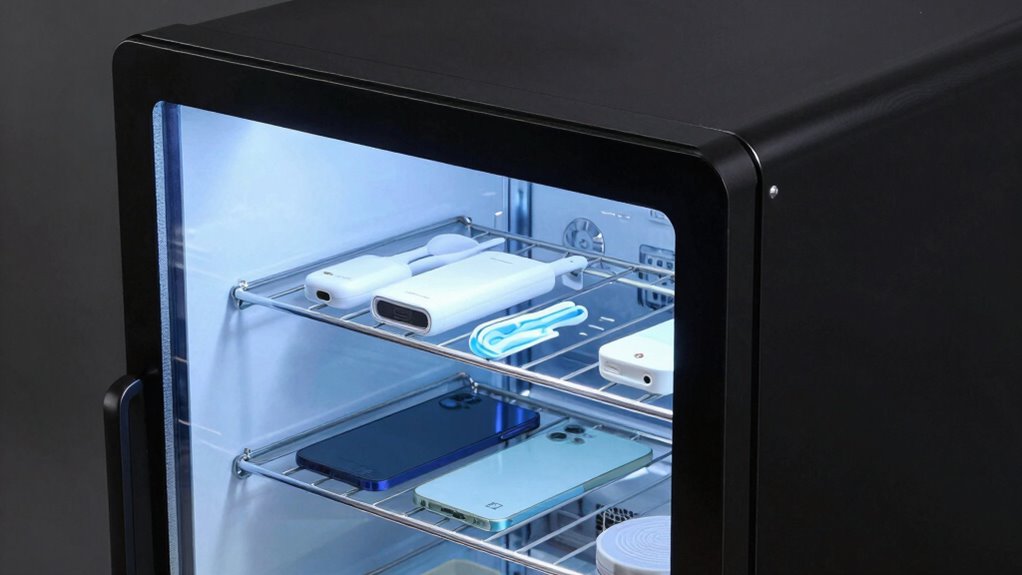
UV cabinets are highly effective for disinfecting many items, but they can’t reliably sanitize everything. Certain materials and residues hinder their effectiveness. For example, items with chemical residues can shield germs from UV light, making disinfection incomplete. Porous materials, like fabric or sponge, can trap bacteria and viruses deep within, preventing UV exposure from reaching all surfaces. Additionally, objects with shadowed areas or complex shapes may leave spots untreated. Items that are opaque or thick also limit UV penetration. Finally, UV cabinets can’t disinfect items that are heavily soiled or dirty, as dirt blocks UV light from reaching microbes. To ensure proper sanitation, always clean items thoroughly before UV treatment, especially if they contain chemical residues or are porous. Additionally, understanding effective cleaning methods is essential to maximize the effectiveness of UV sanitization.
Common Myths and Limitations of UV Sanitizers
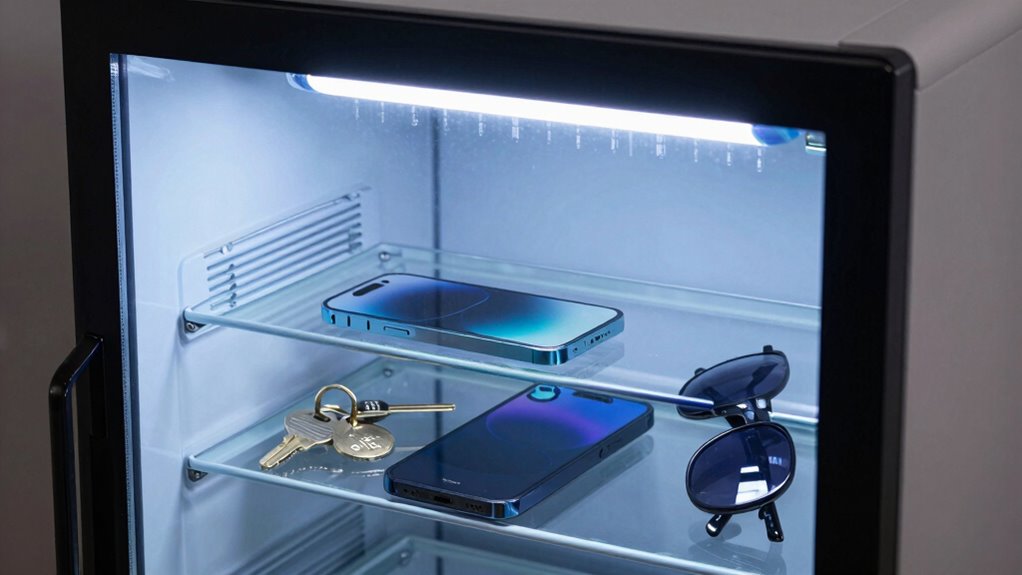
Many people believe UV sanitizers can disinfect everything, but UV light has limitations and can’t reach every surface or shadowed area. You also need to be aware that some materials, like certain plastics or fabrics, may not tolerate UV exposure and could be damaged. Understanding these myths and restrictions helps you use UV sanitizers effectively and safely.
UV Light Limitations
Despite their popularity, UV sanitizers have limitations that many users overlook or misunderstand. One key issue is UV light limitations, particularly its limited penetration depth. UV rays can’t reach into cracks, shadows, or underneath surfaces, leaving some contaminants behind. This means you can’t rely solely on UV sanitization for thorough disinfection. Additionally, UV light effectiveness depends on exposure time and distance; if you’re too far away or don’t leave items exposed long enough, germs may survive. Here are some important points to consider:
- UV light doesn’t penetrate opaque or thick materials
- Shadows reduce UV effectiveness
- Surface dirt can shield microbes from UV rays
- Penetration depth varies by wavelength
- UV light only disinfects exposed surfaces
Understanding these limitations helps you use UV sanitizers more effectively.
Material Compatibility Issues
While UV sanitizers are effective at disinfecting surfaces, a common misconception is that they work equally well on all materials. In reality, material durability varies, and some surfaces may degrade or discolor when exposed to UV light. Certain plastics and polymers can undergo chemical reactions that weaken their structure over time, compromising their integrity. Metal surfaces are generally more resistant, but even they can be affected if the UV exposure is prolonged or intense. It’s important to understand that UV light doesn’t penetrate materials deeply, so porous or textured surfaces may harbor bacteria despite surface disinfection. Always verify material compatibility before using UV sanitizers, as improper exposure can lead to damage and reduce the effectiveness of your sanitization efforts.
Best Practices for Using Your UV Sanitizer Safely
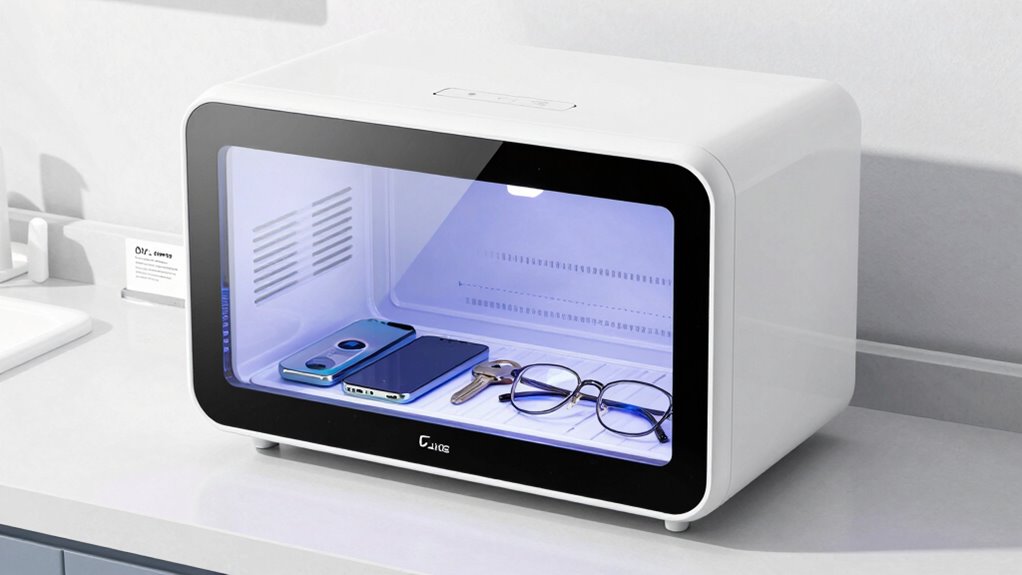
To guarantee safe and effective use of your UV sanitizer cabinet, always follow the manufacturer’s instructions carefully. Proper UV safety practices help prevent accidental exposure and ensure your device works as intended. Regular device maintenance keeps the UV bulbs functioning at their best, preventing diminished germ-killing power. Never look directly at the UV light when the cabinet is open, and keep the door securely closed during operation. Use the sanitizer only for appropriate items, and avoid overcrowding. Store the device in a cool, dry place away from children. Periodically check for bulb wear or damage, replacing bulbs as recommended. By adhering to these best practices, you’ll maximize safety and device longevity while effectively sanitizing your items.
When to Use Other Disinfection Methods
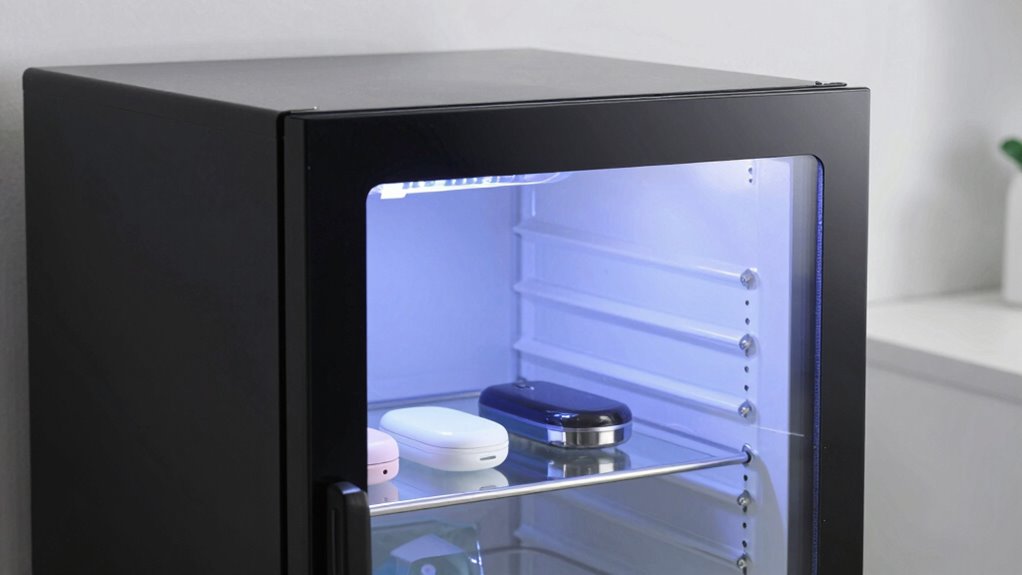
There are situations when relying solely on a UV sanitizer cabinet isn’t sufficient to thoroughly disinfect your items. UV light may not reach every surface or crevice, so manual cleaning is vital beforehand. For items heavily soiled or with stubborn residues, using chemical disinfectants guarantees a deeper clean that UV alone can’t provide. In cases involving high-risk pathogens, such as during an outbreak or in healthcare settings, combining manual cleaning with chemical disinfectants offers a more exhaustive approach. UV sanitizers are effective for surface sterilization but aren’t a substitute for proper cleaning and chemical disinfection when dealing with complex or contaminated items. Recognizing when to supplement UV treatment with these methods helps you achieve the highest standard of safety.
Frequently Asked Questions
How Long Does It Take for UV Cabinets to Disinfect Items?
You can expect UV cabinets to disinfect items in about 5 to 10 minutes, depending on the UV light durability and the type of items. The sterilization speed varies with the intensity and quality of the UV light, so higher-quality lights typically work faster. Keep in mind that thorough exposure is essential, so follow the manufacturer’s instructions for maximum results and guarantee your items are properly positioned inside the cabinet.
Are UV Sanitizer Cabinets Energy-Efficient?
Yes, UV sanitizer cabinets are generally energy-efficient. They use low energy consumption, which helps reduce your environmental impact. Most models are designed to operate quickly and use minimal power, making them cost-effective for frequent use. By choosing energy-efficient cabinets, you help lower your electricity bills and support sustainability efforts. So, you can sanitize your items effectively without worrying about high energy use or negative environmental effects.
Can UV Cabinets Damage Certain Materials Over Time?
Yes, UV cabinets can damage certain materials over time. You need to take into account material compatibility because some surfaces, like plastics or rubber, may experience surface degradation after repeated UV exposure. Prolonged or intense UV treatments can weaken or discolor these materials, so it’s essential to verify whether your items are suitable for UV sanitization. Regularly check for signs of damage to ensure your items stay in good condition.
Do UV Cabinets Require Regular Bulb Replacements?
Yes, UV cabinets require regular bulb replacements. The bulb lifespan typically ranges from 9 to 12 months, depending on usage. To maintain effective sanitization, you should monitor the replacement frequency and swap out bulbs when they near the end of their lifespan. Regularly changing bulbs guarantees the UV light remains strong enough to disinfect properly, preventing reduced effectiveness over time.
Are UV Sanitizers Effective Against Viruses Like COVID-19?
UV germicidal sanitizers can be effective against viruses like COVID-19 when used properly, as they inactivate the virus by damaging its DNA or RNA. You should guarantee the UV light provides sufficient exposure and coverage for virus inactivation. Keep in mind, though, that effectiveness depends on correct usage, bulb quality, and maintenance. Regularly replacing bulbs and following manufacturer guidelines help maintain ideal UV germicidal performance against viruses.
Conclusion
Remember, your UV sanitizer cabinet is like a shining guardian, diligently zapping germs away. But just like any hero, it has its limits—some villains slip through its grasp. To keep your space truly safe, use it wisely alongside other cleaning methods. Think of it as part of your toolkit, a bright spark in your hygiene arsenal. When used correctly, it’s your ally in creating a germ-free environment—bright, clean, and protected.