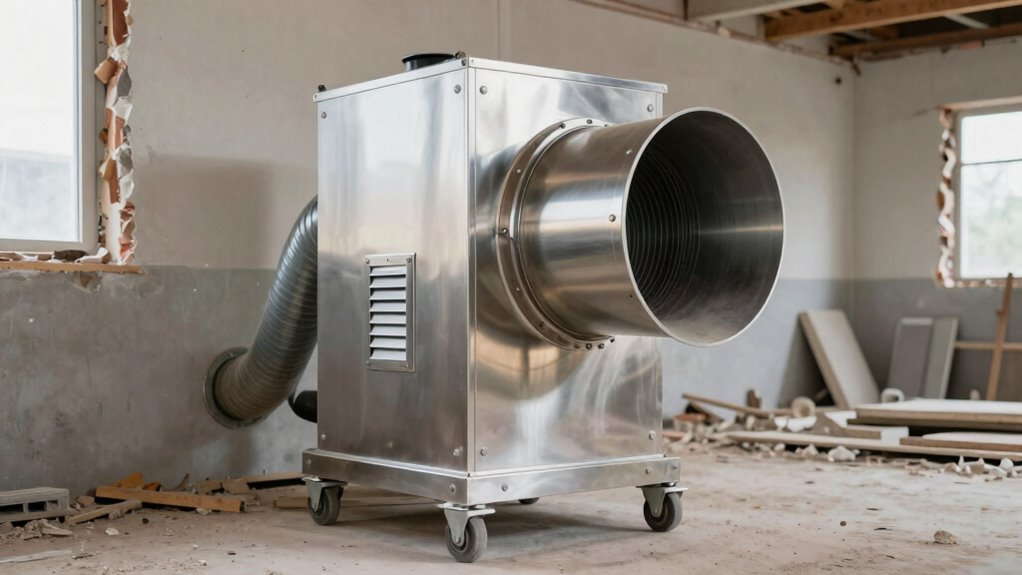
Contractors love negative air machines because they control airborne contaminants, improve indoor air quality, and create safer job sites. By pulling dust, mold spores, and other particles out of the air, these machines help contain debris and prevent it from spreading. They also speed up cleanup and prevent health risks for workers. To get the most out of your equipment and guarantee safety, knowing more details can make a big difference.
Key Takeaways
- They create negative pressure environments, effectively containing dust, mold spores, and contaminants during restoration or construction projects.
- HEPA filtration ensures high-efficiency removal of airborne particles, improving indoor air quality for workers and occupants.
- Their portability and ease of setup allow contractors to quickly deploy and scale solutions for various project sizes.
- Using negative air machines enhances safety by reducing airborne hazards and helping meet regulatory standards.
- They speed up cleanup and drying processes, saving time and costs on remediation efforts.
What Are Negative Air Machines and How Do They Work?
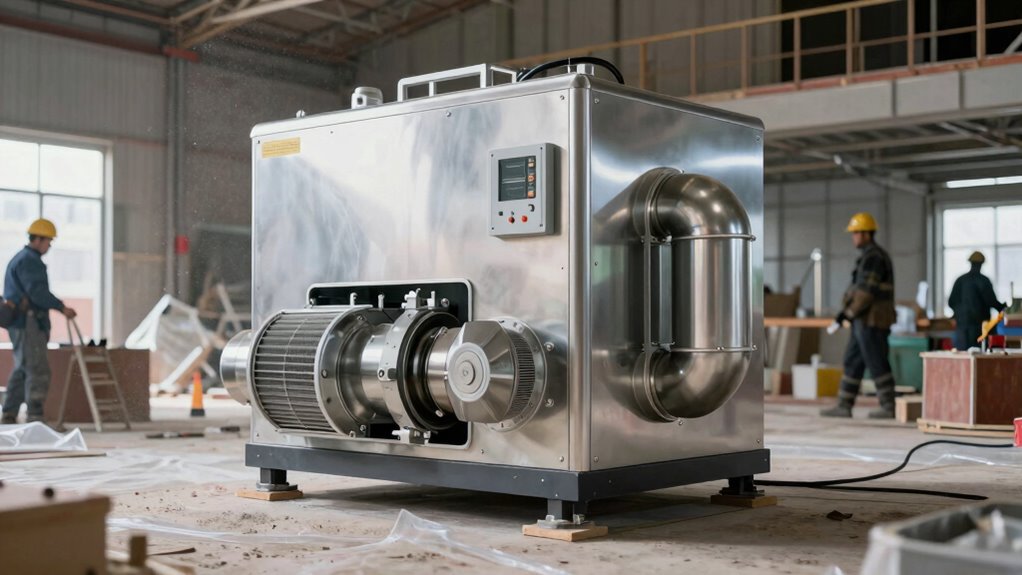
Have you ever wondered how negative air machines clear out dangerous particles from contaminated spaces? These machines work by creating a controlled environment with lower air pressure inside the room. They achieve this through a powerful fan that pulls air out, preventing contaminated air from escaping. The key component is the filtration system, which traps harmful particles like dust, mold spores, and pathogens. HEPA filters are common because they capture 99.97% of particles as small as 0.3 microns. As air is drawn into the machine, it’s filtered thoroughly before being expelled outside or into a safe space. This process ensures that harmful contaminants are contained and removed efficiently, making negative air machines essential tools for maintaining a safe, clean environment during construction, remediation, or restoration projects. Additionally, understanding the air filtration process highlights the importance of high-quality filters like HEPA in ensuring safety and effectiveness. Proper air quality management is vital for protecting workers and occupants during such operations. Maintaining regular maintenance and filter replacements enhances the machine efficiency and prolongs the lifespan of these systems. Regular monitoring of filter performance can further optimize the system’s effectiveness and ensure continuous safety.
Why Use Negative Air Machines on Job Sites? Benefits Explained
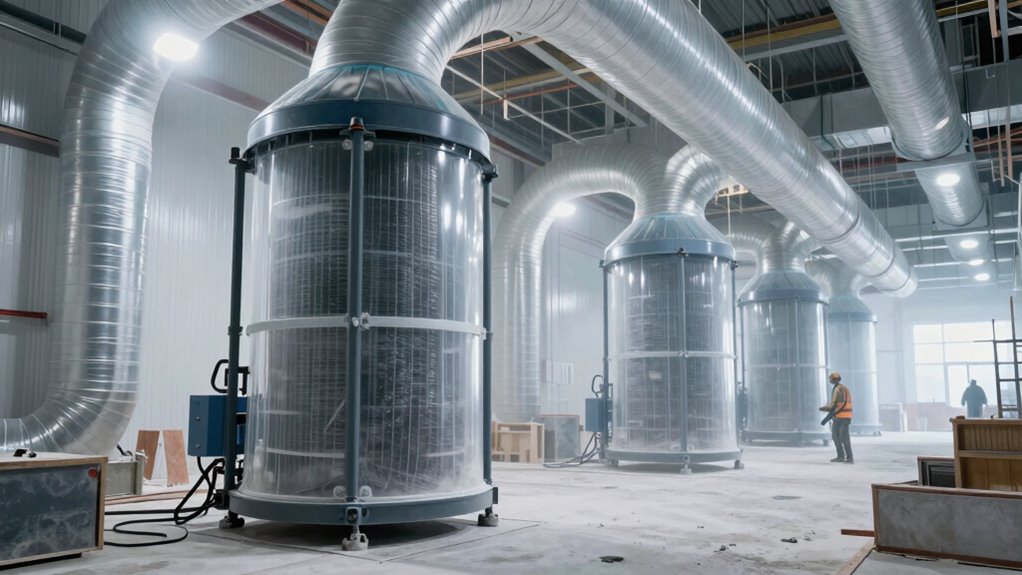
Using negative air machines on job sites improves indoor air quality by removing airborne contaminants. They help contain dust particles, preventing them from spreading to other areas. Plus, they enhance worker safety by creating a cleaner, healthier environment. Additionally, they facilitate compliance with safety regulations by maintaining proper airflow management in enclosed spaces. Proper dust control measures can also significantly reduce the risk of respiratory issues among workers. Proper golf course construction techniques can also benefit from effective dust control measures, ensuring a safe environment for workers and surrounding areas.
Improved Indoor Air Quality
Negative air machines play a crucial role in enhancing indoor air quality on job sites by actively removing contaminants from the environment. They improve indoor ventilation by filtering out dust, mold spores, and volatile organic compounds, ensuring cleaner air for workers and occupants. These machines use advanced air purification technologies to trap particles and purify the air, reducing health risks and creating a safer workspace. When contaminants are continuously extracted, the air remains fresher and less likely to cause allergies or respiratory issues. This not only benefits workers’ health but also helps maintain a more comfortable environment. Additionally, they can help control microplastics in dust, preventing these tiny particles from accumulating and affecting indoor air quality. Proper air purifier maintenance and timely filter replacements further optimize their performance, ensuring consistent air quality improvements. By effectively filtering and circulating air, negative air machines ensure that indoor spaces stay healthier, making them an essential tool for any project focused on indoor air quality management. Regular operation of these units also helps in reducing odors and chemical fumes, contributing to a more pleasant indoor environment.
Containment of Dust Particles
Controlling dust particles is essential on job sites to protect workers and maintain a clean environment. Negative air machines excel at dust containment by capturing airborne particles before they spread. When you set up these machines, they create a negative pressure zone that pulls dust-laden air into filters, trapping tiny airborne particles effectively. This process prevents dust from migrating into other areas, reducing contamination and cleanup time. Proper containment also minimizes the risk of inhaling hazardous dust, safeguarding worker health. By ensuring dust stays confined within designated zones, negative air machines help you maintain a safer, more controlled work environment. Additionally, understanding the horsepower of electric dirt bikes can help in selecting the right equipment for demanding tasks. Proper selection of battery inverter generators can also ensure reliable power to these machines during long work hours. Utilizing air filtration systems designed for construction sites further enhances dust control and improves indoor air quality. Implementing comprehensive dust mitigation strategies can lead to better health outcomes for workers and compliance with safety standards. Incorporating effective filtration methods ensures even finer dust particles are captured, maximizing safety and cleanliness. Ultimately, effective dust containment using these machines keeps your job site cleaner, safer, and compliant with health standards.
Enhanced Worker Safety
Effective dust containment with negative air machines directly enhances worker safety by reducing exposure to hazardous airborne particles. By implementing proper ventilation strategies, you create a safer environment that minimizes inhalation risks. These machines help maintain negative pressure, ensuring contaminated air stays contained. Incorporating safety protocols like PPE and controlled airflow further protects your team. Ensuring proper training and understanding of these devices guarantees optimal safety and performance on the job site. Additionally, understanding airflow management techniques can maximize containment efficiency. Proper maintenance and inspection of the equipment also play a crucial role in ensuring continuous safe operation. Regular monitoring of air quality levels ensures that containment measures remain effective throughout the project duration. Employing proper setup procedures further enhances the effectiveness of dust control measures.
How to Choose the Best Negative Air Machine for Your Restoration Projects
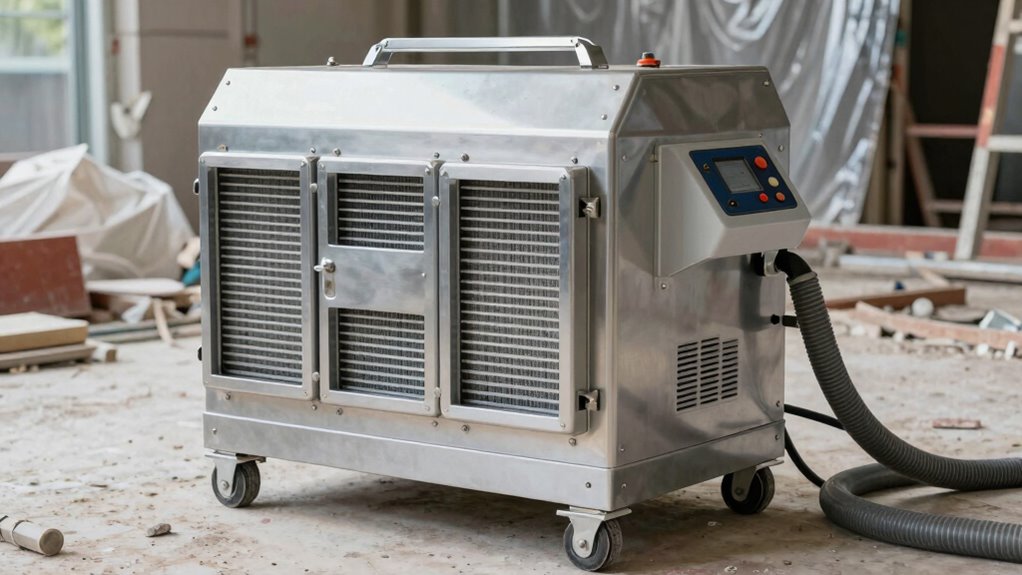
Choosing the right negative air machine for your restoration project can make a significant difference in how quickly and efficiently you eliminate airborne contaminants and odors. Start by comparing costs, considering both upfront investment and ongoing maintenance. A higher price may offer better filtration and durability, but verify it fits your project scope. Equipment portability is equally important; lightweight machines with sturdy handles and casters make setup and movement easier, saving you time and effort. Think about the size of the space you’re working in—larger areas might require more powerful units with higher airflow. Also, consider stackability if you need to run multiple units simultaneously. Ultimately, balancing cost, portability, and power will help you select the best negative air machine for your specific restoration needs. Ensuring Comfort and Safety can be achieved by choosing the right equipment to maintain a healthy environment during projects. Additionally, understanding industry standards can guide you in selecting equipment that meets safety and performance requirements. It’s also essential to consider air filtration capabilities to ensure the machine effectively captures the targeted contaminants.
Common Uses of Negative Air Machines in Restoration and Construction
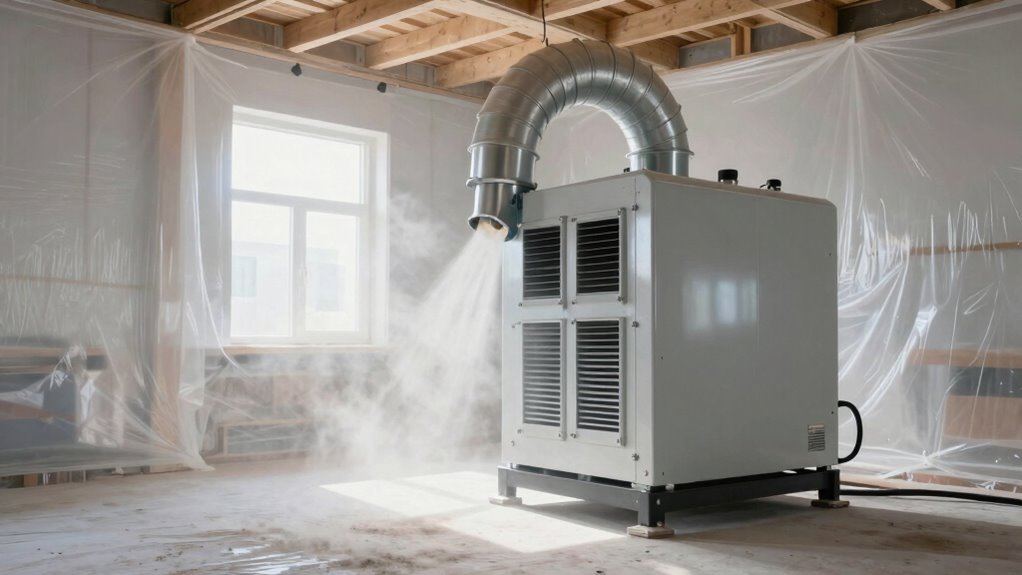
Negative air machines are essential tools in restoration and construction projects. You’ll use them to control mold and mildew, remove dust and debris, and eliminate stubborn odors. Understanding these common applications helps guarantee you get the most effective results from your equipment.
Mold and Mildew Control
Have you ever wondered how professionals quickly eliminate mold and mildew during restoration projects? Negative air machines are essential in controlling these issues by creating negative pressure zones that contain spores and prevent spread. They improve HVAC efficiency by filtering the air and reducing contamination risks. Using these machines also helps with a clear cost analysis, as they speed up drying and air purification processes, saving you money. Here’s a quick look at common uses:
| Benefit | Explanation |
|---|---|
| Mold containment | Isolates affected areas, preventing cross-contamination |
| Mildew prevention | Removes moisture and airborne spores efficiently |
| Cost savings | Reduces the need for extensive mold remediation work |
Dust and Debris Removal
Dust and debris removal is a critical step in restoration and construction projects, and negative air machines make this process much more efficient. They create negative pressure that helps contain dust, preventing it from spreading to other areas. With high-quality air filtration, these machines trap tiny particles, including dust, debris, and airborne contaminants, ensuring cleaner air during work. By maintaining dust containment, you reduce cleanup time and improve safety for workers and occupants. Negative air machines are especially useful during demolition, sanding, drywall installation, and cleaning phases, where dust generation is high. Their ability to continuously filter the air and control dust guarantees the environment stays safer, cleaner, and compliant with health regulations. This makes them an indispensable tool for effective dust and debris management.
Odor Elimination Techniques
Ever wonder how restoration and construction crews eliminate stubborn odors effectively? Negative air machines play a key role in odor elimination techniques by enhancing air purification and odor neutralization. They help remove airborne particles and odors that traditional cleaning can’t tackle alone. Here are four common uses:
- Ventilating smoke-damaged spaces to eliminate residual odors.
- Removing musty smells from water or mold damage.
- Neutralizing pet or cigarette odors during remediation.
- Improving indoor air quality after fire or flood damage.
Troubleshooting and Maintaining Your Negative Air Machine
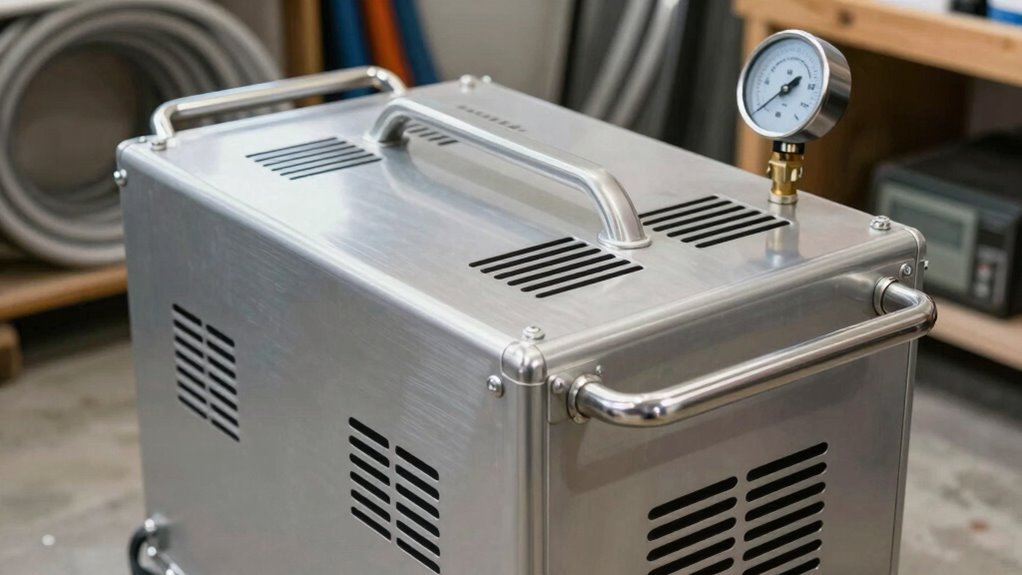
Regularly troubleshooting and maintaining your negative air machine guarantees it operates effectively and prolongs its lifespan. Start with filter maintenance—check filters frequently and replace or clean them as needed to maximize airflow and filtration. Clogged or dirty filters reduce efficiency and can strain the motor. When machine troubleshooting, listen for unusual noises, observe airflow performance, and inspect for loose connections or damage. Keep the unit in a clean, dry area to prevent dust buildup that can clog components. Regularly inspect hoses and fittings for leaks or cracks. Follow manufacturer guidelines for scheduled maintenance, and don’t ignore warning signs like decreased airflow or overheating. Proper upkeep minimizes breakdowns, keeps the machine running smoothly, and guarantees it continues to serve its purpose effectively.
Safety Rules and Regulations for Operating Negative Air Machines
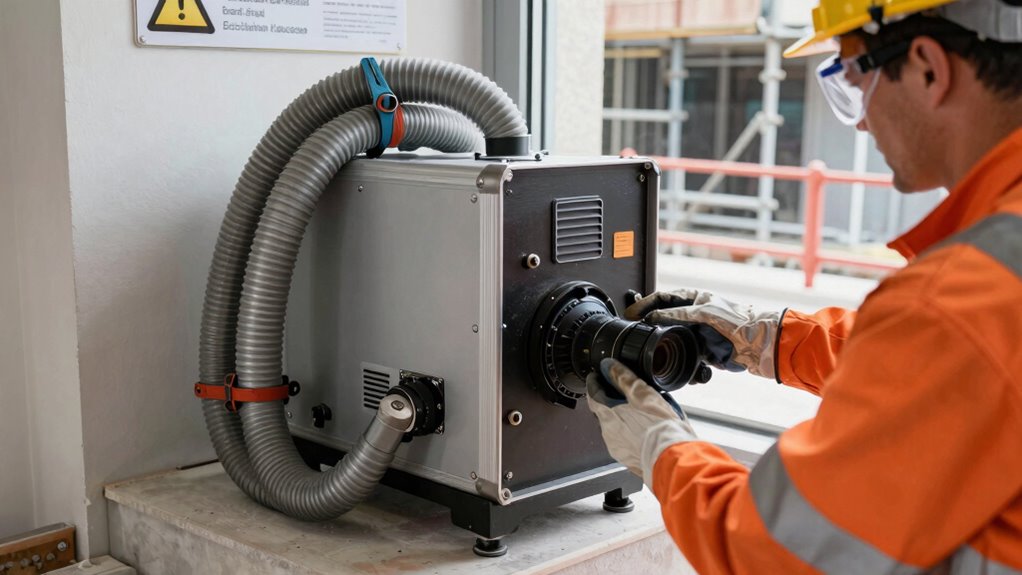
Operating negative air machines safely is vital to prevent health hazards and guarantee effective performance. You must follow essential safety rules to protect yourself and others.
- Always wear appropriate personal protective equipment, including masks and gloves, when operating the machine.
- Regularly check and calibrate the equipment to ensure it functions correctly and maintains proper airflow.
- Keep the work area clear of obstructions and unauthorized personnel to prevent accidents.
- Follow manufacturer guidelines and safety regulations, including proper setup and shutdown procedures.
Adhering to these rules minimizes exposure to contaminants and guarantees your negative air machine operates reliably. Proper equipment calibration and safety practices are key to successful and safe operation.
Future Trends in Negative Air Technology for Contractors
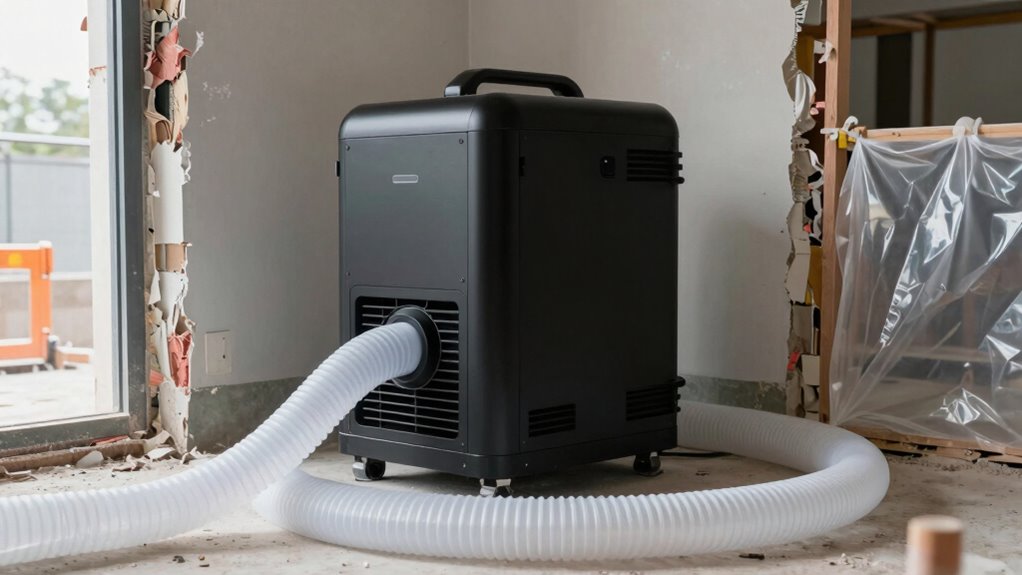
As technology advances, contractors can expect significant improvements in negative air machine capabilities, making them more efficient, portable, and user-friendly. Future trends in air purification will focus on enhanced filtration systems that remove particles, mold spores, and VOCs more effectively, ensuring healthier indoor environments. Equipment portability will also see major upgrades, with lightweight designs and ergonomic handles that simplify transport and setup across job sites. Smart features like remote controls, real-time air quality monitoring, and automatic adjustments are on the horizon, giving you greater control and convenience. These innovations will streamline your workflow, reduce setup time, and improve overall safety. As a result, you’ll be better equipped to handle complex projects with ease, ensuring top-tier air quality and efficient operation every time.
Frequently Asked Questions
How Long Should a Negative Air Machine Run During a Project?
You should run a negative air machine continuously during your project, especially when maintaining an air exchange rate of at least 4 to 6 air changes per hour. Keep it operating throughout the project duration to guarantee proper containment and air quality control. Turning it off can allow contaminants to escape, so consistent operation maximizes safety and effectiveness, protecting both workers and the environment.
Are Negative Air Machines Noisy or Disruptive On-Site?
Negative air machines can produce some noise, but their noise levels are generally manageable and designed to minimize work disruption. You might notice a steady hum or low rumble, which shouldn’t interfere considerably with your daily activities. To keep disruptions minimal, place the machine away from high-traffic areas and use sound dampening options if needed. Overall, their benefits in controlling contaminants outweigh the modest noise they generate.
Can Negative Air Machines Remove All Types of Airborne Contaminants?
Like a vigilant sentinel, a negative air machine with HEPA filtration can capture most airborne toxins, including dust, mold, and bacteria. However, it can’t eliminate all types of airborne contaminants, especially gases or vapors. You need specialized filters for those. Using these machines effectively helps improve air quality on-site, but understanding their limits guarantees you address every hazard properly and keep everyone safe.
What Is the Typical Lifespan of a Negative Air Machine?
You can expect a negative air machine to last about 3 to 5 years with proper maintenance. Regular maintenance tips include cleaning the exterior and checking for dust buildup, as well as replacing filters as recommended by the manufacturer. Timely filter replacements are vital to keep the machine running efficiently and extend its lifespan. Proper care ensures you get the most out of your investment and maintains ideal air quality during use.
Do Negative Air Machines Require Special Storage or Transportation Considerations?
Think of your negative air machine as a delicate piece of art that needs careful handling. You should follow strict storage protocols to keep it safe from dust, moisture, and extreme temperatures. During transportation, guarantee it’s secured firmly to prevent jostling or damage. Proper storage and transportation safety aren’t just recommendations—they’re the shields that keep your equipment in prime condition, ready to perform whenever you need it most.
Conclusion
Negative air machines are your trusted allies in creating safer, cleaner job sites. They act like silent guardians, trapping airborne contaminants and preventing their spread. By choosing the right machine and maintaining it well, you’ll keep your projects running smoothly and protect everyone involved. Embrace these powerful tools, and you’ll find yourself managing restoration and construction challenges with the confidence of a captain steering through calm waters—safe, steady, and prepared for whatever comes next.