
Laundry rooms get grimy because constant moisture from washing and drying creates a humid environment that fosters mold and bacteria growth. Lint buildup from clothes shedding fibers and escaping lint traps traps dirt and moisture, while detergent residue forms a sticky film that traps grime. Water stains and mineral deposits from splashes and leaks add to the mess. Keep going to discover simple ways to keep your laundry space cleaner and healthier.

Get cleaning gear delivered free with Prime
- Fast, free delivery on millions of items
- Prime Video, Amazon Music and more included
- Member-only deals all year
Key Takeaways
- Lint buildup from fibers shed by clothes creates a breeding ground for mold and bacteria.
- Water stains and mineral deposits from leaks and splashes dull surfaces and trap dirt.
- Excess moisture and humidity promote mold growth and dampen surfaces, making the space look neglected.
- Residual detergent forms sticky films that trap dirt, lint, and water stains, increasing grime.
- Inadequate cleaning, poor ventilation, and infrequent maintenance allow dirt, mold, and grime to accumulate.
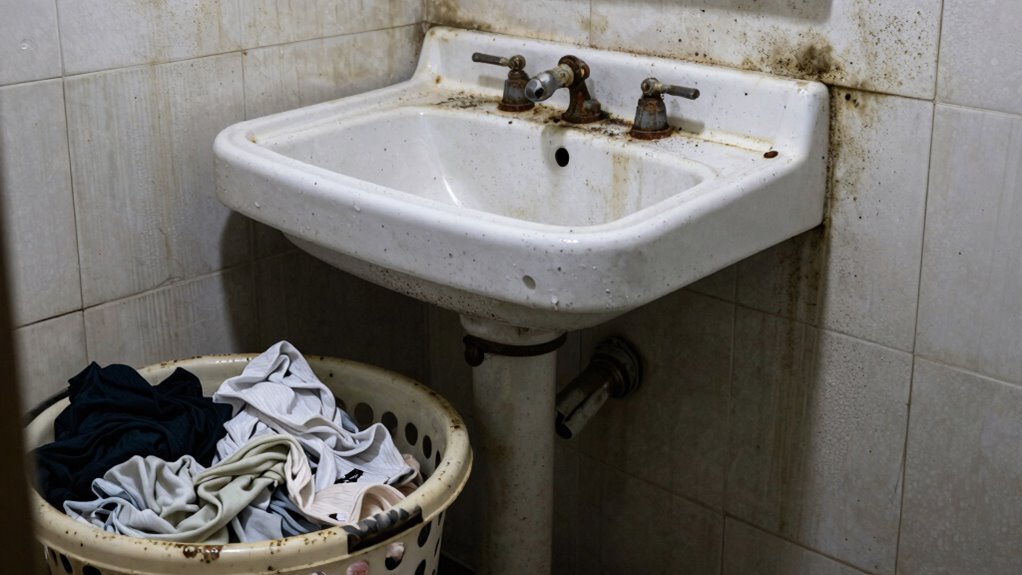
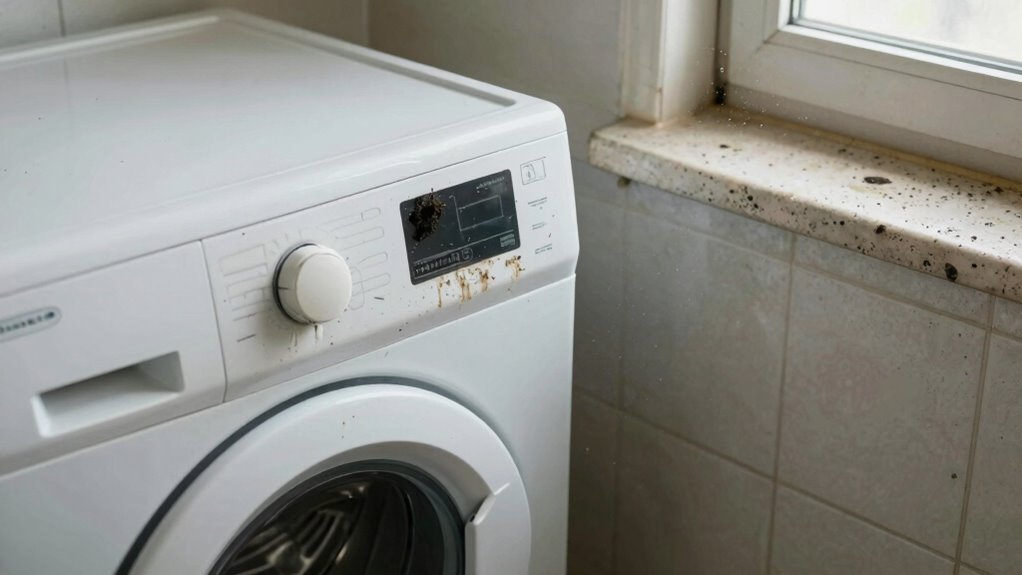
Laundry rooms often become surprisingly grimy because of the constant buildup of dirt, detergent residue, and moisture. This environment creates the perfect conditions for grime to settle and multiply. One of the main culprits is dryer lint, which you might not realize is a significant source of dirt accumulation. Every time you dry clothes, tiny fibers shed off and collect in the lint trap. If you neglect to clean it regularly, these fibers can escape and cling to walls, vents, and surfaces, creating a dusty, filmy layer that’s tough to remove. Over time, this lint buildup can become a breeding ground for mold and bacteria, especially in humid environments, making your laundry room not just grimy but potentially unhealthy. Additionally, lint trap maintenance** is crucial for preventing these issues from escalating. Water stains are another common problem that adds to the grime. These stains often appear around sinks, washing machines, or water hookups, especially if there are small leaks or if water splashes during use. Water stains aren’t just unsightly; they also trap dirt and dust, which can make surfaces look dull and dirty even if you’ve just cleaned them. If you notice white or mineral deposits on tiles or appliances, it’s likely caused by hard water or frequent splashes that haven’t been wiped away. These stains can become stubborn if left untreated, leading to a buildup of grime that’s difficult to scrub away. The moisture in laundry rooms also plays a significant role in grime formation. Water vapor from washing and drying creates a humid environment that encourages mold and mildew growth. Mold spores can settle on surfaces, forming dark patches that give your laundry space a neglected look. Proper ventilation and regular cleaning can help control moisture levels and reduce mold growth. The use of dehumidifiers can also be highly effective in maintaining a healthier environment. Combine this with lint and water stains, and your laundry room can quickly turn into a dirty, damp space that’s hard to keep pristine. Regular cleaning, good ventilation, and timely maintenance are essential to prevent this buildup. Moreover, detergent residue can contribute heavily to grime. When you don’t rinse out your washing machine or wipe down surfaces regularly, leftover soap can dry into a sticky film**. This film traps dirt, lint, and water stains, making everything look dull and grimy. Using the right amount of detergent and cleaning your appliances often helps reduce this problem. Overall, the root of laundry room grime isn’t just dirt or dust but a combination of lint, water stains, moisture, and soap residue, all of which thrive in the humid, enclosed space. Regular upkeep is your best defense against this inevitable buildup.
As an affiliate, we earn on qualifying purchases.
Frequently Asked Questions
How Often Should I Deep Clean My Laundry Room?
You should deep clean your laundry room at least once a month to keep it spotless. Regular cleaning helps remove detergent residue that builds up and prevents lint accumulation, which can clog vents and cause fire hazards. Focus on wiping down surfaces, cleaning out lint traps, and inspecting vents. A thorough deep cleaning guarantees your laundry space stays fresh, safe, and functioning efficiently, saving you time and potential repairs in the long run.
What Are Common Hidden Sources of Grime in Laundry Areas?
You might not realize it, but detergent residue often builds up unnoticed, creating a sticky film that attracts dirt. Lint accumulation from dryers also sneaks into corners, clogging vents and surfaces. These hidden grime sources can make your laundry area look dirty even after cleaning. Regularly wiping down surfaces and cleaning lint traps can help prevent this buildup, keeping your laundry space fresh and hygienic.
Can Cleaning Products Damage Laundry Room Appliances?
Cleaning products can damage your laundry room appliances if you’re not careful. Harsh chemicals or excess detergent residue can cause appliance corrosion over time, leading to rust or mechanical issues. Always use recommended cleaners and avoid overusing detergents. Regularly run cleaning cycles and wipe down your machines to prevent buildup, ensuring your appliances stay in good shape and last longer. Proper maintenance protects your investment and keeps your laundry area clean.
How Do I Prevent Mold and Mildew Buildup?
To prevent mold and mildew buildup, you should improve ventilation and control moisture. Keep your laundry room well-ventilated by opening windows or installing a vent fan, especially during and after use. Wipe down surfaces regularly to remove excess moisture, and fix leaks promptly. Using a dehumidifier can also help maintain low humidity levels, reducing mold growth. Consistent moisture control and good airflow are key to keeping your laundry room clean and mold-free.
Are There Eco-Friendly Ways to Keep the Laundry Room Cleaner?
Yes, you can keep your laundry room cleaner with eco-friendly methods. Use eco-friendly detergents that are free from harsh chemicals, and try natural cleaning methods like vinegar and baking soda to tackle grime and odors. Regularly wipe down surfaces, keep the space well-ventilated, and avoid excessive water use. These approaches help maintain a fresh, clean laundry room while protecting the environment.
As an affiliate, we earn on qualifying purchases.
Conclusion
So, next time your laundry room turns into a grimy disaster zone, remember—it’s not just dirt. It’s a battleground of soap scum, lint monsters, and mold invasions, all fighting for dominion over your space. If you ignore it, it’ll take over your house, your sanity, and maybe even your dreams. Stay vigilant, clean regularly, and don’t let that chaos win. Your laundry room isn’t doomed—unless you let it be!
As an affiliate, we earn on qualifying purchases.
mold and mildew cleaner for laundry room
As an affiliate, we earn on qualifying purchases.
As an affiliate, we earn on qualifying purchases.
Halloween Picks
halloween
As an affiliate, we earn on qualifying purchases.