
TL;DR

Get cleaning gear delivered free with Prime
- Fast, free delivery on millions of items
- Prime Video, Amazon Music and more included
- Member-only deals all year
A Livingetc report shares five storage principles drawn from Japanese kitchens, including decluttering before buying organizers, choosing containers for their function and keeping frequently used items accessible. The advice comes from designer Yoko Kloeden and Nakagawa executive vice president Tasuku Ogino; it is design guidance, not a reported study of Japanese households.
Livingetc has published five kitchen-storage lessons associated with Japanese design, recommending that households declutter before buying organizers, select containers for specific jobs and keep only useful, visually considered items on counters. The report draws on comments from London-based interior designer Yoko Kloeden and Tasuku Ogino, executive vice president of Japanese home-goods company Nakagawa.
The advice starts with removing items before adding storage. Kloeden suggests choosing a shelf and asking what each object is for before purchasing organizers. The report presents this as a way to avoid using new storage to accommodate things that are not needed, while potentially saving space and money. It does not provide measured results or evidence that the approach works the same way in every kitchen.
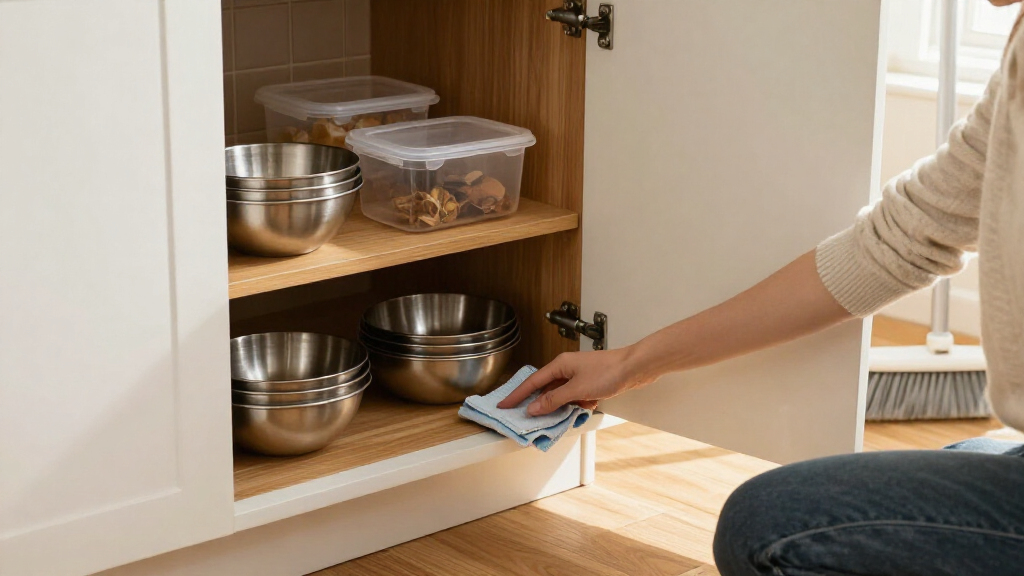
A second lesson is to match containers to their contents and purpose. Kloeden says dried goods and tea may be kept in paulownia wood boxes, while clear containers can help people see what is inside. She also recommends considering how a material handles the food it stores, rather than choosing containers only because they look alike. The article gives salt and sugar as examples of ingredients that can clump and describes using easy-to-open jars for items reached for regularly.
The remaining principles focus on reducing friction and visual clutter. Kloeden recommends giving frequently used cooking ingredients and utensils a convenient place, and choosing cookware that can move from cooking to serving to reduce transfers and washing. For counters, she cites a two-part test: whether an item is used daily and whether it contributes visually. The report also attributes the idea of deliberate visual contrast, or “merihari,” to Ogino.
Storage That Fits Daily Cooking
The recommendations matter to readers because they frame kitchen organization as a matter of editing, access and function, not simply buying more shelves or matching containers. Starting with a shelf-by-shelf review can help households identify what they actually use before spending money or giving up more counter or cupboard space.
The suggestions also connect storage decisions to everyday routines: keep often-used items within reach, choose containers suited to their contents and use cookware that can serve more than one role. These are practical design ideas rather than guarantees of a calmer or more efficient kitchen. Their usefulness will depend on the household, its cooking habits, available space and food-storage needs.
Japanese style kitchen storage containers
As an affiliate, we earn on qualifying purchases.
As an affiliate, we earn on qualifying purchases.
The Design Ideas Behind the Advice
The source is a Livingetc advice report about five lessons it says readers can borrow from Japanese kitchen storage. It links the advice to the value of making limited storage work carefully, while Kloeden describes Japanese kitchens as spaces where each container must justify its place. The article does not establish that all Japanese kitchens follow one standard layout or set of rules.
Kloeden runs a London architecture and interior design studio founded in 2016, according to the supplied report. Ogino is identified as Nakagawa’s executive vice president; the report says the company was founded in Nara in 1716 and combines traditional craft with contemporary home goods. Their comments provide the article’s main perspective, rather than a survey or comparative study.
“Before you add storage, take one shelf and ask what each thing on it is for.”
— Yoko Kloeden, interior designer
clear food storage jars for pantry
As an affiliate, we earn on qualifying purchases.
As an affiliate, we earn on qualifying purchases.
What the Report Does Not Establish
The supplied source does not give the report’s publication date, describe a formal study or offer data measuring how much space or money readers might save. It also does not establish that the five principles are universal across Japanese homes. The guidance is presented through the views of two design and home-goods professionals, and some recommendations—such as particular wood or ceramic vessels—may not suit every ingredient, budget or kitchen.
The source does not set out detailed food-safety instructions for transferring or storing ingredients. Readers should follow relevant storage guidance for the specific food and container, rather than assume that a material or traditional vessel is suitable for every use.
As an affiliate, we earn on qualifying purchases.
Applying the Five Ideas at Home
The report offers no announced follow-up event or next milestone. For readers applying its advice, the sequence it outlines is straightforward: review one shelf, remove items without a clear purpose, then decide whether any remaining items need a container or more accessible location. Only after that review does buying additional storage fit the approach.
Households can then assess their routine: place frequently used ingredients and tools where they are easy to reach, consider cookware that can serve at the table, and keep counter items that meet both the daily-use and visual-presence tests. The report does not claim that every suggestion will work in every home; the practical result depends on available space and individual cooking habits.
As an affiliate, we earn on qualifying purchases.
Key Questions
What are the five Japanese kitchen storage lessons in the report?
Declutter before adding storage, choose each container for its job, keep regularly used cooking items accessible, use cookware that can also serve food, and leave counters clear except for items that are both useful and visually considered.
Who provided the advice?
The report quotes interior designer Yoko Kloeden and attributes the term “merihari” to Tasuku Ogino, executive vice president of Nakagawa. It does not cite a broader study or survey.
Does the advice mean buying special Japanese containers?
No. The central recommendation is to choose containers according to their function and contents, rather than matching them for appearance. The report gives paulownia boxes and ceramic jars as examples, not requirements for every kitchen.
What should be left on the counter?
Kloeden’s test is whether an item is used daily and has visual presence. The report gives a utensil holder and condiment jars as examples and says branded packaging can be stored away.
Source: rss
Halloween Picks
halloween
As an affiliate, we earn on qualifying purchases.