
TL;DR
Prime for Young Adults — start your free trial
Fast free delivery, streaming and member deals for eligible 18–24 year olds.
As an affiliate, we earn on qualifying purchases.
A method shared on Hackaday demonstrates how to add weight and a clean surface to 3D prints by filling designed hollow bases with plaster of Paris after printing. This technique avoids pause-insertion and offers an economical, post-processing-friendly solution.
A maker has introduced a straightforward method to increase the weight of 3D printed objects using plaster of Paris, which can be applied after printing without halting the process. This technique enhances stability and allows for a clean, post-process finish, making it relevant for hobbyists and professionals seeking economical solutions.
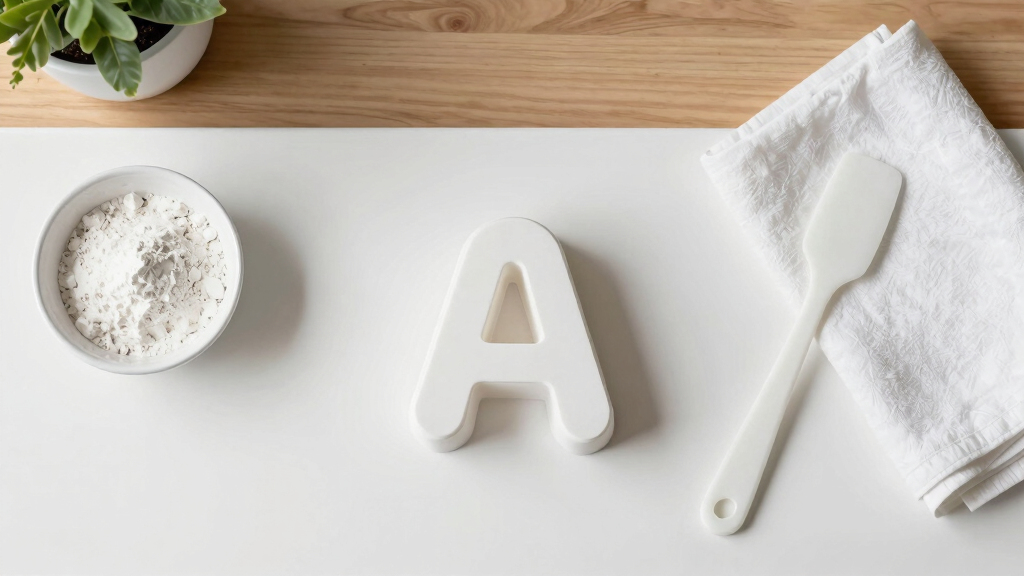
The method involves designing a hollow base into a 3D print, not as a zero-infill structure but as a cavity intentionally modeled into the bottom of the object. After the print is completed, the user mixes dry plaster of Paris with water to create a thick, pourable mixture and then fills the cavity by inverting the print. Once set, typically within an hour, the plaster provides significant weight and a smooth, sandable surface.
This approach eliminates the need to pause printing for hardware insertion or to seal gaps with epoxies. The cured plaster can be further refined with sanding and sealed with a clear coat for durability. The technique is cost-effective, requiring only basic materials, and is suitable for creating heavier, more stable objects without complex post-processing steps.
Advantages of Using Plaster of Paris for 3D Print Weight
This method offers a low-cost, efficient way to add mass to 3D prints, improving their stability for functional or display purposes. It also produces a smooth, presentable surface that reduces the need for additional finishing. The technique can be particularly useful in applications where weight distribution and surface aesthetics are critical, such as in prototypes, display models, or tools.
Plaster of Paris for 3D printing weight
As an affiliate, we earn on qualifying purchases.
As an affiliate, we earn on qualifying purchases.
Previous Methods and Practical Applications of Adding Mass
Traditionally, adding weight to 3D prints involved inserting hardware like nuts, bolts, or metal balls during the printing process, which often required pausing the print or modifying the model. Other approaches used concrete or epoxies, but these can be messy, time-consuming, and require sealing. The new plaster of Paris technique simplifies this process by enabling post-print weight addition through a cavity design, aligning with trends toward more accessible and post-process friendly methods.
“Filling a designed hollow base with plaster of Paris after printing is an effective way to add weight and achieve a smooth finish without interrupting the print process.”
— an anonymous researcher
As an affiliate, we earn on qualifying purchases.
Limitations and Unanswered Questions of the Technique
It is not yet clear how durable the plaster-filled bases are over extended periods or under stress, and whether the method is suitable for all types of 3D printed materials. The long-term adhesion between the print and the plaster, as well as potential issues with moisture or cracking, remain to be studied.
post-processing plaster for 3D prints
As an affiliate, we earn on qualifying purchases.
As an affiliate, we earn on qualifying purchases.
Future Developments and Practical Testing Plans
Further testing is expected to evaluate the durability and strength of plaster-filled prints in real-world scenarios. Makers and researchers may also explore variations, such as sealing the plaster for outdoor use or experimenting with different cavity shapes for optimized weight distribution.
3D print weight addition materials
As an affiliate, we earn on qualifying purchases.
As an affiliate, we earn on qualifying purchases.
Key Questions
Can this method be used with any 3D printing material?
While primarily demonstrated with common filament prints, the technique should work with most materials that can support the plaster weight without cracking or delaminating, but testing is recommended for specific cases.
Does filling the cavity with plaster affect the print’s surface quality?
The plaster cures to a smooth surface that can be sanded or sealed, often improving the overall appearance without additional finishing steps.
Is the plaster of Paris filling waterproof or suitable for outdoor use?
Unsealed plaster may absorb moisture and degrade outdoors; sealing with a clear coat can improve water resistance but may not make it fully waterproof.
Does this process add significant weight to large prints?
Yes, filling the cavity with plaster can substantially increase weight, which is beneficial for stability but may impact handling and transportation.
Are there safety precautions when handling plaster of Paris?
Yes, wear PPE such as gloves and a mask when mixing and handling plaster to avoid skin irritation and inhalation of dust. Ensure good ventilation during mixing and curing.
Source: Hackaday
Fall yard work Picks
leaf blowers
As an affiliate, we earn on qualifying purchases.