TL;DR

Get cleaning gear delivered free with Prime
- Fast, free delivery on millions of items
- Prime Video, Amazon Music and more included
- Member-only deals all year
A Hunker report describes gabion retaining walls—wire cages filled with stones—as an alternative to poured or block concrete. The report cites drainage, resistance to freeze-thaw damage and potential savings when recycled stone is available, while noting that costs vary and larger walls may need professional installation.
Gabion retaining walls, built from wire cages filled with stones, offer an alternative to poured or block concrete for holding back soil, according to a report by Hunker. The report says the structures can drain water through their rock fill and are not subject to the same freeze-thaw damage that can harm concrete, though suitability, cost and installation needs depend on the site.
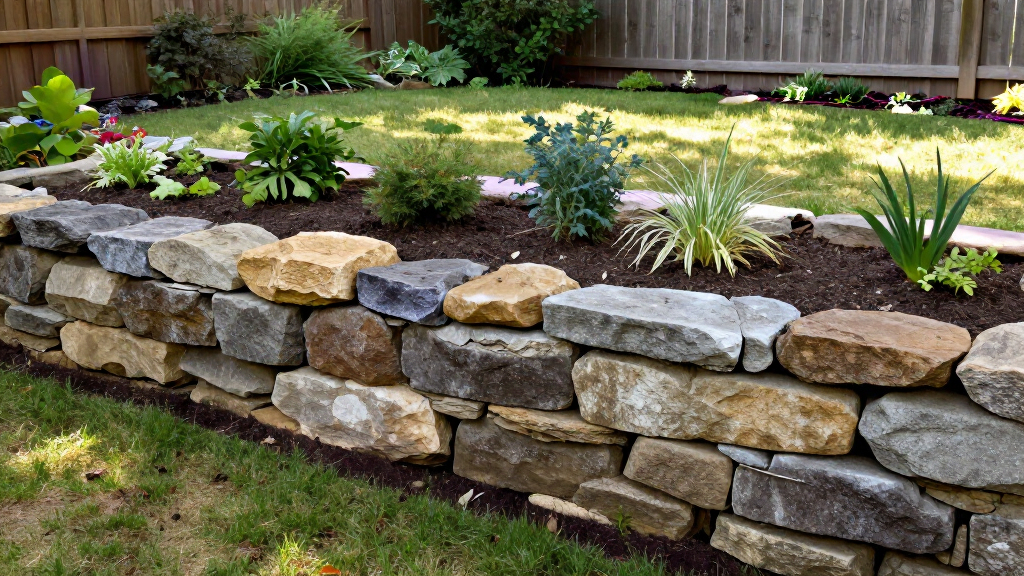
A gabion wall is made by assembling metal wire baskets, fastening them together and filling them with stones. The cages hold the rocks in place, while gaps between the stones let water pass through. Hunker says this drainage can make gabions useful on steep properties where erosion is a concern. The report also notes that stone can blend with nearby landscaping more readily than concrete, although the visible cages give the wall an industrial appearance.
Hunker gives a general sizing ratio of one foot of wall thickness for every two feet of height. Under that guideline, a four-foot-high wall would be two feet wide. The article describes a wall of that scale as potentially manageable for a do-it-yourself project, but says larger structures may call for professional installation, particularly where digging a trench or leveling the ground is required.
The report estimates professional gabion installation at $25 to $50 per square foot, compared with its stated concrete range of $25 to $40 per square foot. It says DIY costs may be lower when builders can use free or recycled stones. Those figures are estimates in the report, not site-specific quotes, and the supplied material does not give a location, date for the estimates or a cost breakdown.
Drainage and Site Conditions Shape the Choice
The practical case for gabions is not simply that they replace concrete. Their stone-filled structure allows drainage, which may be useful where water buildup and soil movement are concerns. Hunker also says gabions are resistant to the freeze-thaw cycle that can contribute to concrete cracking or spalling when concrete is not installed correctly. These are material advantages described by the report, not a guarantee that any gabion wall will perform well at every site.
Cost and appearance can also affect a homeowner’s decision. The professional price ranges cited by Hunker overlap, so the article does not establish that a gabion wall is always cheaper than concrete. Access to suitable stone could reduce material costs for a DIY build, but excavation, ground preparation and the size of the wall can change the total. The industrial look of wire cages may suit some landscapes and clash with others.
For readers considering a retaining wall, the report’s central point is that material choice should follow the site’s drainage, slope, dimensions and design needs. A wall that holds back soil has to be sized and installed for its conditions; a general rule of thumb is not a substitute for a site assessment.
As an affiliate, we earn on qualifying purchases.
How Gabion Walls Differ From Concrete
Concrete remains a commonly used retaining-wall material in both poured and block forms. Hunker describes it as strong and widely accessible, while warning that poor installation can lead to cracking and spalling and make repairs difficult. The report presents gabions as an alternative rather than evidence that concrete is unsuitable in general.
The name “gabion” traces to the Italian word “gabbionne,” which roughly means “big cage,” according to the article. The report says the basic approach has roots thousands of years old. In modern landscaping, gabion baskets can also be used for features such as accent walls and garden pillars, beyond their role in retaining soil.
Hunker frames the potential environmental benefit around using existing or recycled stone and reducing the need to produce and mix concrete. The supplied report does not provide a life-cycle assessment or quantified comparison of environmental impacts, so that benefit should be understood as a stated advantage of material reuse rather than a measured finding.
““gabion walls are a durable, smart alternative””
— Hunker
As an affiliate, we earn on qualifying purchases.
Costs and Wall Requirements Vary by Site
The supplied report does not identify the location or date behind its price estimates, or specify what labor, materials and preparation those figures include. Actual costs may differ with stone availability, access, excavation and ground conditions. It also does not provide engineering specifications, soil assessments or a maximum safe wall height.
Hunker’s thickness ratio is a rule of thumb, not a project-specific design. The material does not establish whether a particular slope needs drainage measures beyond the gaps in the rock fill, or whether a proposed wall requires permits or professional review. Those questions remain dependent on local requirements and site conditions.
The report’s claims about drainage, freeze-thaw resistance and environmental benefits are not accompanied in the supplied text by independent studies or quantified performance data. Gabions can also be a poor visual fit for some properties, and wire condition and stone choice may matter over time; the report does not detail maintenance or service life.
As an affiliate, we earn on qualifying purchases.
Assess the Slope Before Building
Hunker’s report does not announce a construction project, regulatory change or new product; it outlines an option for homeowners weighing retaining-wall materials. Anyone considering a gabion wall would need to determine the wall’s dimensions, evaluate the slope and ground, confirm local rules and compare site-specific installation quotes. For a larger wall or work involving significant excavation or grading, the article recommends professional installation rather than treating the project as a simple DIY build.
The next decision is practical: whether the site and desired appearance suit a stone-filled cage, and whether the cost advantage holds after preparation and installation are priced. The supplied material provides no follow-up plans, independent cost survey or engineering guidance, so those details remain for property owners and qualified local professionals to establish.
As an affiliate, we earn on qualifying purchases.
Key Questions
What is a gabion retaining wall?
It is a wall made from wire cages filled with stones. The cages hold the stones in place, and gaps between them allow water to drain through.
Are gabion walls always cheaper than concrete?
No. Hunker estimates professional gabion installation at $25 to $50 per square foot and concrete at $25 to $40. The ranges overlap, and actual prices depend on the site and what the estimate includes.
Can a homeowner build a gabion wall?
The report says smaller projects may be manageable as DIY work. It says larger walls may need professionals, especially when trench digging or ground leveling is involved. Its sizing ratio should not replace an assessment of the particular site.
What are the main drawbacks?
Hunker says the wire cages create an industrial look that may not suit every home or landscape. Costs can also vary, and the article does not provide project-specific engineering or maintenance guidance.
What remains unknown about the cost estimates?
The supplied report does not state the estimates’ location, date or included work. It also does not provide a detailed comparison of labor, stone, excavation or long-term maintenance costs.
Source: rss
Halloween Picks
halloween
As an affiliate, we earn on qualifying purchases.