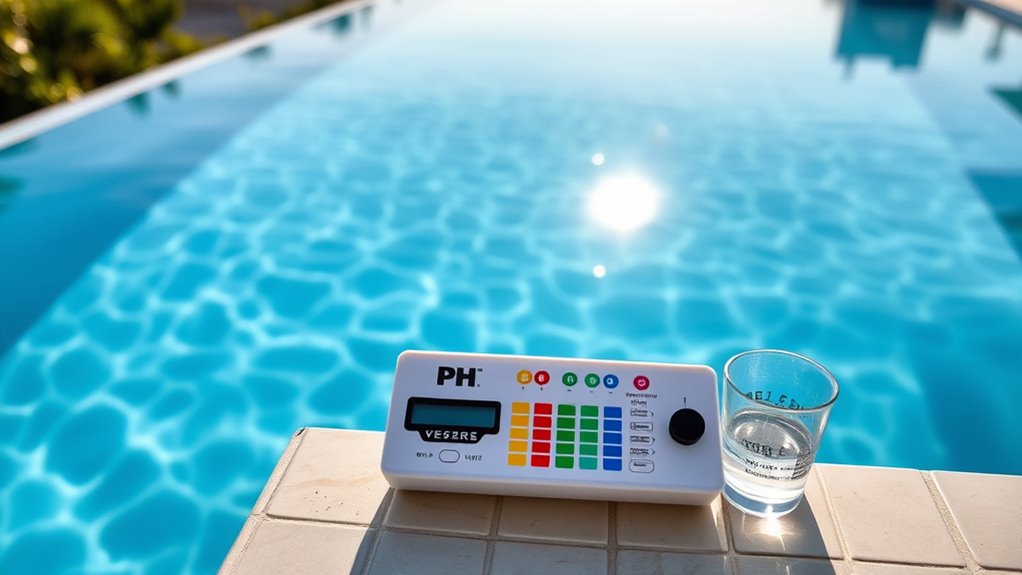

Each week, you should test your infinity pool’s pH and water chemistry using test strips or digital meters. Keep the pH between 7.2 and 7.8 by adding pH increasers or decreasers as needed. Check calcium hardness and TDS to prevent scaling or corrosion, adjusting with mineral conditioners if necessary. Regularly balancing these elements helps keep your pool clean, clear, and comfortable. Keep going to discover more tips for maintaining perfect water chemistry.

Get cleaning gear delivered free — and shop member deals
- Fast, free delivery on millions of items
- Access to Prime Big Deal Days deals on October 6–7
- Prime Video, Amazon Music and more included
Key Takeaways
- Test pH levels weekly using test strips or liquid kits to ensure they stay between 7.2 and 7.8.
- Adjust pH with sodium carbonate to raise or muriatic acid to lower levels as needed.
- Monitor chlorine and mineral levels regularly to maintain overall water balance and prevent issues.
- Correct pH imbalances promptly to optimize chlorine effectiveness and swimmer comfort.
- Keep detailed records of tests and adjustments to maintain consistent water chemistry management.
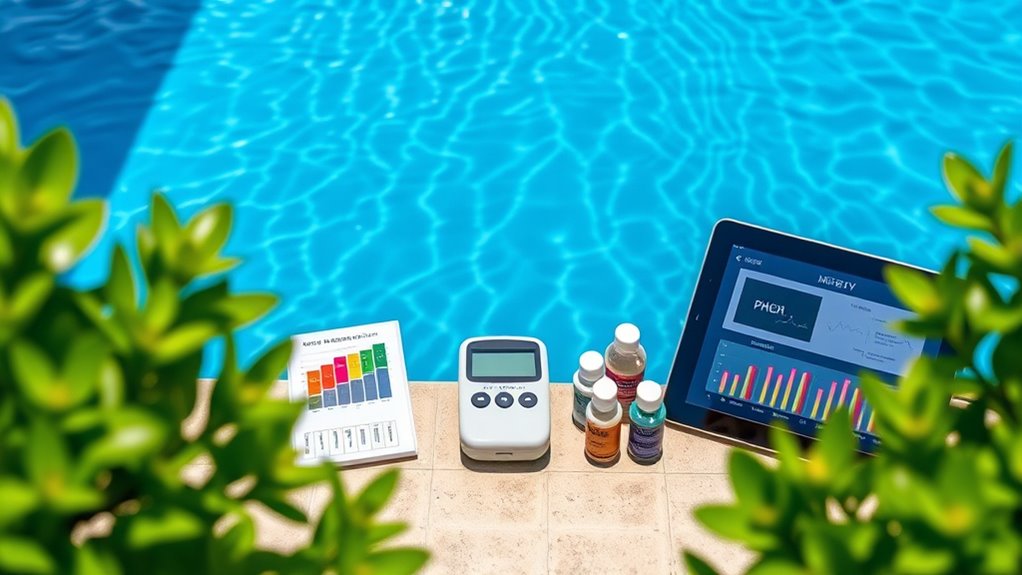
Maintaining proper pH and water chemistry is crucial for guaranteeing a safe and healthy aquatic environment in your infinity pool. When you keep an eye on chlorine levels, you’re protecting your pool from bacteria, algae, and other contaminants that can thrive in unbalanced water. It’s important to regularly test the chlorine because too much can cause skin and eye irritation, while too little leaves your pool vulnerable to germs. Aim for a steady, appropriate chlorine level—usually between 1 and 3 ppm—and adjust as needed. But chlorine isn’t the only factor; mineral balance plays an essential role in maintaining water clarity and preventing scale buildup or corrosion of your pool’s surfaces and equipment.
Maintaining proper pH and mineral balance ensures a safe, clear, and inviting infinity pool environment.
Your weekly routine should include testing the mineral content, particularly calcium hardness and total dissolved solids (TDS). If calcium levels are too high, you risk scale formation on the pool’s surface and equipment, which can be costly to repair. Conversely, low calcium can cause the water to become corrosive, damaging metal fixtures and plaster. To keep mineral balance in check, use test kits or digital meters that provide precise readings. If levels are off, you can add specific mineral conditioners or treatment products designed for pools. Maintaining balanced minerals ensures your water remains clear, comfortable, and safe for swimmers.
Balancing pH is equally critical. When pH swings too high or too low, it affects chlorine’s effectiveness and can lead to cloudy water or scaling. Ideally, your pH should stay between 7.2 and 7.8. Use test strips or liquid test kits weekly to monitor this. If your pH is too low, adding a pH increaser—like sodium carbonate—can bring it back to the ideal range. If it’s too high, a pH reducer, such as muriatic acid or sodium bisulfate, will restore balance. Consistent pH levels not only improve swimmer comfort but also maximize chlorine’s sanitizing power.
In addition to testing and adjusting, remember that water chemistry isn’t a one-and-done task. Changes in weather, usage, and even evaporation can alter your pool’s chemistry, so regular testing is key. When you keep chlorine levels and mineral balance in check, you’re actively preventing issues like algae blooms, scaling, and corrosion. This proactive approach ensures your infinity pool remains pristine, safe, and inviting all season long. Staying diligent with these weekly tasks might seem small, but they’re crucial for preserving the beauty and functionality of your luxurious pool. Proper water chemistry management, including the use of appropriate testing methods, ensures your pool stays in optimal condition.
As an affiliate, we earn on qualifying purchases.
Frequently Asked Questions
How Often Should I Test My Infinity Pool’s Water Chemistry?
You should test your infinity pool’s water chemistry at least once a week for proper pool maintenance. Regular chemical testing helps you spot imbalances early, ensuring safe, clear water. If your pool gets heavy use or experiences weather changes, consider testing more frequently. Consistent testing allows you to adjust chemicals promptly, preventing issues like algae growth or corrosion. Keep on top of your pool’s health with routine chemical testing.
What Are the Signs of Imbalanced Ph Levels?
You’ll notice signs of imbalanced pH levels through pH fluctuation, such as cloudy water, skin and eye irritation, or a strong chemical odor. If your water feels slimy or you see scale buildup, it indicates a chemical imbalance. Regular testing helps catch pH fluctuations early, so you can adjust chemicals promptly. Maintaining proper pH guarantees your infinity pool stays clear, safe, and comfortable for swimming.
Can Household Items Be Used to Adjust Ph?
Did you know that 60% of pool owners try DIY remedies to balance their water? You can use household solutions like baking soda to raise pH or vinegar to lower it, but be cautious. While some DIY remedies are effective, not all household items are safe or precise. Always test your water chemistry after adjustments and consult guidelines to avoid damage or unsafe conditions in your infinity pool.
How Does Weather Affect Water Chemistry Balance?
Weather considerably impacts your infinity pool’s water chemistry. Solar evaporation causes water levels to drop, concentrating chemicals and raising pH levels. Rainfall impact can dilute your pool’s chemicals, lowering pH and alkalinity. You need to monitor these changes regularly, adjusting chemicals as needed to maintain balance. After heavy rain or intense sun, test your water often, and add chemicals cautiously to keep your pool safe and inviting.
What Safety Precautions Are Necessary When Adding Chemicals?
When adding chemicals, always wear protective gear like gloves and goggles to prevent skin and eye irritation. Store chemicals in a cool, dry, well-ventilated area away from children and pets. Follow the manufacturer’s instructions carefully, adding chemicals slowly and never mixing them. Keep a well-stocked first aid kit nearby, and wash your hands thoroughly afterward. These precautions guarantee your safety and maintain proper water chemistry.
As an affiliate, we earn on qualifying purchases.
Conclusion
Keeping your infinity pool’s pH and water chemistry perfectly balanced isn’t just a chore—it’s a battle for aquatic supremacy! Fail to do it, and you risk turning your luxurious oasis into a murky swamp or a bubbling volcano. But stay vigilant, and you’ll have the clearest, most inviting water imaginable. Remember, you’re the hero in this epic quest for pristine perfection—conquer those weekly tasks, and your pool will be the envy of all!
As an affiliate, we earn on qualifying purchases.
As an affiliate, we earn on qualifying purchases.
Fall Picks
fall essentials
As an affiliate, we earn on qualifying purchases.