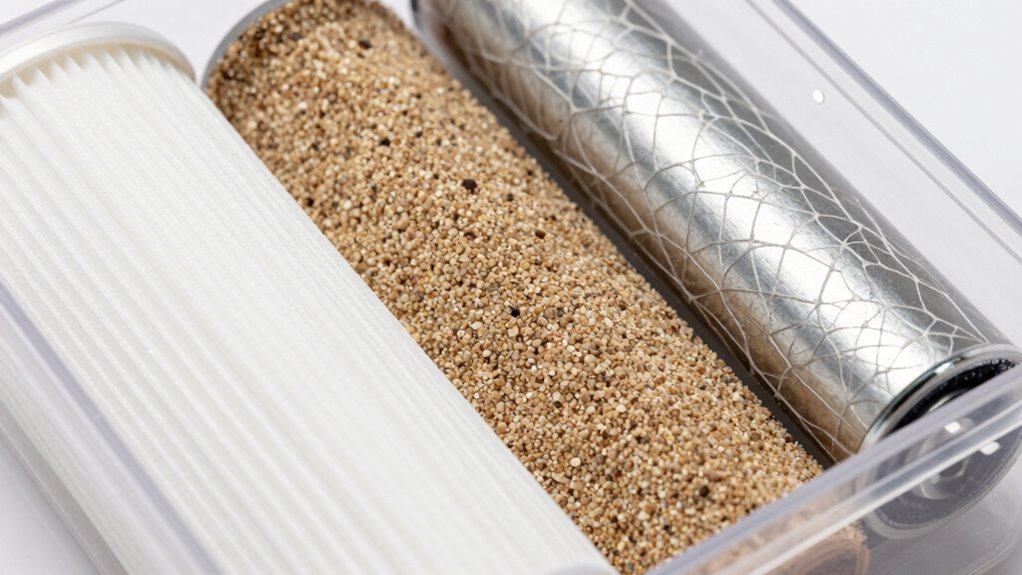
Choosing between cartridge, sand, and DE filters depends on how much maintenance you’re willing to do. Cartridge filters are simple—just rinse them off and replace every 1-2 years. Sand filters need backwashing monthly and sand replacement every 3-5 years. DE filters require more care, including grid cleaning and powder reapplication, but offer the best filtration. Want to discover which system suits your pool and upkeep style? Keep exploring to find out more.

Get cleaning gear delivered free with Prime
- Fast, free delivery on millions of items
- Prime Video, Amazon Music and more included
- Member-only deals all year
Key Takeaways
- Cartridge filters are easiest to clean with a hose and require less frequent maintenance but have a shorter lifespan.
- Sand filters need regular backwashing every month and sand replacement every 3-5 years, making them more involved.
- DE filters offer the highest filtration efficiency but require grid cleaning and powder replenishment, increasing maintenance complexity.
- Overall, cartridge filters are simpler and cheaper for maintenance, while sand and DE filters need more routine upkeep and part replacements.
- Choosing the right filter depends on balancing ease of maintenance, water clarity needs, pool size, and long-term costs.
best cartridge pool filter replacement
As an affiliate, we earn on qualifying purchases.
As an affiliate, we earn on qualifying purchases.
How Pool Filters Work and Keep Your Water Clear
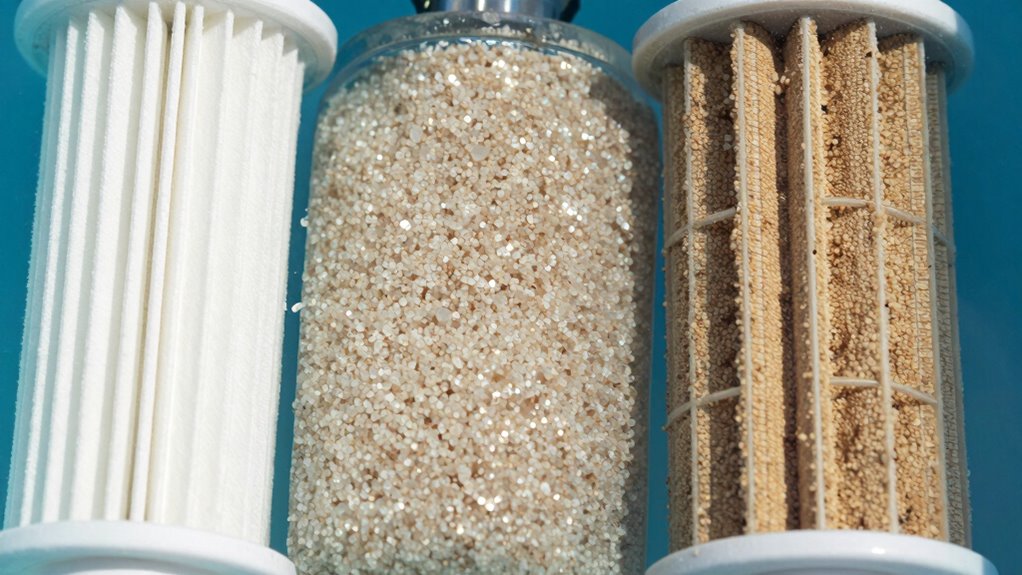
Pool filters are essential for maintaining clear, healthy water by removing dirt, debris, and microscopic particles. They work by trapping contaminants as water flows through them, ensuring your pool stays clean and inviting. Proper water circulation is key; it evenly distributes chemicals and prevents stagnation, helping the filter do its job effectively. Good circulation also extends filter longevity by reducing strain and buildup, meaning your filter lasts longer and performs better. As water passes through the filter media—whether cartridge, sand, or DE—it captures unwanted particles, keeping the water sparkling. Regularly maintaining water flow and avoiding clogs are crucial to maximizing filter lifespan. Additionally, understanding filter maintenance procedures can help prevent common issues and ensure optimal performance. Maintaining the correct filter pressure can also indicate when cleaning or backwashing is needed, preventing damage and improving efficiency. Consistent monitoring of flow rates can help detect early signs of buildup or malfunction, ensuring your system runs smoothly. To further optimize performance, it’s important to consider eco-friendly disposal options for replacing or cleaning filter media to reduce environmental impact. Incorporating routine inspections can help identify potential problems before they impact water quality. In short, a well-functioning filter and water circulation work together to keep your pool water crystal clear and healthy.
As an affiliate, we earn on qualifying purchases.
Basic Maintenance for Cartridge, Sand, and DE Pool Filters
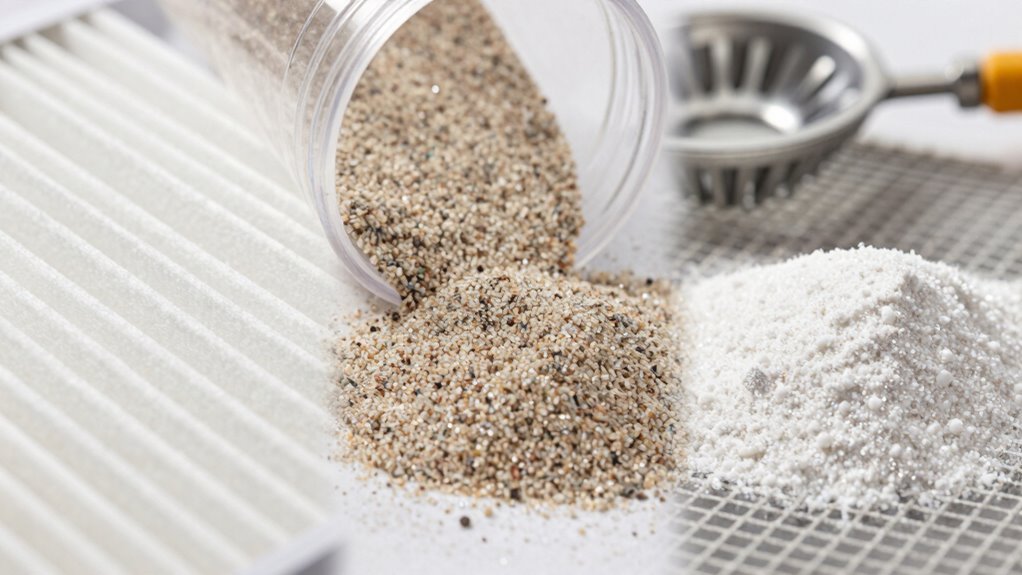
Regular maintenance is essential to keep your cartridge, sand, and DE filters working efficiently and prolong their lifespan. Start by regularly inspecting your filters for dirt and debris buildup, which can hinder water flow. Keep your pool’s water balanced by monitoring and adjusting pool chemical levels, as proper chemical balancing reduces stress on your filters. For cartridge filters, rinse the cartridges with a hose every few weeks to remove dirt. Sand filters require backwashing to flush out trapped particles, typically once a month or as needed. DE filters need a gentle wash of the grids and reapplication of DE powder. Additionally, understanding filtration/suction basics can help you optimize your filter maintenance routine. Incorporating filter technology into your routine can improve efficiency and lifespan. Utilizing advanced cleaning techniques can further enhance your filter’s performance. Paying attention to filter flow rates and pressure gauges can help you detect when maintenance is necessary and prevent potential damage. Regularly checking pressure levels can also indicate when your filters need servicing, preventing issues before they escalate. Proper care minimizes the need for costly repairs and replacements. Proper maintenance not only extends the lifespan of your filters but also ensures optimal water clarity and safety.
As an affiliate, we earn on qualifying purchases.
How to Clean and Replace Your Pool Filter Media
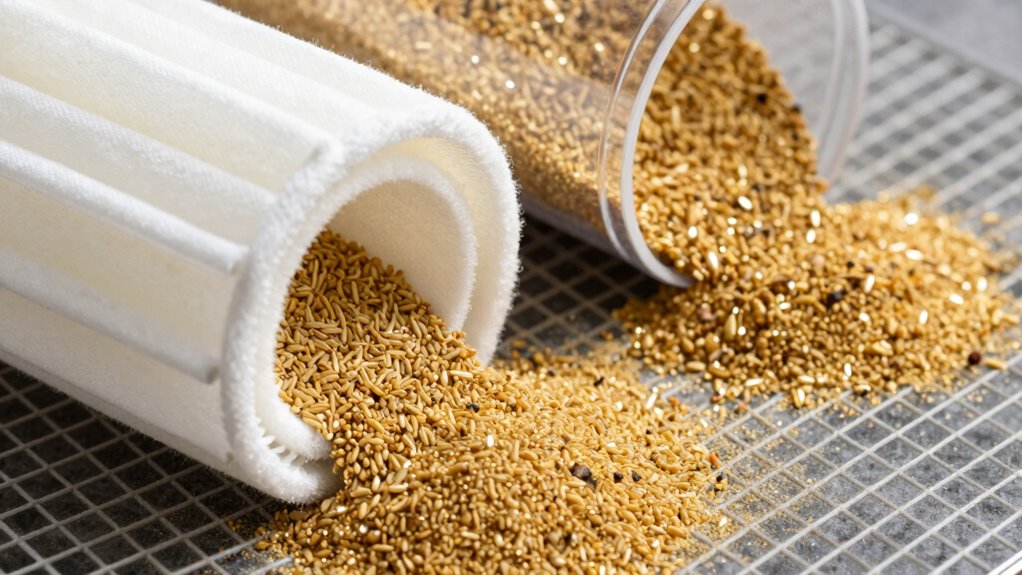
Cleaning or replacing your pool filter media is a crucial step to maintaining peak filtration performance. Regular cleaning extends the filter’s lifespan and ensures your pool stays clear. For cartridge filters, remove the cartridge and hose it down with a high-pressure nozzle to clear debris. Replace the cartridge when it’s worn or damaged, typically every 1-2 years. Sand filters require backwashing to remove trapped dirt, and the sand should be replaced every 3-5 years to maintain effectiveness. DE filters involve carefully removing the grids, cleaning them with a mild detergent, and replenishing the DE powder to restore filtration capacity. Proper maintenance of filter media also helps prevent damage to your filter system, and using the correct filter media can significantly improve filtration efficiency. Additionally, understanding filter media types can help you select the most suitable option for your pool’s needs. Regular inspection of the filter components and monitoring filter pressure can help you identify issues early and prevent costly repairs, ensuring your pool remains crystal clear.
As an affiliate, we earn on qualifying purchases.
Troubleshooting Common Pool Filter Problems
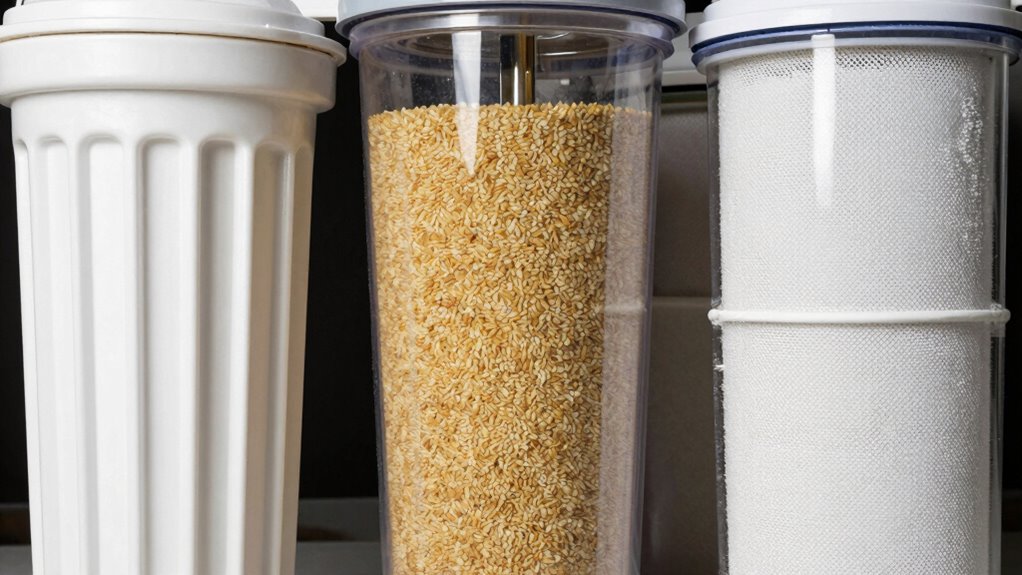
When your filtration system isn’t working properly, it’s important to identify and address common issues promptly. If your pool isn’t filtering effectively, check for clogged media or debris buildup, which can reduce the filter’s lifespan. A dirty or worn-out filter may increase pressure and decrease water flow, leading to cloudy water. Regularly inspecting and cleaning your filter helps prevent costly repairs and extends its lifespan. Troubleshooting also involves evaluating the cost comparison of repairs or replacements; some issues are cheaper to fix, while others might require replacing the entire filter. Understanding how each filter type responds to problems allows you to make informed decisions, saving money and ensuring your pool stays clean and healthy. Proper maintenance is key to avoiding frequent breakdowns and prolonging filter efficiency. Additionally, familiarizing yourself with different filter types helps you choose the most suitable option for your needs and troubleshoot effectively. Incorporating preventive maintenance routines, such as regular backwashing or media replacement, can further improve filter performance and longevity. Moreover, staying informed about filter media compatibility can help prevent issues caused by using incompatible materials. Being proactive with filter system checks can help catch problems early before they become costly repairs and can be supported by using proper measurement tools to accurately assess filter performance.
Choosing the Best Pool Filter for Easy Maintenance
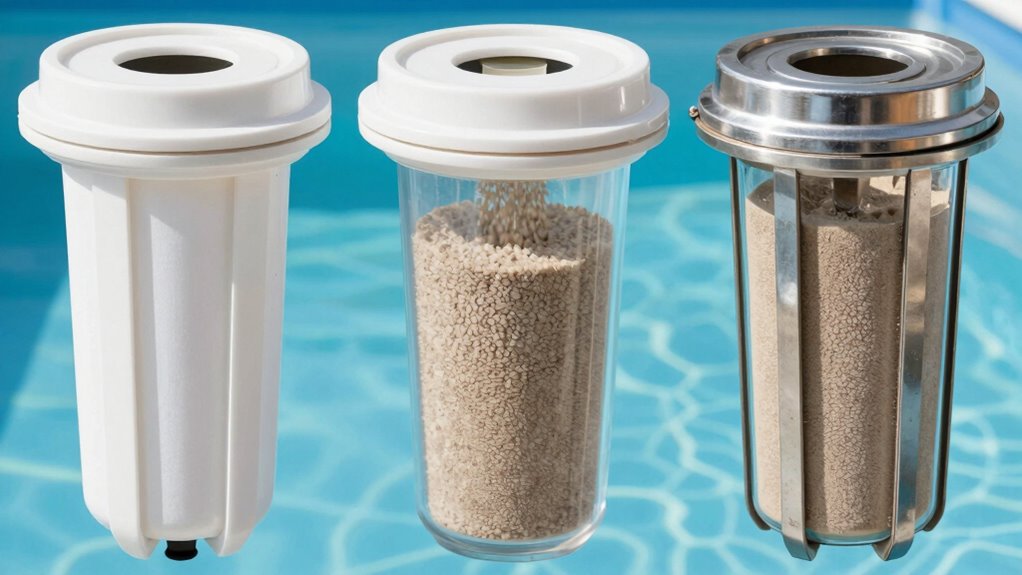
Choosing the best pool filter for easy maintenance depends on your pool size, usage, and personal preferences. To simplify your decision, consider these factors:
Selecting the right pool filter depends on your pool size, usage, and maintenance preferences for easy care.
- Filter lifespan: Some filters last longer with proper care, reducing replacement costs and effort. Regular maintenance can extend the lifespan of your filter, making your choice more cost-effective over time. Additionally, understanding the filter materials can help you select a model that withstands wear and tear better. Knowing the manufacturing quality can also influence the durability and longevity of your filter.
- Energy efficiency: Opt for models that consume less power to lower ongoing operating expenses.
- Ease of cleaning: Cartridge filters are straightforward to clean, while sand and DE filters may require more maintenance. The ease of cleaning can significantly impact how often you need to perform maintenance tasks.
- Performance needs: Match your pool’s size and usage with a filter capable of handling the volume efficiently.
- Compatibility with maintenance practices: Selecting a filter that aligns with your preferred maintenance routine can make pool upkeep more manageable. Understanding the regulatory standards related to pool equipment can also inform your decision to ensure compliance and safety.
Frequently Asked Questions
How Often Should I Replace My Pool Filter Media?
You should replace your pool filter media when you notice a decline in filter performance, typically every 1 to 3 years for sand, 1 to 2 years for cartridge, and every 4 to 8 years for DE filters. Regular media replacement guarantees peak filter lifespan and keeps your pool clean. Keep an eye on water clarity and pressure readings to determine when it’s time for media replacement.
What Are Signs My Filter Needs Urgent Maintenance?
If your pool’s water looks cloudy or becomes difficult to circulate, it’s a sign your filter needs urgent maintenance. You might notice reduced flow rate or increased pressure, indicating the filter’s lifespan is nearing its limit. Regular maintenance frequency helps prevent this. Don’t ignore these signs, as delaying can lead to poor water quality and costly repairs. Stay proactive to keep your pool crystal clear and enjoyable.
Can I Upgrade From One Filter Type to Another?
Yes, you can upgrade your pool filter, but you should first check filter compatibility with your pool system. The upgrade process involves guaranteeing your new filter fits your existing setup and may require adjusting fittings or plumbing. For example, switching from a cartridge to a sand or DE filter might need new connections. Always consult your pool manufacturer’s guidelines or a professional to guarantee a smooth upgrade and ideal filtration.
How Do Filter Types Affect Overall Water Chemistry?
Your filter type impacts water chemistry by influencing chemical balance and pH stability. Cartridge filters mainly trap debris, minimally affecting chemistry. Sand filters can slightly alter pH by releasing minerals, while DE filters often sustain stable pH levels due to fine filtration. Regular maintenance ensures your filter supports balanced water chemistry, preventing pH swings and chemical imbalances that could harm your pool or spa.
What Safety Precautions Are Necessary During Filter Maintenance?
Prioritize protection by donning safety gear like gloves and goggles before beginning filter maintenance. Make sure to disconnect power to prevent electrical shocks, and handle components carefully to avoid spills. Follow manufacturer instructions meticulously, and avoid rushing repairs. Keep a clean workspace to prevent accidents, and double-check that all electrical connections are secure before restarting equipment. These precautions help guarantee your safety during filter maintenance.
Conclusion
Think of your pool filter as the guardian of your aquatic oasis, silently working to keep chaos at bay. Whether you choose cartridge, sand, or DE filters, regular maintenance is your secret weapon. Like tending a garden, caring for your filter guarantees clear, inviting water. When you stay attentive and proactive, your pool remains a tranquil sanctuary—beautiful, pristine, and ready for you to enjoy, season after season.
Halloween Picks
halloween
As an affiliate, we earn on qualifying purchases.