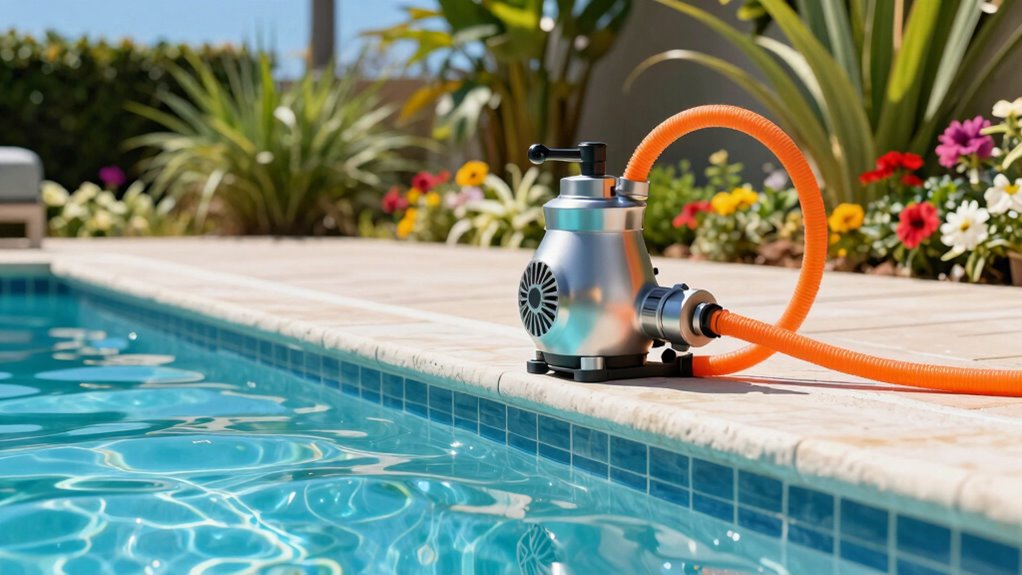
To keep your pool pump running efficiently through summer, regularly inspect and clean it to prevent debris buildup and guarantee parts are tight and free of leaks. Monitor motor sounds for any signs of wear or overheating, and adjust pump size and settings for ideal flow without wasting energy. Installing a timer and using energy-efficient models can also cut costs. Proper installation and routine maintenance help extend the pump’s lifespan and keep your pool crystal clear. Continue for more tips.

Get cleaning gear delivered free with Prime
- Fast, free delivery on millions of items
- Prime Video, Amazon Music and more included
- Member-only deals all year
Key Takeaways
- Regularly inspect and clean the pump, strainer basket, and impeller to prevent debris buildup and ensure smooth operation.
- Monitor motor performance for unusual noises, vibrations, or overheating, and service promptly if issues arise.
- Optimize pump size and flow rate settings based on manufacturer recommendations for efficient circulation.
- Ensure proper installation and conduct routine maintenance to prevent leaks, corrosion, and operational problems.
- Use energy-efficient pumps, consider timers, and keep settings calibrated to minimize energy consumption during summer.
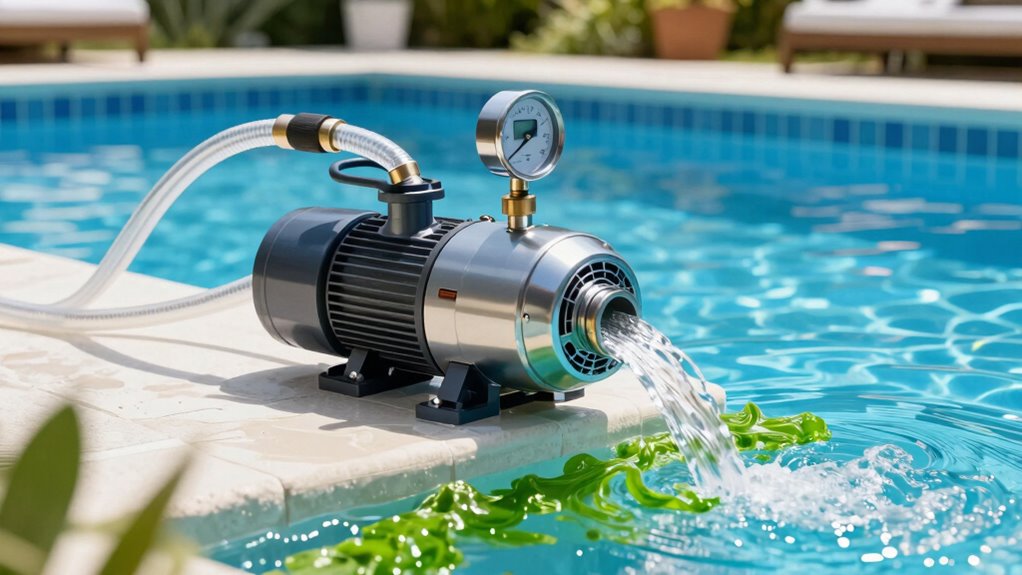
Are you looking to save energy and reduce costs while keeping your pool sparkling clean? Properly maintaining your pool pump is the key to achieving these goals, especially during the busy summer months when your pool sees constant use. Regular pump maintenance ensures your system runs smoothly, preventing unnecessary strain and energy waste. By paying attention to your pump’s condition, you can extend its lifespan and ensure it operates at peak efficiency, saving you money on energy bills and repairs.
Start by inspecting your pump regularly for leaks, corrosion, or worn-out parts. A small leak can cause your pump to work harder, increasing energy consumption and reducing its lifespan. Tighten fittings and replace worn seals promptly to keep everything sealed tightly. Clean the pump’s strainer basket frequently—debris buildup can restrict water flow, forcing the pump to work harder than necessary. When the basket is clean and the impeller is unobstructed, your pump operates more efficiently, conserving energy and prolonging its life.
Regularly inspect and clean your pump to prevent leaks, debris buildup, and improve efficiency.
Another crucial aspect of pump maintenance is ensuring your pump’s motor is functioning correctly. Listen for unusual noises or vibrations, which may indicate problems that need addressing. Over time, bearings can wear out, or the motor may overheat, both of which reduce efficiency. If you notice these signs, it’s best to have a professional check and service your pump. An efficiently running motor consumes less energy, translating into significant energy savings over the summer months. Regularly checking for proper motor function can help catch issues early before they escalate. Additionally, understanding how pump size and settings impact performance can help you avoid unnecessary energy consumption. Properly calibrated settings can also improve overall system efficiency. Ensuring your pump is correctly installed and maintained can help prevent common issues and maximize energy efficiency.
You should also evaluate your pump’s size and settings. A pump that’s too powerful for your pool can waste energy, while a too-weak pump might not circulate water effectively. Consult your manufacturer’s recommendations or a pool professional to optimize your pump’s size and flow rate, ensuring you’re not overspending on unnecessary power. Additionally, consider installing a timer to run your pump during off-peak hours, further reducing energy costs. Using energy-efficient pumps can significantly lower your energy consumption while maintaining optimal circulation.
Products Worth Considering

Ring Floodlight Cam Wired Plus, 1080p HD Outdoor Security Camera with Motion-Activated Floodlights, 4-Pack, White

Ring Battery Doorbell (1st Gen), 2-Pack, Satin Nickel

Dreame H15 Pro Wet-Dry Vacuum and Mop
As an affiliate, we earn on qualifying purchases.
Frequently Asked Questions
How Often Should I Clean My Pool Pump Filter?
You should clean your pool pump filter at least once every 1-2 weeks during peak swimming season. Regular pool maintenance prevents clogs and guarantees efficient pump operation. Keep an eye on the pressure gauge; if it rises 8-10 psi above the normal level, it’s time to clean the filter. Proper pump troubleshooting includes checking for debris and wear, which helps your pump run smoothly all summer long.
What Is the Ideal Pool Pump Run Time During Summer?
Think of your pool pump like a trusty steed—regularly running keeps everything smooth. During summer, aim for about 8-12 hours daily for ideal pool maintenance and energy efficiency. This run time ensures proper filtration, keeps water crystal clear, and prevents algae. Adjust based on pool size and usage; shorter runs might suffice if you’re vigilant about filter cleaning. Consistent operation saves energy and extends your pump’s lifespan.
Can Using a Pool Cover Improve Pump Efficiency?
Using a pool cover can definitely improve pump efficiency. It helps retain heat from solar heating, reducing the workload on your pump, and minimizes debris that can clog the system. Plus, it prevents algae growth by limiting sunlight exposure. When you cover your pool, your pump doesn’t have to work as hard to filter out contaminants, saving energy and extending its lifespan during hot summer months.
How Do Weather Changes Affect Pool Pump Performance?
Weather patterns often unexpectedly impact your pool pump performance. Sudden temperature drops or storms can strain the pump, reducing its durability and efficiency. You might notice it struggles more during fluctuating weather, as extreme heat or heavy rain challenges its operation. To keep your pump running smoothly, make sure it’s protected from the elements, and monitor for weather-induced wear, so you can address issues before they cause costly damage.
What Are Signs My Pool Pump Is Underperforming?
If your pool pump is underperforming, you’ll notice increased pump noise and possible seal leaks. These signs suggest the pump isn’t operating efficiently, which can lead to poor water circulation. You might also observe reduced flow rate or longer filtering times. Addressing seal leaks promptly and monitoring unusual noises helps maintain peak performance. Regular inspections ensure your pump runs smoothly, keeping your pool clean and clear all summer long.
Conclusion
Keeping your pool pump running efficiently in summer not only saves energy but also extends its lifespan. Did you know that a well-maintained pump can reduce energy costs by up to 50%? Regular cleaning, proper scheduling, and checking for leaks make a big difference. By following these simple tips, you’ll enjoy crystal-clear water all season long without breaking the bank. Stay proactive, and your pool will thank you with sparkling, inviting waters.