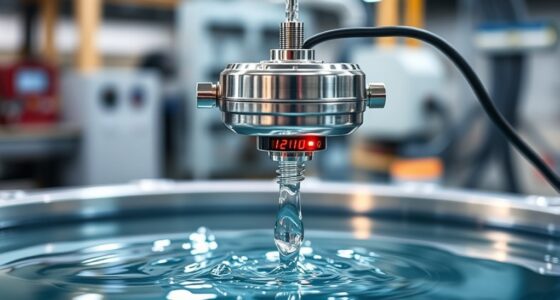
To keep your infinity pool safe and crystal clear, aim for a pH between 7.2 and 7.6, which prevents irritation and equipment damage. Maintain free chlorine levels from 1.0 to 3.0 ppm to guarantee proper disinfection without causing skin or eye discomfort. Regular testing and gradual adjustments help keep these levels stable, ensuring a beautiful and inviting pool. Continuing with the proper balancing techniques will help you maintain ideal water quality effortlessly.

Get cleaning gear delivered free — and shop member deals
- Fast, free delivery on millions of items
- Access to Prime Big Deal Days deals on October 6–7
- Prime Video, Amazon Music and more included
Key Takeaways
- Maintain pH between 7.2 and 7.6 for optimal clarity and equipment protection.
- Keep free chlorine levels between 1.0 and 3.0 ppm for effective disinfection.
- Test water chemistry weekly and adjust chemicals gradually to prevent overshooting.
- Use appropriate chemicals to raise or lower pH as needed based on test results.
- Regularly monitoring and balancing water chemistry ensures a safe, clear, and inviting infinity pool.

Maintaining proper pH and chlorine levels is vital for keeping your infinity pool safe, clean, and inviting. When it comes to pool maintenance, understanding water chemistry is key. The right balance prevents algae growth, minimizes cloudiness, and guarantees your pool is comfortable to swim in. If you ignore these aspects, you risk cloudy water, unpleasant odors, and potential health hazards. Regular testing and adjusting of pH and chlorine levels are your best tools to keep your infinity pool pristine.
Your goal should be to keep the pH within the ideal range of 7.2 to 7.6. This slightly alkaline level helps maintain water clarity, prevents corrosion of pool equipment, and maximizes chlorine efficiency. If the pH dips below 7.2, the water becomes acidic, which can cause eye and skin irritation and damage pool surfaces. Conversely, if it rises above 7.6, the water becomes too alkaline, leading to scale buildup and reduced chlorine effectiveness. To achieve the correct pH, use pH increasers or decreasers based on your test results, and always follow manufacturer instructions carefully. Proper water chemistry also enhances pool comfort and extends the lifespan of your equipment.
Keep pH between 7.2 and 7.6 for clear, safe, and effective pool water.
Chlorine is your primary disinfectant, vital for eliminating bacteria and controlling algae. The recommended free chlorine level for an infinity pool is generally between 1.0 and 3.0 parts per million (ppm). Maintaining this range ensures your water stays sanitized without causing discomfort or skin irritation. Too little chlorine allows harmful microorganisms to thrive, while too much can cause skin and eye irritation and produce unpleasant odors. You should test chlorine levels regularly, particularly during heavy use or after rainfall, which can dilute the sanitizer. If levels are too low, add chlorine tablets, liquid chlorine, or shock your pool with a higher dose to restore proper sanitation.
Balancing water chemistry isn’t a one-time task but a routine part of pool maintenance. Use reliable test kits or digital testers to monitor both pH and chlorine frequently—at least weekly, or more often if your pool is heavily used. Remember that water chemistry can fluctuate due to weather conditions, pool usage, and chemical additions, so stay vigilant. Adjustments should be made gradually to avoid overshooting the target ranges. Properly balancing pH and chlorine not only protects your investment but also creates a safe and enjoyable environment for every swim. Staying on top of these levels ensures your infinity pool remains a stunning, inviting oasis year-round.
pool water test kit for pH and chlorine
As an affiliate, we earn on qualifying purchases.
As an affiliate, we earn on qualifying purchases.
Frequently Asked Questions
How Often Should I Test My Infinity Pool’s Ph and Chlorine Levels?
You should test your infinity pool’s pH and chlorine levels at least twice a week to maintain ideal water quality. Regular test frequency helps you catch imbalances early, so you can make necessary chemical adjustments promptly. If the pool is heavily used or after heavy rain, test more often. Consistent testing ensures your water stays balanced, clean, and safe, preventing issues like algae growth or skin irritation.
Can High Ph Levels Cause Cloudy Water in My Infinity Pool?
High pH levels can be a sneaky culprit behind cloudy water in your infinity pool. When pH fluctuates, it messes with chlorine stability, making it harder for your sanitizer to do its job. This imbalance allows algae and bacteria to bloom, turning your clear oasis into a murky mess. Regular testing and adjusting pH helps keep water crystal clear, ensuring your pool stays inviting and sparkling.
What Are the Risks of Over-Chlorinating an Infinity Pool?
Over-chlorinating your infinity pool can lead to chlorine overdose, which irritates your skin and eyes, and causes strong chemical odors. It also creates a pool chemical imbalance, making the water unsafe and uncomfortable to swim in. Too much chlorine can damage pool equipment and surfaces over time. To avoid these risks, always measure your chlorine levels carefully and maintain them within the recommended range for a safe, clean swimming environment.
How Do Temperature Changes Affect Ph and Chlorine Levels?
Imagine the shimmering surface of your infinity pool, reflecting changing skies. Temperature fluctuations cause your pool’s pH and chlorine levels to dance, affecting chemical stability. As water warms, chlorine dissipates faster, risking insufficient sanitation, while cooler temps can cause pH shifts. To keep balance, test regularly, adjust chemicals accordingly, and monitor temperature changes. This proactive approach guarantees your pool remains crystal clear and safe, no matter the weather.
Is It Necessary to Use Pool Stabilizers or Conditioners?
You should use pool stabilizers and chemical conditioners if you want to maintain consistent chlorine levels and protect your pool’s water quality. Pool stabilizers, like cyanuric acid, help prevent chlorine degradation from sunlight, while chemical conditioners improve water clarity and reduce chemical evaporation. Regularly adding these guarantees your infinity pool stays clean, safe, and properly balanced, especially during hot days or extended use.
As an affiliate, we earn on qualifying purchases.
Conclusion
By maintaining the perfect balance of pH and chlorine, your infinity pool becomes a shimmering oasis that could rival the beauty of a thousand sunsets. Keep the pH between 7.2 and 7.6 and chlorine levels around 1-3 ppm, and you’ll enjoy crystal-clear water that invites you to relax and unwind. Don’t let imbalances turn your paradise into a murky swamp—stay vigilant, and your pool will remain a breathtaking masterpiece that’s worth more than gold.
As an affiliate, we earn on qualifying purchases.
pH increaser and decreaser for pools
As an affiliate, we earn on qualifying purchases.
As an affiliate, we earn on qualifying purchases.
Fall Picks
fall essentials
As an affiliate, we earn on qualifying purchases.