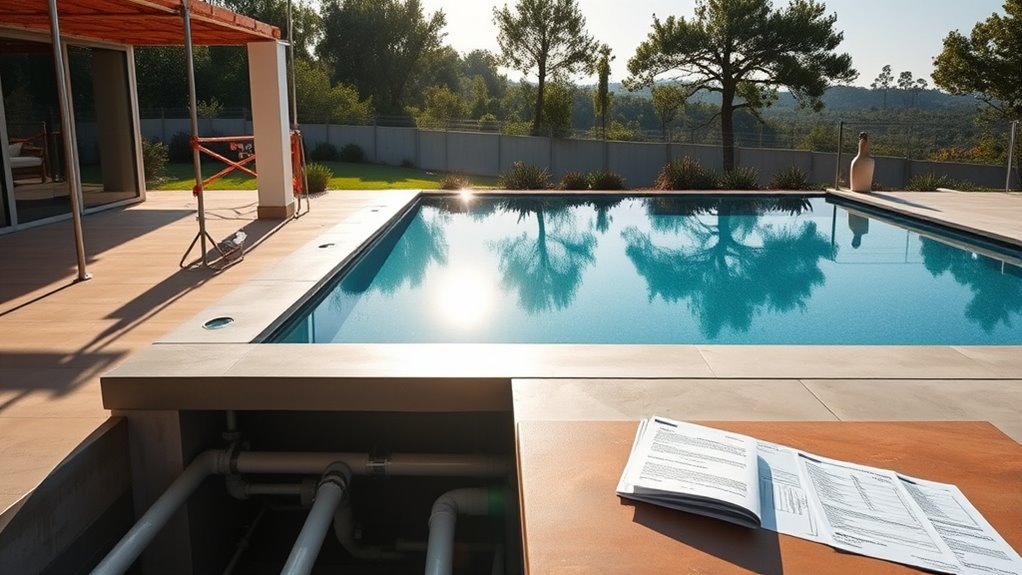

When building an infinity pool, you’ll need to prioritize structural integrity by guaranteeing proper reinforcement with concrete, steel rebar, and a strong foundation to handle hydrostatic pressure and soil movement. Consulting a structural engineer is vital to assess site-specific conditions and determine the right reinforcement solutions. Additionally, obtaining necessary permits guarantees your project complies with local building codes and safety standards. Keep exploring to learn how these considerations help create a durable, safe, and compliant infinity pool.

Get cleaning gear delivered free with Prime
- Fast, free delivery on millions of items
- Prime Video, Amazon Music and more included
- Member-only deals all year
Key Takeaways
- Engage a structural engineer to assess soil stability, site conditions, and design appropriate reinforcement for the infinity pool.
- Ensure the foundation is well-designed and reinforced to handle hydrostatic pressure and ground movement.
- Comply with local zoning laws, building codes, and safety standards through proper permits and documentation.
- Incorporate durable materials like reinforced concrete and steel rebar for structural integrity and longevity.
- Collaborate with professionals to prepare detailed plans that meet regulatory requirements and facilitate permit approval.
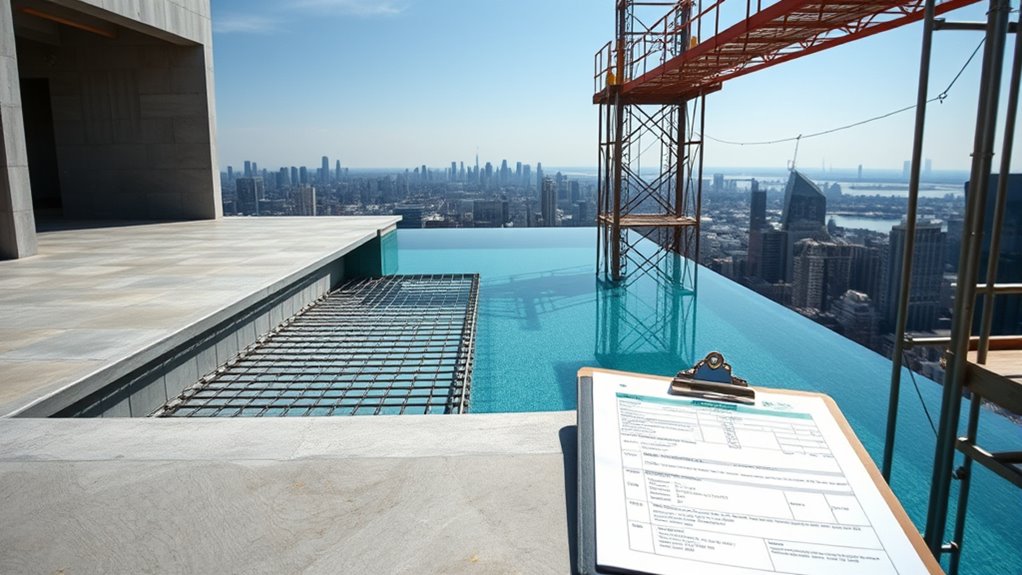
Building an infinity pool can add stunning visual appeal to your property, but it requires careful planning to guarantee safety and durability. One of the most critical aspects to consider is the structural integrity of the pool, especially when dealing with the forces exerted by water. Hydrostatic pressure, the force exerted by standing water, can be significant, particularly during heavy rain or when the pool is empty. If not properly managed, this pressure can cause structural damage or even collapse. To prevent this, you need to ensure your pool has adequate pool reinforcement, which involves using reinforced concrete, steel rebar, or other durable materials capable of handling these forces effectively. Proper reinforcement distributes the hydrostatic pressure evenly across the structure, reducing stress points and enhancing the pool’s lifespan.
Proper reinforcement ensures your infinity pool withstands hydrostatic pressure and lasts for years.
Before you start construction, it’s essential to consult with a structural engineer who understands the nuances of infinity pool design. They can assess your site’s soil stability, water load, and other environmental factors to determine the most suitable reinforcement solutions. A well-reinforced foundation not only withstands hydrostatic pressure but also mitigates risks associated with ground movement or shifting soil, which are common concerns in many locations. Neglecting these considerations can lead to costly repairs down the line, so investing in proper pool reinforcement from the outset is a wise decision.
In addition to structural reinforcement, you’ll need to secure the necessary permits before breaking ground. Building an infinity pool often involves complex engineering and safety standards that local authorities strictly enforce. Permits ensure your project complies with zoning laws, building codes, and safety regulations, which can vary widely depending on your location. Failure to obtain the proper permits can result in fines, forced modifications, or even legal issues that delay your project considerably. When applying for permits, be prepared to submit detailed plans illustrating the pool’s design, reinforcement details, and safety features. This documentation helps authorities verify that your project is structurally sound and adheres to all safety standards.
Furthermore, some regions may have additional requirements for features like pool fencing, barriers, or special reinforcements depending on local climate or soil conditions. Working with experienced professionals who understand local codes will streamline the permit process and ensure your infinity pool is both safe and compliant. Remember, investing time and resources into proper structural design and securing permits isn’t just about legality; it’s about creating a beautiful, safe space that endures over time. Proper planning and reinforcement safeguard your investment, giving you peace of mind as you enjoy your stunning infinity pool for years to come. Additionally, understanding soil stability is crucial for ensuring your foundation remains secure over time.
reinforced concrete for infinity pool
As an affiliate, we earn on qualifying purchases.
As an affiliate, we earn on qualifying purchases.
Frequently Asked Questions
What Are the Best Materials for Infinity Pool Construction?
You should choose high-quality concrete or gunite for your infinity pool construction, as they offer excellent durability considerations. These materials withstand water pressure and environmental factors, ensuring longevity. Fiberglass is also a good option for quicker installation and lower maintenance, but may not be as customizable. Using the right construction materials guarantees your infinity pool remains sturdy and beautiful for years, providing lasting enjoyment and value.
How Long Does the Permit Approval Process Typically Take?
Think of the permit approval process as a garden that needs time to bloom. Typically, it takes anywhere from a few weeks to a couple of months, depending on local permit timeline and approval factors. Factors like project complexity, your location, and how quickly authorities review your plans can influence the timeline. Stay proactive, provide clear documentation, and communicate with officials to help speed up the process.
Are There Specific Zoning Restrictions for Infinity Pools?
You need to check local zoning restrictions and building codes before installing an infinity pool. Many areas have specific regulations about pool setbacks, height limits, and safety features to ensure community safety and aesthetic consistency. Zoning restrictions can also include property line distances and permitted uses, so it’s essential to consult your city or county planning department. Doing this early helps prevent delays or legal issues later on.
Can an Infinity Pool Be Built in a Sloped Yard?
Yes, you can build an infinity pool in a sloped yard. Imagine the seamless blend of water and landscape, where the slope enhances the pool’s aesthetic appeal and creates stunning views. To achieve this, you’ll need careful design to integrate the pool with the terrain, ensuring structural stability. Proper planning allows the pool to complement the natural landscape, turning your sloped yard into a breathtaking retreat.
What Safety Features Are Recommended for Infinity Pools?
You should install safety features like child safety barriers or covers to prevent accidents, especially if kids are around. Make certain emergency access with clear pathways and easy-to-reach safety equipment. Consider installing alarms or sensors that alert you when someone enters the pool area. Regularly inspect and maintain these features to keep your infinity pool safe, giving you peace of mind while enjoying your luxurious backyard oasis.
steel rebar for pool construction
As an affiliate, we earn on qualifying purchases.
As an affiliate, we earn on qualifying purchases.
Conclusion
Building an infinity pool is an exciting project, but don’t let the hurdles catch you off guard. Make sure you’ve covered all your structural bases and secured the necessary permits before diving in. Ignoring these steps can turn your dream into a headache. Remember, it’s better to be safe than sorry—so lay a solid foundation and follow the rules. After all, a well-planned pool is worth its weight in gold!
hydrostatic pressure pool reinforcement
As an affiliate, we earn on qualifying purchases.
As an affiliate, we earn on qualifying purchases.
infinity pool permit application kit
As an affiliate, we earn on qualifying purchases.
As an affiliate, we earn on qualifying purchases.
Halloween Picks
halloween
As an affiliate, we earn on qualifying purchases.