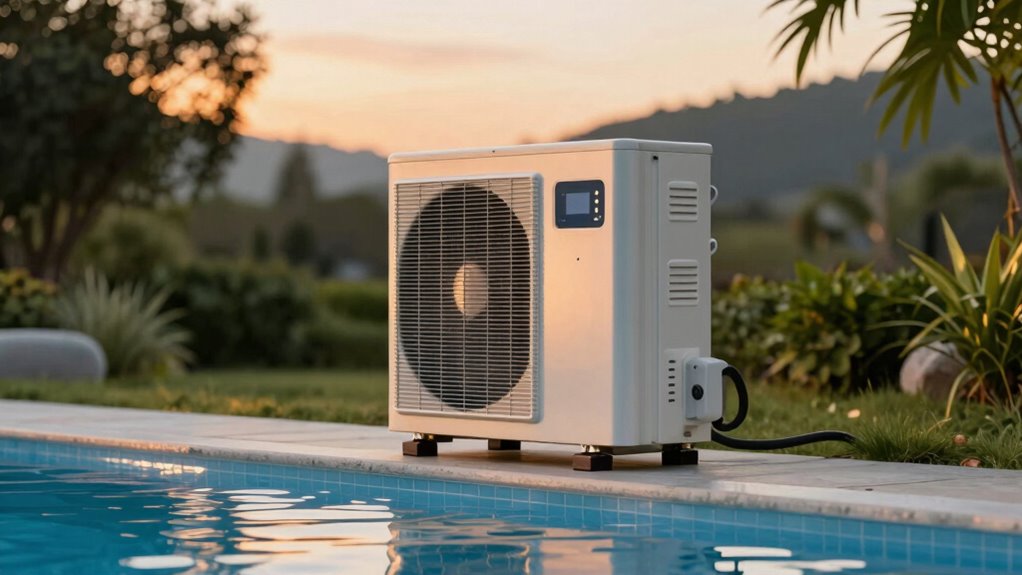
Inverter pool heat pumps run quieter and usually cost less to operate because they use variable-speed compressors that adjust their power based on your pool’s needs. This smooth operation reduces mechanical vibrations and noise, making your outdoor space more peaceful. Plus, by running at ideal speeds, they waste less energy, leading to lower bills over time. If you want to discover how these features work together to save you money and reduce noise, keep exploring the details.
Key Takeaways
- Variable-speed compressors operate at lower speeds, producing less noise during operation compared to traditional models.
- Smooth modulation of compressor output reduces mechanical vibrations and rattling sounds.
- Adjusting compressor speed prevents sudden jolts, decreasing noise peaks and enhancing outdoor comfort.
- Lower fan speeds during less intensive heating cut down on fan noise and overall sound levels.
- More efficient, adaptive operation minimizes energy waste and reduces operational costs over time.
What Are Inverter Pool Heat Pumps and How Do They Work?
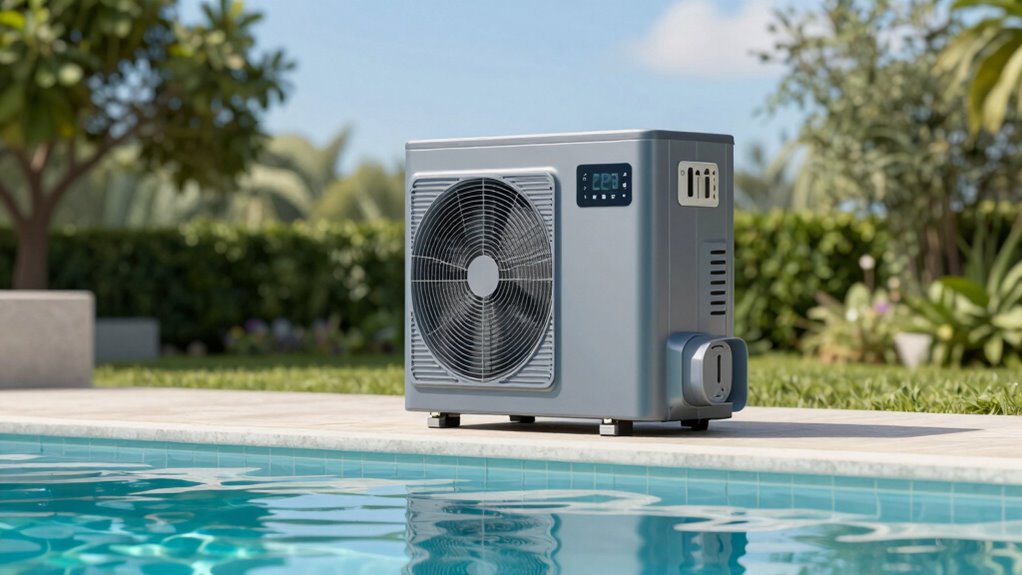
Inverter pool heat pumps are energy-efficient systems designed to heat your pool more effectively than traditional models. They use variable-speed compressors that adjust their power based on your pool’s heating needs, which helps save energy. When you install one, you’ll find that the initial installation costs can be higher than conventional heaters, but the long-term savings on energy bills often outweigh this expense. These systems also require less maintenance because they operate smoothly at ideal speeds, reducing wear and tear. Unlike traditional models that run at full capacity constantly, inverter heat pumps modulate their output, providing consistent, efficient heating. This makes them a smart choice for keeping your pool comfortable while minimizing ongoing costs and effort. Additionally, their quieter operation is due to the compressor’s ability to run at lower speeds when full power isn’t needed, making them a more quiet heating option overall. The use of inverter technology also contributes to their reputation for lower operational noise, enhancing user comfort and reducing disturbance. Moreover, the improved efficiency of inverter systems aligns with the goal of energy savings, helping pool owners reduce their environmental impact.
Why Are Inverter Pool Heat Pumps Quieter Than Traditional Models?
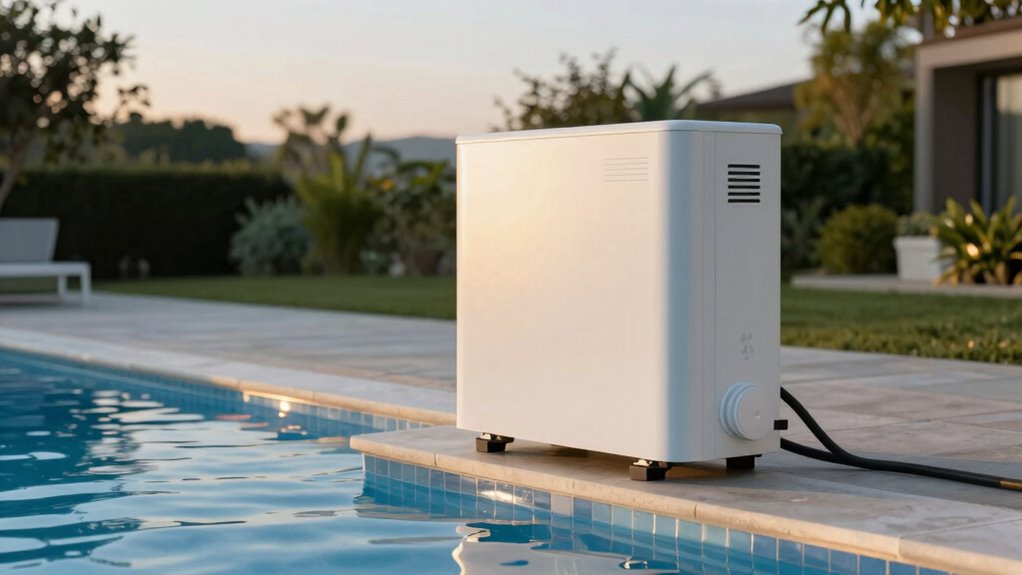
Because they operate with variable-speed compressors, inverter pool heat pumps run much more quietly than traditional models. This ability to adjust compressor speed means the unit doesn’t have to run at full power constantly, which considerably reduces noise levels. This noise reduction makes your pool area more comfortable and less disruptive, especially during nighttime operation. Additionally, quieter operation often correlates with smoother, more efficient performance, leading to cost savings over time. With less noise, you can enjoy your pool without the constant hum or loud cycling sounds common with old-style pumps. This combination of quieter operation and energy efficiency makes inverter pool heat pumps a smart choice for homeowners looking to enhance comfort while saving money on electricity bills. quieter operation also contributes to a more peaceful outdoor environment, enhancing your overall pool experience. Furthermore, the energy-efficient design minimizes environmental impact and reduces long-term operating costs. The variable-speed technology also helps in maintaining a consistent water temperature more precisely, improving overall pool maintenance. Incorporating advanced motor systems further optimizes performance and sustainability.
How Does Variable Speed Technology Reduce Noise and Save Energy?
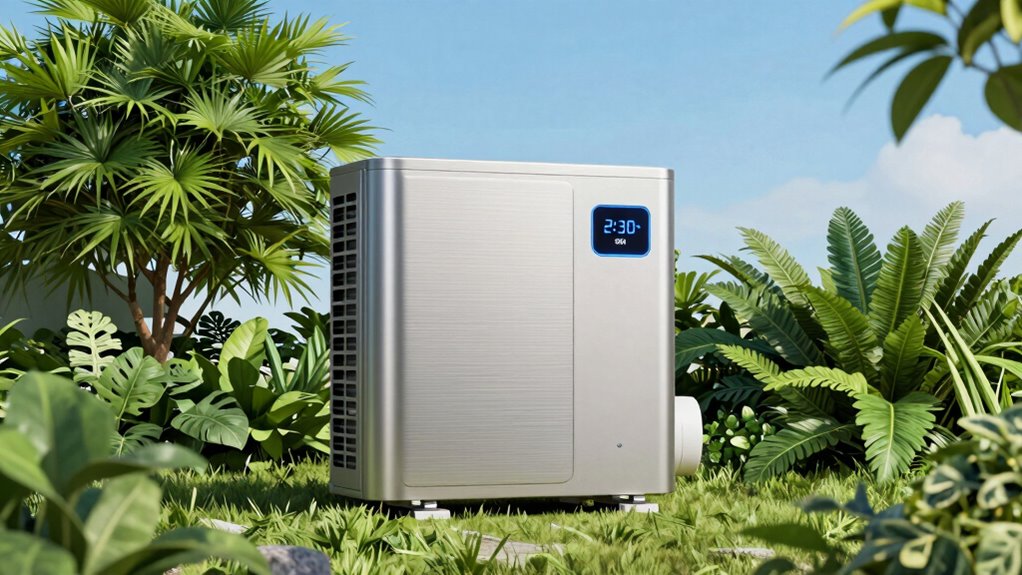
Variable speed technology allows your pool heat pump to operate more smoothly, reducing mechanical noise and vibrations. It automatically adjusts the compressor’s speed based on your pool’s heating needs, leading to quieter performance. Plus, this adaptive approach cuts down energy use by avoiding unnecessary high-speed operation. Additionally, AI-powered data analytics can optimize the system’s efficiency further by predicting heating demands. This integration leverages scientific principles of thermodynamics to enhance system performance and reliability. Moreover, incorporating advanced smart control systems enables real-time adjustments that improve overall efficiency. These intelligent controls exemplify adaptive management strategies that improve system responsiveness and user experience. This smart adjustment process not only enhances comfort but also contributes to work-life harmony by reducing operational disruptions.
Smoother Compressor Operation
When a pool heat pump uses variable speed technology, its compressor can adjust its power smoothly rather than turning on and off abruptly. This creates a much smoother compressor operation, reducing vibrations and noise. As a result, you’ll enjoy a quieter swimming experience and less disturbance around your pool area. You’ll notice the difference during operation, especially during low-speed settings. The compressor maintains a steady output, avoiding sudden jolts that cause noise and wear. This not only improves comfort but also enhances energy efficiency. Additionally, sound insulation around the equipment can further reduce noise transmission. Incorporating compressor design principles that focus on durability can also minimize vibrations and prolong equipment life. Moreover, implementing variable speed motors that are engineered for optimal performance can further lower operational noise and improve overall efficiency. Proper installation practices can also play a significant role in minimizing vibrations and noise levels.
Adaptive Speed Adjustments
Adaptive speed adjustments enable your pool heat pump to fine-tune its compressor operation in real-time, responding to changes in heating or cooling demands. This precise control reduces unnecessary energy use, making the system more efficient and lowering your energy bills. Because the compressor runs at lower speeds when less heating is needed, noise levels decrease considerably, resulting in quieter operation. Additionally, variable speeds improve solar compatibility, allowing the heat pump to work seamlessly with solar heating systems. These adjustments also influence maintenance requirements; smoother, more consistent operation reduces wear and tear on components, extending the system’s lifespan. Proper system regulation ensures optimal performance and prevents overworking the unit. Moreover, energy efficiency is significantly enhanced, leading to cost savings over time. This technology also helps in noise reduction, making outdoor environments more comfortable. Overall, adaptive speed technology not only enhances quietness and efficiency but also minimizes maintenance needs, giving you a smarter, more reliable pool heating solution.
Reduced Mechanical Noise
Because the compressor in traditional pool heat pumps runs at a constant high speed, it produces noticeable mechanical noise that can be disruptive. Variable speed technology reduces this noise by adjusting the compressor’s RPM based on demand, minimizing mechanical vibrations. This adaptive control allows the system to operate more smoothly and quietly. It leads to quieter operation overall. You’ll notice less fan noise since fans run at lower speeds when less cooling or heating is needed. The reduction in mechanical vibrations also means fewer rattles and less structural noise. As a result, your pool area remains peaceful, especially during nighttime use. Additionally, noise reduction techniques in inverter heat pumps contribute to a more tranquil outdoor environment. Plus, the quieter operation often correlates with energy savings, making inverter heat pumps both more pleasant and more efficient. Romanian folklore-inspired designs and effects can also enhance the ambiance of your outdoor space.
Are Inverter Pool Heat Pumps Worth the Investment?
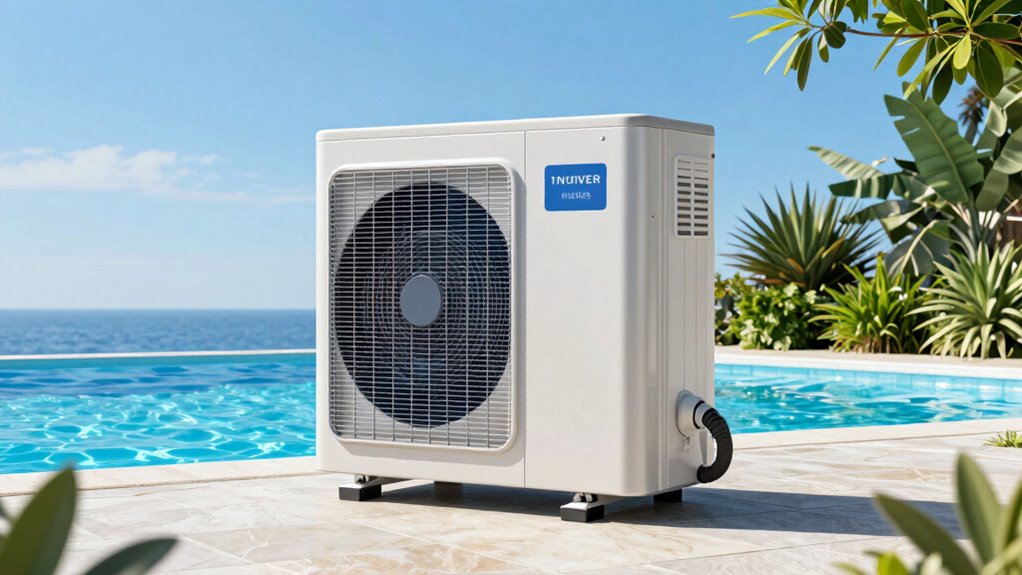
Are inverter pool heat pumps truly worth the investment? If you’re looking to lower energy costs, they often are, especially when combined with solar heating and pool covers. Inverter models adjust their compressor speed to match your pool’s heating needs, reducing energy waste. Over time, this can lead to significant savings compared to traditional heat pumps. Plus, their quiet operation makes pool use more enjoyable. While the upfront cost is higher, the efficiency gains and longer lifespan make them a smart choice for many pool owners. Incorporating solar heating or using a pool cover further enhances savings by reducing the workload on your heat pump. Overall, if you’re seeking a quieter, more cost-effective solution, inverter pool heat pumps are worth considering.
What Factors Affect the Operating Costs of Inverter Pool Heat Pumps?
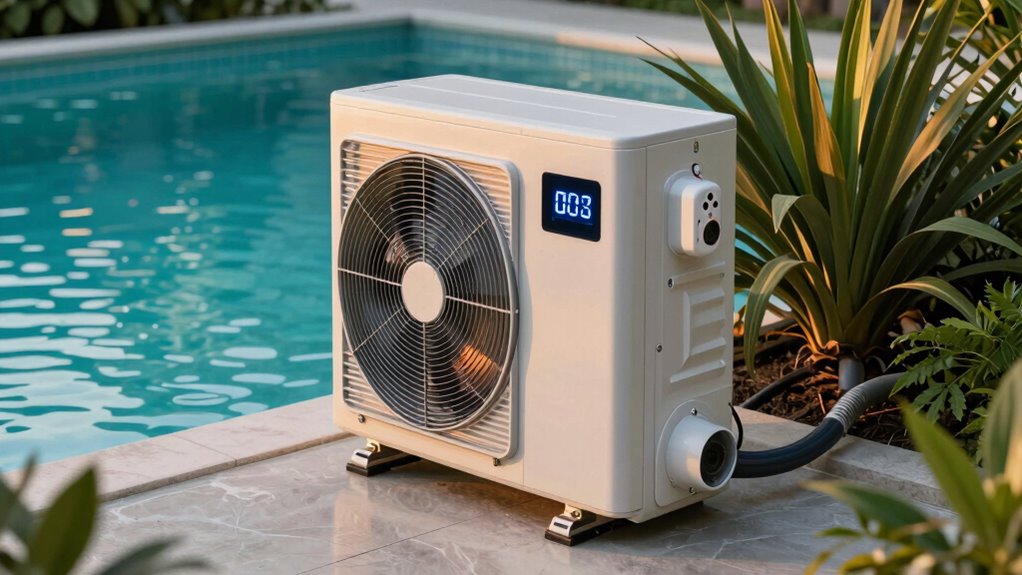
Your inverter pool heat pump’s operating costs mainly depend on its energy efficiency ratings and how often you use it. If you run it frequently or for long periods, your expenses will increase, even with a highly efficient model. Understanding these factors helps you manage costs and get the most out of your system.
Energy Efficiency Ratings
Energy efficiency ratings play a crucial role in determining how much you’ll spend to operate inverter pool heat pumps. Higher ratings mean less energy consumption, leading to lower costs and a reduced environmental impact. When comparing models, pay attention to these ratings to get the best cost comparison. Several factors influence these ratings:
- The compressor’s efficiency and technology
- The design and insulation of the heat pump
- The quality of the heat exchanger
- The inverter technology’s ability to modulate power based on demand
Usage Patterns and Duration
The way you use your inverter pool heat pump and how long you run it considerably impact operating costs. Running it consistently or for extended periods increases energy consumption, raising expenses. Proper installation considerations, like ideal placement and insulation, can improve efficiency and reduce runtime needs. Additionally, regular maintenance requirements, such as cleaning filters and checking refrigerant levels, keep the system operating smoothly and prevent costly repairs. To maximize costs, consider adjusting your pool’s heating schedule based on usage patterns, avoiding unnecessary operation during off-hours. Use the following table to understand how different factors influence costs:
| Usage Pattern | Impact on Costs | Tips for Optimization |
|---|---|---|
| Extended daily operation | Higher energy bills | Limit run time, use timers |
| Infrequent use | Less overall cost | Maintain system regularly |
| Installation considerations | Affects efficiency | Ensure proper setup |
| Maintenance requirements | Prevents costly repairs | Schedule routine check-ups |
How to Choose the Best Inverter Pool Heat Pump for Your Pool and Budget?
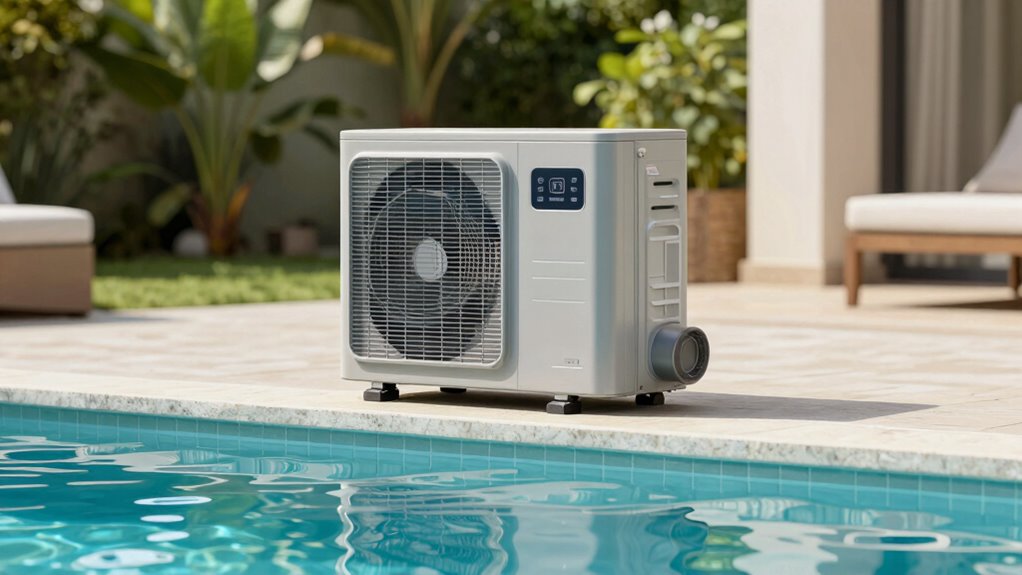
Choosing the right inverter pool heat pump depends on balancing your pool’s size, climate, and your budget. To make the best choice, consider installation considerations like space requirements and electrical setup, ensuring compatibility with your existing system. Look into warranty coverage to protect your investment and get peace of mind if issues arise. Additionally, evaluate the pump’s capacity to match your pool’s volume, avoiding over- or under-sizing. Energy efficiency ratings and noise levels also matter, as these impact long-term costs and comfort. Compare features such as inverter technology, controls, and durability. Finally, factor in upfront costs versus long-term savings to stay within your budget while getting the most efficient, reliable heat pump for your needs.
Tips to Maximize Energy Savings and Keep Noise Levels Low
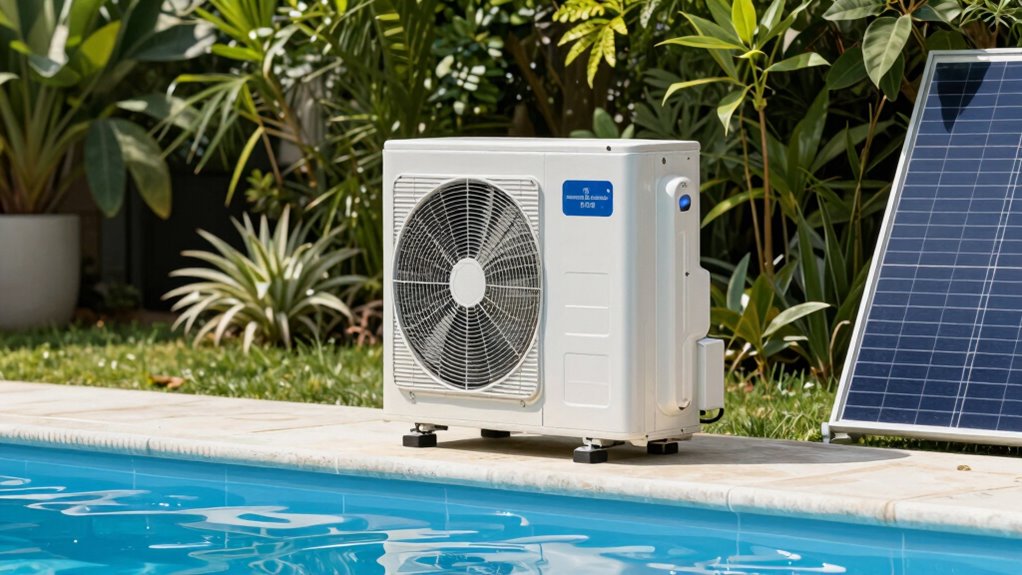
To maximize your inverter pool heat pump’s energy savings and keep noise levels low, start by setting the thermostat to an ideal temperature—avoiding unnecessary heating that wastes power. Properly maintaining your equipment, such as cleaning filters and checking for leaks, also enhances efficiency and reduces noise caused by strain. Use a timer or automation system to run the pump during off-peak hours, which can lower energy costs and minimize noise disturbances. Installing sound barriers or placing the unit on a stable, vibration-absorbing surface helps with noise reduction. Regularly scheduling professional maintenance ensures the system operates smoothly, saving energy and keeping noise levels at a minimum. Following these tips ensures you enjoy quieter operation while cutting down on energy expenses.
Frequently Asked Questions
Do Inverter Pool Heat Pumps Require Special Maintenance?
You don’t need special maintenance routines for inverter pool heat pumps, but regular upkeep helps guarantee noise reduction and efficiency. Clean the filter and check for debris monthly, and inspect the fan and compressor periodically. Keep the unit free from dirt and obstructions, which can cause noise issues. Following these simple steps keeps your inverter heat pump running quietly and smoothly, saving you money and extending its lifespan.
How Long Is the Typical Lifespan of an Inverter Pool Heat Pump?
Like a trusty steed in a modern knight’s tale, your inverter pool heat pump typically lasts 10 to 15 years with proper maintenance. Its energy efficiency helps prolong its life, reducing ongoing costs. While installation costs might be higher initially, the durability and savings on energy make it a smart investment. Regular upkeep guarantees it stays in top shape, so you enjoy warm water season after season.
Are Inverter Pool Heat Pumps Suitable for All Pool Sizes?
Inverter pool heat pumps are suitable for most pool sizes, but you should consider your pool size and climate suitability. Larger pools may require more powerful models, while smaller pools benefit from energy-efficient options. In warmer climates, these heat pumps perform well year-round, but in colder areas, you might need additional heating methods. Always choose a model that matches your pool size and climate for ideal performance and energy savings.
Can Inverter Pool Heat Pumps Operate Efficiently in Cold Climates?
Yes, inverter pool heat pumps can operate efficiently in cold climates, but you might wonder if they’ll keep your pool warm enough. Cold weather can pose efficiency concerns, yet modern inverter technology adjusts power precisely, helping maintain peak performance even in chilly conditions. With proper sizing and installation, you’ll enjoy consistent heating, ensuring your pool remains inviting regardless of the cold outside.
What Are Common Signs That a Pool Heat Pump Needs Servicing?
You’ll notice your pool heat pump needs servicing if the water isn’t heating properly or if it’s making unusual noises. Keep an eye out for signs like inconsistent temperature, increased energy bills, or frequent cycling. Common issues include pool filter problems that hinder flow and thermostat troubles that affect temperature control. Addressing these early prevents bigger repairs and keeps your heat pump running efficiently all season long.
Conclusion
Switching to an inverter pool heat pump can save you money and keep your backyard peaceful. Imagine a homeowner who upgraded and noticed a quieter, more efficient pool season, all while cutting energy costs. By choosing the right inverter model and following simple tips, you’ll enjoy a warmer pool and a quieter environment. It’s a smart upgrade that pays off in comfort, savings, and peace of mind—making your pool experience better all year round.