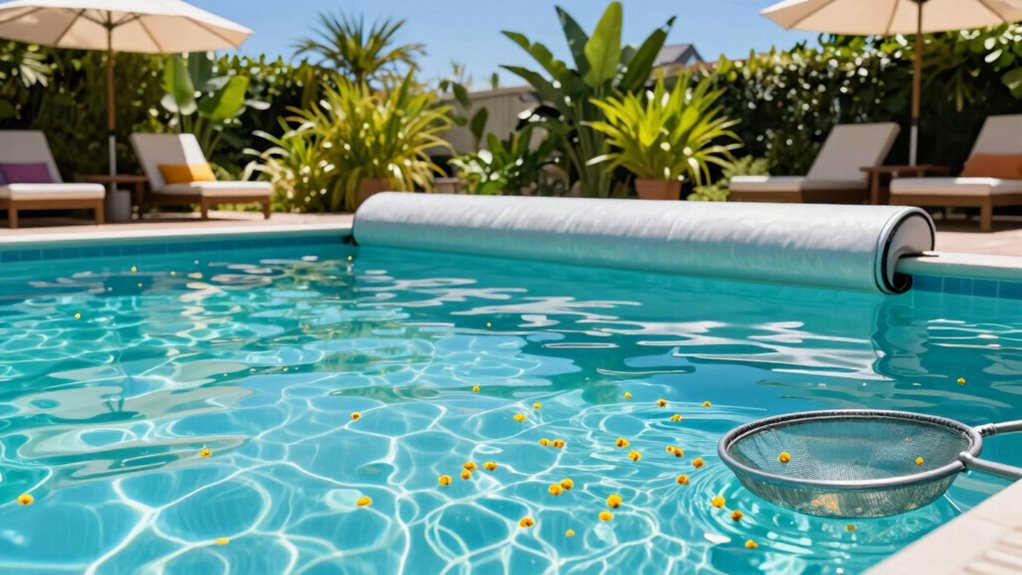
During pollen season, you should regularly skim the pool surface with a fine mesh net and keep the cover tightly fitted when not in use to block pollen entry. Improve filtration by running it 8-12 hours daily and maintaining proper water chemistry. Trim nearby trees, sweep the deck often, and shower before swimming to reduce pollen on your body. To learn more about keeping your pool pristine during pollen season, keep going for detailed tips.

Get cleaning gear delivered free with Prime
- Fast, free delivery on millions of items
- Prime Video, Amazon Music and more included
- Member-only deals all year
Key Takeaways
- Use a tightly fitting pool cover when not in use to block pollen entry and ease cleaning.
- Conduct daily surface skimming with a fine mesh net to remove pollen before it sinks.
- Run and maintain the filtration system for extended hours during peak pollen times for optimal removal.
- Trim surrounding trees and shrubs to reduce pollen-laden debris near the pool area.
- Shower before swimming to rinse off pollen and prevent contamination in the pool water.
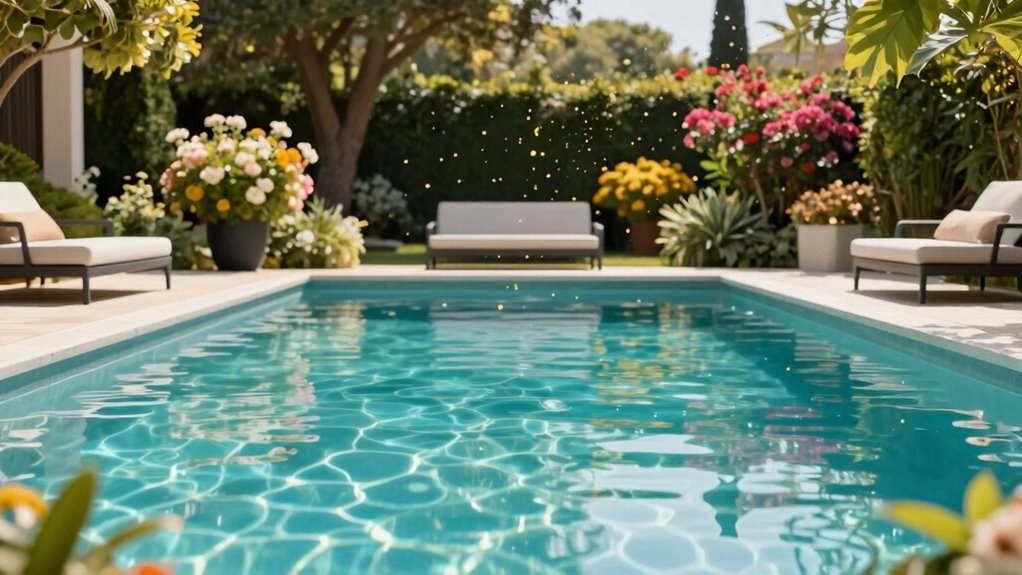
When pollen season hits, maintaining a pristine, inviting pool can feel like a challenge. Pollen particles drift through the air and settle on your pool’s surface, making your usual cleaning routine more demanding. To keep your pool looking perfect during this time, you need a strategic approach that emphasizes allergy prevention and diligent pool maintenance. This way, you can enjoy your pool without constantly battling a yellowish film or worrying about allergen buildup.
Start by implementing a regular skimming routine. Use a fine mesh net to remove pollen from the surface daily. This prevents the pollen from sinking to the bottom and forming stubborn stains or clouding your water. Keeping the surface clear also reduces the risk of pollen entering your filtration system, which can compromise water quality. Keep your pool covered when it’s not in use—invest in a high-quality, tightly fitted cover that prevents pollen from settling in the first place. Not only does this minimize the amount of pollen that enters your pool, but it also makes cleaning easier when you’re ready to swim again.
Skim daily, cover your pool, and keep the surface clear to reduce pollen buildup and simplify cleaning.
Adjust your pool’s filtration system for optimal performance. Run your filter longer each day—at least 8-12 hours—especially during peak pollen times. A robust filtration process captures airborne particles more effectively, maintaining clearer water. Pair this with regular backwashing or cleaning of your filter to remove accumulated pollen and debris. Checking and balancing your water chemistry is equally important; pH levels should stay between 7.2 and 7.6, and sanitizer levels should remain consistent to prevent algae and bacteria growth, which pollen can sometimes promote when it settles. Regularly monitoring your filtration system can help ensure optimal performance during pollen season. Additionally, consider upgrading to a pool cover designed to block finer particles, further reducing pollen entry. Incorporating proper circulation can also help distribute chemicals evenly and prevent pollen from settling in one area of your pool. Regular maintenance of your pool’s filtration and circulation system is essential during pollen season to keep water clear and free of contaminants. Improving your pool’s water chemistry can also help mitigate the effects of pollen and other airborne debris.
In addition to mechanical cleaning, consider using a pool clarifier during pollen season. Clarifiers help aggregate fine particles into larger clumps that your filter can easily trap. This improves water clarity and reduces the amount of pollen circulating in your pool. Also, maintain proper water levels—adding water regularly may be necessary as pollen and debris accumulate and are removed.
Finally, focus on allergy prevention by keeping your pool area tidy and free of excessive pollen-laden debris nearby. Regularly trim trees and shrubs around your pool, and sweep the surrounding deck. Shower before swimming to rinse off pollen from your body, and encourage others to do the same. These simple steps, combined with vigilant pool maintenance, will ensure your premium pool stays inviting and allergen-free, letting you enjoy the water without allergy worries.
As an affiliate, we earn on qualifying purchases.
Frequently Asked Questions
Can Pollen Affect the Chemical Balance of My Pool?
Yes, pollen can affect your pool’s chemical balance by introducing organic matter that promotes algae growth and consumes sanitizer. During pollen season, you need to prioritize pool maintenance and pollen prevention by regularly skimming the surface, brushing the walls, and checking your water chemistry. These steps help keep pollen from disrupting your pool’s chemical levels, ensuring clear, healthy water all season long.
What Outdoor Plants Contribute Most to Pollen in Pools?
You’ll find that trees like maples, oaks, and birches are the biggest culprits contributing pollen to your pool. These pollen-heavy plants can turn your outdoor oasis into a floating cloud spectacle. To fight back, consider planting pollen-resistant plants and improving outdoor air quality around your pool. So, while you’re dreaming of perfect swim days, remember, nature’s sneaky sneezers are busy adding a sneeze-worthy touch!
How Often Should I Replace Pool Filters During Pollen Season?
During pollen season, you should replace your pool filters every 4 to 6 weeks to maintain proper pool maintenance and filter efficiency. Pollen can clog filters quickly, reducing their ability to clean the water effectively. Regular replacement helps prevent debris buildup, keeps your pool clear, and guarantees the filtration system runs smoothly. Stay proactive to enjoy a clean, pollen-free swimming experience throughout the season.
Are There Natural Remedies to Reduce Pollen Around My Pool?
Yes, you can reduce pollen naturally around your pool by enhancing air filtration and water circulation. Use plants like lavender or eucalyptus nearby, which can help trap pollen particles and improve air quality. Regularly run your pool’s water circulation system to prevent pollen buildup and guarantee filters are clean. These natural methods, combined with consistent maintenance, create a healthier environment and keep your pool cleaner during pollen season.
Does Pollen Impact the Safety of Pool Water for Swimmers?
Pollen allergy can subtly threaten your pool’s safety. While pollen itself isn’t toxic, it can cloud pool water, affecting clarity and making it harder to spot issues. Pollen particles might also encourage algae growth, compromising water quality. So, yes, pollen impacts your pool’s safety by reducing clarity and potentially leading to contamination. Regular skimming and filtration keep your pool inviting and safe for every swimmer, even during pollen season.
high quality pool cover for pollen protection
As an affiliate, we earn on qualifying purchases.
As an affiliate, we earn on qualifying purchases.
Conclusion
Think of your pool as a delicate oasis, easily overwhelmed by the pollen storm outside. By staying vigilant—skimming regularly, maintaining your filtration system, and showering before swimming—you’ll keep your oasis clear and inviting. Don’t let pollen settle like dust on your paradise; instead, be the vigilant guardian of your sparkling retreat. With these simple steps, you’ll enjoy pristine waters all season long, making your pool a invigorating sanctuary amid nature’s pollen parade.
pool filtration system 8-12 hours
As an affiliate, we earn on qualifying purchases.
As an affiliate, we earn on qualifying purchases.
As an affiliate, we earn on qualifying purchases.
Halloween Picks
halloween
As an affiliate, we earn on qualifying purchases.