When choosing between travertine and limestone for your pool deck, consider safety, aesthetics, and maintenance. Travertine offers a textured surface that resists slipping and stays cooler underfoot, perfect for a natural look. Limestone provides a smooth, elegant finish with easier cleaning, ideal for modern designs. Both materials need sealing to prevent stains and wear. To discover which option best fits your style and needs, explore the details on their unique benefits.

Get cleaning gear delivered free — and shop member deals
- Fast, free delivery on millions of items
- Access to Prime Big Deal Days deals on October 6–7
- Prime Video, Amazon Music and more included
Key Takeaways
- Travertine offers textured, slip-resistant surfaces with natural warmth, ideal for safety and comfort around pools.
- Limestone provides a smooth, elegant finish that is easier to maintain and suits modern or classic outdoor designs.
- Both materials require sealing to prevent staining; travertine’s porosity demands more frequent upkeep.
- Travertine’s earthy tones blend seamlessly with natural landscaping, while limestone’s subtle hues complement sleek aesthetics.
- Consider your climate, desired look, and maintenance capacity when choosing between the textured, natural appeal of travertine and the refined smoothness of limestone.
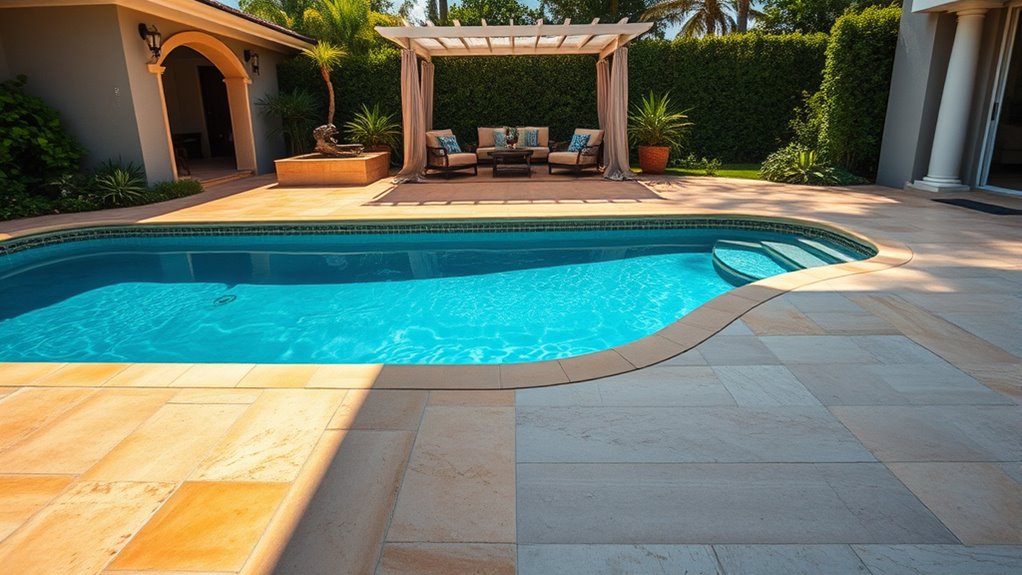
Selecting the right deck material for your pool is essential to guarantee safety, durability, and style. When it comes to creating a beautiful and functional outdoor space, choosing between travertine and limestone can notably impact how you enjoy your backyard. Both options offer natural elegance, but they differ in texture, maintenance, and overall performance. As you consider these materials, think about how pool lighting will enhance nighttime ambiance and how your outdoor furniture will complement your deck’s look and feel. The right choice can make your pool area inviting, safe, and stylish for years to come.
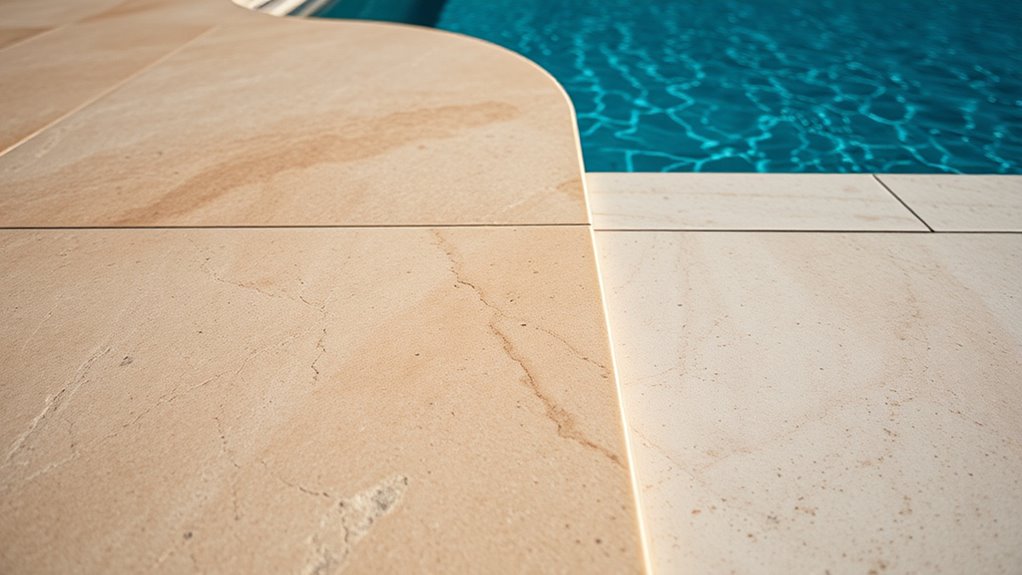
Travertine is widely appreciated for its textured surface, which provides excellent slip resistance—crucial for safety around water. This natural stone absorbs heat less than other materials, so your deck remains comfortable underfoot, even during hot summer days. Its porous surface allows for a range of finishes, from matte to polished, giving you flexibility to match your aesthetic preferences. When installing pool lighting, travertine’s light-reflective qualities can add a warm glow to your nighttime setup. Pairing it with outdoor furniture made from weather-resistant materials like wicker or aluminum creates a cohesive, inviting space that can withstand the elements. Its natural earthy tones blend seamlessly with lush landscaping, making your pool area feel integrated with nature.
Travertine’s textured surface offers slip resistance and a warm glow under pool lighting.
Additionally, considering the texture of the surface can influence safety and comfort, especially when barefoot or wet. Limestone, on the other hand, offers a smooth, uniform surface that exudes understated elegance. It tends to be more polished and refined, making it a popular choice for modern or classic designs. Limestone’s color palette varies from soft creams to grayish hues, providing versatility in matching your outdoor furniture and overall landscape. While it’s generally less porous than travertine, it still requires sealing to prevent staining and wear over time. When you install pool lighting, limestone’s reflective surface can enhance the ambient glow, creating a cozy atmosphere for evening swims or gatherings. Its sleek appearance pairs well with contemporary furniture styles, such as minimalist loungers or sleek dining sets.
Both materials demand proper maintenance to retain their beauty and safety. Travertine’s porosity calls for regular sealing, especially in areas exposed to pool chemicals or staining agents. Limestone also benefits from sealing, but its smoother surface can make cleaning easier. When selecting your deck, consider how the material will complement your outdoor furniture and lighting choices. A well-thought-out combination of deck material, lighting, and furniture transforms your pool area into a stylish retreat. Whether you lean toward the textured warmth of travertine or the polished elegance of limestone, your choice will define your outdoor experience, ensuring safety, durability, and a beautiful aesthetic for years to come.
As an affiliate, we earn on qualifying purchases.
Frequently Asked Questions
How Does Climate Affect Travertine and Limestone Durability?
Climate markedly impacts travertine and limestone durability. In hot, sunny climates, travertine’s climate resilience can decrease as it’s more prone to fading and cracking from UV exposure, reducing its material longevity. Limestone, on the other hand, handles moisture better in humid environments, offering better resilience against weathering. Your choice should consider your local climate to guarantee your pool deck maintains its beauty and durability over time.
Are There Eco-Friendly Options Within Travertine and Limestone Choices?
You’ll love knowing that eco-friendly options exist within travertine and limestone choices. Look for products made from natural sourcing, which considerably reduces environmental impact. Some suppliers prioritize sustainable quarrying and eco-conscious manufacturing processes, making these materials more environmentally friendly. These options help you create a beautiful pool deck while honoring the planet—because choosing sustainable materials isn’t just good for the environment, it’s a decision that causes ripples of positive change.
What Are the Maintenance Costs for Each Material Over Time?
You’ll find that travertine generally has lower maintenance costs over time due to its durability and resistance to weathering, making it a cost-effective choice. Limestone may require more upkeep, especially sealing and cleaning, which can add to your expenses. When considering longevity, travertine often lasts longer with less deterioration, providing better value in the long run. A clear cost comparison helps you choose a material that balances initial investment with ongoing maintenance.
Can These Materials Be Customized With Colors or Patterns?
Yes, both travertine and limestone offer various color options and pattern customization. You can choose from earth tones like beige, cream, or taupe, or opt for more unique shades. Pattern customization is also possible, allowing you to create intricate designs or unique layouts that match your style. Talk to your supplier about your preferences, and they can help you select or design a deck that perfectly fits your vision.
How Do Slip Resistance and Safety Compare Between the Two?
Travertine and limestone both offer good slip safety, but travertine’s textured surface generally provides better material traction, reducing slip risks around your pool. Limestone can be somewhat smoother, which might feel less secure when wet. To maximize safety, opt for textured finishes on either material and consider adding non-slip treatments. Prioritizing slip safety guarantees you and your guests enjoy your pool area without worry about slipping accidents.
As an affiliate, we earn on qualifying purchases.
Conclusion
Ultimately, both travertine and limestone offer unique benefits for your pool deck, blending natural beauty with durability. While travertine’s cool, textured surface invites comfort and elegance, limestone’s warm tones and resilience provide a timeless appeal. Choosing between them is like balancing practicality with aesthetics—each material tells a different story. Your ideal deck material reflects your personal style and priorities, turning your pool area into a luxurious retreat or a durable gathering spot.
As an affiliate, we earn on qualifying purchases.
As an affiliate, we earn on qualifying purchases.
Fall Picks
fall essentials
As an affiliate, we earn on qualifying purchases.