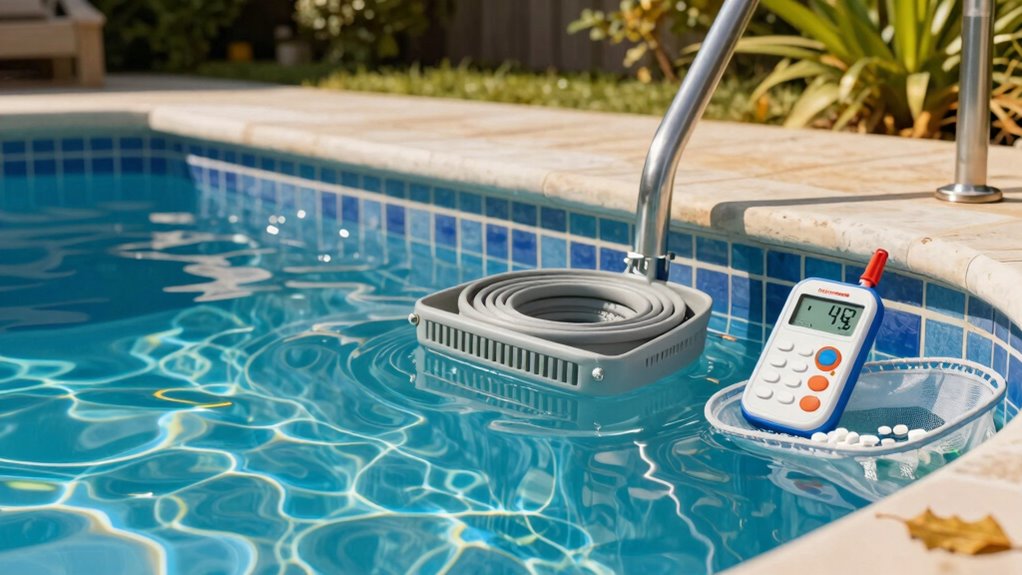
Before summer, focus on balancing your water chemistry by testing pH, chlorine, and alkalinity regularly to prevent algae and bacteria growth. Inspect your equipment, including pumps, filters, and skimmers, to guarantee everything operates smoothly and efficiently. Keep the surface clean by skimming leaves and debris and brushing the walls to prevent buildup. Establishing these habits now helps extend your pool’s lifespan and keeps it safe and inviting. You’ll discover more essential tips if you continue exploring.

Get cleaning gear delivered free with Prime
- Fast, free delivery on millions of items
- Prime Video, Amazon Music and more included
- Member-only deals all year
Key Takeaways
- Test and balance water chemistry (pH, chlorine, alkalinity) twice weekly to prevent algae and bacteria growth.
- Regularly inspect and clean pool equipment, including filters, skimmers, and pumps, to ensure optimal function.
- Skim debris and brush pool walls weekly to maintain water clarity and prevent algae buildup.
- Properly store and handle chemicals to ensure safety and maintain their effectiveness.
- Establish routine maintenance habits early to extend equipment lifespan and ensure a safe, sparkling pool for summer.
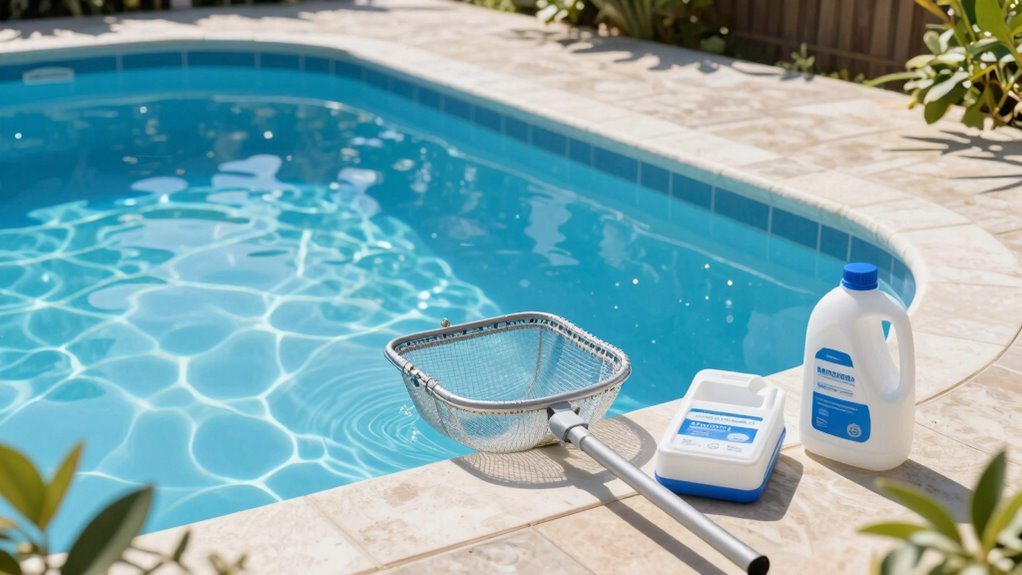
Maintaining a clean and healthy pool requires consistent habits and attention. As summer approaches, it’s essential to establish a routine that keeps your pool inviting and safe for everyone. The foundation of good pool maintenance starts with understanding the importance of chemical balancing. Proper chemical levels guarantee that algae, bacteria, and other contaminants don’t take hold, and they also help prevent skin irritation and equipment damage. Regularly testing your water’s pH, chlorine, alkalinity, and stabilizer levels allows you to adjust the chemicals as needed. You should check these levels at least twice a week during the warmer months, especially as sunlight and usage increase. Keeping the chemicals balanced isn’t just about safety; it also extends the lifespan of your pool’s equipment and reduces the need for costly repairs later on. Remember, adding chemicals in small, controlled amounts and following manufacturer instructions helps maintain proper balance without over-treating the water. Incorporating safe handling practices for chemicals reduces risks and ensures effective treatment. Staying informed about water chemistry can help you make better decisions about your pool’s maintenance routine. Additionally, understanding proper chemical storage is crucial to prevent accidents and maintain chemical effectiveness.
Alongside chemical balancing, equipment inspection plays an essential role in pre-summer pool care. Before the season kicks into high gear, thoroughly examine your pool’s pumps, filters, heaters, and skimmers. Look for signs of wear, leaks, or blockages that could impair performance. Cleaning or replacing filters guarantees ideal water circulation and cleanliness, preventing debris from settling on the bottom or causing algae growth. Inspect hoses and connections for cracks or loose fittings, which can lead to leaks or equipment failure. Properly functioning equipment not only keeps your pool water clear but also conserves energy and prolongs the lifespan of your system. Consider scheduling a professional inspection if you’re unsure about the condition of your equipment, as catching issues early can save you money and headaches later.
Consistency is key when it comes to pool maintenance, especially before summer. Set aside time each week to perform these essential tasks—testing water chemistry and inspecting equipment—so problems don’t build up. Additionally, skimming leaves and debris from the surface and brushing the pool walls should become part of your routine. These simple habits help maintain water clarity and prevent the buildup of algae or bacteria. By establishing a proactive approach now, you’ll enjoy a sparkling, safe pool all season long. Your efforts in maintaining proper chemical balance and inspecting your equipment aren’t just chores—they’re investments in your pool’s longevity, your safety, and your summer fun.
Products Worth Considering

Philips Hue Bridge Pro Starter Kit with 4 A19 E26 Smart Bulbs

Arlo Ultra 4K HDR Wireless Security Camera (3rd Gen), 3-Camera Kit with SmartHub

Philips Hue Smart Light Starter Kit with Bridge and 4 White and Color A19 Bulbs
As an affiliate, we earn on qualifying purchases.
Frequently Asked Questions
How Often Should I Change My Pool’s Filter?
You should change your pool’s filter every 1 to 2 years, depending on usage and pool size. Regularly check your pool equipment to guarantee proper water circulation and filter performance. If you notice cloudy water, reduced flow, or increased debris, it’s time to replace the filter sooner. Keeping your filter clean and functioning at its best helps maintain water clarity and extends the life of your pool equipment.
What’s the Best Way to Prevent Algae Growth?
To prevent algae growth, you should maintain proper chemical stability by regularly testing and balancing your pool’s pH and chlorine levels. Use algaecide treatments as needed and guarantee your filtration system runs efficiently. Also, brush the pool walls and skimmer regularly to remove any algae spores. Keeping your pool clean and chemically balanced creates an inhospitable environment for algae, helping you enjoy a sparkling, algae-free pool all summer long.
Should I Use Salt or Chlorine for My Pool?
You can’t judge a book by its cover, and choosing between salt or chlorine depends on your preferences. Saltwater systems use salt as a natural sanitizer, offering a gentler, less harsh experience. Chlorine alternatives, like mineral or UV systems, also exist if you want to reduce chemical use. Consider your budget, maintenance ease, and skin sensitivity to decide if salt or traditional chlorine suits your pool best.
How Can I Detect Hidden Leaks Early?
You can detect hidden leaks early by monitoring water levels regularly. If you notice consistent water loss despite no visible splashing or leaks, it might be due to evaporation or a leak. Use a pool cover to help reduce evaporation and keep water levels stable. To confirm a leak, perform a bucket test: fill a bucket with water, place it in the pool, and compare the water levels after 24 hours.
When Is the Ideal Time to Balance Pool Chemicals?
Think of your pool as a delicate dance partner—you need perfect timing. You should balance your pool chemicals after shocking or adding stabilizers, ideally in the late afternoon when water temperature is stable and pool safety is highest. This guarantees proper chemical distribution, keeps water clear, and prevents irritation. Regularly balancing your chemicals helps maintain safe, inviting water, making every swim enjoyable and worry-free.
Conclusion
By staying consistent with your pool maintenance habits, you’re planting seeds for a summer filled with crystal-clear waters and endless fun. Think of your pool as a garden—you can’t expect vibrant blooms without regular care. Keep up with cleaning, chemical balance, and inspections, and you’ll guarantee your oasis stays inviting all season long. When you nurture your pool like a treasured friend, it’ll reward you with sparkling waters that shine as brightly as your summer days.