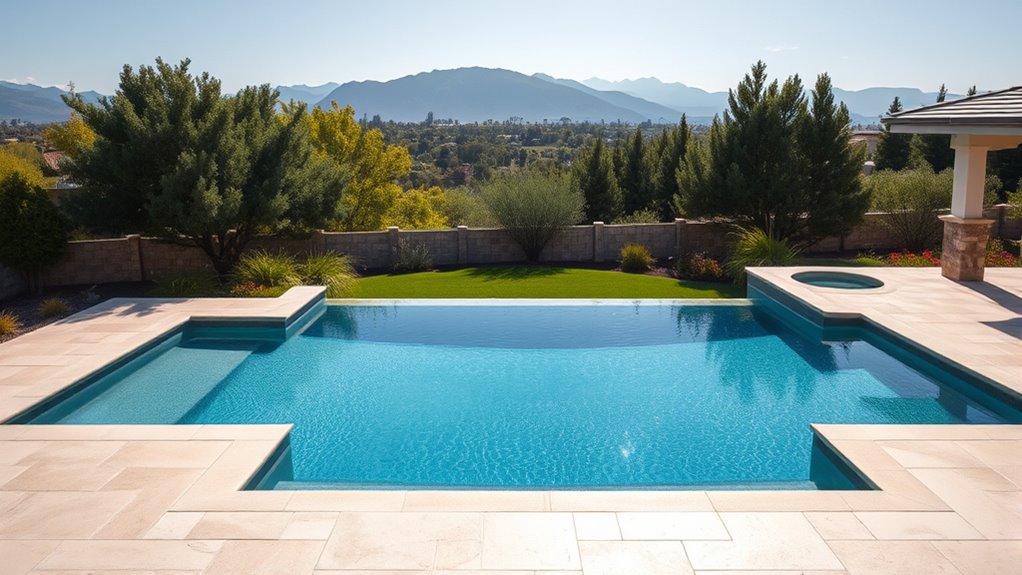

Transforming a standard pool into a vanishing-edge design is possible but depends on your current pool structure, site conditions, and your aesthetic vision. While a full retrofit involves complex modifications like installing hidden overflow systems and reinforcing pool walls, more affordable options like elevated decks can create a similar illusion. For detailed steps, costs, and alternatives that suit your setup, you’ll find valuable insights further below.

Get cleaning gear delivered free — and shop member deals
- Fast, free delivery on millions of items
- Access to Prime Big Deal Days deals on October 6–7
- Prime Video, Amazon Music and more included
Key Takeaways
- Retrofitting a standard pool into a vanishing-edge design is technically challenging but possible with significant structural modifications.
- Existing pool structure must be assessed for reinforcement, waterproofing, and compatibility with overflow systems.
- Upgrading circulation, filtration, and installing hidden catch basins are essential for proper vanishing-edge function.
- Cost and complexity depend on pool size, shape, current materials, and site conditions, often making it a substantial investment.
- Alternative aesthetic solutions or partial vanishing edges can offer similar visual effects with lower retrofit costs.
vanishing edge pool overflow system
As an affiliate, we earn on qualifying purchases.
As an affiliate, we earn on qualifying purchases.
Understanding the Basics of Vanishing-Edge Pools
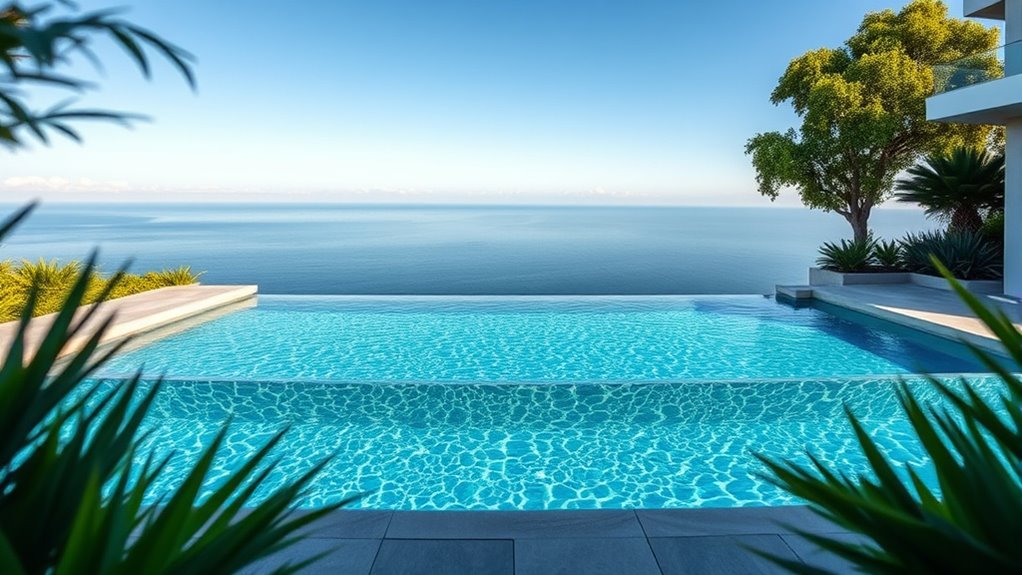
Vanishing-edge pools, also known as infinity pools, create the illusion that the water extends seamlessly into the horizon. You’ll notice that the water appears to flow over the edge, blending with the sky or landscape beyond. This effect is achieved through a carefully designed catch basin below the overflow edge, which collects and recirculates the water. The key feature is the hidden edge, which makes the pool seem to vanish into its surroundings. These pools often sit on elevated sites, enhancing the visual impact. Understanding this basic principle helps you appreciate the sophisticated engineering behind them. Additionally, water circulation is essential for maintaining the seamless effect and ensuring proper function. While they look simple and elegant, vanishing-edge pools require precise construction and careful planning to achieve that seamless, stunning look.
As an affiliate, we earn on qualifying purchases.
Assessing Your Existing Pool’s Structure and Design
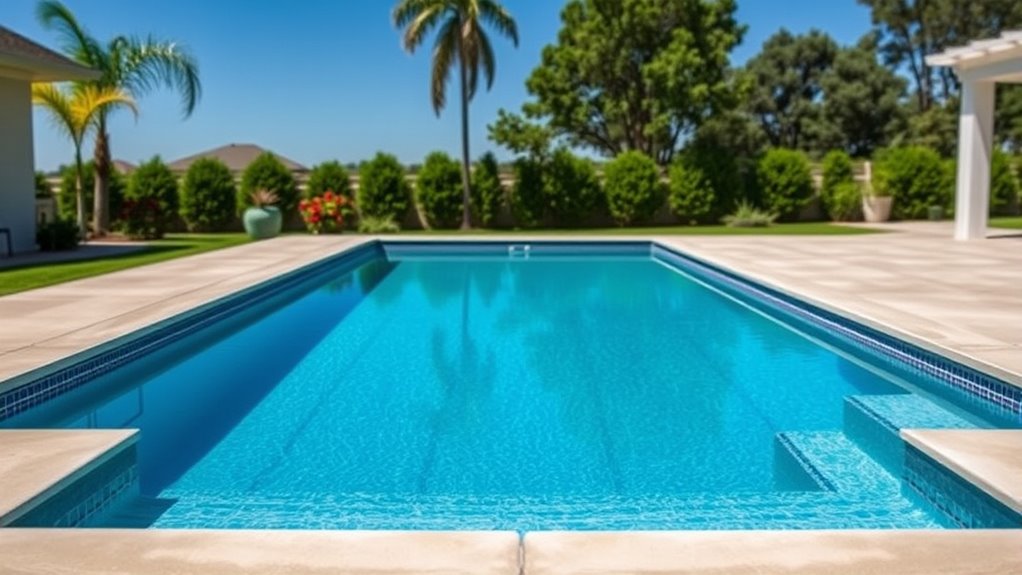
Before beginning the retrofit, you need to thoroughly evaluate your existing pool’s structure and design. Check for any structural issues, such as cracks, uneven surfaces, or weak spots that could compromise the vanishing-edge installation. Understand your pool’s size, shape, and depth to determine if it can accommodate the new design. Consider the current water level and overflow system, as they impact the edge’s functionality. Use the table below to visualize key aspects:
| Aspect | Consideration |
|---|---|
| Structural integrity | Are there cracks or weak spots? |
| Pool dimensions | Is the size suitable for a vanishing edge? |
| Water system | Can current plumbing support the new overflow? |
| Surrounding deck area | Is there enough space for the edge and spillover? |
This assessment guides your retrofit plan and feasibility. Additionally, reviewing the existing water circulation system can help ensure the retrofit will function smoothly and efficiently.
pool reinforcement and waterproofing kit
As an affiliate, we earn on qualifying purchases.
As an affiliate, we earn on qualifying purchases.
Key Factors Influencing Retrofit Feasibility
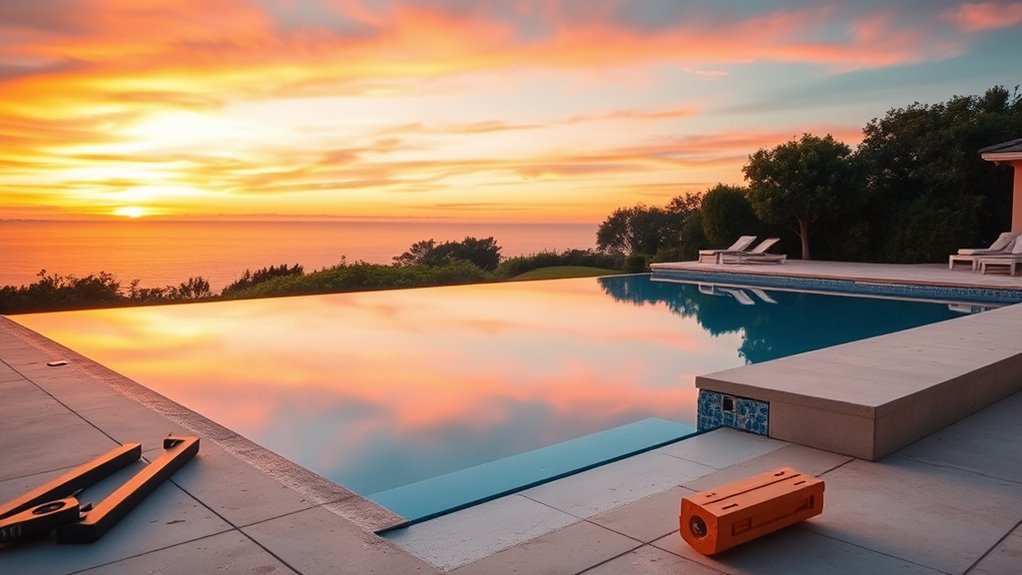
Several factors determine whether retrofitting your existing pool with a vanishing edge will be feasible. First, assess your pool’s current structure—its shape, size, and shell integrity. A sturdy, well-built shell makes conversion easier, while cracks or weaknesses may require costly repairs. The location and slope of your yard also matter; a flat, stable area simplifies installation. Water supply and drainage systems need to accommodate the additional demands of a vanishing edge, so existing plumbing must be compatible or adaptable. Local regulations and zoning codes can impact your project, especially regarding water features and safety standards. Ultimately, your budget and timeline influence feasibility; complex retrofits require more resources and planning. Evaluating these factors upfront helps determine whether transforming your pool into a vanishing-edge is practical. Additionally, understanding the design complexity of a vanishing edge feature can help you better assess the scope of the project and its potential challenges.
elevated deck for pool aesthetic
As an affiliate, we earn on qualifying purchases.
As an affiliate, we earn on qualifying purchases.
Technical Challenges in Converting a Standard Pool
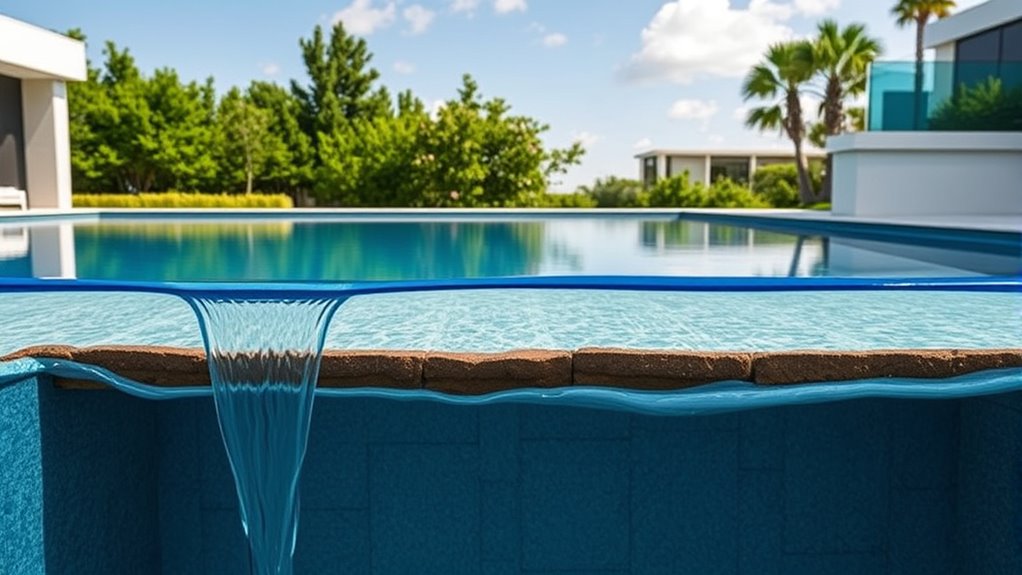
Converting a standard pool to a vanishing-edge requires addressing several technical challenges. You’ll need to reinforce the existing structure to handle increased water pressure, manage water levels carefully, and upgrade your pump and filtration systems. These adjustments are vital to guarantee safety, functionality, and a seamless shift to the new design. Additionally, understanding the Pimple Patch technology can inform proper maintenance and repairs during the conversion process, ensuring the longevity and performance of your new vanishing-edge feature.
Structural Reinforcement Needs
Have you considered the significant structural reinforcement required to transform a standard pool into a vanishing-edge feature? You’ll need to verify the pool’s walls and base can handle additional stress from the thin, high-performance edge. This often involves strengthening the concrete shell with rebar or post-tension cables to prevent cracking or bowing. The edge itself must be carefully engineered to support the water’s weight without sagging or breaking. Reinforcement may also include installing a robust coping or bond beam to distribute pressure evenly. If your existing structure isn’t designed for these loads, retrofit solutions like additional framing or thicker walls become necessary. Proper reinforcement ensures the integrity of the vanishing edge, avoiding costly failures and guaranteeing safety and durability over time. Additionally, understanding the structural integrity of your pool is essential for ensuring that reinforcement techniques are appropriately applied to support the unique stresses involved.
Water Level Management
Achieving precise water level control is one of the main technical challenges when transforming a standard pool into a vanishing-edge feature. You need to maintain a consistent water height across the entire pool surface to ensure a seamless edge. Small variations in water level can cause the edge to look uneven or compromise its function. To manage this, you’ll require a carefully calibrated overflow system that constantly monitors and adjusts the water level. This involves installing sensors, automatic overflow valves, and possibly additional piping to direct excess water to a sump or recirculation system. Ensuring reliable, real-time control is essential to prevent overflows or dry spots, which could damage the edge or disrupt the visual effect you’re aiming for. Mom – Amazing Life Together
Pump and Filtration Upgrades
Upgrading the pump and filtration system is crucial to support the increased water movement and clarity demands of a vanishing-edge pool. You’ll need a high-capacity pump to handle higher flow rates and guarantee the water remains clear and properly circulated. Additionally, the filtration system must be capable of removing fine particles efficiently. Consider these key points:
- Select a pump with adjustable flow to prevent overflow or splashing.
- Upgrade to a multi-stage filtration system for ideal water clarity.
- Guarantee the pump can operate continuously without overheating.
- Incorporate energy-efficient models to reduce operational costs.
- Ensuring color accuracy in water clarity and flow can improve the visual appeal of your vanishing-edge feature.
These upgrades are necessary for maintaining both the aesthetic and functional integrity of your vanishing-edge feature, preventing issues like water buildup or poor water quality.
Budget Considerations and Cost Estimates
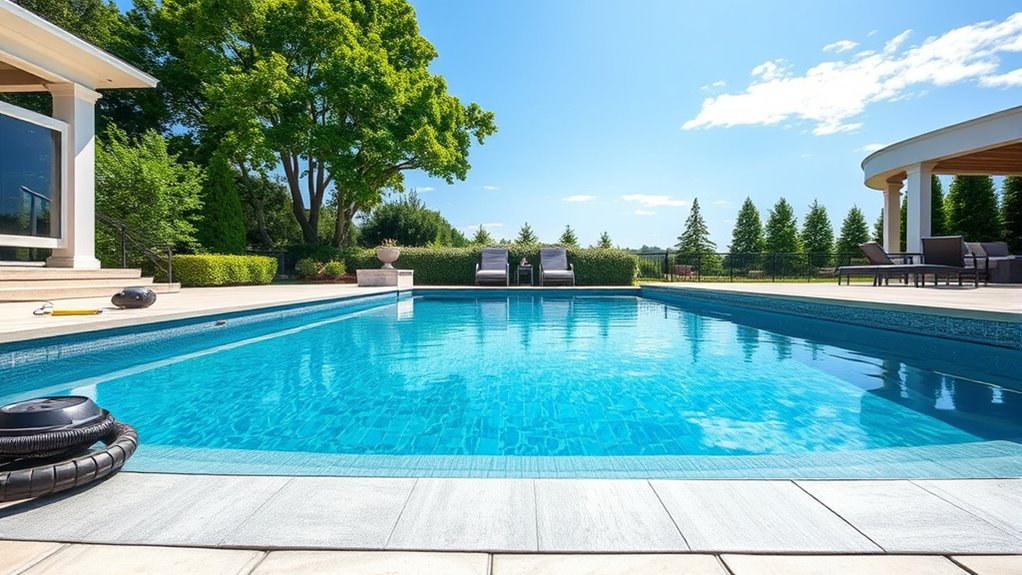
Understanding the costs involved helps you plan effectively for converting your pool. Factors like materials, labor, and existing setup influence the overall price, so it’s important to contemplate them carefully. If you’re on a budget, exploring affordable alternatives can still achieve a stunning vanishing-edge effect without overspending. Additionally, considering emotional alignment during the planning process can help ensure your project aligns with your overall vision and satisfaction.
Conversion Cost Factors
When planning to retrofit a standard pool into a vanishing-edge design, it’s essential to take into account the various factors that influence the overall cost. First, the complexity of your existing pool’s structure impacts labor and materials needed. Second, the type of materials selected for the edge—such as glass, stone, or concrete—can markedly alter expenses. Third, site-specific challenges like accessibility, slope, or existing landscaping add unforeseen costs. Fourth, your choice of additional features, such as lighting or water features, will also increase the budget. Understanding these factors helps you anticipate potential cost fluctuations and plan accordingly. Being aware of these conversion cost factors allows you to make informed decisions and avoid surprises during the retrofit process. Additionally, considering space and organization can help optimize the installation process and future maintenance.
Budget-Friendly Alternatives
If you’re working with a limited budget, there are several cost-effective options to achieve a vanishing-edge look without overspending. One approach is to repurpose existing materials, like using a painted or textured waterline to create the illusion of an edge rather than installing a full-scale overflow. You can also opt for a smaller or partial vanishing edge instead of a full one, reducing excavation and construction costs. Installing a simple, gravity-fed overflow system often costs less than complex pump-driven setups. Additionally, shop around for affordable contractors and materials, and consider DIY elements where possible. While these alternatives might not deliver a perfect vanishing edge, they can considerably enhance your pool’s aesthetic without breaking the bank. For long-term savings, consider incorporating a whole-house water filtration system to maintain water clarity and reduce maintenance costs.
Necessary Modifications and Construction Adjustments
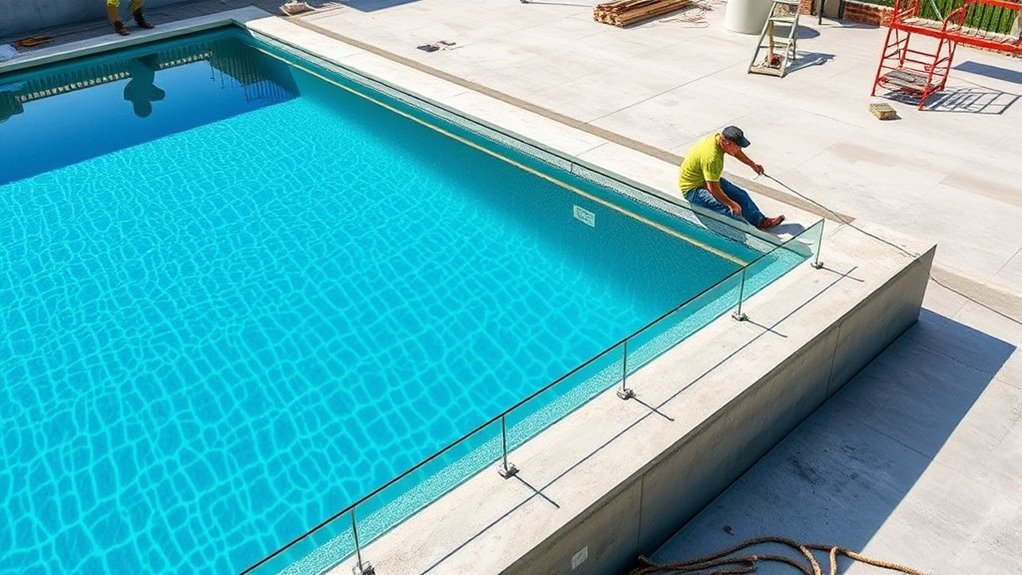
Transforming a standard pool into a vanishing-edge feature requires precise modifications to the existing structure. You’ll need to reinforce the pool’s perimeter, adjust the plumbing, and create a catch basin for water recirculation. These modifications guarantee proper water flow and prevent structural issues. Key adjustments include:
Transforming your pool into a vanishing-edge feature involves structural reinforcement, plumbing adjustments, and creating a recirculation catch basin.
- Reinforcing the coping edge for additional support.
- Installing a hidden overflow system to manage water levels.
- Modifying the pool’s internal plumbing for continuous circulation.
- Constructing a suitable catch basin or reservoir to collect and recirculate water efficiently.
These steps are essential for a seamless shift to a vanishing edge, ensuring functionality and durability while maintaining the pool’s aesthetic appeal. Proper planning and precision are critical for successful retrofitting.
Choosing the Right Materials and Equipment
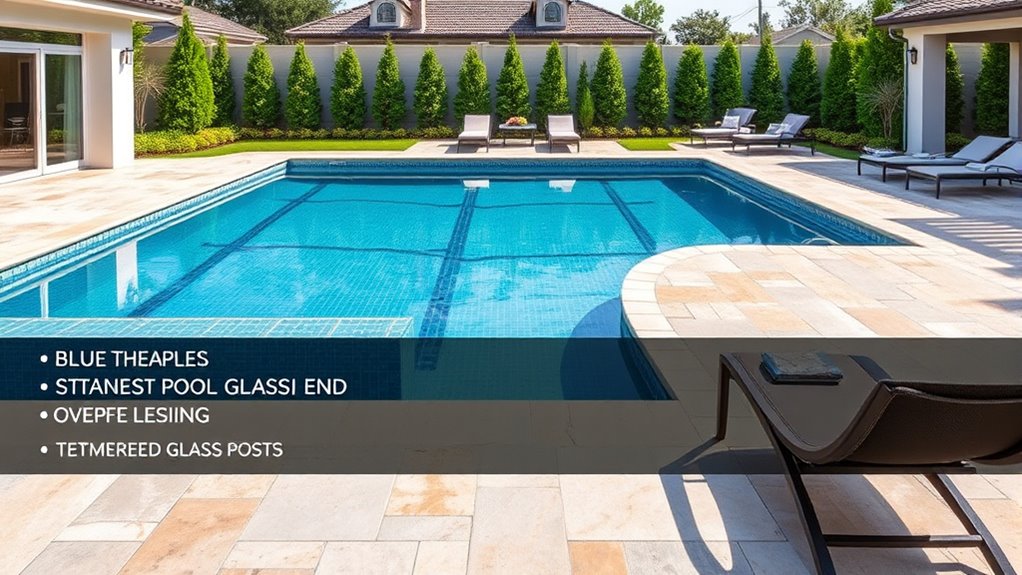
Selecting the right materials and equipment is crucial to guarantee your vanishing-edge pool functions properly and looks stunning. You’ll want durable, high-quality materials like tempered glass or acrylic for the spillway and edge, ensuring they withstand water flow and weather conditions. For the pool shell, opt for corrosion-resistant finishes such as pebble plaster or quartz to resist staining and wear. The overflow basin and drainage system should feature reliable pumps and filtration systems that can handle increased water movement. Precision in selecting waterproof sealants and bonding agents is essential to prevent leaks. Additionally, choose a motorized weir or catch basin that offers smooth operation and minimal maintenance. Using the right materials ensures longevity, safety, and a sleek, professional appearance for your retrofit.
Hiring Professionals: Architects and Contractors
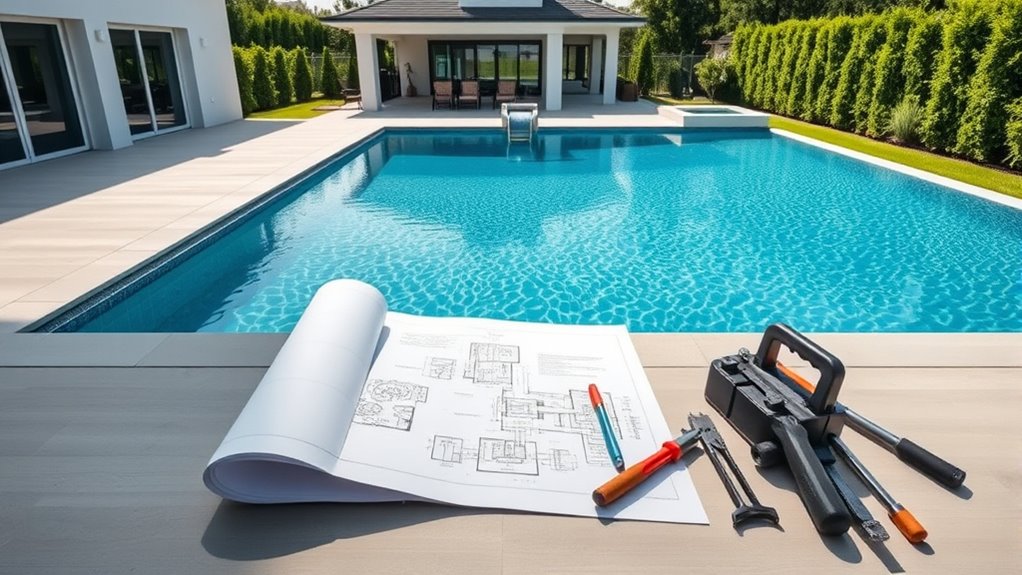
Hiring experienced architects and contractors is essential to guarantee your vanishing-edge pool retrofit is executed safely and meets your design goals. Their expertise assures structural integrity, proper water management, and adherence to safety standards. Plus, they can navigate the complexities of existing pool modifications efficiently.
To find the right professionals, consider these key factors:
- Experience with vanishing-edge designs – Proven track record ensures quality work.
- Clear communication skills – They should understand your vision and explain technical details.
- Licensing and insurance – Protects you from liability and guarantees legitimacy.
- Detailed project proposal – Outlines scope, timeline, and costs, preventing surprises.
Partnering with the right experts makes your retrofit smoother, safer, and aligned with your aesthetic goals.
Timeline and Project Management Expectations
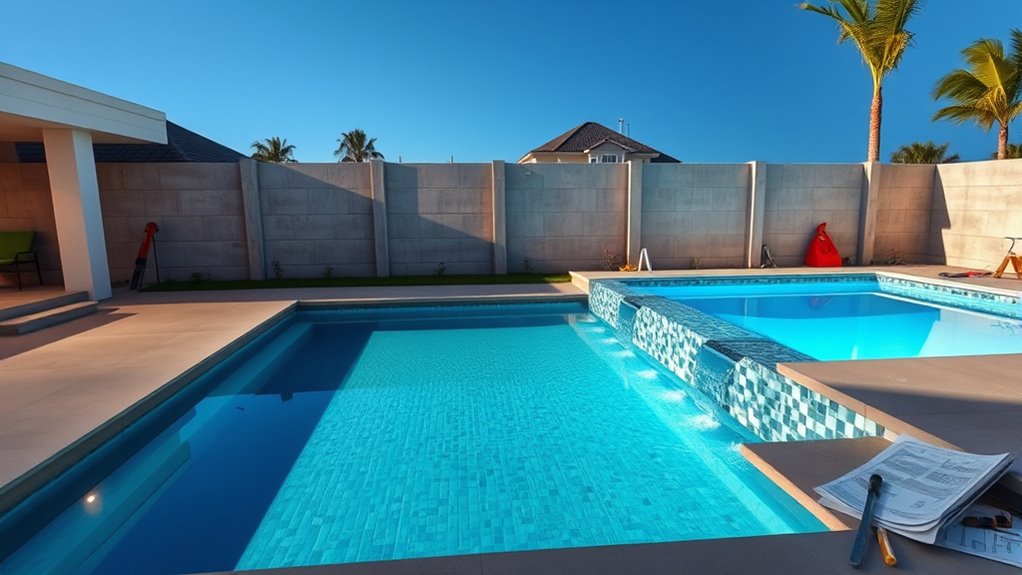
Understanding the timeline and managing expectations are crucial for a smooth vanishing-edge pool retrofit. The project typically takes several weeks to months, depending on your pool’s complexity, existing conditions, and contractor availability. You should plan for potential delays caused by unforeseen issues like structural challenges or permit approvals. Clear communication with your contractor helps set realistic milestones and keeps everyone aligned. Regular updates are essential to avoid surprises and ensure the project stays on track. Be prepared for some inconvenience, like limited access or temporary pool closure. Establishing a detailed schedule upfront reduces miscommunication and helps you anticipate key phases. By staying involved and flexible, you’ll better manage expectations and contribute to a successful, timely transformation.
Alternatives to Full Retrofit for Achieving a Vanishing-Edge Look
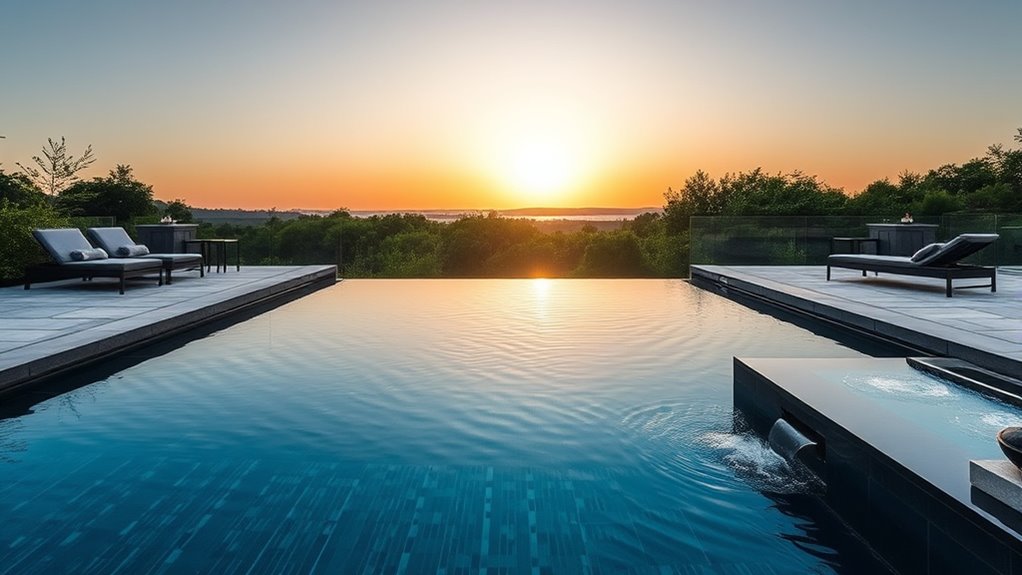
If a full retrofit isn’t an option, consider adding partial waterfall features to create the illusion of a vanishing edge. Integrating an elevated deck can also enhance the effect without major construction. These alternatives can give your pool a striking look with less complexity and cost.
Partial Waterfall Features
When a full retrofit to a vanishing-edge pool isn’t feasible, partial waterfall features offer an attractive alternative. These features create the illusion of a seamless edge without extensive modifications. You can incorporate waterfalls along one side or corner of your pool, directing water over a ledge that mimics a vanishing edge. This approach provides visual appeal and a relaxing soundscape, enhancing your outdoor space.
Consider these key points:
- Focuses on visual impact with less invasive work
- Offers flexibility in placement and design
- Reduces overall project cost and complexity
- Provides an elegant progression between pool and landscape
Partial waterfalls serve as a practical compromise, delivering the aesthetic of a vanishing edge without full-scale retrofitting.
Elevated Deck Integration
Elevated deck integration offers a practical alternative to full-scale retrofitting by creating the illusion of a vanishing edge through strategic deck design. By raising the deck around your pool, you can visually extend the waterline to the horizon, mimicking a vanishing edge without altering the pool’s structure. This approach involves constructing a sleek, cantilevered or supported deck that appears to seamlessly blend with the water’s edge. You can enhance the effect with glass panels or transparent balustrades, providing unobstructed views. Elevated decks also give you the flexibility to incorporate lighting, built-in seating, or landscaping features that complement the overall aesthetic. While it doesn’t create a true overflow, this method offers a stunning visual upgrade with less invasive work.
Frequently Asked Questions
Can a Retrofit Vanishing-Edge Pool Be Added to an Above-Ground Pool?
Yes, you can retrofit an above-ground pool into a vanishing-edge pool, but it’s quite complex. You’ll need to reinforce the structure, add a catch basin or hidden reservoir, and install a recirculation system to handle the overflow. It’s essential to work with experienced professionals to guarantee proper design and safety. Keep in mind, retrofitting may be costly and require significant modifications to your existing pool.
How Long Does a Typical Retrofit Project Usually Take?
A typical retrofit project usually takes between two to six weeks, depending on the pool’s size and complexity. You’ll need time for planning, permits, and construction work, including excavation, structural modifications, and waterproofing. Delays can happen if unforeseen issues arise. To stay on schedule, work closely with experienced contractors and make sure all materials and permits are prepared before starting. This way, you’ll have a smoother, quicker transformation process.
Are There Any Safety Concerns With Retrofitting a Vanishing-Edge Design?
Yes, there are safety concerns when retrofitting a vanishing-edge design. You need to guarantee the structural integrity of the pool and proper waterproofing to prevent leaks. Additionally, installing secure barriers and safety features around the edge is vital to prevent accidents, especially if you have children or pets. Working with experienced professionals helps address these concerns effectively, making sure your new edge is both beautiful and safe.
Is Special Maintenance Required for a Retrofit Vanishing-Edge Pool?
You’ll need to perform special maintenance on your retrofit vanishing-edge pool, much like a homeowner in California who had to regularly clean the catch basin to prevent debris buildup. The edge requires frequent inspections of the water level, pump function, and seal integrity to guarantee proper water flow and safety. Regular cleaning of the catch basin and adjusting water levels are essential to keep your vanishing edge looking pristine and functioning correctly.
Can Retrofitting Affect the Pool’s Structural Warranty?
Retrofit a pool to a vanishing-edge can influence your structural warranty, especially if it involves significant modifications. You might void the original warranty or face limited coverage if the retrofit isn’t approved by the manufacturer. To protect yourself, consult your warranty terms and work with licensed professionals who can ensure the work meets safety standards. Proper documentation and adherence to manufacturer guidelines help prevent warranty issues down the line.
Conclusion
Transforming your standard pool into a stunning vanishing-edge feature isn’t impossible, but it’s a journey full of surprises. With the right planning, you’ll soon see the water seamlessly blending into the horizon, creating a breathtaking illusion. However, unexpected challenges could still be lurking beneath the surface, waiting to test your patience and resolve. Are you ready to take the plunge and turn your backyard into a mesmerizing escape? The edge of transformation is closer than you think.
Evergreen bestsellers Picks
bestsellers
As an affiliate, we earn on qualifying purchases.