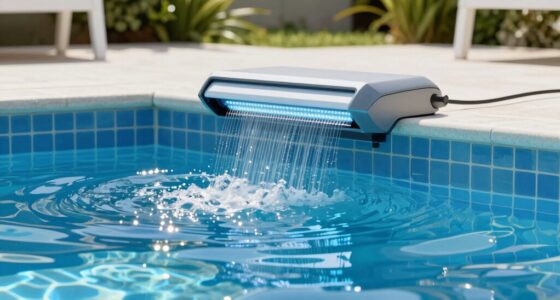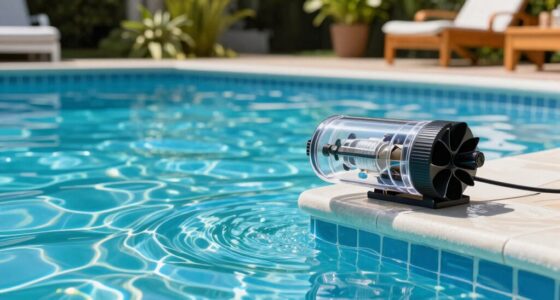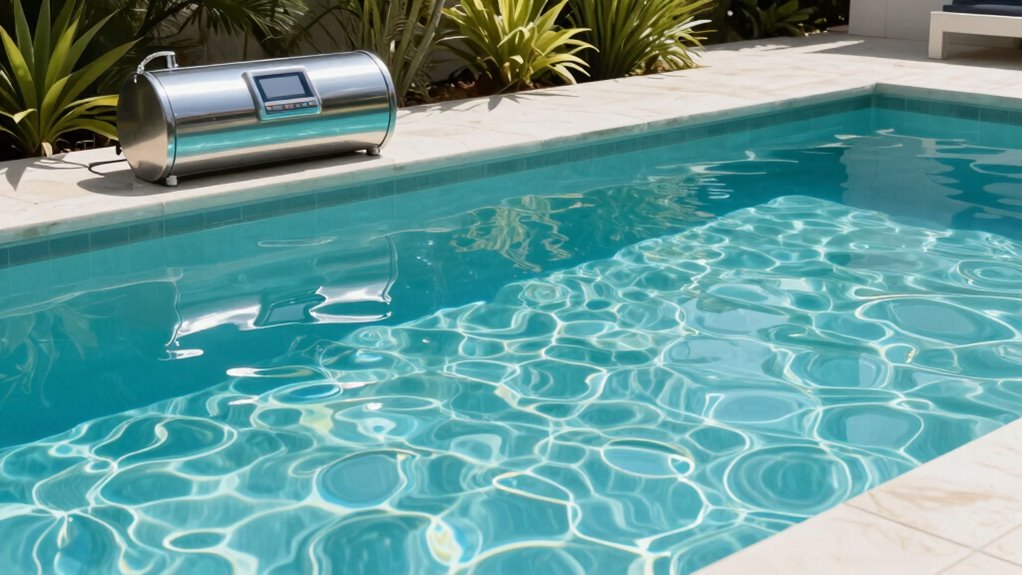

Saltwater systems offer a gentler, more natural swimming experience by producing sanitizer through electrolysis, which reduces harsh chemical use. However, they can cause corrosion of metal parts like ladders and heaters if not properly managed. Regularly monitoring water chemistry, using corrosion-resistant equipment, and maintaining your system are key to longevity. If you’re curious about how to keep your premium pool in top shape, there’s more you’ll want to discover about proper upkeep and best practices.

Get cleaning gear delivered free with Prime
- Fast, free delivery on millions of items
- Prime Video, Amazon Music and more included
- Member-only deals all year
Key Takeaways
- Saltwater systems provide a gentler, more natural swimming experience with fewer harsh chemicals.
- Corrosion of metal components is a significant concern, requiring corrosion-resistant materials and protective measures.
- Regular maintenance of water chemistry and cleaning of salt cells are essential for optimal system performance.
- While easier than traditional chlorination, saltwater pools still demand routine upkeep to prevent damage and water quality issues.
- Proactive management, including monitoring salt levels and using sacrificial anodes, extends the longevity of premium saltwater pools.

Saltwater systems have become a popular choice for premium pools because they offer a more natural and gentle swimming experience. Instead of harsh chlorine chemicals, saltwater pools produce a steady stream of sanitizer through electrolysis, creating softer, more skin-friendly water. However, despite their appeal, saltwater systems come with their own set of challenges, particularly when it comes to corrosion issues and maintenance challenges.
Saltwater pools offer a natural, gentle experience but require careful maintenance to prevent corrosion and keep water balanced.
One of the most significant concerns you’ll face with saltwater pools is corrosion. The salt in the water can gradually eat away at metal components, including pool ladders, handrails, heaters, and even the salt cell itself. Over time, this can lead to costly repairs or replacements if you don’t stay vigilant. You might notice rust spots or corrosion buildup, which signals that the salt levels are too high or that protective coatings are failing. To combat this, you need to regularly monitor salt concentrations and assure that your pool’s metal parts are made with corrosion-resistant materials or coated with protective finishes. Using sacrificial anodes can also help prevent damage, but neglecting corrosion issues can shorten the lifespan of your pool equipment. Additionally, proper water chemistry maintenance is essential to prevent scaling and other problems caused by imbalanced water conditions.
Maintenance challenges are another aspect you’ll need to handle with care. While saltwater pools generally require less chemical balancing than traditional chlorinated pools, they still demand regular upkeep. Testing the water’s pH, alkalinity, and salt levels is essential to keep the water balanced and prevent issues like scaling or cloudy water. The salt cell, which is central to producing sanitizer, can become fouled or calcified over time, reducing its efficiency. Cleaning the cell periodically is necessary, and failure to do so can lead to costly replacements or decreased water quality. Additionally, the presence of salt can accelerate the buildup of mineral deposits on pool surfaces and equipment, demanding more frequent cleaning and maintenance routines.
While saltwater systems simplify chlorination and create a more natural swimming environment, they aren’t entirely maintenance-free. You’ll need to stay proactive about inspecting and maintaining your equipment and managing corrosion risks. If you ignore these challenges, you could face higher repair costs and compromised water quality. Properly balancing your water chemistry and investing in corrosion-resistant equipment can help you enjoy the benefits of a saltwater system without the downsides. Overall, understanding and managing these issues ensures your premium pool remains a luxurious, safe, and inviting retreat for years to come.
saltwater pool salt level tester
As an affiliate, we earn on qualifying purchases.
As an affiliate, we earn on qualifying purchases.
Frequently Asked Questions
How Much Does a Saltwater System Typically Cost to Install?
A saltwater system typically costs between $1,000 and $2,500 to install, depending on your pool size and features. You’ll also need to account for ongoing expenses for maintenance and salt. This system uses chlorine generation to keep your water clean, reducing the need for traditional chlorine. It can also help with pool heating efficiency, making your swimming experience more comfortable while saving you money over time.
Are Saltwater Pools More Environmentally Friendly Than Traditional Pools?
Saltwater pools are incredibly eco-friendly, often more than you might expect. They considerably reduce the need for harsh chemicals, leading to a cleaner, greener environment. The eco-friendly benefits include less chemical runoff and lower energy consumption for pool maintenance. By choosing a saltwater system, you’re making a smarter choice for the planet, helping to protect water quality and reduce chemical waste, making your pool both eco-conscious and enjoyable.
Can Saltwater Systems Be Used With All Pool Types?
Yes, you can use saltwater systems with most pool types, but it depends on your pool’s construction and equipment. Saltwater systems require good water circulation to prevent damage and ensure even distribution of salt. You should also consider how salt impacts pool lighting and other fixtures. Before installation, check compatibility with your pool’s materials and guarantee proper maintenance to keep your pool in prime condition.
What Maintenance Is Required for Saltwater Pools?
You need to regularly check your saltwater system components and maintain proper pool chemical balance. This includes testing and adjusting chlorine levels, pH, alkalinity, and stabilizer to keep water clean and healthy. Clean the salt cell periodically to prevent calcium buildup, and inspect the system for leaks or issues. Proper maintenance guarantees your saltwater pool stays sparkling, safe, and efficient, extending the lifespan of your equipment and providing a great swimming experience.
How Long Do Salt Cells Usually Last Before Replacement?
Salt cell lifespan generally ranges from 3 to 7 years, depending on usage and water chemistry. You’ll need to monitor salt levels and keep the cell clean to extend its life. Replacement frequency varies, but most pool owners replace their salt cells every 4 to 5 years. Regular maintenance and proper water balance are key to maximizing the longevity of your salt cell, saving you money and ensuring your pool stays crystal clear.
As an affiliate, we earn on qualifying purchases.
Conclusion
In the end, understanding the ins and outs of saltwater systems helps you make the best choice for your pool. They offer a gentler, more natural swimming experience and can save you time on maintenance. But don’t forget, every rose has its thorn. Do your homework, weigh the pros and cons, and remember that knowledge is power. When you’re informed, you’re better equipped to keep your pool sparkling and your enjoyment endless.
As an affiliate, we earn on qualifying purchases.
sacrificial anodes for saltwater pools
As an affiliate, we earn on qualifying purchases.
As an affiliate, we earn on qualifying purchases.
Halloween Picks
halloween
As an affiliate, we earn on qualifying purchases.