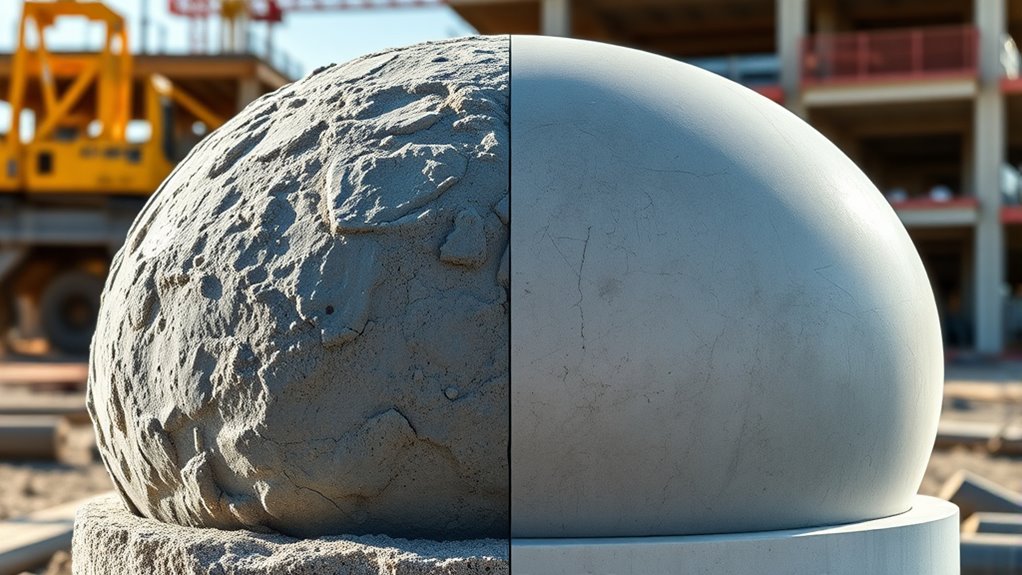

For an infinity pool shell, shotcrete often wins with faster application, better adherence to complex shapes, and lower labor costs. It’s ideal if you want quick construction and a durable surface that resists cracking. Cast-in-place offers a smoother finish and more precise details but takes longer to build and can be pricier. To choose the best method for your project, consider your design goals, budget, and timeline — more details follow.

Get cleaning gear delivered free — and shop member deals
- Fast, free delivery on millions of items
- Access to Prime Big Deal Days deals on October 6–7
- Prime Video, Amazon Music and more included
Key Takeaways
- Shotcrete offers faster application and better adaptability for complex, irregular shapes typical of infinity pool shells.
- Cast-in-place provides a smoother, more precise finish suitable for detailed aesthetic features.
- Shotcrete’s high bonding strength enhances durability in harsh environmental conditions.
- Cast-in-place allows for better control over surface finish, ideal for high-end aesthetic requirements.
- Overall, shotcrete is more efficient for rapid construction, while cast-in-place excels in detailed, smooth finishes.
As an affiliate, we earn on qualifying purchases.
Understanding the Basics of Shotcrete and Cast-In-Place Concrete

Understanding the basics of shotcrete and cast-in-place concrete is essential to compare these two construction methods effectively. Shotcrete is a process where concrete is sprayed at high velocity onto a surface, often used for complex shapes or hard-to-reach areas. It’s typically applied with a nozzle, allowing for quick layering and forming of structures like tunnels, pools, or retaining walls. Cast-in-place concrete, on the other hand, involves pouring liquid concrete into formwork on-site, which then hardens into the desired shape. This method suits large, uniform sections and offers precision through molds. Both methods require careful preparation and material handling, but their application techniques and end-use versatility differ markedly, making understanding these basics vital for choosing the right approach for your project.
As an affiliate, we earn on qualifying purchases.
Comparing Construction Speed and Flexibility

When comparing construction speed and flexibility, shotcrete often leads the way because it can be applied rapidly and adapted on-site to complex shapes. You can start shooting it within hours of prepping, saving time compared to formwork and curing delays typical with cast-in-place concrete. Its spray application allows for quick coverage of irregular surfaces and tight spaces, reducing labor and equipment costs. You’re not limited by formwork constraints, giving you more design freedom and faster project turnaround. In contrast, cast-in-place concrete requires extensive formwork setup and curing time, which slows down progress. Shotcrete’s adaptability makes it ideal for projects needing swift execution and flexible design changes, ensuring you meet deadlines without sacrificing quality. Additionally, the ability to work with natural materials like stone and reclaimed wood can enhance the aesthetic and durability of concrete structures.
infinity pool shotcrete supplies
As an affiliate, we earn on qualifying purchases.
As an affiliate, we earn on qualifying purchases.
Assessing Structural Strength and Durability
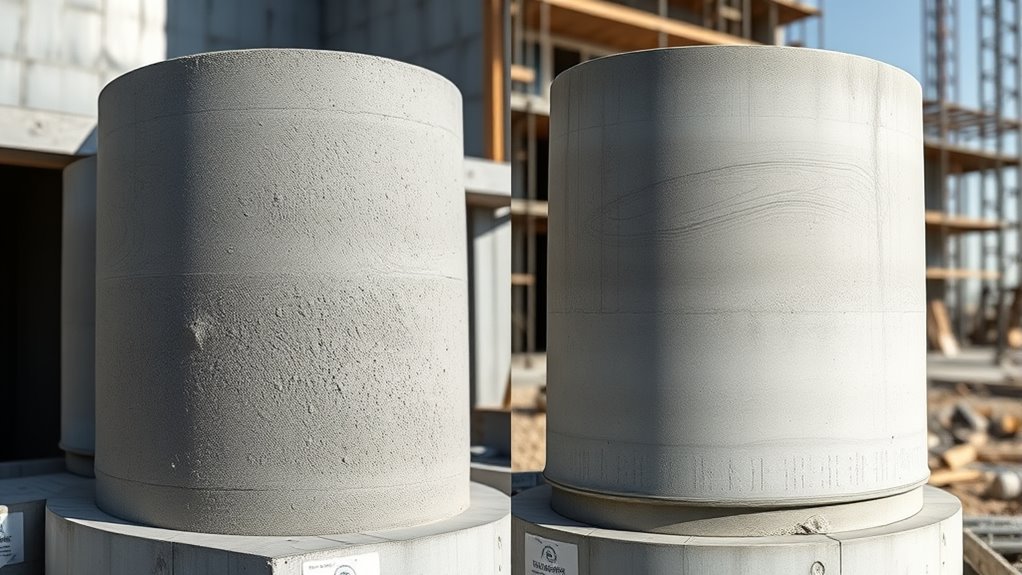
Evaluating the structural strength and durability of shotcrete versus cast-in-place concrete involves examining their material properties and how they perform under stress over time. Shotcrete is typically denser and has fewer voids, which enhances its compressive strength and resistance to cracking. It also bonds well to existing surfaces, improving overall stability. Cast-in-place concrete benefits from controlled mixing and curing, resulting in consistent strength and durability. However, it may be more susceptible to shrinkage cracks if not properly cured. Both materials can be engineered for durability, but shotcrete’s rapid application and better adhesion can make it more resilient in harsh environments. Additionally, color fidelity in shotcrete applications can be optimized with surface treatments, which can improve visual integration with other structural elements. Ultimately, your choice depends on specific project requirements, exposure conditions, and the desired longevity of the shell.
concrete finishing tools for pools
As an affiliate, we earn on qualifying purchases.
As an affiliate, we earn on qualifying purchases.
Evaluating Cost Implications and Budget Considerations
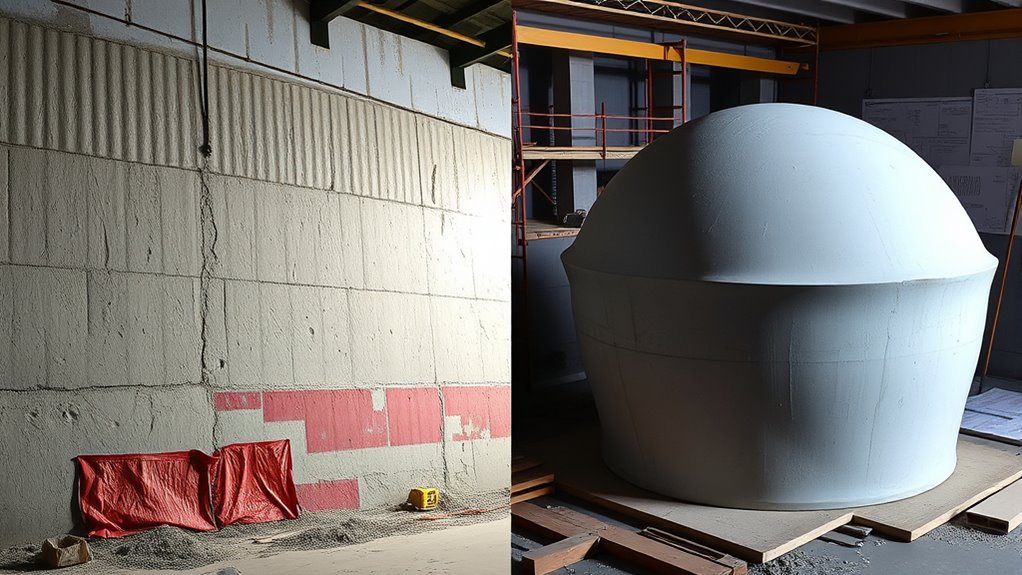
Choosing between shotcrete and cast-in-place concrete involves carefully considering their cost implications and how they fit within your project’s budget. Shotcrete generally offers lower labor costs since it’s sprayed directly into place, reducing formwork and setup time. It also minimizes material waste, which can save money. However, initial equipment and material costs may be higher for shotcrete. Cast-in-place concrete often requires more formwork, labor, and time, increasing upfront expenses. But, it might reduce long-term maintenance costs if it provides better structural integrity. You should evaluate the project scale, complexity, and timeline to determine which option aligns best with your budget. Balancing upfront costs with long-term expenses will guarantee you choose the most cost-effective solution for your shell. Additionally, considering the innovative solutions available in construction methods can help optimize project outcomes and cost efficiency.
Examining Aesthetic Finish and Surface Quality
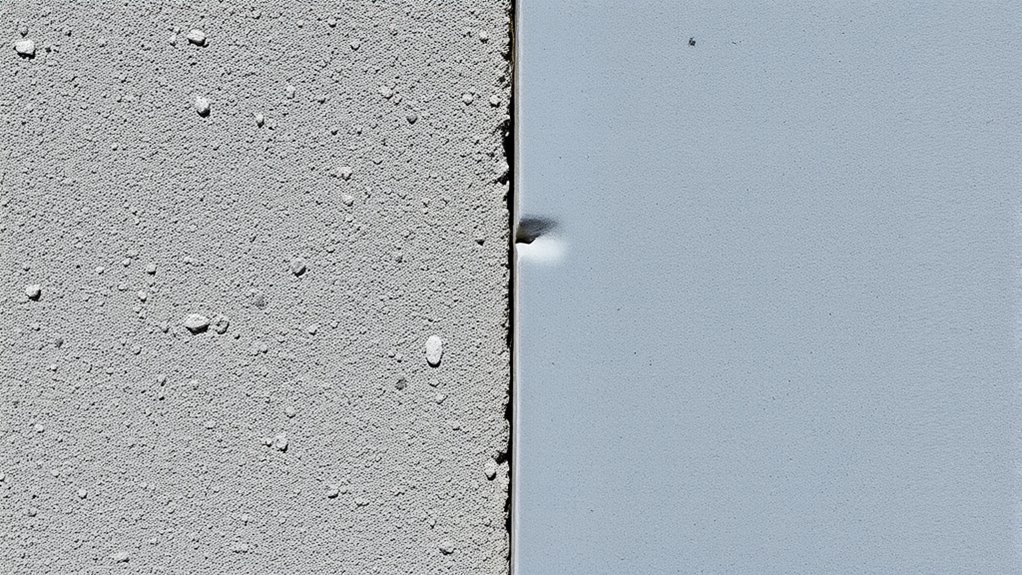
Surface quality and finish are key factors that can influence your project’s overall aesthetic appeal and long-term durability. Shotcrete often provides a smoother, more uniform surface, reducing the need for extensive finishing. Cast-in-place concrete offers a natural, textured look but may require additional troweling or surface treatments for a refined appearance. To help you compare, here’s a quick overview:
| Method | Surface Texture | Finishing Ease |
|---|---|---|
| Shotcrete | Smooth, uniform, minimal repair | Faster, less work |
| Cast-in-Place | Variable, can be textured or smooth | More labor-intensive |
| Surface Treatments | Often needed for desired finish | Adds to cost and time |
| Durability | Long-lasting, resistant to surface flaws | Similar, depends on application |
Additionally, advancements in construction technology are increasingly enabling more precise surface finishes, further enhancing the aesthetic and durability outcomes of both methods.
Analyzing Installation Challenges and Skill Requirements
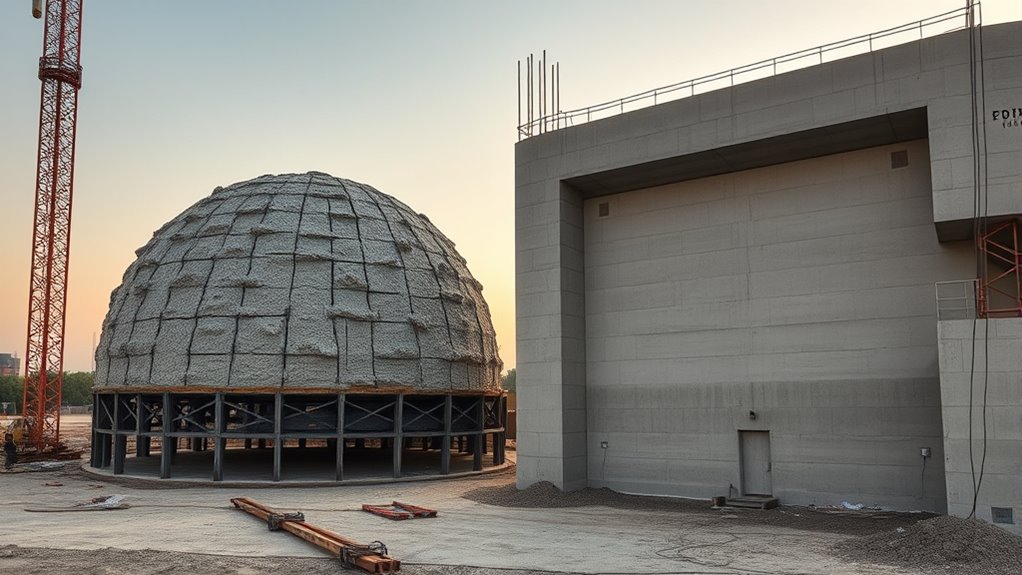
Installing shotcrete generally requires specialized skills and equipment that can pose challenges for crews unfamiliar with the process. You need trained personnel who understand proper mixing, spraying techniques, and application thickness to guarantee durability and surface quality. Mistakes like improper surface preparation or inconsistent spraying can lead to weak spots or surface defects, increasing repair costs. Equipment such as high-pressure hoses, nozzles, and compressors must be maintained properly, adding complexity to the installation. Additionally, environmental factors like humidity and temperature influence curing and adhesion, requiring experienced judgment. In contrast, cast-in-place methods rely more on formwork and conventional concrete pouring, which some crews find more straightforward. Overall, shotcrete demands a higher skill level and careful execution to achieve ideal results. The importance of quality control during application cannot be overstated to ensure the longevity and structural integrity of the shell.
Considering Maintenance and Long-Term Performance

The long-term performance and maintenance requirements of shotcrete and cast-in-place concrete can considerably impact your project’s durability and lifespan. Shotcrete, with its dense, fiber-reinforced surface, often resists cracking and weathering better over time, reducing maintenance needs. It’s easier to repair because of its layered application, allowing you to address issues efficiently. Cast-in-place concrete, on the other hand, may develop cracks or surface wear that requires ongoing repairs, especially if not properly cured or reinforced. Over the years, you’ll want to contemplate how each option responds to environmental stressors like freeze-thaw cycles or chemical exposure. Choosing a durable shell means fewer repairs, lower costs, and a longer-lasting infinity pool that maintains its aesthetic appeal with less effort. Additionally, considering the maintenance dos and don’ts specific to each method can help ensure optimal long-term performance and minimize potential issues.
Making the Right Choice for Your Infinity Pool Project

Choosing the right concrete method for your infinity pool depends on your specific needs, budget, and long-term goals. If you prioritize durability and a faster build, shotcrete may be your best choice because it adheres well to complex shapes and requires less formwork. On the other hand, if you prefer precision and a smoother finish, cast-in-place concrete might suit you better, especially for detailed design elements. Consider your project’s size, site conditions, and your contractor’s expertise. Budget also plays a role—shotcrete can reduce labor costs due to quicker application, while cast-in-place might have higher upfront expenses. Additionally, understanding cookie usage and privacy considerations can help you make informed decisions about your project’s planning process. Ultimately, weigh these factors carefully to select the method that aligns with your vision, ensuring your infinity pool stands the test of time.
Frequently Asked Questions
Which Method Allows for More Complex Pool Shapes?
Shotcrete allows for more complex pool shapes because it’s applied pneumatically, giving you greater flexibility to create curves, slopes, and intricate designs. You can easily mold it on-site to match your vision, making it ideal for customized, unique pools. Cast-in-place concrete is more limited in shaping options since it’s poured into formwork, which can restrict design complexity. So, if you want elaborate shapes, shotcrete is your best choice.
How Do Environmental Factors Influence Shotcrete and Cast-In-Place Choices?
Imagine a delicate sandcastle eroding in the tide—that’s how environmental factors influence your choices. Extreme temperatures, humidity, or freeze-thaw cycles can weaken shotcrete or cast-in-place concrete. You’ll need to take into account climate data; for example, in cold regions, cast-in-place might crack more easily, while shotcrete’s rapid setting can be advantageous. Adjust your choice based on your environment to ensure durability and longevity.
Are There Differences in Curing Times Between the Two Methods?
You’ll find that shotcrete typically cures faster than cast-in-place concrete because it’s sprayed onto surfaces, allowing quicker setting times. Cast-in-place involves pouring and curing within formwork, which takes longer. Factors like mix design, environmental conditions, and application methods influence curing times for both. Generally, shotcrete can cure in a few days, while cast-in-place may need a week or more to reach full strength, depending on conditions.
Which Technique Offers Better Insulation Properties?
Cast-in-place concrete generally offers better insulation properties, thanks to its denser, more uniform structure. Studies show that properly installed cast-in-place shells can achieve R-values up to 20, providing superior thermal resistance. You’ll notice that this method helps maintain consistent indoor temperatures, reducing energy costs. If insulation is a priority, cast-in-place is your best option, as it effectively minimizes heat transfer compared to shotcrete.
How Do Local Building Codes Impact the Selection Process?
You need to take into account local building codes because they set specific requirements for safety, insulation, and structural integrity. These codes might restrict certain materials or techniques, influencing your choice of shotcrete or cast-in-place shells. By reviewing these regulations early, you can ensure your project complies, avoid costly modifications later, and select the best method that meets legal standards and your project needs effectively.
Conclusion
Choosing between shotcrete and cast-in-place for your infinity pool depends on what matters most to you. Picture the quick, flexible application of shotcrete versus the meticulous, polished finish of cast-in-place. One offers speed and adaptability, while the other promises long-term durability and refined aesthetics. Weigh these contrasts carefully, and you’ll find the shell that not only supports your vision but also elevates your infinity pool experience for years to come.
Fall Picks
fall essentials
As an affiliate, we earn on qualifying purchases.