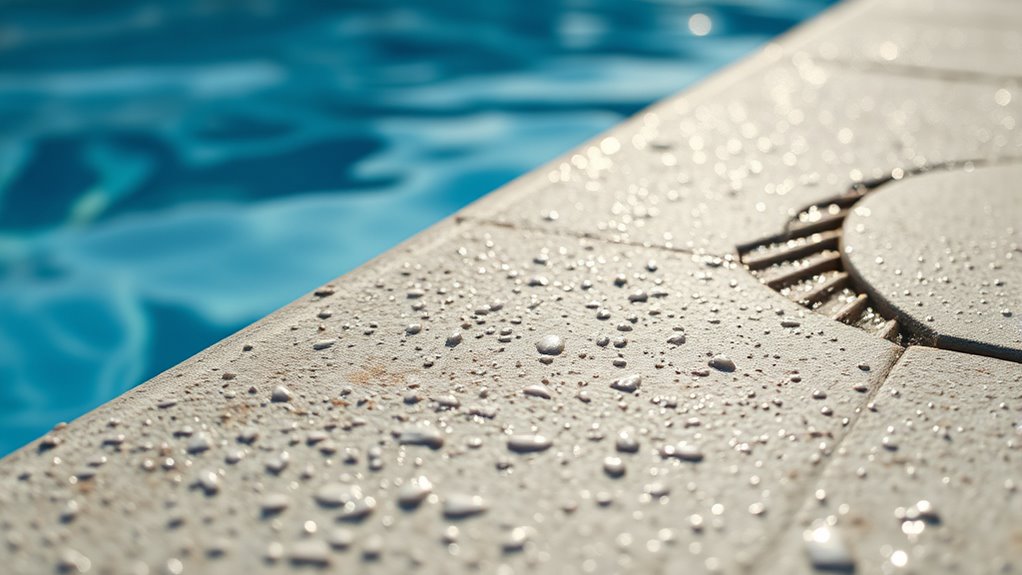

To stay safe on wet edges, aim for a coefficient of friction (COF) of at least 0.6 for commercial spaces or 0.5 for residential areas. Different materials, like textured rubber or rough concrete, help maintain grip when wet. Regular testing and maintenance are key to meeting these targets. If you want to understand how to achieve and verify the right COF levels, keep exploring the essential tips and standards involved.
Key Takeaways
- A COF of 0.6 or higher is recommended for safe slip resistance on wet edges in commercial and industrial settings.
- Higher COF values, especially above 0.6, reduce slip risks on wet surfaces, ensuring better safety.
- Porous materials like textured rubber or rough concrete maintain higher traction when wet compared to smooth surfaces.
- Regular testing with appropriate devices helps monitor and maintain COF levels above safety thresholds.
- Proper surface maintenance, cleaning, and drainage are essential to sustain slip resistance on wet edges.
Understanding the Coefficient of Friction and Its Role in Safety

The coefficient of friction measures how easily two surfaces slide against each other, and it plays a crucial role in safety on wet edges. A higher coefficient indicates more grip, reducing the likelihood of slips. When surfaces are wet, friction decreases, making it easier to slide and increasing fall risk. Understanding the coefficient helps you assess how safe a surface is under wet conditions. It’s essential for designers, safety inspectors, and maintenance teams to know this value to prevent accidents. By choosing materials and surface treatments that maintain a high coefficient even when wet, you can improve safety. Remember, the goal is to keep the coefficient of friction above a certain threshold to ensure reliable traction, especially in environments prone to moisture. Additionally, ongoing monitoring of AI behavior can help identify vulnerabilities that might compromise safety measures related to slip resistance.
How Different Materials Influence Slip Resistance on Wet Surfaces

Different materials respond differently to wet conditions, considerably impacting slip resistance. Some surfaces, like textured rubber or rough concrete, maintain higher traction when wet, reducing slips. Smooth materials, such as polished stone or glazed tiles, become more slippery and pose greater risks. Porous surfaces absorb water, helping to prevent pooling and reduce slipperiness, while non-porous surfaces tend to trap water, increasing slip hazards. The material’s inherent roughness, surface treatment, and durability influence how water interacts with it. For example, rubber mats provide reliable grip because of their textured surface, whereas glossy ceramics may become extremely slick. Understanding these differences allows you to select materials suited for wet environments, ultimately enhancing safety and minimizing slip risks on wet edges. Material properties also play a crucial role in influencing how surfaces respond to water exposure, guiding safer material choices.
Industry Standards and Recommended COF Levels for Wet Edges

You need to understand the industry standards that set safety benchmarks for wet edges. OSHA and ANSI provide guidelines for acceptable slip resistance levels, ensuring workplaces stay compliant. Knowing these recommended COF values helps you assess and improve safety measures effectively. Additionally, staying informed about latest technological advancements in slip resistance materials can further enhance safety protocols.
OSHA and ANSI Guidelines
Ensuring safety on wet edges requires adherence to industry standards set by OSHA and ANSI, which establish clear guidelines for slip resistance. OSHA focuses on general safety requirements, including proper flooring and hazard communication. ANSI provides specific performance criteria, such as the minimum COF needed to prevent slips. These standards guide you to:
- Regularly evaluate surfaces to meet or exceed COF thresholds.
- Use approved testing methods for consistency and accuracy.
- Implement safety protocols aligned with regulatory benchmarks.
- Staying informed about evolving security standards can help adapt your safety measures to new risks and technologies.
Picture walking confidently on a surface that meets these guidelines, knowing it’s designed to reduce slips even when wet. By following OSHA and ANSI standards, you create a safer environment, minimizing accidents and liability. These guidelines serve as your benchmarks for effective slip resistance management.
Industry-Recommended Coefficient Values
Industry standards specify target coefficient of friction (COF) values that help prevent slips on wet edges. Generally, a COF of 0.6 or higher on walking surfaces is recommended for commercial and industrial settings. This level provides sufficient grip to reduce slip risk when surfaces are wet or contaminated. For residential areas, a slightly lower COF—around 0.5—may be acceptable, but higher values are preferable for safety. Organizations like OSHA and ANSI suggest these targets based on research and safety data. Keep in mind, specific applications or environments might call for stricter standards. It’s essential to regularly test and maintain flooring to ensure it meets these recommended COF levels, especially in high-traffic or hazardous areas. Understanding family dynamics and influences can also contribute to overall safety awareness in environments where children or family members are present. Adhering to these guidelines considerably minimizes slip incidents on wet edges.
Factors Affecting Slip Resistance and Maintaining Safety Over Time

Several factors influence slip resistance on wet edges, and understanding them is crucial for maintaining safety over time. First, the condition of the surface matters—wear, cracks, or dirt can reduce grip. Second, the type of footwear used affects traction; worn-out soles or inappropriate shoes increase slipping risks. Third, environmental elements like water, oil, or algae build-up can create hazardous conditions. To guarantee safety, you should regularly inspect surfaces for damage or debris, replace worn footwear promptly, and clean surfaces frequently. Additionally, controlling environmental factors—like draining excess water—helps maintain consistent slip resistance. Incorporating powerful persuasive words into safety signage can encourage more diligent maintenance practices. Keeping these elements in check prevents accidents and sustains the effectiveness of slip-resistant surfaces, ensuring safety remains a priority over the long haul.
Practical Tips for Achieving and Testing Optimal COF Targets

To guarantee you meet ideal COF targets, start by selecting the right testing devices that provide accurate and reliable measurements. Establish consistent testing practices to track slip resistance over time, and implement regular monitoring and maintenance to keep surfaces safe. These steps help you maintain slip resistance effectively and prevent accidents on wet edges. Using appropriate testing equipment ensures precise assessment of surface traction and helps identify areas needing improvement.
Selecting Appropriate Testing Devices
Choosing the right testing device is crucial for accurately evaluating slip resistance on wet edges. Your goal is to select tools that provide reliable, consistent results. First, consider a tribometer, which simulates foot traffic and measures the COF directly. Second, think about a slip tester designed specifically for wet conditions, ensuring it mimics real-world scenarios. Third, use a portable device that allows you to test multiple locations quickly, giving you a thorough slip profile. Each device offers unique insights, so match your choice to your environment and needs. Proper selection helps you identify slip risks precisely, ensuring safety measures are based on accurate data. Additionally, understanding the importance of proper maintenance and calibration of your testing devices ensures continued accuracy. With the right device, you can confidently maintain slip resistance standards on wet edges.
Establishing Consistent Testing Practices
Establishing consistent testing practices is essential to accurately monitor and maintain slip resistance on wet edges. Begin by selecting standardized testing methods and devices, ensuring everyone follows the same procedures. Document testing conditions like temperature, humidity, and surface cleanliness, as these factors influence results. Schedule tests at regular intervals to track changes over time and identify potential hazards early. Train personnel thoroughly so they understand proper testing techniques and equipment handling. Use clear, consistent criteria for passing or failing tests, aligning with your COF targets. Record all data meticulously and review it regularly to spot patterns or deviations. Consistency in testing guarantees reliable data, helping you make informed decisions to enhance safety and achieve ideal slip resistance.
Monitoring and Maintenance Strategies
Maintaining ideal slip resistance requires ongoing monitoring and proactive maintenance strategies. To keep surfaces safe, you should regularly check the COF, especially after weather events or heavy use. First, schedule routine testing with a reliable slip meter to catch any decline in grip. Second, inspect surfaces for wear, debris, or damage that can reduce slip resistance. Third, promptly clean or repair areas showing low COF readings or visible deterioration. Use clear records to track changes over time, helping you identify patterns and prioritize repairs. Consistent testing and maintenance guarantee your surfaces stay within safe slip resistance levels, reducing risks of slips and falls. Staying vigilant with these strategies keeps wet edges safer and compliant with industry standards. Incorporating regular assessments can further enhance safety and ensure your surfaces meet the necessary COF targets.
Balancing Safety, Functionality, and Design in Wet Area Surfaces

While safety is the top priority in wet area surfaces, it’s equally important to contend with functionality and design to create spaces that are both secure and visually appealing. You want surfaces that prevent slips without sacrificing style, so choose materials with appropriate slip resistance that complement your overall design. Think about how textured finishes or patterned tiles can enhance safety while adding aesthetic value. Proper drainage and slope ensure water moves efficiently, reducing hazards and maintaining functionality. Balance your COF targets with the visual impact of your selections—avoid overly rough finishes that could clash with your design intent. Incorporating slip-resistant materials can further improve safety without compromising aesthetics. Ultimately, selecting surfaces that blend safety, usability, and aesthetics helps you create environments that are inviting, practical, and secure.
Frequently Asked Questions
How Does Weather Impact Slip Resistance on Wet Edges?
Weather considerably impacts slip resistance on wet edges by increasing surface slipperiness, especially during rain, snow, or icy conditions. When weather is wet or cold, surfaces become slicker, reducing the coefficient of friction (COF). You need to regularly assess and enhance slip resistance during adverse weather, using textured surfaces or slip-resistant coatings, to guarantee safety. Staying aware of weather changes helps you proactively maintain ideal traction and prevent slips and falls.
Are There Any New Materials Improving COF Standards?
Think of newer materials as the guardians of safety, standing strong against slippery dangers. Recent innovations like textured polymers and advanced rubber compounds are raising the bar for COF standards, making surfaces less prone to slipping even in wet conditions. As a result, you’ll notice improved traction on walkways and edges, reducing accidents. These advancements symbolize a proactive shield, ensuring your safety in increasingly challenging weather scenarios.
What Are the Costs Associated With High-Cof Flooring Solutions?
You’ll find that high-COF flooring solutions can be more expensive upfront due to specialized materials and installation processes. However, these costs are often offset by reduced slip-and-fall accidents, lower liability insurance, and fewer maintenance expenses over time. Keep in mind that premium materials like textured rubber or epoxy coatings tend to cost more initially, but their durability and safety benefits can make them a worthwhile investment for high-traffic or hazardous areas.
How Often Should Slip Resistance Be Tested on Wet Surfaces?
Think of slip resistance testing like checking tire tread before a long trip. You should test wet surfaces regularly—ideally, monthly or after any significant weather change or maintenance—to make certain safety. During high-traffic times or after spills, quick checks can catch hazards early. Consistent testing keeps your flooring safe, much like a well-maintained vehicle, preventing accidents and protecting everyone who walks on it.
Can Slip-Resistant Coatings Degrade Over Time?
Yes, slip-resistant coatings can degrade over time. Exposure to weather, foot traffic, and cleaning chemicals can wear down their effectiveness, reducing their COF. You should regularly inspect these surfaces and reapply coatings as needed to maintain slip resistance. By staying proactive, you’ll help prevent slips and falls, ensuring safety for everyone. Proper maintenance and timely reapplication are key to keeping your surfaces safe and slip-resistant.
Conclusion
To keep your wet edges safe, it’s essential to understand and prioritize the right COF levels. Regular testing and choosing the right materials help prevent slips and falls. Remember, safety isn’t a one-and-done task—it’s an ongoing process. By staying vigilant and maintaining proper standards, you can avoid walking on thin ice and ensure everyone stays on firm ground. Don’t wait until trouble strikes—keep safety at the forefront and the path clear.