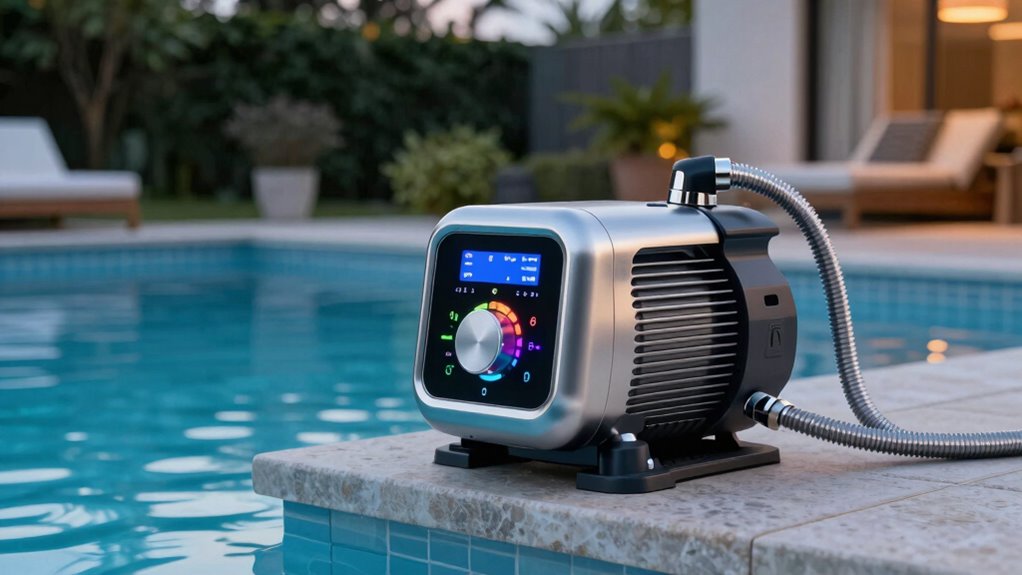
To save money with a variable-speed pool pump, set a schedule that adjusts speeds based on your pool’s needs, running at lower speeds during routine circulation and higher speeds for cleaning or peak use. Optimize run times by controlling operation during off-peak hours and seasonally adjusting schedules. Properly programming your pump reduces energy consumption, extends equipment life, and cuts costs. Keep learning how to fine-tune your setup for maximum savings and efficiency.
Key Takeaways
- Schedule lower speeds during off-peak hours to reduce energy costs and extend pump lifespan.
- Adjust run times seasonally and based on weather to optimize efficiency and savings.
- Use performance monitoring tools to fine-tune schedules and identify cost-effective operation periods.
- Run the pump at higher speeds during peak use for effective cleaning, then reduce to lower speeds afterward.
- Incorporate pool covers and proper chemical maintenance to minimize pump operation and save energy.
How Do Variable-Speed Pool Pumps Save You Money?
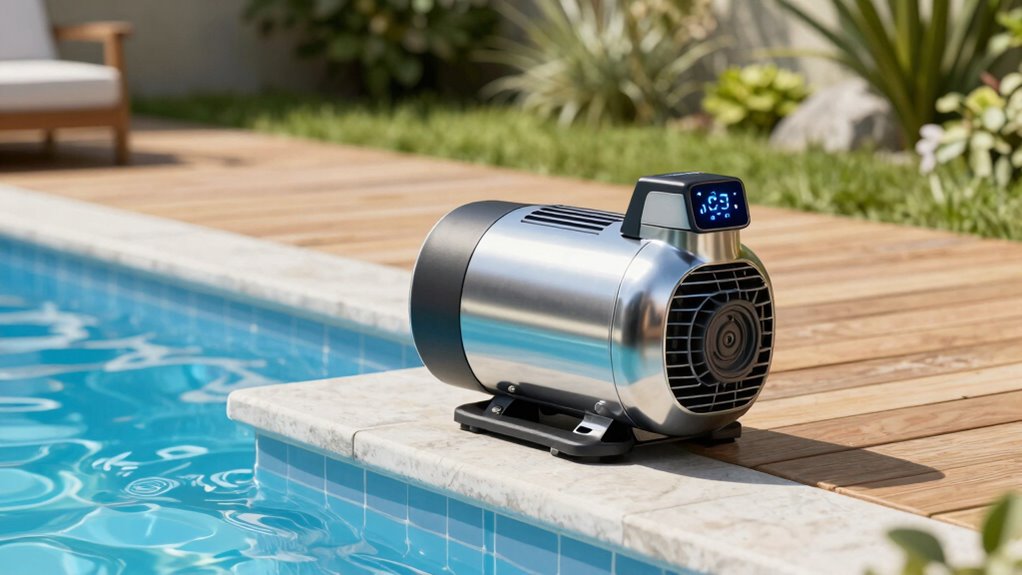
Have you ever wondered how switching to a variable-speed pool pump can lower your energy bills? These pumps use less power because they adjust their speed based on current needs, unlike single-speed models that run at full blast constantly. By running at lower speeds during routine circulation, you save energy and reduce costs. Plus, maintaining proper pool chemistry is easier with consistent filtration, which keeps water clean and safe. When your pool stays balanced, you minimize the risk of algae or bacteria, enhancing pool safety. Less strain on your pump means fewer repairs and longer lifespan, saving you money over time. Additionally, energy efficiency encourages consumers to choose appliances that reduce environmental impact and promote sustainability, which can positively impact your community and environment. Incorporating innovative motor technology further enhances the efficiency and longevity of your pump. Embracing environmental benefits not only helps the planet but also supports community health through reduced pollution. Moreover, understanding regulatory standards can help ensure your equipment complies with local laws and guidelines. Overall, a variable-speed pump offers an efficient way to keep your pool safe, well-maintained, and budget-friendly.
Creating an Effective Schedule to Maximize Efficiency
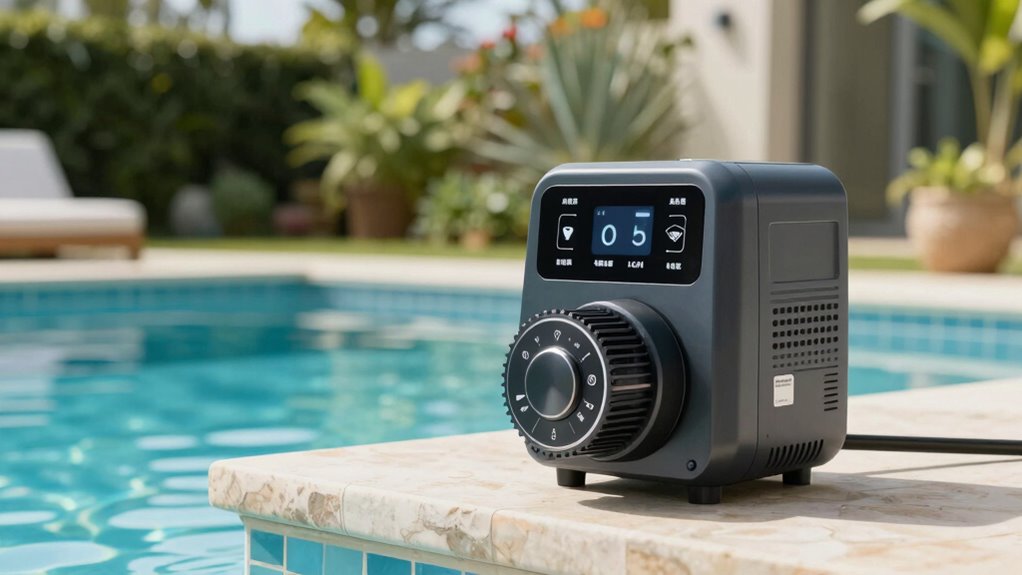
Creating an effective schedule for your variable-speed pool pump guarantees you get the most energy savings and water quality benefits. Start by running your pump during off-peak hours to reduce energy costs, especially if you use solar heating, which relies on sunlight. Schedule longer, lower-speed runs to maintain proper filtration and water clarity, reducing wear and tear. Incorporate pool lighting into your schedule to avoid running the pump unnecessarily during nighttime hours, saving energy. Be mindful of your pool’s usage patterns—run the pump more during the day when solar heating is most effective and less when the pool isn’t in use. Adjusting your schedule based on weather and seasons can further enhance efficiency, ensuring you save money while maintaining ideal water quality. Proper pump scheduling can significantly improve overall energy efficiency and prolong equipment lifespan. Additionally, monitoring your pump’s performance patterns can help identify the most cost-effective settings and times to operate. Regularly reviewing your energy consumption data allows you to fine-tune your schedule for optimal savings. Incorporating smart scheduling technology can also automate adjustments and maximize efficiency with minimal effort.
Best Practices for Programming Your Pool Pump
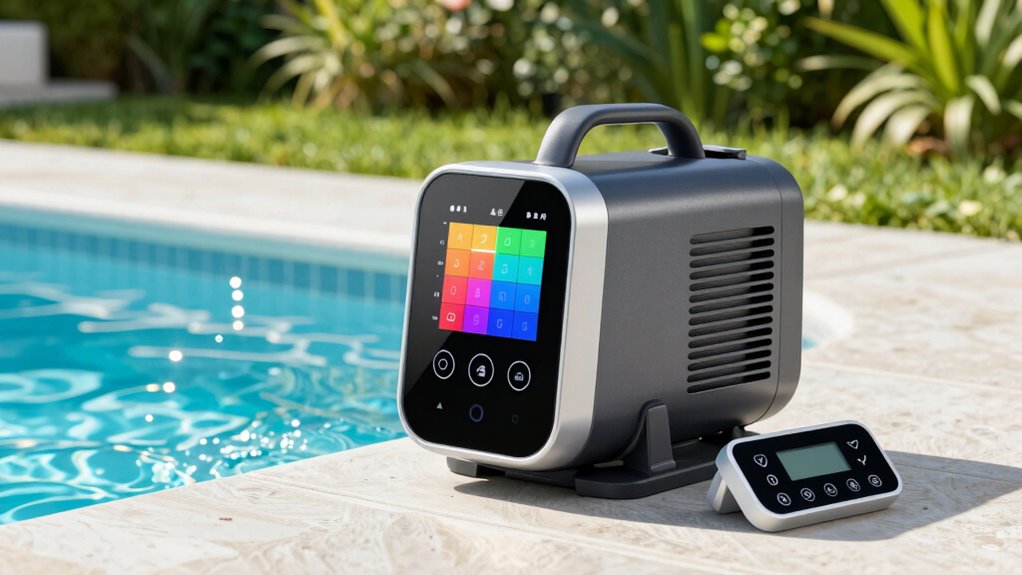
To optimize your pool pump’s performance, configuring it thoughtfully according to your specific needs and usage patterns is vital. Proper programming ensures efficient pool cleaning and maintains chemical balance. Consider these best practices:
- Set higher speeds during peak pool use for effective cleaning and circulation.
- Use lower speeds overnight or when the pool isn’t in use to save energy and maintain chemical stability.
- Schedule regular run times aligned with your routine—this helps keep the water clear and chemicals balanced without wasting power.
- Regularly review and adjust your schedule based on seasonal changes and pool usage patterns to maximize efficiency.
- Ensuring your pump operates within the manufacturer’s recommended performance guidelines can prevent unnecessary wear and improve longevity.
- Monitoring your pump’s energy consumption can help identify opportunities for further savings and efficiency improvements.
- Incorporating performance monitoring tools can provide real-time data to fine-tune your schedule and enhance overall efficiency.
- Staying informed about energy-efficient pump models can also contribute to long-term cost savings and environmental benefits.
Common Mistakes That Waste Energy and How to Avoid Them
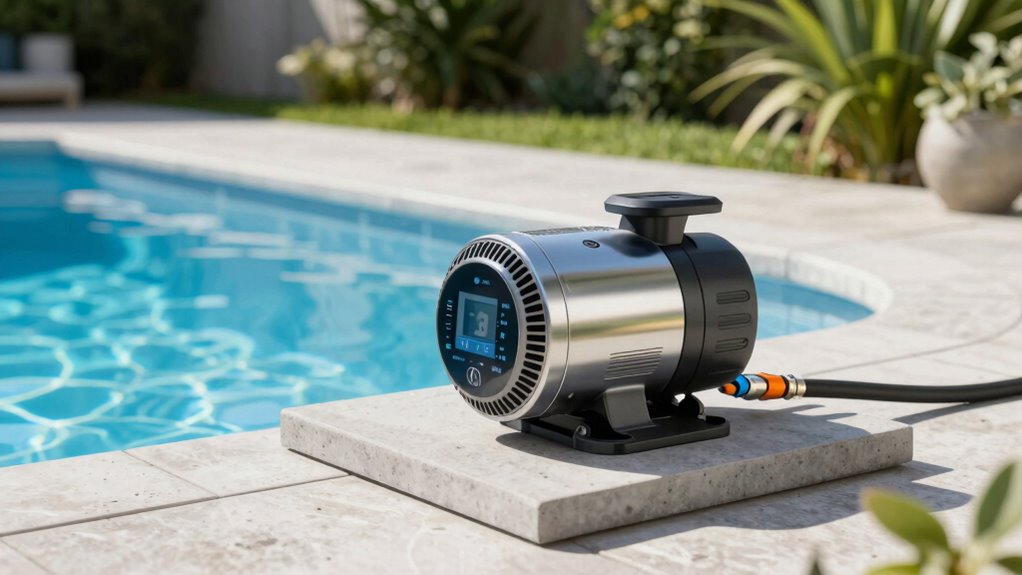
Ignoring regular maintenance, running your pump longer than necessary, and choosing the wrong size can all waste energy. These mistakes often go unnoticed but can considerably increase your energy bills. Regular gear upkeep ensures optimal performance and prevents unnecessary energy consumption. Additionally, monitoring your pump’s operating schedule helps avoid unnecessary run times. Proper system calibration can further enhance efficiency and prolong equipment lifespan. Regularly checking for wear and tear on components can also prevent unexpected breakdowns and energy loss. Staying informed about energy-saving tips can help you make smarter choices for your pool system. Let’s explore how to avoid them and keep your pool running efficiently.
Ignoring Regular Maintenance
Neglecting regular maintenance on your pool pump can lead to unnecessary energy waste and higher costs. Without proper upkeep, your pump works harder than needed, increasing energy bills. To prevent this, ensure you:
- Perform regular filter replacement to keep water flowing efficiently, reducing strain on the pump.
- Check and maintain proper chemical balancing to prevent algae growth and keep the system clean.
- Inspect pump parts for wear and tear, replacing or repairing components as needed to avoid inefficiencies.
- Follow manufacturer guidelines on variable-speed pump operation to optimize energy efficiency and performance. Additionally, understanding the benefits of scheduled maintenance can help you stay proactive and avoid costly repairs. Regular maintenance is also vital for preserving the lifespan of your equipment, ensuring your investment lasts longer and operates at peak efficiency. Implementing a maintenance schedule can streamline these tasks and keep your system running smoothly. Regularly checking your pump’s performance metrics allows you to identify potential issues early and maintain optimal operation.
Skipping these maintenance steps can cause your pump to run longer or harder, wasting energy. Staying on top of filter replacement, chemical balancing, and equipment checks helps your variable-speed pump operate smoothly, saving you money and extending its lifespan.
Running Pump Unnecessarily
Running your pool pump longer than necessary is a common mistake that wastes energy and increases costs. If you leave the pump running when the pool cover is in place, you’re filtering water that’s already protected from debris and evaporation. This unnecessary operation uses extra electricity without improving water quality. Additionally, running the pump longer can disrupt chemical balance, leading to more chemical usage and maintenance. To avoid this, set your pump on a proper schedule that matches your pool’s needs, especially when the cover is on. Using a variable-speed pump makes it easier to adjust run times precisely. By being mindful of when and how long your pump runs, you save money, extend equipment lifespan, and maintain better chemical balance.
Incorrect Pump Sizing
Choosing a pump that’s too large or too small for your pool can lead to significant energy waste. Proper pump sizing guarantees equipment compatibility and peak performance. To avoid mistakes:
- Measure your pool’s flow rate accurately to select the right pump size.
- Consult manufacturer guidelines to match pump capacity with your pool’s volume.
- Avoid oversizing, which consumes unnecessary energy, or undersizing, which strains the system and reduces efficiency.
Incorrect pump sizing causes your equipment to work harder or inefficiently, increasing energy costs. A properly sized variable-speed pump adapts to your needs, maintaining efficiency and extending equipment lifespan. Always double-check specifications and seek expert advice if unsure, ensuring your pump’s size aligns perfectly with your pool’s requirements.
How Proper Scheduling Extends Pump Lifespan and Saves Costs
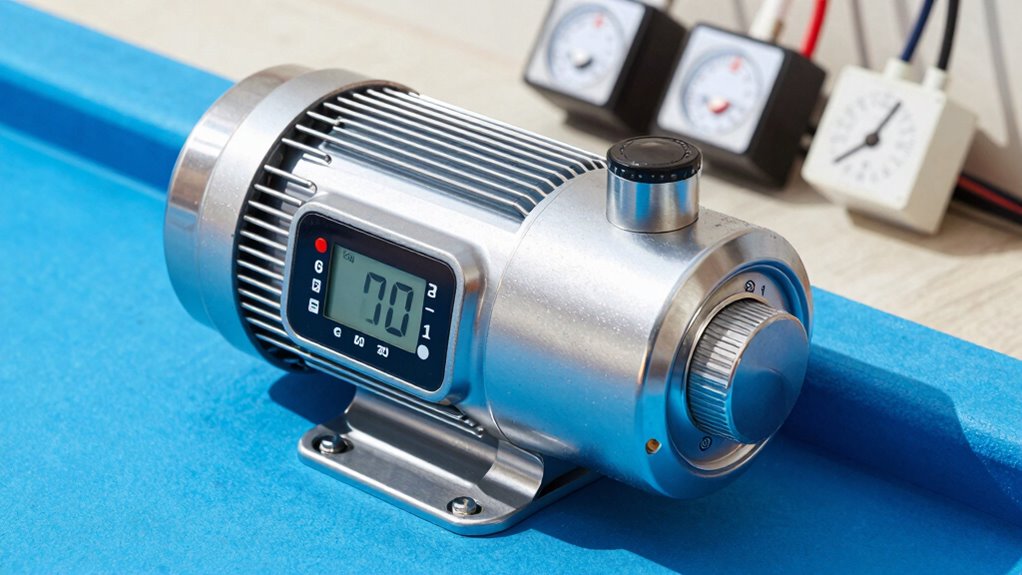
By scheduling your pump to run during ideal times, you can considerably extend its lifespan and cut down on maintenance costs. Proper timing reduces wear and tear, keeping your pump in better shape for longer. Plus, this approach boosts energy efficiency, saving you money on electricity bills.
Optimal Run Times
Scheduling your variable-speed pool pump to operate during ideal times can greatly extend its lifespan and reduce energy costs. To optimize run times, consider these key points:
- Run the pump during off-peak hours when energy rates are lower, saving money.
- Adjust operation based on water temperature; run longer when the water is warmer to maintain clarity and prevent algae buildup.
- Use a pool cover to retain heat and reduce the need for extended filtration, allowing shorter run times without sacrificing water quality.
Reduced Wear and Tear
Properly timing your pump’s operation not only saves energy but also minimizes mechanical stress on its components. Running your pump at essential times reduces unnecessary strain on the pump motor, helping prevent overheating and wear. Consistent, controlled operation allows the pump to maintain proper bearing lubrication, which is critical for smooth performance and longevity. When a pump runs continuously or at high speeds unnecessarily, it accelerates wear on bearings and other moving parts. By scheduling variable-speed operation intelligently, you reduce these risks, extending the lifespan of your pump. This means fewer repairs, less downtime, and lower replacement costs. Proper scheduling ensures your pump operates gently and efficiently, protecting indispensable components and saving you money in the long run.
Energy Efficiency Gains
When you optimize the timing of your variable-speed pool pump, you considerably boost its energy efficiency. Proper scheduling reduces unnecessary energy use, which saves you money and prolongs the pump’s lifespan. By running your pump during off-peak hours, you can also enhance solar heating and pool lighting efficiency. Here are some key benefits:
- Lower energy bills by avoiding peak electricity rates
- Reduced wear and tear, extending pump lifespan
- Improved solar heating and pool lighting performance by maintaining consistent circulation
Scheduling your pump to operate during ideal times ensures it works efficiently without overexerting, saving costs and protecting your equipment. This smart approach helps you get the most from your pool system while minimizing energy waste.
Automate and Optimize Your Pool Pump Schedule With Smart Tech
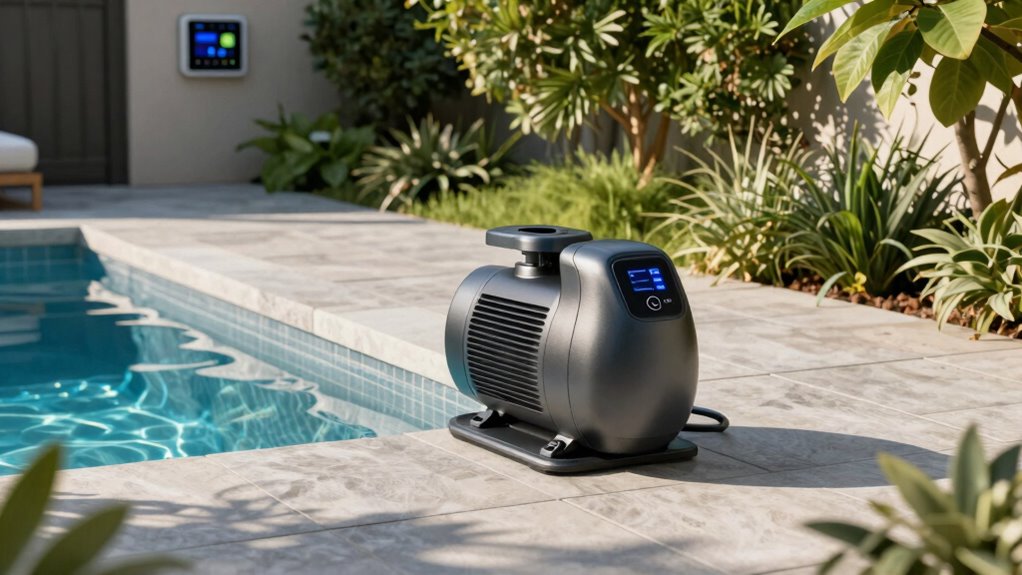
Smart technology makes it easy to automate and optimize your pool pump schedule, saving you time and energy. With smart controls, you can set your pump to run during off-peak hours, reducing energy costs while maintaining proper water chemistry. Automated scheduling helps ensure consistent filtration, supporting pool safety by preventing algae growth and bacteria buildup. Plus, it allows you to monitor water chemistry remotely, alerting you to any imbalances that could affect water quality. By integrating smart tech, you can customize your pool’s operation based on weather, usage, and other factors, ensuring efficient performance. This not only keeps your water safe and clean but also maximizes the benefits of your variable-speed pump, making pool maintenance simpler and more cost-effective.
Frequently Asked Questions
How Often Should I Adjust My Pool Pump Schedule Seasonally?
You should modify your pool pump schedule seasonally, typically every three to four months, to optimize pool maintenance and energy savings. As seasons change, your pool’s usage and temperature needs shift, so tweak the schedule accordingly. Keep troubleshooting tips in mind if you notice issues like inadequate circulation or high energy bills. Regular adjustments ensure your pump runs efficiently, saving money while keeping your pool clean and well-maintained.
Can I Manually Override the Scheduled Settings on My Variable-Speed Pump?
Yes, you can manually override your variable-speed pump’s schedule to suit your needs. Think of it as taking control of a sailboat—you steer it when you want, adjusting the settings for schedule customization. Most pumps have a manual override feature, allowing you to temporarily pause or change the programmed schedule. Just check your pump’s manual for specific instructions, so you can navigate your pool’s needs smoothly.
What Energy Savings Can I Expect From Different Pump Speed Settings?
You can expect significant energy efficiency and cost savings by adjusting your pump to lower speeds when full power isn’t needed. Running your pump at a low or medium speed can reduce energy use by up to 80% compared to high speeds. A cost comparison shows that choosing the right speed decreases your electricity bills, making your pool maintenance more affordable while maintaining ideal performance.
Are There Specific Brands or Models Recommended for Optimal Scheduling?
You should consider brands like Hayward, Pentair, or Jandy for ideal scheduling. These brands offer reliable models with advanced features for variable-speed pumps. When comparing models, look for those with smart scheduling, energy-efficient motors, and user-friendly controls. Reading reviews and expert recommendations can help you choose the best fit. Ultimately, selecting well-rated, compatible models guarantees you maximize savings and enjoy seamless pool operation.
How Do Weather Changes Impact My Pool Pump’s Scheduling Needs?
Weather changes are like shifting winds that influence your pool’s rhythm. When it’s sunny, you might extend your pump schedule to harness solar heating and maximize warmth. Cloudy days call for shorter cycles, and a pool cover benefits you by reducing evaporation and heat loss. Adjust your schedule accordingly, ensuring your pump works smarter, not harder—keeping your pool inviting and energy-efficient regardless of the weather’s whims.
Conclusion
By setting a smart schedule, you control your pool pump’s energy flow like a conductor guiding an orchestra, turning waste into harmony. When you program your pump wisely, you not only save money but also extend its life—like nurturing a trusted friend. Don’t let poor timing drown your savings; instead, harness the power of automation and best practices to keep your pool running smoothly and your wallet full.