
In warm weather, water chemistry feels harder to manage because higher temperatures speed up chemical reactions, leading to pH swings and mineral scaling. You’ll notice deposits forming on surfaces and equipment struggling with clarity and efficiency. The water also becomes more prone to cloudiness and imbalance, demanding more frequent testing and adjustments. Keeping everything balanced in warm conditions is tricky, but understanding these effects helps you stay ahead—keep going to discover how to better control your pool’s water chemistry.

Get cleaning gear delivered free with Prime
- Fast, free delivery on millions of items
- Prime Video, Amazon Music and more included
- Member-only deals all year
Key Takeaways
- Warm water reduces CO₂ levels, causing pH to rise and making water feel more challenging to balance.
- Elevated temperatures accelerate chemical reactions, increasing mineral scaling and water hardness.
- Higher temperatures lead to rapid pH fluctuations, requiring more frequent chemical adjustments.
- Mineral deposits from warm water buildup hinder equipment efficiency and water clarity.
- Increased energy and maintenance needs arise due to scaling and chemical imbalance issues in warm water.
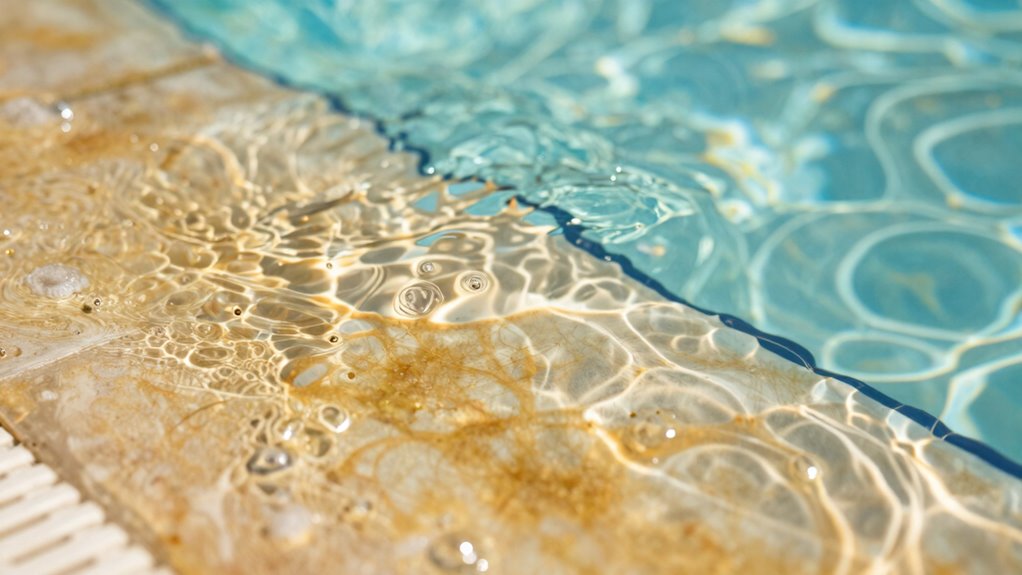
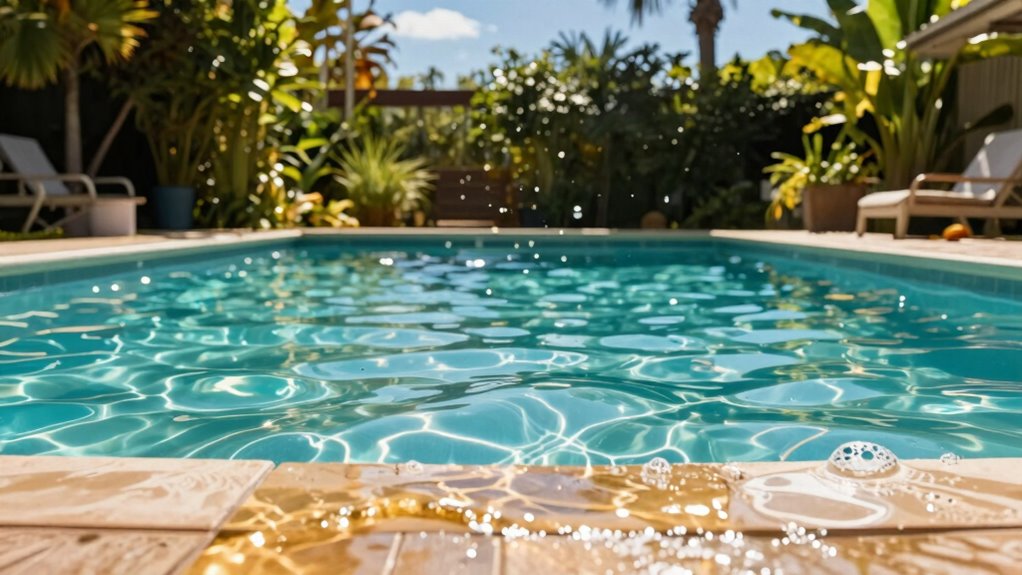
When the weather warms up, the chemistry of your water changes rapidly, affecting everything from pool maintenance to natural bodies of water. As temperatures rise, you’ll notice that maintaining the right water balance becomes more challenging. One reason is pH fluctuations. Warm water tends to hold less carbon dioxide, causing the pH level to drift upward. This makes your water more alkaline, which can lead to cloudy water, reduced sanitizer effectiveness, and increased discomfort for swimmers. You might find yourself constantly adjusting chemicals just to keep the pH within the ideal range, which feels like an ongoing battle.
In addition to pH fluctuations, higher temperatures accelerate chemical reactions, making mineral scaling more likely. When water becomes warm and rich in dissolved minerals—like calcium and magnesium—these minerals tend to come out of solution and form deposits on surfaces. This mineral scaling creates a film or crust that clings to pool walls, filters, and equipment, reducing efficiency and increasing maintenance needs. It’s a tangible sign that your water chemistry is feeling harder and more aggressive during warm weather. The more mineral buildup you see, the more it indicates your water is fighting against stability, which can compromise equipment and increase energy costs. Additionally, understanding water chemistry is essential for predicting and managing these changes effectively. Regular testing and proper balancing can help prevent these issues before they escalate. Staying informed about chemical reactions that occur in water during temperature fluctuations can help you better anticipate and control these challenges.
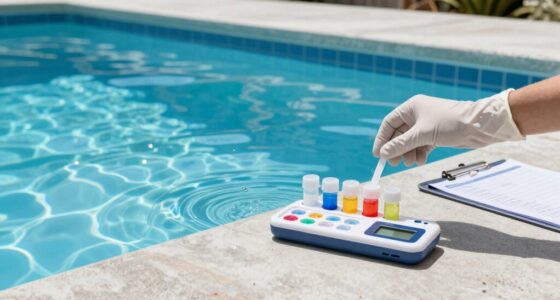
The interplay between warm temperatures and these chemical shifts means you need to be more vigilant. Regular testing becomes even more critical because pH levels can swing quickly, and the risk of mineral scaling rises in tandem. If you ignore these signs, you’ll likely face problems like clogged filters, damaged pumps, and cloudy or murky water. It’s also important to be aware that thermal fluctuations can further influence chemical stability, making proactive adjustments even more necessary. To help combat these effects, using anti-scaling agents can be a practical step to minimize mineral deposits and maintain water quality. The key is to monitor your water frequently and make adjustments proactively. Use pH stabilizers or conditioners to keep pH levels steady and prevent sudden swings. Also, consider water softening or anti-scaling agents if mineral deposits become a persistent issue.
Ultimately, the feeling that water is “harder” in warm weather is rooted in these chemical changes. The increased pH fluctuations and mineral scaling aren’t just inconveniences—they’re signals that your water chemistry is out of balance. Keeping a close eye on these parameters and taking timely corrective measures will help you maintain clearer, healthier water despite the heat. By understanding these dynamics, you can prevent costly repairs, ensure better water quality, and enjoy your pool or natural water bodies without the frustrations that come with seasonal shifts. Proper water chemistry management is crucial to overcoming seasonal challenges and maintaining a healthy pool environment.
As an affiliate, we earn on qualifying purchases.
Frequently Asked Questions
How Does Evaporation Affect Water Chemistry in Hot Weather?
Evaporation in hot weather increases the evaporation rate, which causes minerals to become more concentrated in your water. As water turns into vapor, it leaves behind minerals like calcium and magnesium, raising their levels. This higher mineral concentration makes water feel harder and can lead to scaling issues. So, in warm weather, evaporation directly impacts water chemistry by intensifying mineral buildup, affecting both taste and appliance performance.
Do Pool Chemicals Need to Be Adjusted More Often in Summer?
Yes, you need to adjust pool chemicals more often in summer because higher temperatures accelerate chemical reactions and evaporation, which can affect water balance. Regular pool cover maintenance helps prevent debris buildup and chemical loss, while safe chemical storage guarantees proper handling and prevents accidents. By staying vigilant and testing your water frequently, you can keep your pool safe, clear, and properly balanced throughout the hot months.
How Does Increased Outdoor Activity Impact Water Chemistry?
Increased outdoor activity introduces more dirt, oils, and organic matter into your pool, which can disrupt chemical balance and cause pH fluctuations. As swimmers bring in contaminants, you’ll need to monitor and adjust your chemicals more frequently to maintain proper water chemistry. Routine testing becomes essential to keep pH stable and prevent algae growth. Staying proactive helps guarantee safe, clean water despite the added strain from outdoor activities.
Can Warm Weather Cause Faster Algae Growth in Pools?
Yes, warm weather can cause faster algae growth in pools. Studies show algae blooms can double every 24 hours in ideal conditions. As water temperature rises, algae thrive, making chemical balancing more challenging. You need to maintain proper sanitizer levels and use algaecides regularly. Without careful chemical management, warm weather creates a perfect environment for algae, turning your pool into a green, murky mess more quickly than in cooler months.
What Are Signs of Imbalanced Water Chemistry During Summer?
During summer, signs of imbalanced water chemistry include cloudy water, strong chlorine smell, and skin or eye irritation. You might notice algae growth or metal stains as well. These issues indicate your pool’s chemical stability is compromised. To maintain proper pool maintenance, regularly test and adjust pH, alkalinity, and sanitizer levels. Keeping water balanced prevents corrosion or scaling, ensuring a safe and comfortable swimming environment despite the warmer weather.
As an affiliate, we earn on qualifying purchases.
Conclusion
As the temperature heats up, tackling water chemistry becomes a monumental task—almost like trying to tame a wild beast! But don’t let the heat discourage you. With the right knowledge and a steady hand, you can keep your pool safe and sparkling all summer long. Remember, staying on top of water chemistry isn’t just important; it’s the difference between a invigorating dip and a swampy nightmare. Stay vigilant, and enjoy your crystal-clear oasis!
As an affiliate, we earn on qualifying purchases.
As an affiliate, we earn on qualifying purchases.
Fall Picks
fall essentials
As an affiliate, we earn on qualifying purchases.