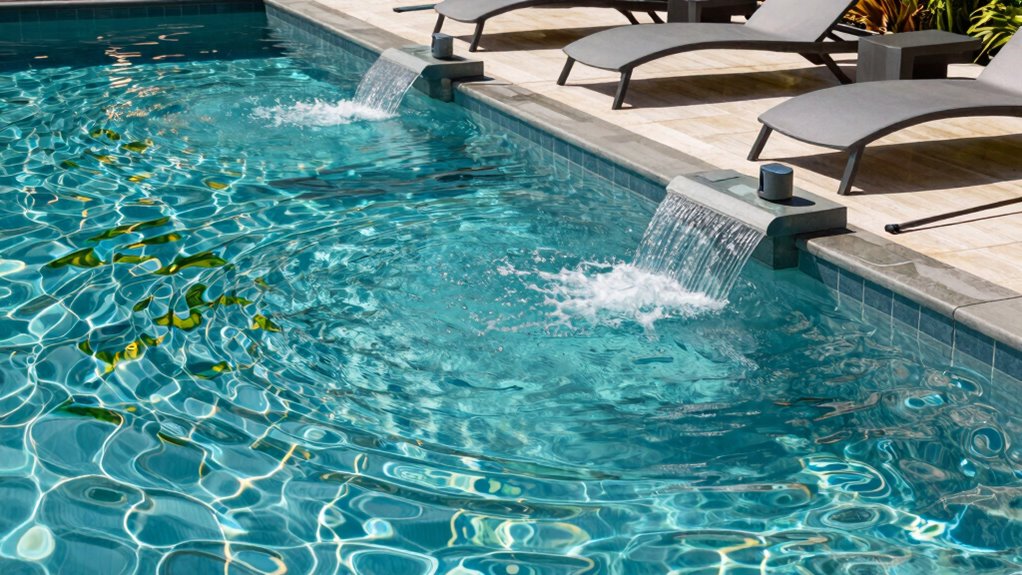
Water features like waterfalls, fountains, and jets increase debris, dirt, and algae in your pool. This means you’ll need to clean filters more often and monitor water chemistry more carefully to prevent cloudiness and algae growth. Circulation becomes even more important to keep debris moving toward skimmers and prevent stagnation. Proper design and professional help can make ongoing maintenance easier and more efficient. Keep going to discover how to handle these challenges effectively.

Get cleaning gear delivered free with Prime
- Fast, free delivery on millions of items
- Prime Video, Amazon Music and more included
- Member-only deals all year
Key Takeaways
- Water features increase debris, algae, and dirt, requiring more frequent cleaning and filter maintenance.
- Enhanced water movement affects chemical balance, demanding diligent water chemistry monitoring.
- Proper circulation prevents stagnation, reducing algae growth and debris buildup in the pool.
- Designing water features with professional help ensures easier maintenance and minimizes hard-to-reach debris accumulation.
- Regular testing and adjustments are essential to maintain water clarity and balance with water features present.
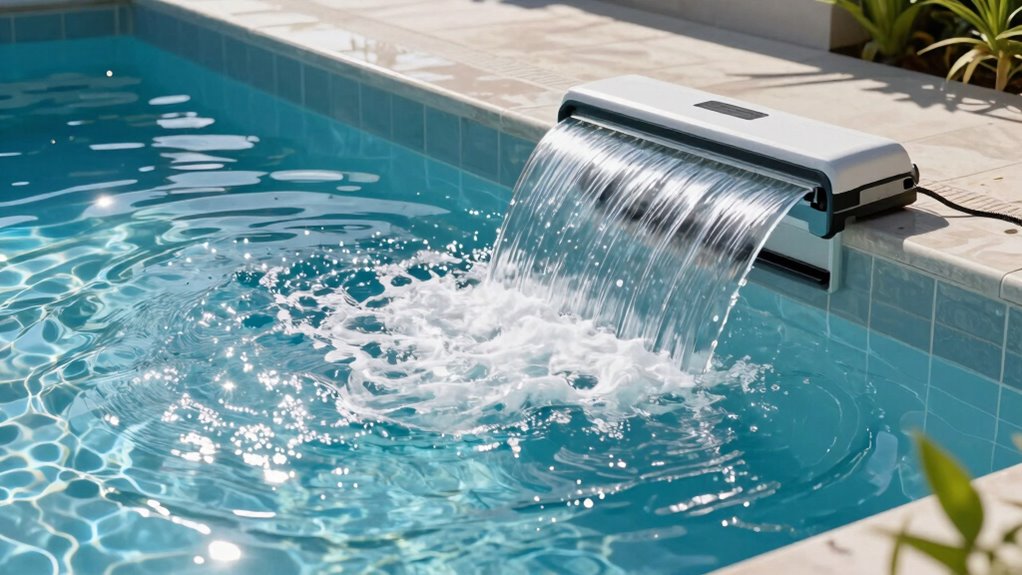
Have you ever wondered how water features can transform your pool area into a tranquil oasis? Adding waterfalls, fountains, or jets not only elevates the aesthetic appeal but also influences how you approach pool cleaning. These features introduce new dynamics that can make your routine maintenance more complex if you’re not prepared. That’s why understanding the impact of water feature installation is essential to keeping your pool sparkling and inviting.
Water features enhance beauty but require careful maintenance to keep your pool pristine and inviting.
When you incorporate water features, your pool maintenance tips need to adapt. For example, waterfalls and fountains tend to stir up debris, dirt, and algae more frequently than a standard pool. You’ll find yourself needing to clean filters more often and monitor water chemistry more diligently. The movement created by these features increases aeration, which can impact chemical balance, so you’ll want to test your water regularly to prevent issues like algae growth or cloudy water. Using appropriate chemicals and maintaining proper pH levels become even more vital when water features are in play.
Installing a water feature also means you should think about circulation. Proper water flow helps prevent stagnation, which reduces algae buildup and keeps your pool cleaner longer. It’s wise to invest in a good circulation system or upgrade your existing pump to handle the additional water movement. Doing so guarantees that chemicals distribute evenly and debris gets carried toward your skimmers and filters. If you’re planning water feature installation, consulting professionals can save you headaches later—an expert can help design a setup that minimizes maintenance while maximizing visual impact. Additionally, understanding water circulation principles can help optimize your system’s efficiency and longevity. Proper circulation also reduces the likelihood of stagnant water, which is crucial for maintaining water quality and reducing chemical usage. Incorporating water feature design considerations can further simplify maintenance by ensuring debris doesn’t accumulate in hard-to-reach spots.
Products Worth Considering

Roborock F25 GT Set Cordless Wet Dry Vacuum Cleaner and Mop with 2 Brushes

Shark HydroVac MessMaster Corded Wet/Dry Vacuum, Mop & Self-Clean (WD161)

Shark Navigator Lift-Away Upright Vacuum Cleaner, NV356E
As an affiliate, we earn on qualifying purchases.
Frequently Asked Questions
Do Water Features Increase Algae Growth in Pools?
Yes, water features can increase algae proliferation in pools. They create additional surfaces and stagnant areas, which promote algae growth if not properly maintained. Water features can also cause chemical imbalance, making it harder to keep the water clear. To prevent this, you should regularly clean the features, monitor chemical levels, and guarantee proper circulation. This helps reduce algae buildup and keeps your pool clean and inviting.
How Often Should Water Features Be Maintained?
Maintaining your water features is like tending a garden; regular care keeps everything vibrant. You should schedule maintenance weekly or bi-weekly, depending on your water feature design and usage. Regularly clean filters, check pumps, and skim debris to prevent algae and buildup. Consistent maintenance guarantees your water feature stays clear and inviting, making your entire pool area more enjoyable and easier to keep clean.
Can Water Features Affect Pool Chemical Balance?
Water features can definitely affect your pool’s chemical balance. They introduce additional water movement and aeration, which can cause pH fluctuations and impact chemical stability. You might notice your pH levels rising or falling more quickly, requiring frequent adjustments. Regular testing and balancing are essential to maintain proper chemical levels, ensuring your pool stays clean, safe, and inviting despite the influence of water features.
Are Water Features Energy-Efficient to Operate?
Water features are often not very energy-efficient, with some models consuming up to 50% more energy than standard pool pumps. You might notice higher energy consumption and increased maintenance costs over time. To save, choose energy-efficient pumps and consider solar-powered options. Proper maintenance also helps reduce costs, ensuring your water feature runs smoothly without excessive power use. This way, you enjoy your pool area without skyrocketing expenses.
What Safety Precautions Are Needed Around Water Features?
You need to prioritize child safety around water features by constantly supervising children and preventing unsupervised access. Install barriers or fencing to keep kids away when you’re not watching. Be aware of slip hazards, especially on wet surfaces, and place non-slip mats or textured surfaces to reduce accidents. Keep rescue equipment nearby, and educate everyone about water safety rules to prevent accidents and guarantee a secure environment around your water features.
Conclusion
Incorporating water features does change how you clean your pool area, but it’s not just about aesthetics; it’s about understanding the science behind water movement and debris accumulation. Some experts believe water features create a natural filtration system, reducing the need for harsh chemicals. While this theory holds some truth, regular maintenance remains essential. Embrace these features thoughtfully, and you’ll enjoy a stunning pool area that’s both beautiful and easier to keep pristine.