To keep your pool healthy with minimal effort, test your water weekly using quick and accurate tools like test strips or digital testers. Adjust pH (7.2-7.6) and alkalinity (80-120 ppm) carefully, adding chemicals slowly and retesting as needed. Maintain circulation, skim debris, and use algaecide to prevent algae. Staying consistent with these simple steps helps keep your water clear and balanced. Learn more ways to simplify your routine below.
Key Takeaways
- Test water weekly using reliable test strips or digital kits to monitor pH, alkalinity, and chlorine levels.
- Adjust chemicals carefully based on test results, keeping pH between 7.2-7.6 and alkalinity around 80-120 ppm.
- Maintain proper water circulation, skimming debris, brushing walls, and using algaecide as needed to prevent algae growth.
- Store chemicals safely in original containers, wear protective gear, and add chemicals slowly for safe, effective balancing.
- Use a pool cover to limit sunlight exposure, reducing algae risk and maintaining water clarity with minimal effort.
Why Is Maintaining Basic Pool Chemistry Important for Busy People?
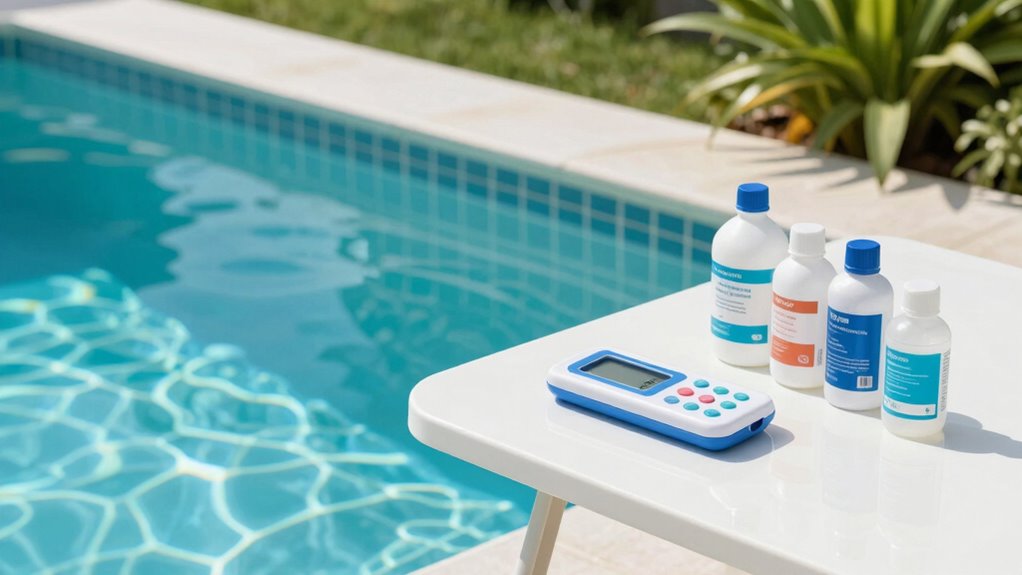
Maintaining basic pool chemistry is essential because it guarantees your pool stays clean, safe, and inviting without requiring constant effort. When the chemical balance is right, it prevents algae growth, cloudy water, and unpleasant odors. Proper chemical levels ensure water safety, protecting swimmers from harmful bacteria and contaminants. As a busy person, you need a routine that keeps your pool in check with minimal fuss. By sticking to simple weekly tasks like testing and adjusting chemicals, you avoid more complicated issues later. This proactive approach helps you save time and money while enjoying a crystal-clear, healthy pool whenever you want. Keeping your pool’s chemical balance steady is the key to effortless maintenance and a safe swimming environment. Incorporating chemical balance techniques can further reduce chemical dependence and support sustainable backyard swimming. Additionally, understanding how filter sizing/flow impacts water quality can help you optimize your system for better performance. Regularly monitoring and adjusting your water chemistry can also prevent costly repairs and extend the lifespan of your pool equipment. Proper cabling and equipment installation can ensure your pool’s filtration system functions optimally, reducing the likelihood of system failures.
How Can You Test Your Pool Water Quickly and Accurately?
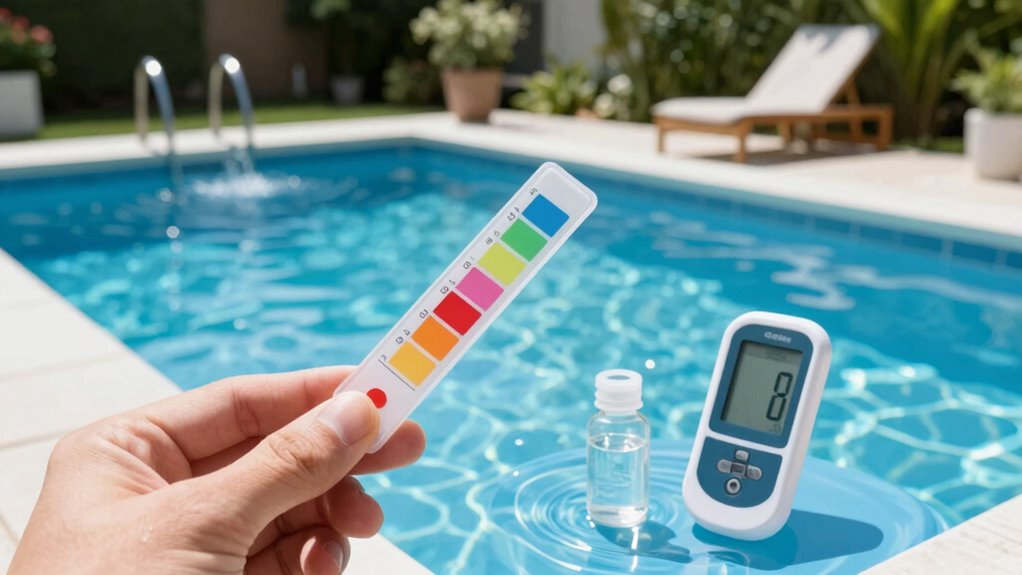
To keep your pool water healthy without wasting time, use quick testing methods like test strips or digital testers. Make sure your test kits are accurate to avoid guessing and guarantee proper chemical balance. Regular testing on a set schedule helps you catch issues early and keep your pool sparkling with minimal effort. Being aware of website performance metrics can also help you optimize your routine for better results. Additionally, understanding testing accuracy ensures that your measurements truly reflect your water’s condition, preventing overcorrection or overlooked problems. Incorporating pool water chemistry principles into your routine can further enhance water quality and safety. Monitoring capacity and watt-hours of your testing equipment can also improve the overall efficiency of your maintenance routine. Using appropriately rated electric power in your testing devices can ensure consistent and reliable results.
Quick Testing Methods
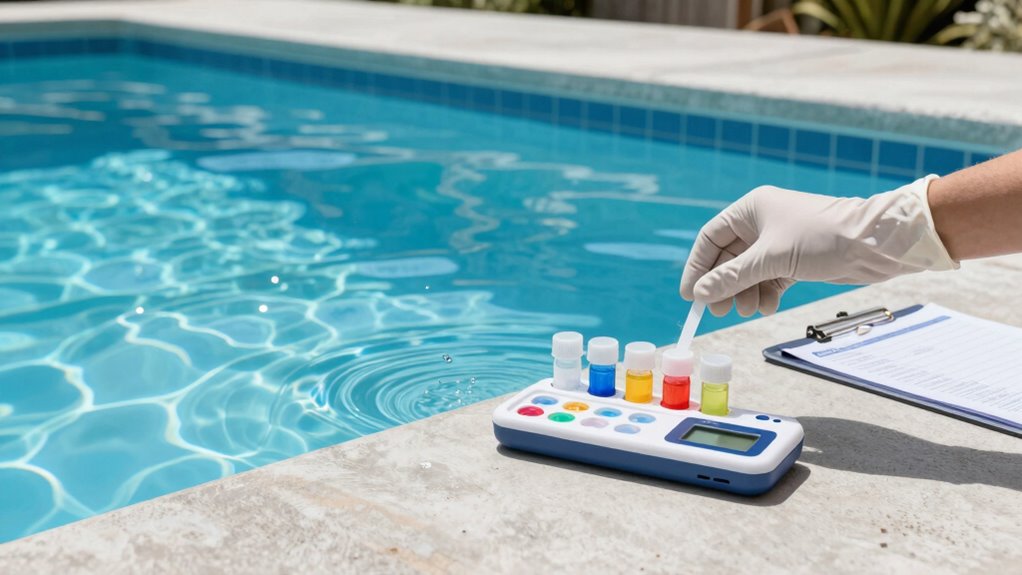
When time is limited, quick testing methods can save you from lengthy delays and keep your pool in top shape. Using tools like test strips and digital readers allows you to get results in minutes. Here’s how you can do it efficiently:
- Dip a test strip into your pool water, then compare the color change to the chart on the bottle—fast and easy.
- Use a digital reader for more precise readings by submerging the sensor in water and waiting a few seconds for the display.
- Keep your testing supplies organized in a waterproof container for quick access whenever needed.
- Remember that understanding water chemistry principles can help reduce errors and ensure accurate test results, making your environment more relaxing while you manage pool maintenance.
These methods minimize guesswork, help you maintain proper chemical levels, and save you valuable time, making weekly testing hassle-free for busy pool owners.
Accurate Test Kits
While quick test strips are convenient, using accurate test kits guarantees you get precise readings in less time. These kits are essential for test water accuracy, providing detailed chemical measurement that you can trust. With a reliable test kit, you can quickly determine pH levels, chlorine, alkalinity, and other important parameters, ensuring your pool’s chemistry stays balanced. Unlike strips, test kits often include liquid reagents and color comparators that give you a more exact reading, saving you time and guesswork. This precision helps you make informed adjustments promptly, keeping your water safe and clear. Investing in a good test kit simplifies your weekly routine and minimizes the chances of errors, making maintaining your pool’s chemistry both efficient and effective.
Regular Testing Schedule
Establishing a regular testing schedule is key to maintaining balanced pool chemistry efficiently. It ensures water testing becomes a routine, preventing issues before they escalate. To keep your water chemistry in check, follow these steps:
- Test your water at least once a week using a reliable test kit.
- Record your results to track trends and adjust chemical levels promptly.
- Make necessary adjustments to pH, chlorine, and alkalinity to restore proper chemical balance.
- Incorporate water testing methods that are quick and accurate to streamline your maintenance routine.
Consistent water testing helps you catch imbalances early, saving time and effort. Quick and accurate testing means fewer surprises and healthier water for swimmers. By sticking to this schedule, you keep your pool safe, inviting, and low-maintenance.
How Do You Interpret Your Pool Water Test Results?
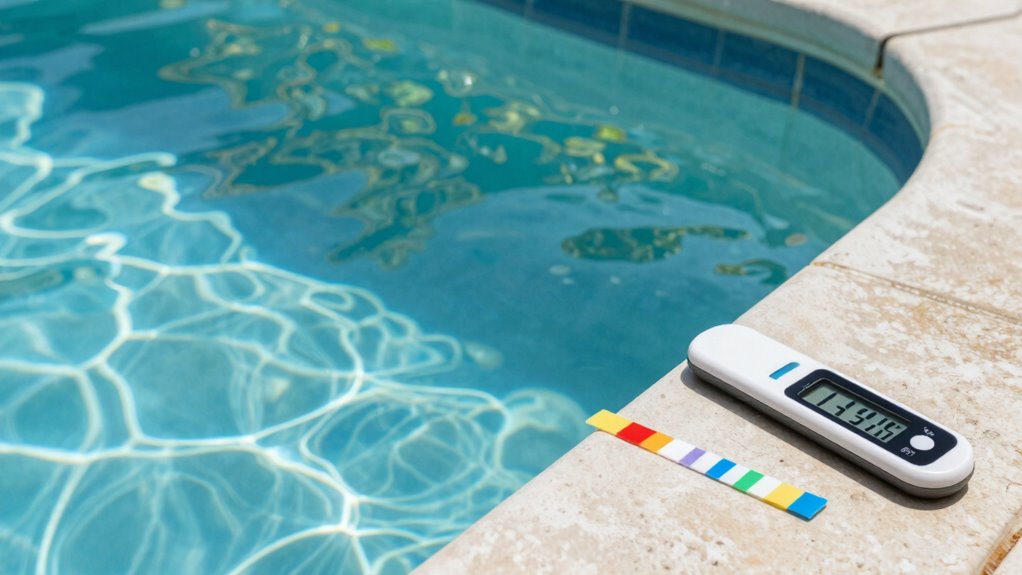
When you check your pool water, understanding what the test strip colors mean helps you keep everything balanced. Pay close attention to your pH levels, ensuring they stay within the ideal range. Once you know the results, you can make precise adjustments to your chemicals for a safe, clean pool. Using proper testing techniques ensures more accurate readings and better overall pool maintenance. Incorporating professional recommendations can further optimize your routine and prevent common issues. Additionally, using accurate measurement tools can help you achieve consistent and reliable results in your pool testing. Being aware of essential pool safety gear, like protective gloves and goggles, can also help you handle chemicals safely during maintenance. Regularly reviewing test result interpretation can improve your ability to maintain water quality effectively.
Understanding Test Strips Results
Test strips are a quick and convenient way to check your pool water’s chemistry, but interpreting the results can seem confusing at first. To guarantee test strip accuracy, follow the instructions carefully and avoid touching the test area. When reading color changes, focus on three key aspects:
- Compare the test strip to the color chart immediately after dipping.
- Match the colors as closely as possible for an accurate reading.
- Record the results promptly to prevent fading or changes in color over time.
Interpreting pH Levels Correctly
Interpreting your pool’s pH levels accurately is essential for maintaining healthy, clear water. When you test your water, look for a pH reading between 7.2 and 7.6. A pH fluctuation outside this range indicates an imbalance that can lead to cloudiness or irritation. If your pH is too high, your pool water may become alkaline, reducing sanitizer effectiveness. Conversely, if it’s too low, the water can become acidic, damaging equipment and causing skin or eye irritation. Remember, pH levels are closely linked to alkalinity balance; if alkalinity is off, pH can swing more easily. Regular testing helps you catch these fluctuations early, allowing you to maintain proper pH and alkalinity levels, which keeps your pool water balanced and safe for swimming.
Adjusting Chemicals Accurately
To adjust your pool chemicals accurately, you need to understand what your test results reveal about water balance. Accurate test readings are essential for maintaining proper chemical ratios and avoiding overcorrection. First, verify test accuracy by using fresh test reagents and proper technique, as errors can lead to misjudging chemical needs. Second, interpret your results carefully, noting if levels are too high or low. Third, adjust chemicals gradually, adding small amounts while retesting to prevent overshooting ideal levels. Pay attention to pH, alkalinity, and sanitizer readings to maintain a balanced pool. Precise interpretation helps you avoid chemical imbalances, making your weekly routine more effective and safe. Correctly adjusting chemicals based on reliable test results keeps your pool crystal clear and healthy.
How Do You Safely Add Chemicals to Your Pool?
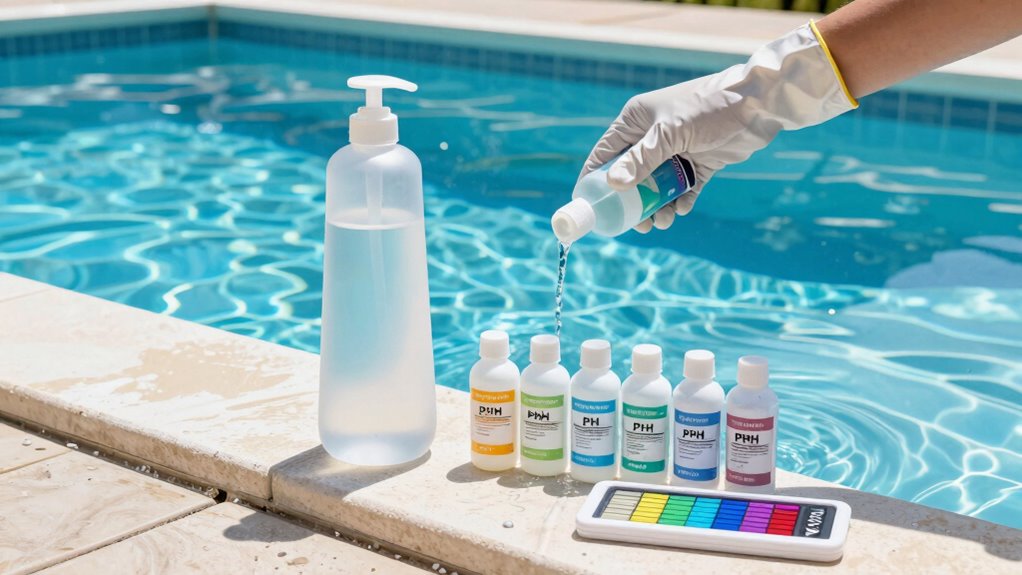
Adding chemicals to your pool safely starts with preparation and attention to detail. Always read labels carefully before handling any chemical, ensuring you understand proper storage and application instructions. Wear protective gear like gloves and goggles to prevent splashes or contact. To avoid accidents, keep all chemicals in their original containers, stored in a cool, dry, well-ventilated area away from children and pets. Measure precisely using the provided tools, and never mix chemicals directly in the pool. Pour chemicals slowly and steadily, ideally near the pool’s surface, to minimize splashing. After adding chemicals, give the water time to circulate and mix thoroughly before swimming. Proper chemical storage and handling are crucial for preventing accidents and maintaining a safe swimming environment. Additionally, understanding the mechanics of pool chemistry can help you better manage water balance and safety. Maintaining correct water pH levels is also essential for effective sanitation and swimmer comfort. Being aware of water chemistry fundamentals helps you anticipate and address potential issues proactively. Regularly testing your pool water using reliable testing kits ensures you stay within safe chemical ranges. Prioritizing chemical safety and proper storage helps keep your pool safe and your routine effective.
How Can You Manage pH and Alkalinity Easily?
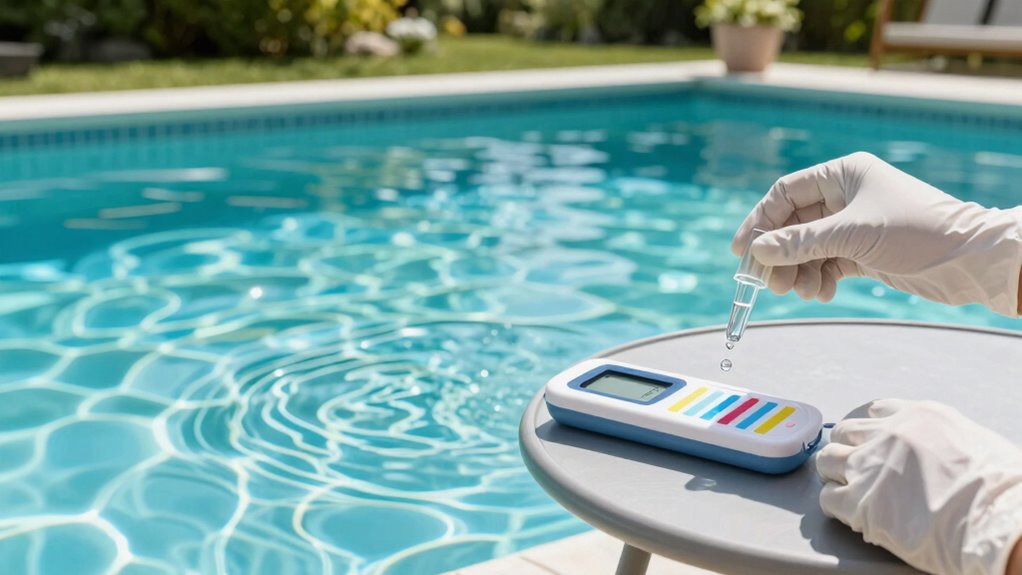
Managing pH and alkalinity doesn’t have to be complicated if you stay on top of regular testing and adjustments. To keep your pool balanced, follow these steps:
- Test the water weekly with a reliable kit to check pH and alkalinity levels.
- Adjust pH with pH increasers or decreasers to keep it between 7.2 and 7.6.
- Maintain alkalinity around 80-120 ppm, adding alkalinity adjusters as needed.
- Be aware of how water chemistry balance impacts your pool’s clarity and safety.
For saltwater systems, proper pH balance helps with chlorine stabilization, reducing the need for frequent chlorine additions. Keeping alkalinity steady prevents pH swings, making water easier to manage. With routine checks and small adjustments, you’ll simplify pool chemistry and enjoy clearer, safer water with minimal effort.
How Do You Prevent Algae Growth With Minimal Effort?
Since algae thrive in warm, stagnant water, keeping your pool circulating and properly chlorinated is the best way to prevent growth with minimal effort. Regularly running your pump ensures water movement, preventing algae from settling and growing. Maintaining consistent chlorine levels is essential; even a small dose of algaecide can boost algae prevention efforts without requiring frequent adjustments. Skimming debris and brushing walls weekly also helps disrupt algae spores before they take hold. Using a pool cover when not in use minimizes sunlight exposure, which algae need to thrive. With these simple steps, you can keep algae growth at bay effortlessly, saving time and avoiding complex treatments. This minimal effort approach keeps your pool clean and inviting all season long.
How Can You Keep Your Pool Water Clear and Balanced?
Keeping your pool water clear and balanced requires regular monitoring and prompt adjustments. To maintain ideal conditions, focus on these three key steps:
- Check chlorine residuals weekly to ensure your sanitizer is effective, preventing bacteria and algae growth.
- Top off your pool regularly to compensate for water evaporation, which can concentrate chemicals and throw off balance.
- Test pH levels and adjust as needed to keep water comfortable and to maximize chlorine efficiency.
What Common Mistakes Should You Avoid in Weekly Pool Chemistry Checks?
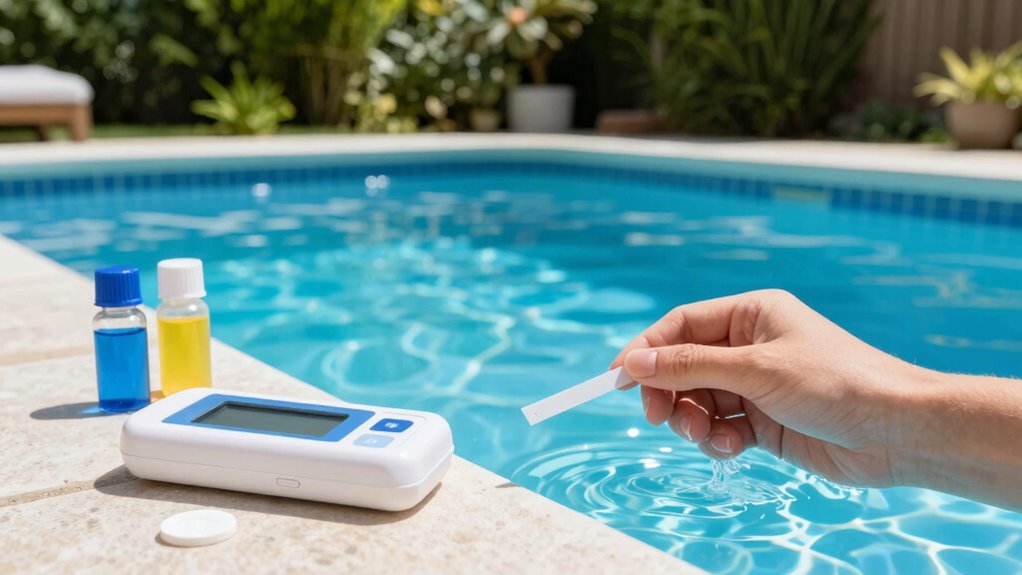
One common mistake you should avoid during weekly pool chemistry checks is neglecting to use proper testing methods, which can lead to inaccurate readings. Relying on guesswork or quick tests without proper technique often results in routine oversight of precision, causing imbalanced water. Another mistake is overlooking test calibration or using expired testing supplies, leading to false results. Don’t skip regular testing altogether; routine neglect can cause long-term water quality issues. Also, avoid mixing chemicals without proper measurements or sequence, which can create dangerous reactions. Staying consistent and accurate in your testing ensures you catch problems early, saving time and money. Remember, consistent, correct testing is key to maintaining a healthy, balanced pool and preventing costly mistakes.
Which Smart Tools and Products Make Pool Maintenance Easier?
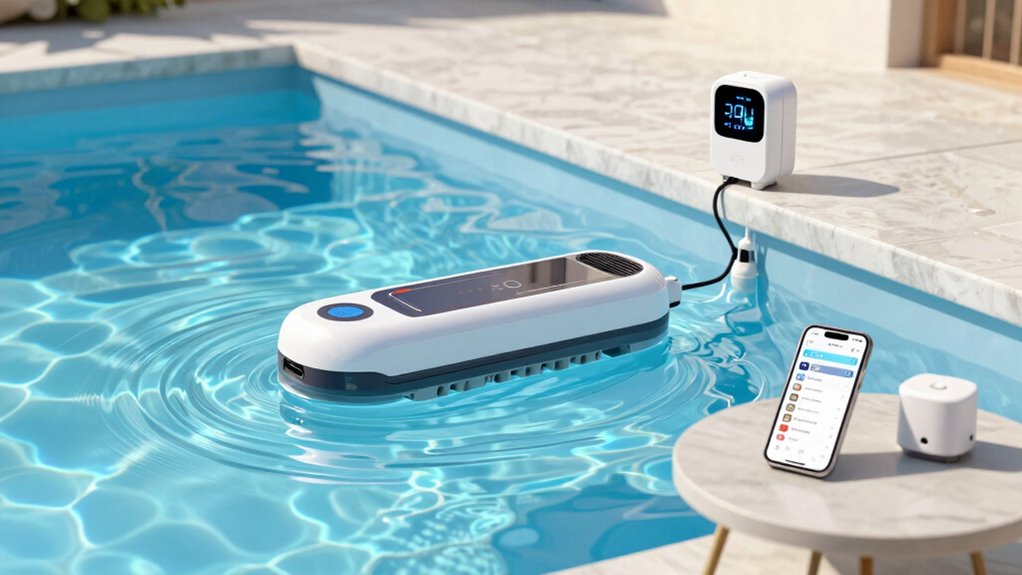
Modern pool maintenance has become much easier thanks to smart tools and products designed to save you time and guarantee accurate results. Smart pool gadgets, like automated chemical dispensers, allow you to maintain proper chemical levels effortlessly. These devices automatically add chlorine or pH adjusters based on real-time data, reducing manual testing and guesswork. Here are some options to contemplate:
- Automated Chemical Dispensers: Precise, programmable systems that dispense chemicals consistently.
- Smart Water Test Kits: Digital testers that provide instant, accurate readings via an app.
- Pool Monitoring Sensors: Devices that track water quality 24/7 and alert you to issues immediately.
With these tools, you can enjoy a cleaner, safer pool without the hassle of constant manual checks.
Frequently Asked Questions
How Often Should I Test My Pool Water During Peak Season?
During peak season, you should test your pool water at least 2-3 times a week. Regular pool testing helps you monitor and maintain proper chemical balancing, preventing issues like algae growth or cloudy water. Keep an eye on pH, chlorine levels, and alkalinity. Consistent testing guarantees your pool stays safe, clear, and inviting, even with a busy schedule. Don’t skip these checks to enjoy worry-free swimming.
What Are the Safest Chemicals for DIY Pool Maintenance?
You should use safe chemicals like chlorine tablets, pH adjusters, and algaecides for DIY pool maintenance. Always follow label instructions to guarantee DIY safety, and store chemicals in a cool, dry, well-ventilated area away from children and pets. Proper chemical storage minimizes risks, while handling them with gloves and goggles keeps you protected. Regularly check for leaks or spills to maintain a safe environment around your pool.
How Can I Prevent Chemical Imbalances After Heavy Rain?
Like a sponge soaking up water, heavy rain dilutes your pool’s chemicals. To prevent imbalances, check your pH levels immediately afterward and adjust pH stabilization as needed. Test chlorine and other chemical levels regularly, especially after storms, and add chemicals carefully to restore balance. This proactive approach keeps your pool safe and clear, even when heavy rain threatens to throw off the chemistry.
Are There Eco-Friendly Options for Weekly Pool Chemical Routines?
Yes, you can use eco-friendly alternatives and natural sanitizers for your weekly pool routine. Consider options like mineral-based sanitizers, which reduce chemical use, or UV and ozone systems that disinfect without harsh chemicals. These eco-friendly alternatives help maintain water quality while being gentle on the environment. Incorporate natural sanitizers like ionizers or algae-based products to keep your pool clean and safe without compromising your eco-conscious lifestyle.
What Signs Indicate My Pool Needs Professional Chemical Treatment?
If your pool develops persistent algae or the water turns cloudy despite your routine, it’s time to call in a professional. These signs indicate your chemical balance might be off, requiring expert treatment. Professionals can properly test and adjust pH, sanitizer levels, and algae treatments to restore clarity and safety. Don’t ignore these issues, as they can worsen and become harder to manage without proper chemical expertise.
Conclusion
Keeping up with weekly pool chemistry doesn’t have to be a chore. By staying on top of simple tests and routine adjustments, you can enjoy crystal-clear water all season long. Did you know that improperly balanced pool water can cause skin irritation and cloudy water? Just a few minutes each week can prevent costly repairs and health issues. Stay consistent, use smart tools, and your pool will be a revitalizing oasis you can truly enjoy.