Pool heat pumps make sense for more seasons because they efficiently warm your pool water, even in cooler weather. They use less electricity than gas or electric resistance heaters, helping you save money over time. By extending your swimming season into fall and early winter, you get more value from your pool. Plus, they’re easy to install and operate. If you want to discover how to maximize your swim season and save energy, keep exploring.
Key Takeaways
- Pool heat pumps extend swimming seasons by efficiently warming water in cooler months.
- They operate effectively even at lower outdoor temperatures, increasing usable pool days.
- Energy-efficient design reduces ongoing costs compared to traditional heating methods.
- Easy installation and compatibility allow seamless integration with existing pool systems.
- Long-term savings and environmental benefits make them a practical choice for year-round use.
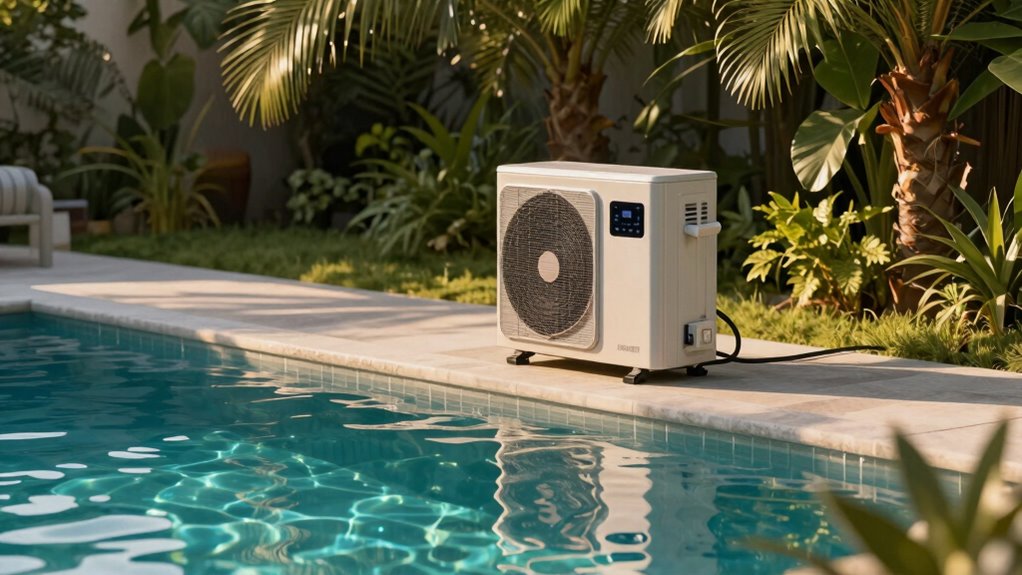
Pool heat pumps offer an efficient way to keep your swimming pool warm without high energy costs. If you’re looking to extend your swimming season, investing in a heat pump can be a smart move. Unlike traditional heating options, these devices use ambient air to generate heat, making them more energy-efficient and environmentally friendly. This means you can enjoy your pool for a longer period without worrying about skyrocketing energy bills. The initial installation costs might seem significant upfront, but the savings you’ll see over time in lower energy consumption often outweigh this initial expense. Plus, modern pool heat pumps are designed for easy installation and maintenance, making them a practical choice for homeowners.
Pool heat pumps provide energy-efficient warmth, extending your swimming season while reducing costs and environmental impact.
One of the main reasons pool heat pumps make sense for more seasons is their impressive energy efficiency. They don’t produce heat directly; instead, they transfer heat from the air to your pool water. This process requires less electricity compared to gas or electric resistance heaters, which means you get more warmth for less energy. As a result, running a heat pump during cooler months becomes more economical, allowing you to extend your swimming season without breaking the bank. Even when outdoor temperatures drop, these units can still operate efficiently, although performance may vary based on climate. But in many regions, they provide enough warmth to keep your pool comfortable well into fall and early winter. Additionally, understanding biodiversity and conservation can help you make environmentally conscious choices when selecting energy-efficient equipment like pool heat pumps. Incorporating renewable energy sources can further enhance the sustainability of your pool heating system.
While the installation costs of pool heat pumps are higher than simply using a cover or solar blanket, they tend to be lower than traditional gas heaters. Plus, the long-term savings are notable. They require minimal ongoing maintenance, and since they run on electricity, you avoid the fluctuating costs of natural gas or propane. Many models are also compatible with existing pool systems, which simplifies the installation process. Additionally, some manufacturers offer rebates or incentives for energy-efficient equipment, further reducing your upfront costs.
Ultimately, the decision to use a pool heat pump hinges on your desire to extend your swimming season comfortably and economically. You’ll appreciate the balance of energy efficiency and durability, especially when you consider the ability to enjoy your pool more months out of the year. Although the initial investment might seem substantial, the long-term benefits in energy savings, convenience, and comfort make pool heat pumps a sensible choice for more seasons. They give you the flexibility to enjoy your pool whenever you want, regardless of the cooler weather outside.
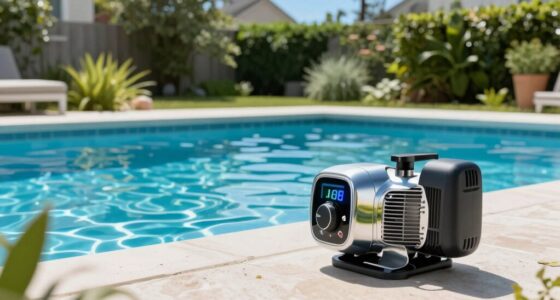
pool heat pump for inground pool
As an affiliate, we earn on qualifying purchases.
As an affiliate, we earn on qualifying purchases.
Frequently Asked Questions
Do Pool Heat Pumps Work Effectively in Cold Weather?
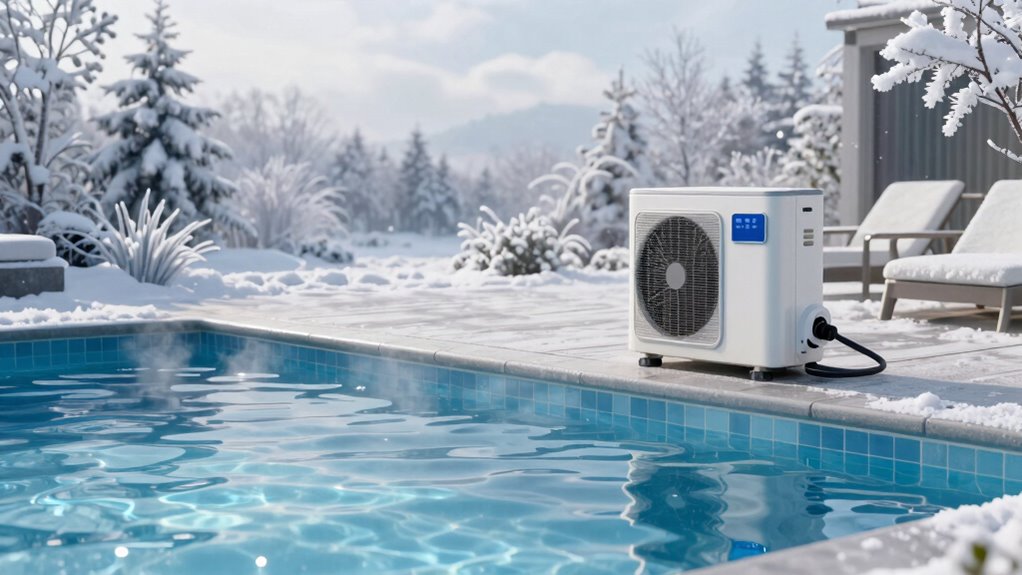
Yes, pool heat pumps work effectively in cold weather, thanks to their winter resilience and advanced technology. While their cold weather performance may decrease slightly compared to warmer months, many models still provide efficient heating in winter. You can enjoy your pool year-round by choosing a heat pump designed for low temperatures. Proper installation and maintenance also help maximize cold weather performance, ensuring your pool stays warm even during chilly seasons.
What Maintenance Is Required for Pool Heat Pumps?
To keep your pool heat pump running smoothly, you need to check the chemical balance regularly to prevent corrosion and scaling. Clean the filter and fan coils as needed, and inspect for debris. If you notice system troubleshooting issues, such as unusual noises or leaks, address them promptly. Routine maintenance guarantees efficient operation, prolongs lifespan, and keeps your pool comfortably warm during more seasons.
How Long Does Installation Typically Take?
Think of installation as planting seeds for your pool’s comfort; it usually takes 1 to 3 days. The setup process involves connecting the heat pump to your existing pool system and ensuring proper electrical wiring. Factors like pool size, system complexity, and site conditions can influence the timeline. You’ll appreciate how quickly your pool becomes a cozy oasis, ready to extend your swimming season.
Are Pool Heat Pumps Energy-Efficient?
Yes, pool heat pumps are energy-efficient. They use less electricity compared to traditional heating systems, leading to significant cost savings over time. Plus, they have a lower environmental impact because they rely on ambient air to generate heat rather than burning fossil fuels. This makes them a smart, eco-friendly choice for extending your swimming season while keeping energy costs down.
Can Heat Pumps Be Used for Heating Other Outdoor Water Features?
Yes, heat pumps can be used for heating outdoor water features like spas and fountains. You can easily connect a heat pump to your outdoor spa to extend its use into cooler months, guaranteeing warm, relaxing baths year-round. For fountain heating, a heat pump efficiently maintains the desired water temperature, preventing freezing and maintaining aesthetic appeal. Just make certain your system is appropriately sized and installed for these specific outdoor features.

AQUASTRONG Swimming Pool Heat Pump,High Energy Efficient Pool Heater for Above Ground and Inground Pool, Heating and Cooling Pool Heater, for 5000 Gallons
- All-Season Temperature Control: Heats or cools water for extended swimming seasons
- High-Performance Heating Module: 16,000 BTU for 5,000-gallon pools
- Precise Temperature Monitoring: Maintains ±2°F accuracy for consistent comfort
As an affiliate, we earn on qualifying purchases.
As an affiliate, we earn on qualifying purchases.
Conclusion
Choosing a pool heat pump is like planting a seed that blooms year-round. It extends your swimming season, turning your backyard into a perpetual oasis. With efficient heat transfer, it’s as reliable as the sunrise, warming your pool without draining your wallet. Embrace the seasons’ dance with confidence, knowing your pool’s comfort is in steady hands. Heat pumps make every swim feel like a splash of summer, no matter the calendar.

Swimming Pool Heat Pump, Electric Swimming Pool Heater Built-in Circulating Water Pump Control System for Above Ground Pools, up to 2000gallons, Max Output 12000BTU/hr, Heat Exchanger,110V No Plug
- Installation Note: Requires electrician installation for pools up to 2000 gallons
- Temperature Range: 71.6°F to 122°F
- Built-in Circulating Pump: Automatically circulates water to maintain temperature
As an affiliate, we earn on qualifying purchases.
As an affiliate, we earn on qualifying purchases.
As an affiliate, we earn on qualifying purchases.