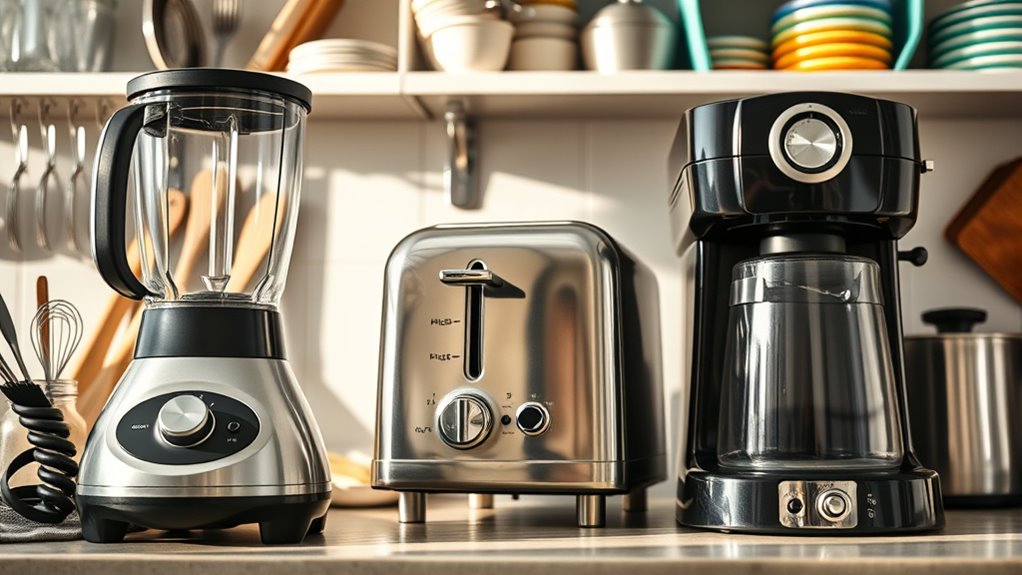

Many common beliefs about small-appliance care are actually myths that can cause damage or reduce efficiency. For example, you shouldn’t use harsh chemicals or immerse electrical parts in water, as this can harm the appliance and be unsafe. Regular cleaning and inspections help your appliances work better and last longer. Staying informed about proper maintenance ensures safety and peak performance. Keep exploring to discover more tips that keep your appliances running smoothly.
Key Takeaways
- Using harsh chemicals can damage appliance surfaces and internal parts, reducing efficiency and lifespan.
- Regular, proper cleaning prevents debris buildup that can cause overheating or malfunction.
- Not all cleaning products are safe; always follow manufacturer instructions and opt for mild solutions.
- Cleaning appliances only when they visibly need it is a myth; routine maintenance ensures optimal performance.
- Periodic inspections help identify safety issues early, preventing accidents and extending appliance longevity.
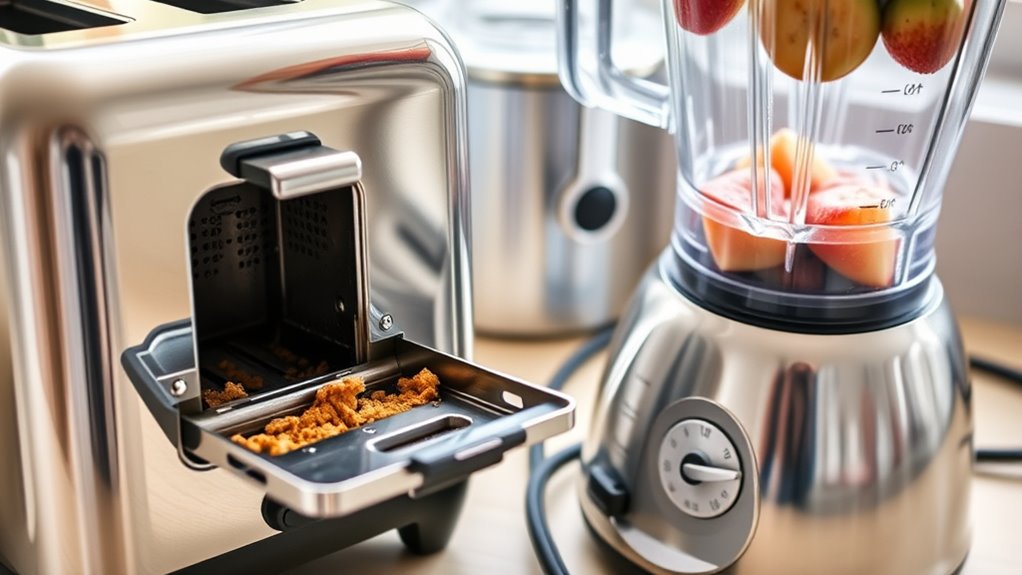
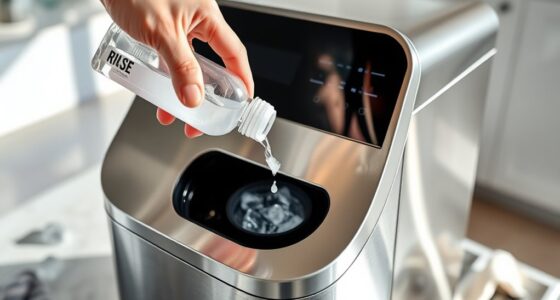
Have you ever believed that cleaning your small appliances with harsh chemicals is the best way to keep them in top shape? Many people think that heavy-duty cleaners will remove stubborn grime and keep appliances like blenders, toasters, and coffee makers functioning perfectly. However, this approach can actually do more harm than good. Using harsh chemicals can damage the appliance’s surfaces and internal components, potentially reducing their energy efficiency. When an appliance isn’t running at its best, it consumes more electricity, which not only increases your utility bills but also harms the environment. Instead, gentle cleaning methods combined with proper maintenance help preserve energy efficiency. It’s vital to follow safety precautions when cleaning to avoid electrical shocks or damage. Always unplug appliances before cleaning, and never immerse electrical parts in water.
Harsh chemicals can damage appliances and reduce energy efficiency; use gentle cleaning methods and safety precautions instead.
Another common myth is that frequent cleaning isn’t necessary if your small appliances seem to work fine. This couldn’t be further from the truth. Regular maintenance prevents the buildup of dust, grease, and food particles that can clog vents or motor parts. Over time, this debris can cause appliances to overheat or work harder than needed, decreasing their lifespan and boosting energy consumption. Keeping appliances clean and well-maintained not only prolongs their life but also ensures they operate at peak energy efficiency. Remember, safety precautions should always be a priority—use soft cloths, non-abrasive cleaners, and avoid spraying liquids directly onto electrical components. Additionally, understanding the importance of contrast ratio can help you choose appliances that perform better in various lighting conditions, ensuring optimal operation and longevity.
Some folks believe that all cleaning products are interchangeable, but that’s a misconception. Many commercial cleaners contain chemicals that aren’t suitable for small appliances, especially those with plastic or rubber parts. Using the wrong cleaning agents can degrade materials and compromise safety. Opt for mild soap, warm water, or specially formulated appliance cleaners. When in doubt, check the manufacturer’s instructions to ensure you’re using the safest products. Proper cleaning not only maintains the appearance of your appliances but also prevents possible safety hazards caused by residue buildup or corrosion.
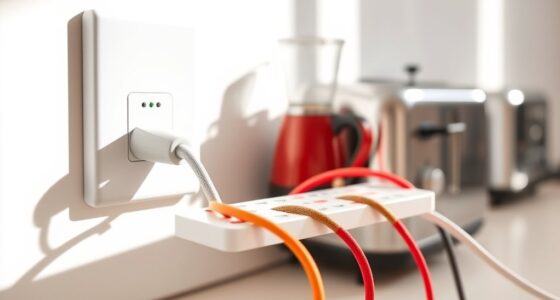
Lastly, many assume that once an appliance is cleaned, it’s good to go without further attention. However, small appliances require periodic inspections to check for frayed cords, loose parts, or other signs of wear. Addressing these issues early can prevent accidents and keep your appliances running smoothly. Always unplug appliances before inspecting or cleaning, and follow safety precautions diligently. By debunking these myths and adopting proper cleaning and maintenance routines, you’ll extend the life of your small appliances, save energy, and ensure your safety every step of the way.
Frequently Asked Questions
How Often Should I Replace Small Appliances for Optimal Performance?
You should replace small appliances based on their appliance lifespan and your replacement schedule, typically every 3 to 5 years. Regularly assess their performance; if they become inefficient or require frequent repairs, it’s time for a replacement. Following a consistent replacement schedule guarantees peak performance and safety. Don’t wait until they completely break down—proactively upgrading keeps your kitchen efficient and prevents unexpected failures.
Are There Eco-Friendly Ways to Dispose of Broken Small Appliances?
Yes, there are eco-friendly ways to dispose of broken small appliances. You can participate in local recycling programs that accept electronics, ensuring hazardous materials are handled safely. Look for certified e-waste recycling centers or drop-off points specializing in eco-friendly disposal. By choosing these options, you help reduce environmental impact, prevent harmful substances from polluting the environment, and promote responsible recycling practices.
Can I Repair Small Appliances Myself or Should I Always Seek Professional Help?
You can often try DIY repairs on small appliances if you’re comfortable with basic troubleshooting and safety precautions. However, for complex issues or if you’re unsure, it’s best to seek professional servicing to prevent further damage. Rushing into DIY repairs might save money initially but could lead to bigger problems. Know your limits, and when in doubt, consulting a professional guarantees your appliance gets the proper care and avoids voiding warranties.
Do Certain Cleaning Products Damage Small Appliances?
Did you know that using improper cleaning chemicals can reduce your appliance’s lifespan by up to 30%? Certain cleaning products, especially those with harsh chemicals or abrasives, can damage small appliances and compromise their longevity. Always check manufacturer instructions before cleaning, and opt for gentle, appliance-safe cleaners. This simple step helps keep your appliances functioning well longer, saving you money and ensuring they last for years to come.
What Safety Precautions Should I Follow When Cleaning or Maintaining Appliances?
When cleaning or maintaining appliances, you should unplug them first to guarantee cord safety and prevent electrical shocks. Use only gentle, appliance-safe cleaning chemicals, avoiding harsh abrasives that could damage surfaces. Keep cords away from water and avoid pulling them when unplugging. Regularly inspect cords for damage, and never attempt repairs yourself. Following these precautions keeps you safe and helps your appliances stay in good condition longer.
Conclusion
Don’t let these myths stop you from properly caring for your small appliances. Even if it feels like more effort, regular maintenance extends their lifespan and saves you money in the long run. Some might think it’s too complicated or time-consuming, but with simple cleaning routines and careful handling, you’ll keep them running smoothly. Investing a little effort now means fewer breakdowns later—so go ahead, give your appliances the care they deserve.