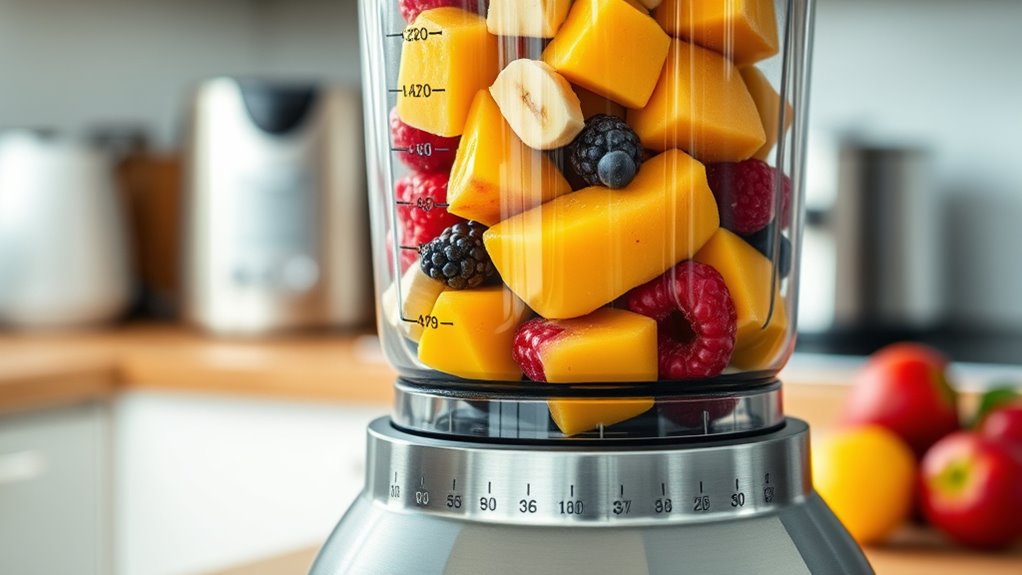

Understanding wattage helps you choose the right blender or mixer for your needs. Higher wattage usually means a more powerful motor that can handle tough ingredients or larger batches, but it also consumes more energy. Lower wattage appliances may be enough for light tasks and save energy. Keep in mind that motor efficiency also plays a role in performance. To find the best balance for your tasks, you’ll want to explore what wattage levels suit your lifestyle best.

Get cleaning gear delivered free — and shop member deals
- Fast, free delivery on millions of items
- Access to Prime Big Deal Days deals on October 6–7
- Prime Video, Amazon Music and more included
Key Takeaways
- Higher wattage generally indicates a more powerful motor suitable for tough ingredients and larger batches.
- Motor efficiency affects performance; a high-efficiency motor can outperform higher wattage models.
- Lower wattage appliances can be sufficient for light tasks, offering energy savings and cost-effectiveness.
- Consider your usage frequency and tasks to balance power needs and energy efficiency.
- Understanding wattage helps select appliances that optimize performance while minimizing energy consumption.
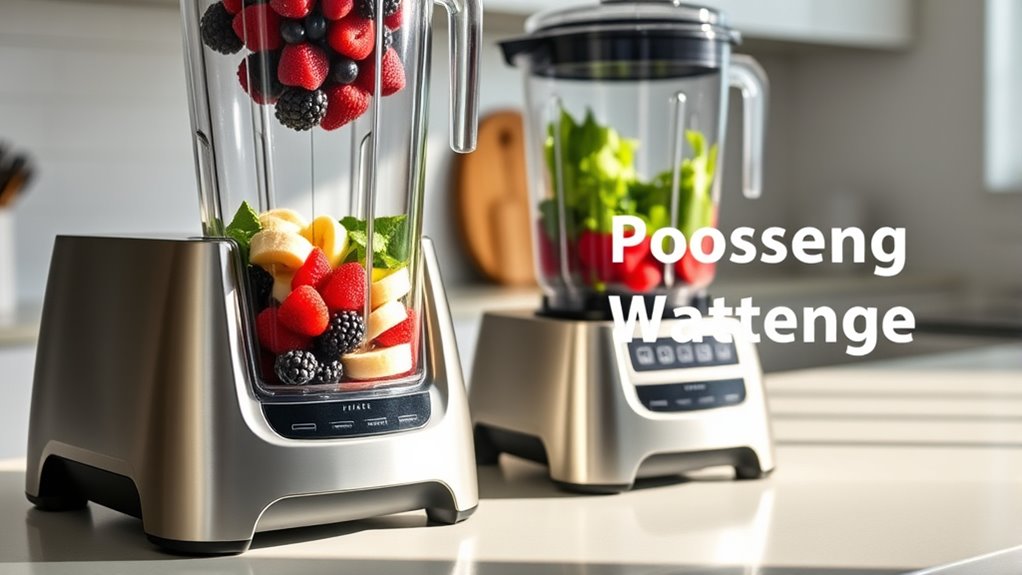
Have you ever wondered what wattage really means when it comes to appliances and electronics? It’s more than just a number on the box; it directly impacts how well your blender or mixer performs and how much energy it uses. When shopping for kitchen gadgets, understanding wattage helps you choose the right tools for your needs. Wattage indicates the power consumption of an appliance, which in turn influences its motor efficiency—the ability of the motor to convert electrical energy into mechanical work. A higher wattage typically means a more powerful motor, capable of handling tougher ingredients or blending for longer periods without overheating. But more power isn’t always better if you’re looking to save on energy bills or want a device that’s more energy-efficient.
Motor efficiency plays a vital role in how effectively a blender or mixer uses electricity. A motor with high efficiency delivers more power to the blades with less energy lost as heat. This means that a 300-watt motor with high efficiency can often outperform a lower-wattage motor that isn’t as optimized. When you’re considering appliances, look at both the wattage and the motor’s design. An efficient motor might have a lower wattage but still deliver the same or better performance as a higher-wattage, less efficient one. This balance ensures you get the power you need without unnecessary energy consumption, which is good for your wallet and the environment.
High-efficiency motors deliver better performance with less energy loss, saving money and benefiting the environment.
Additionally, understanding wattage and efficiency can help you select appliances that best suit your lifestyle and reduce your carbon footprint. Power consumption directly impacts your energy bills and the longevity of your appliances. A high-wattage blender or mixer might seem tempting because of its raw power, but it can also mean higher electricity costs if used frequently. On the other hand, appliances with lower wattage and good motor efficiency can perform well for everyday tasks like smoothies, batter mixing, or chopping, without draining your energy resources. When choosing between models, consider how often you’ll use the device and for what purposes. If you’re blending tough ingredients or making large batches regularly, investing in a higher wattage model with a robust motor might be worthwhile. But if you mostly use it for light tasks, a lower wattage, energy-efficient option will suffice and save you money over time.
In the end, understanding wattage helps you make smarter decisions about your kitchen appliances. It’s about finding the right balance between power and efficiency to suit your specific needs. By paying attention to motor efficiency and power consumption, you guarantee your appliances perform well without wasting energy or costing you more in the long run.
Frequently Asked Questions
How Does Wattage Affect Blending Speed?
Higher wattage increases blending speed because it provides more motor power, allowing the blades to spin faster and handle tougher ingredients efficiently. Motor efficiency varies, so a more efficient motor delivers better performance without consuming excessive energy. As wattage rises, energy consumption also increases, but it often results in quicker, smoother blends. You’ll notice faster results with higher wattage, especially when blending dense or frozen foods.
Can Higher Wattage Damage My Blender?
Higher wattage won’t necessarily damage your blender if it has good motor efficiency. Modern blenders are designed to handle higher wattage levels safely, but they do consume more energy. Overloading or using the blender improperly, regardless of wattage, can cause damage. To prevent this, follow the manufacturer’s guidelines, avoid overworking the motor, and choose a model suited to your blending needs and energy consumption preferences.
What Wattage Is Ideal for Crushing Ice?
You might think higher wattage is always better for ice crushing, but wattage comparison shows that a blender with 500-700 watts typically handles ice well without overexertion. This range provides enough power to break down ice efficiently while maintaining durability. Lower wattage blenders may struggle, leading to uneven texture, while excessively high wattage isn’t necessary. So, aiming for a blender in this wattage range ensures ideal ice crushing performance.
Does Wattage Impact Noise Levels?
Wattage does impact noise levels because a higher wattage motor tends to produce more motor noise during operation. You might notice that powerful blenders or mixers with high wattage generate louder noise compared to lower wattage models. However, noise levels also depend on motor design and insulation. So, if quiet operation matters to you, look for models specifically designed to minimize noise, regardless of wattage.
Is Wattage the Only Factor in Blender Performance?
Wattage isn’t the only factor in blender performance. Picture the motor efficiency as the engine’s heartbeat, driving smooth, powerful results. Design considerations like blade sharpness, jar shape, and motor placement also play essential roles. You’ll notice that a well-designed, efficient motor with ideal wattage delivers better blending, quieter operation, and durability. So, focus on the whole package, not just wattage, to get the best performance from your blender.
Conclusion
Now that you understand how wattage impacts your blender or mixer, you can make smarter choices tailored to your needs. Remember, don’t put all your eggs in one basket—consider what tasks you’ll tackle most often. Picking the right wattage is like finding the sweet spot; it ensures your appliance performs efficiently without wasting energy. Armed with this knowledge, you’re better equipped to blend, mix, and whip your way to culinary success.
Fall Picks
fall essentials
As an affiliate, we earn on qualifying purchases.