Appliances trip breakers more often when they draw too much current, often due to internal faults, wiring issues, or power surges. High-demand devices like refrigerators or space heaters are especially prone if their internal parts are worn or damaged. Faulty wiring or loose connections can cause irregular current flow, increasing the risk of trips. If you’re curious about how to prevent this from happening, there’s more to uncover below.
Key Takeaways
- Appliances with higher power demands or internal faults draw more current, increasing trip chances.
- Faulty wiring or loose connections can cause short circuits and trip breakers more frequently.
- Older or damaged appliances often have worn components that create unstable current flow.
- Power surges and external electrical issues can overload circuits connected to certain appliances.
- Poor maintenance or exposure to moisture and debris heighten internal faults, raising trip risk.

If you notice some appliances consistently trip your circuit breakers while others don’t, it’s likely due to differences in their electrical demands and internal components. Appliances that frequently cause trips tend to draw more current or have issues that make them unstable. One common reason for this is a power surge, which can happen when there’s a sudden spike in electrical voltage. Power surges can overload an appliance’s circuitry, causing it to trip the breaker to prevent damage. Over time, repeated surges can wear down internal parts, increasing the chances of frequent trips.
Appliances that trip breakers often draw more current or have internal issues causing instability.
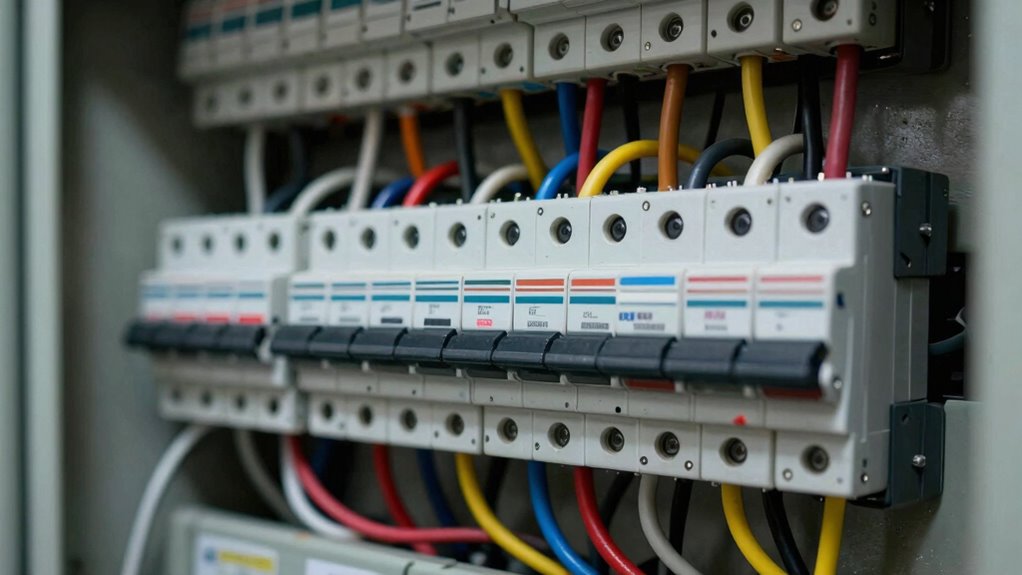
Faulty wiring is another major factor. If an appliance has wiring that’s frayed, loose, or corroded, it can create a short circuit or increase resistance, prompting the breaker to trip as a safety measure. Faulty wiring not only puts the appliance at risk but also jeopardizes your entire electrical system. When a breaker trips due to wiring issues, it’s often because the internal connections are compromised, causing irregular current flow. Appliances with defective wiring are more prone to tripping than those with properly maintained electrical connections. Additionally, wiring integrity plays a crucial role in maintaining safe and consistent operation. Poor electrical connections can further increase the risk of tripping and damage.
Some appliances inherently demand more power, making them more likely to trip breakers. Heavy-duty appliances like refrigerators, washers, or space heaters draw significant current during operation. If your circuit isn’t designed to handle their load, it will trip frequently. Additionally, older appliances or those with worn-out components might not operate efficiently, causing them to draw more current than necessary and trigger the breaker. This inefficiency can be compounded by internal faults, such as motor failures or damaged switches, which increase the likelihood of tripping. Also, internal electrical components may deteriorate over time, further contributing to these issues. Regularly inspecting and maintaining such appliances can help prevent unexpected trips.
You should also consider internal faults within the appliance itself. Sometimes, a malfunctioning motor, capacitor, or circuit board can cause irregular current flow. These issues can lead to a power surge within the appliance, which then trips the breaker to protect the rest of your system. In some cases, appliances become more prone to tripping if they’ve been exposed to moisture or have accumulated dust and debris, leading to short circuits or overheating. Ensuring proper ventilation and avoiding moisture buildup can also help prevent internal faults. Proper appliance maintenance and timely repairs are essential to reduce the risk of internal component failure and repeated breaker trips.
As an affiliate, we earn on qualifying purchases.
Frequently Asked Questions
Can Appliance Age Affect How Often a Breaker Trips?
Yes, appliance age can affect how often a breaker trips. As appliances age, their internal components may wear out, reducing appliance durability and causing electrical issues. Older appliances might also have wiring that’s less compatible with modern circuits, increasing the risk of short circuits or overloads. These problems can lead to frequent breaker trips to protect your home’s electrical system, so regular maintenance and updates are essential to prevent issues.
Do Specific Appliance Brands Trip Breakers More Frequently?
Yes, some appliance brands tend to trip breakers more often due to differences in appliance efficiency and brand reliability. Less reliable brands or those with lower efficiency may draw more power or have faulty components, increasing the risk of breaker trips. You should consider choosing reputable brands known for quality and efficiency, as they typically cause fewer electrical issues and trip breakers less frequently, ensuring safer and more consistent operation.
How Does Improper Appliance Installation Influence Breaker Trips?
Improper appliance installation can cause breaker trips because it often leads to electrical grounding issues or increases vulnerability to power surges. When grounding isn’t done correctly, the appliance may draw uneven current, triggering the breaker. Additionally, without proper setup, appliances become more susceptible to power surges, which can overload the circuit and trip the breaker, protecting your home’s wiring from damage. Always guarantee professional installation for safe, efficient operation.
Are Certain Circuit Breaker Types More Prone to Tripping?
Certain circuit breaker types, like standard circuit breakers, are more prone to tripping if they can’t handle high electrical loads. For better electrical load management, consider using breakers designed for specific appliances, such as dedicated or dual-function breakers. These specialized breakers help prevent frequent trips by better matching the appliance’s power requirements, reducing nuisance trips and protecting your home’s electrical system. Always choose the right breaker type for your needs.
Can Frequent Trips Indicate a Need for Professional Electrical Inspection?
If your breaker trips frequently, it’s a sign you should consider a professional electrical inspection. Studies show that over 60% of electrical fires involve faulty wiring or breaker issues. These trips may indicate electrical safety concerns or the need for breaker maintenance. Ignoring frequent trips can lead to hazards; a licensed electrician can assess your system, guarantee proper function, and help prevent potential fire risks or damage.
heavy-duty extension cord for appliances
As an affiliate, we earn on qualifying purchases.
As an affiliate, we earn on qualifying purchases.
Conclusion
Did you know that appliances with motors, like refrigerators and washers, are responsible for nearly 60% of breaker trips? Understanding why some appliances trip breakers more often can help you prevent unnecessary outages and potential hazards. By paying attention to appliance age, wiring, and load, you can reduce these trips. Stay vigilant and consider professional inspections if trips become frequent—keeping your home safe and powered smoothly.
appliance circuit breaker tester
As an affiliate, we earn on qualifying purchases.
As an affiliate, we earn on qualifying purchases.
wiring repair kit for appliances
As an affiliate, we earn on qualifying purchases.
As an affiliate, we earn on qualifying purchases.