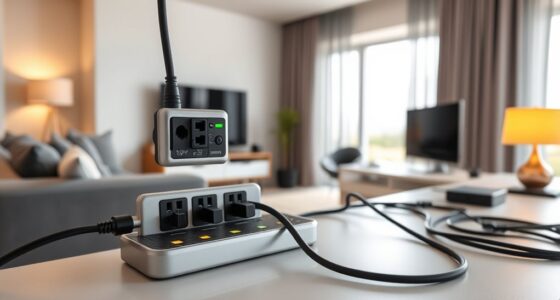
Exceeding your small appliance’s capacity causes it to work harder, which speeds up wear and increases the chance of internal damage. Overloading leads to overheating, component stress, and ultimately shorter lifespan. Sticking to the recommended wattage and voltage helps your appliance operate efficiently and last longer. If you want to better understand how capacity impacts longevity and how to prevent damage, there’s more helpful guidance ahead.
Key Takeaways
- Operating small appliances within their rated capacity prevents overheating and internal component stress, extending their lifespan.
- Overloading causes faster wear and tear, leading to early breakdowns and costly repairs.
- Adhering to manufacturer specifications ensures optimal performance and reduces the risk of electrical failures.
- Monitoring appliance performance helps identify signs of overexertion, preventing damage before it occurs.
- Using appropriate appliances for demanding tasks avoids overloading and maintains long-term durability.

Understanding how capacity impacts the lifespan of your small appliances is essential for getting the most out of them. When it comes to appliances like blenders, coffee makers, or toasters, the power capacity plays a significant role in determining how long they last. If you consistently push your appliances beyond their recommended limits, you risk shortening their appliance lifespan and increasing the chances of breakdowns or failures. Knowing the importance of staying within the specified power capacity helps you prevent unnecessary wear and tear, ultimately saving you money and hassle in the long run.
Staying within your small appliance’s power capacity extends its lifespan and prevents costly breakdowns.
Your small appliances are designed with a specific power capacity in mind, which dictates how much energy they can safely handle during operation. When you overload an appliance—using it with a wattage or voltage that exceeds its capacity—you put undue stress on its internal components. This stress can cause overheating, component degradation, or even electrical failures. Over time, these issues weaken the appliance’s structure and reduce its overall appliance lifespan. It’s like overexerting a muscle; the more you push it beyond its limits, the faster it wears out. Respecting the power capacity guidelines ensures that your appliance operates efficiently without unnecessary strain.
Many people underestimate the importance of adhering to the recommended capacity, thinking that pushing their appliances harder will get the job done faster. However, this mindset often backfires. Consistently operating an appliance at or above its maximum capacity accelerates component fatigue and increases the likelihood of early failure. For example, running a blender at a higher wattage than it’s rated for can cause the motor to overheat, leading to a burnt-out motor or internal damage. Similarly, overloading a coffee maker’s heating element can cause it to fail prematurely. To extend your appliance’s lifespan, always check the manufacturer’s specifications and avoid exceeding the recommended power capacity.
Additionally, understanding the concept of Rhythm Failure can help you select appliances with suitable capacities for specific tasks, ensuring durability and performance. Maintaining the correct power capacity isn’t just about avoiding damage; it’s also about ensuring excellent performance. When you use an appliance within its designed limits, you reduce the risk of overheating, electrical issues, and breakdowns. This care not only prolongs the appliance’s functional life but also keeps it operating at peak efficiency. If you notice that your small appliances seem to be struggling or overheating, it’s a clear sign you might be exceeding their capacity. In such cases, consider using a different appliance better suited for the task or reducing the load to protect it from damage.
Frequently Asked Questions
Can Overloading Cause Permanent Damage to Appliances?
Yes, overloading can cause permanent damage to your appliances. When you overload them, it strains the internal components and can throw off appliance calibration, leading to inefficiency. Additionally, overloading increases power surge risks, which may damage circuits and internal parts. To protect your appliances, avoid exceeding their capacity, and guarantee proper calibration. Doing so helps extend their lifespan and keeps them functioning safely and efficiently.
How Do I Identify if My Appliance Is Overloaded?
You can tell if your appliance is overloaded by checking its power capacity and observing load indicators. If it’s constantly overheating, shutting off unexpectedly, or making unusual noises, these are signs it’s handling more than it should. Also, monitor the power capacity rating; exceeding this limit puts stress on the appliance. Stay within recommended load levels to prevent damage and ensure your appliance operates smoothly and lasts longer.
Are There Safety Risks Associated With Overloading Small Appliances?
Overloading your small appliance definitely poses safety risks. It can lead to electrical hazards like short circuits and overheating risks, which may cause fires or damage your device. The theory that overloading only shortens an appliance’s lifespan isn’t the full story; it also endangers your safety. Always follow the manufacturer’s guidelines, avoid pushing the limits, and make certain your appliance isn’t overloaded to prevent these dangerous risks.
What Are Signs of Early Appliance Failure Due to Overload?
You might notice early appliance failure signs like frequent power surges and abnormal noises. These issues occur because overload strains the motor or electrical components, leading to overheating or mechanical stress. If your appliance suddenly makes loud sounds or experiences sudden power fluctuations, it’s a clear sign that it’s been overloaded and could soon fail. Addressing these signs early helps prevent further damage and extends its lifespan.
Does Frequent Overload Shorten an Appliance’s Overall Lifespan?
Yes, frequent overload can dramatically shorten your appliance’s lifespan, almost like it’s running a marathon every day. When you ignore power capacity limits, it pushes the appliance beyond its limits, causing overheating and wear. Overload prevention is essential; it helps keep your device running smoothly and lasts longer. By respecting capacity, you protect your investment and avoid premature failures, ensuring your small appliance works efficiently for years to come.
Conclusion
Remember, overloading your small appliances can cut their lifespan by up to 50%. By understanding their capacity limits and avoiding excess strain, you extend their longevity and save money in the long run. Keep in mind that nearly 60% of appliance failures are linked to overload issues. So, be mindful of how much you push your devices—your appliances will thank you with longer, reliable service. Stay within capacity, and enjoy your appliances for years to come.