When choosing between glass, Tritan, and stainless steel jars, consider durability, safety, and longevity. Glass is crystal-clear and non-porous but can chip or crack easily. Tritan offers impact resistance and remains stain-free, though it may degrade over time. Stainless steel is virtually indestructible, resists odors, and lasts forever. Each material suits different needs, so exploring more will help you pick the best option for your lifestyle.
Key Takeaways
- Stainless steel jars are the most durable, virtually indestructible, and resistant to dents, scratches, and shattering.
- Tritan plastic offers high impact resistance, maintaining clarity and resisting cracking or breaking over time.
- Glass jars are fragile, prone to shattering or chipping, but resist scratches and stains well with proper care.
- Stainless steel and Tritan are easier to clean and resist odors better than glass, which can stain or retain smells.
- For long-term durability and environmental sustainability, stainless steel and glass outperform Tritan, which may degrade or stain over time.
Why Material Choice Matters When Picking a Jar

Choosing the right jar material is vital because it directly affects durability, safety, and how well your contents are preserved. Material safety is essential—some plastics may leach chemicals over time, while glass and stainless steel are generally safer options. Besides safety, aesthetic appeal plays a significant role; your jar’s look can complement your kitchen decor or give your pantry a sleek, modern vibe. The material you select influences how attractive your jar appears and how well it fits your personal style. A visually appealing jar can motivate you to keep your storage organized. When selecting a jar, understanding material durability helps ensure your choice withstands everyday use over time. Additionally, considering product longevity can help you choose a jar that remains functional and attractive for years to come. Moreover, choosing materials resistant to water damage ensures your jars stay in optimal condition despite exposure to moisture. For example, some plastics may degrade or warp when exposed to water or heat, so selecting water-resistant materials is crucial for longevity. Considering impact resistance can also be beneficial if your jars are likely to be bumped or dropped. Ultimately, emphasizing material safety and aesthetic appeal ensures your jars are both functional and attractive, making your storage solutions more enjoyable and worry-free.
Comparing Durability of Glass, Tritan, and Steel
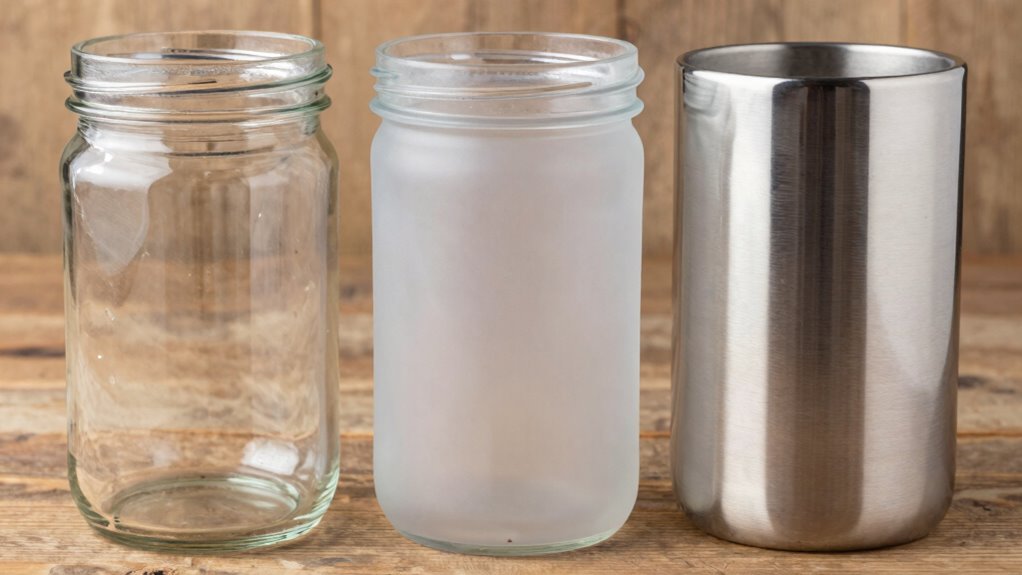
When it comes to durability, impact resistance and long-term wear are key factors to consider. You’ll want a material that can handle drops without cracking and maintain its integrity over time. You’ll also want to consider arcade game nostalgia, as classic arcade games like Ms. Pac-Man and Galaga continue to be popular for their engaging mechanics and timeless appeal. Additionally, material safety plays a crucial role in choosing the right option, ensuring that the material is free from harmful chemicals and safe for everyday use. Let’s compare how glass, Tritan, and steel stand up to everyday use.
Impact Resistance Levels
Impact resistance is a key factor when evaluating the durability of different jar materials. Your choice depends on how well each material withstands sudden drops or knocks, reflecting its impact durability and overall resilience. Glass offers minimal impact resistance and is prone to shattering upon impact. Tritan, a BPA-free plastic, provides good material resilience, absorbing shocks without breaking easily. Stainless steel excels in impact durability, resisting dents and cracks even after repeated impacts. When comparing these materials, consider:
- Glass’s brittleness and susceptibility to shattering
- Tritan’s balance of flexibility and resilience
- Steel’s strength and dent resistance
Understanding these differences helps you pick a jar that withstands everyday accidents, ensuring long-term durability and performance. Additionally, impact resistance is influenced by the material’s inherent properties and manufacturing processes, which can be optimized for specific uses. Properly selecting a durable, safe material for everyday items can also reduce the risk of injuries and replacement costs. Furthermore, impact resistance levels can be improved through specific design and manufacturing techniques, enhancing overall durability. Material properties like toughness play a critical role in how well a jar withstands impacts, guiding consumers to make more informed choices for long-lasting products.
Long-Term Wear Resistance
Long-term wear resistance determines how well a jar maintains its integrity and appearance over time, especially after repeated use. Material flexibility plays a crucial role here, allowing the jar to withstand daily impacts without cracking or deforming. Glass offers excellent aesthetic longevity, resisting scratches and fading, but it can become brittle and chip over years of use. Tritan’s flexibility helps it endure frequent handling, maintaining a clear, like-new appearance longer than some plastics. Stainless steel excels in durability, resisting dents and scratches, ensuring it looks good for years. material durability is a key factor to consider when selecting the best jar for long-term use, as it directly impacts how the material responds to ongoing wear and tear. Additionally, the ability of these materials to resist damage from thermal shocks can influence their longevity under various usage conditions. Proper maintenance and care can also significantly extend the lifespan of jars made from these materials. Overall, if you prioritize long-term wear resistance, stainless steel and Tritan generally outperform glass, which can be more prone to damage despite its timeless look.
Which Materials Resist Stains and Odors Best?
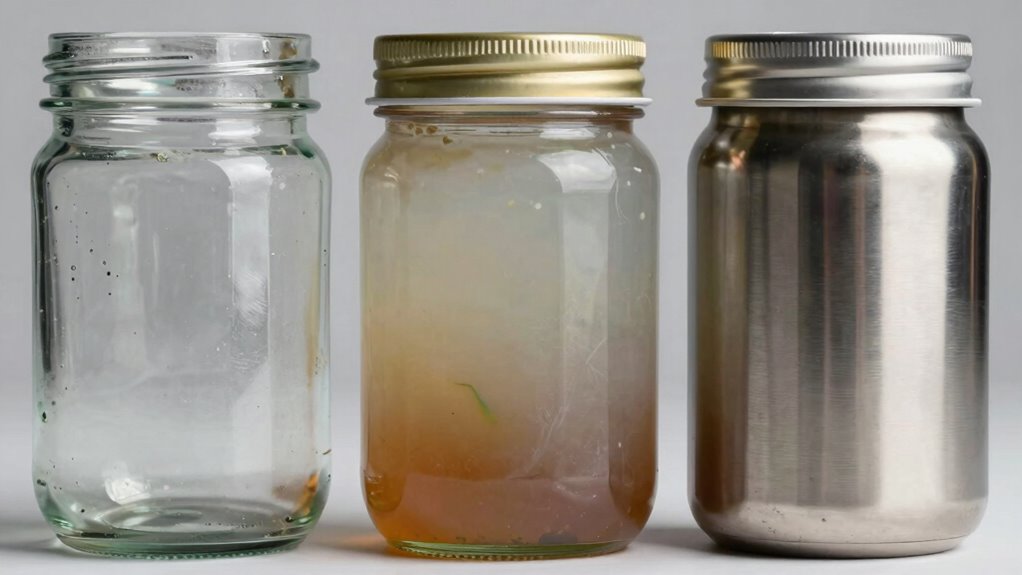
Among the three materials—glass, Tritan, and stainless steel—Tritan often resists stains and odors better than the others. Its superior stain resistance minimizes discoloration from colorful foods, while low odor retention means it doesn’t trap smells from strong ingredients. This makes Tritan ideal if you want a jar that stays fresh and looks clean over time. Additionally, Tritan’s chemical resistance helps it withstand various cleaning agents without degrading. Tritan’s non-porous surface prevents deep stains and lingering smells, unlike glass or stainless steel. Glass can stain easily from certain liquids, and odors may linger if not cleaned promptly. Stainless steel resists stains but can retain odors, especially from acidic or pungent foods. Choosing Tritan helps maintain a clean, odor-free jar with minimal effort and contributes to long-term durability due to its robustness. Furthermore, Tritan’s impact resistance makes it less prone to cracks and breaks compared to glass, ensuring longevity with regular use. Its lightweight nature also enhances ease of handling, making it a practical choice for everyday use. Moreover, Tritan’s temperature resistance allows it to handle hot and cold contents without warping or cracking, adding to its versatility.
Which Jar Material Keeps Food Fresh and Safe?
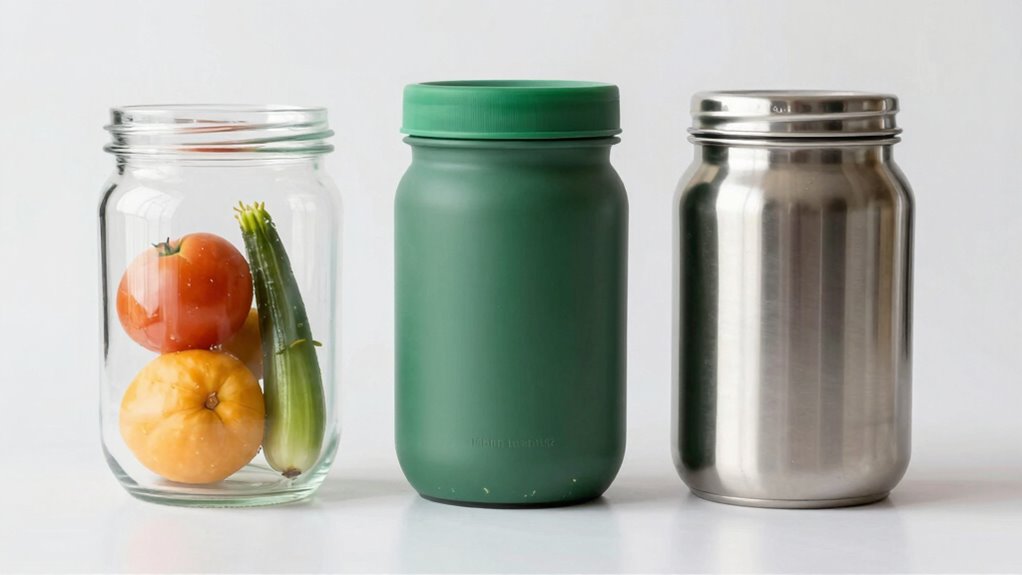
Choosing the right jar material is essential for keeping your food fresh and safe. Glass jars excel in food safety because they’re non-porous, resisting bacteria and odors, and don’t leach chemicals. Tritan offers similar safety benefits, being BPA-free and durable, though it’s a plastic, so some may worry about chemical leaching over time. Stainless steel jars are highly resistant to corrosion and won’t transfer flavors, making them safe for various foods. When considering material recyclability, glass and stainless steel are environmentally friendly options—they’re fully recyclable without losing quality. Tritan, while recyclable, involves more energy in production and disposal. Additionally, the Gold IRA Markets emphasize the importance of choosing durable and environmentally friendly materials for long-term use. Ultimately, for preserving freshness and ensuring safety, glass and stainless steel stand out, but your choice also depends on environmental impact and personal preferences. Selecting a jar material with long-lasting durability ensures your food stays fresh over time and reduces waste from frequent replacements.
How Easy Are Glass, Tritan, and Steel Jars to Clean?
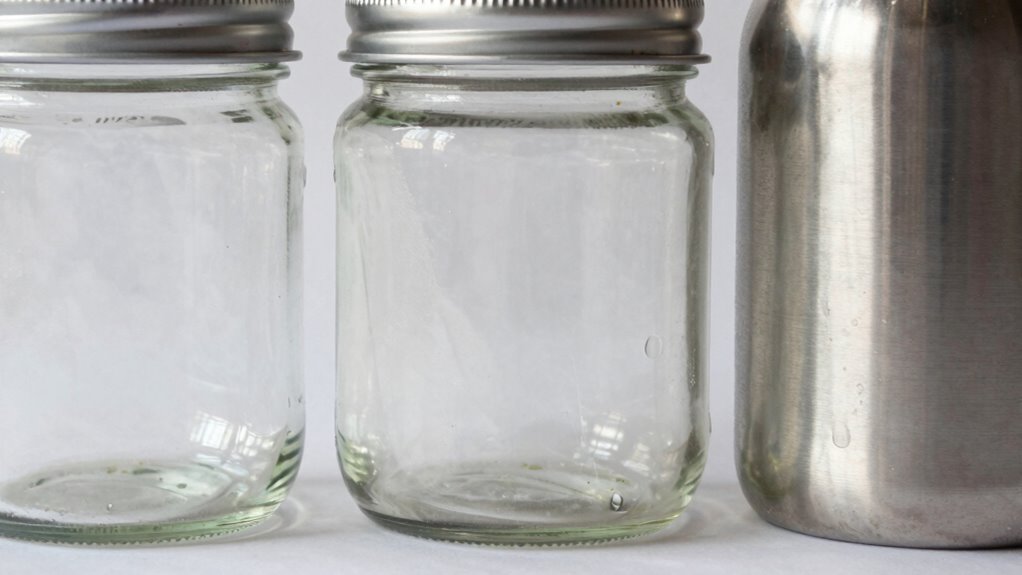
Cleaning ease varies considerably among glass, Tritan, and steel jars. Glass jars are generally straightforward to clean due to their smooth surface and stain resistance, making them less prone to lingering odors. Tritan jars also clean easily; they resist stains and odors better than some plastics, simplifying maintenance. Steel jars, especially stainless steel, are durable but can be trickier to clean thoroughly, as fingerprints and water spots may cling. To keep your jars spotless, consider these points:
- Glass jars require minimal effort thanks to their non-porous nature.
- Tritan’s stain resistance reduces the need for harsh scrubbing.
- Steel jars may need special cleaning tools to remove fingerprints and water spots.
- Material durability influences how often and how thoroughly you need to clean your jars to maintain their appearance and hygiene.
Which Materials Are Most Resistant to Breakage and Cracking?
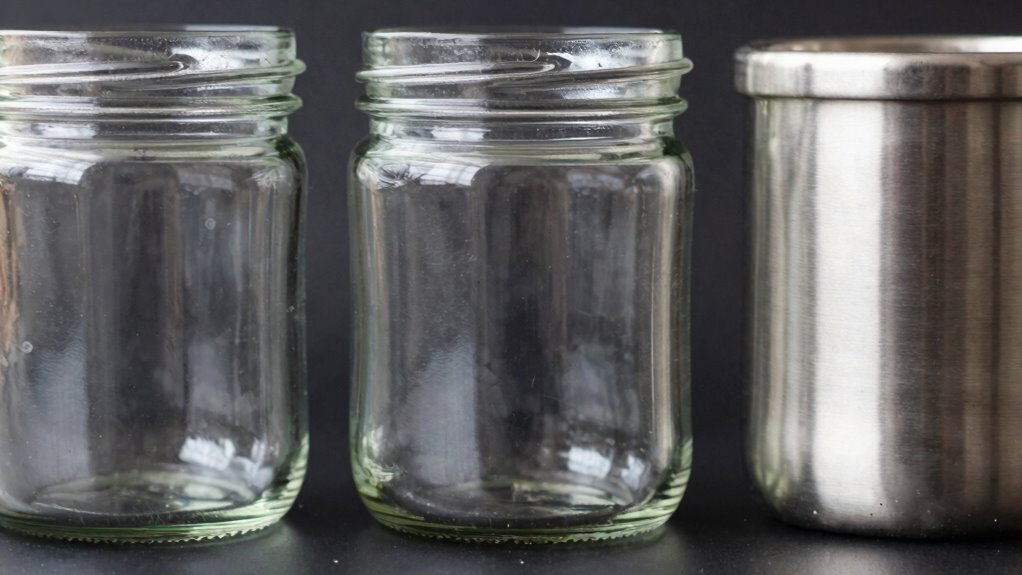
When it comes to resisting breakage and cracking, glass jars are more fragile and prone to shattering upon impact, especially if dropped from a height. Tritan plastic offers excellent durability, making it highly resistant to cracking and breakage, which enhances material safety. Stainless steel jars are virtually indestructible, immune to cracking and shattering, making them the safest choice for rough handling. While glass scores high on aesthetic appeal, its vulnerability can be a concern. Tritan provides a good balance of durability and clarity, maintaining visual appeal over time. Stainless steel, though less transparent, offers unmatched strength and longevity. If resistance to breakage is your priority, steel and Tritan outperform glass, ensuring your jars last longer and stay safer during everyday use.
How Do Jar Materials Look Over Time? (Transparency and Wear)
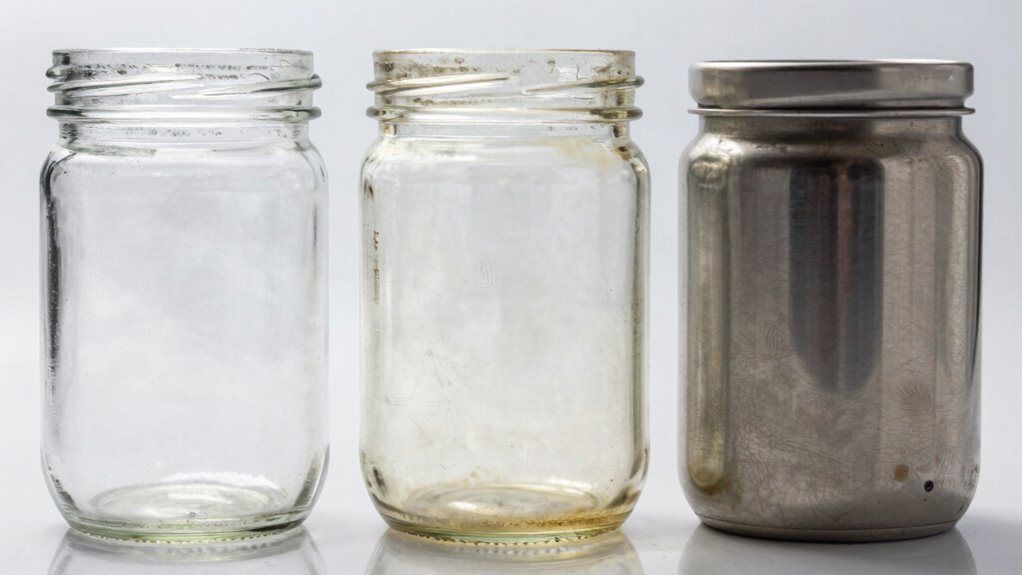
As you use your jars over time, you’ll notice differences in how their clarity changes and how surface wear appears. Some materials may become cloudy or develop scratches, affecting both appearance and functionality. Understanding these patterns helps you choose the best jar for long-term use.
Clarity Over Time
Over time, the clarity of your jar material can change considerably, affecting both appearance and usability. With glass, clarity remains stable, maintaining its aesthetic appeal and showcasing contents vividly. Tritan offers good transparency initially but may develop slight cloudiness after extensive use, impacting its visual appeal. Stainless steel jars typically lack transparency, but if they become scratched or stained, their surface can look dull, diminishing aesthetic value. These changes influence your perception of freshness and safety, highlighting the importance of material safety in choosing a jar. To preserve clarity:
- Regularly clean glass jars to prevent residue buildup
- Avoid harsh abrasives on Tritan to reduce cloudiness
- Use gentle cleaning methods on stainless steel to maintain shine
Surface Wear Patterns
The way jar materials age visually can markedly impact their appearance and functionality. Over time, you’ll notice surface scratches on your jars, especially with Tritan and stainless steel, which can dull their smooth finish. Glass jars are more resistant to scratches but can develop minor chips or cracks with heavy use. Finish degradation is common in stainless steel, where the surface may lose its shine or develop dull patches. Tritan tends to resist surface wear longer but may show fine scratches that affect transparency. These surface wear patterns influence not just aesthetics but also how clearly you can see inside the jar. Regular use, cleaning, and handling all contribute to these changes, making it essential to choose a jar material that maintains its appearance over time.
What Is the Long-Term Cost and Value of Each Material?
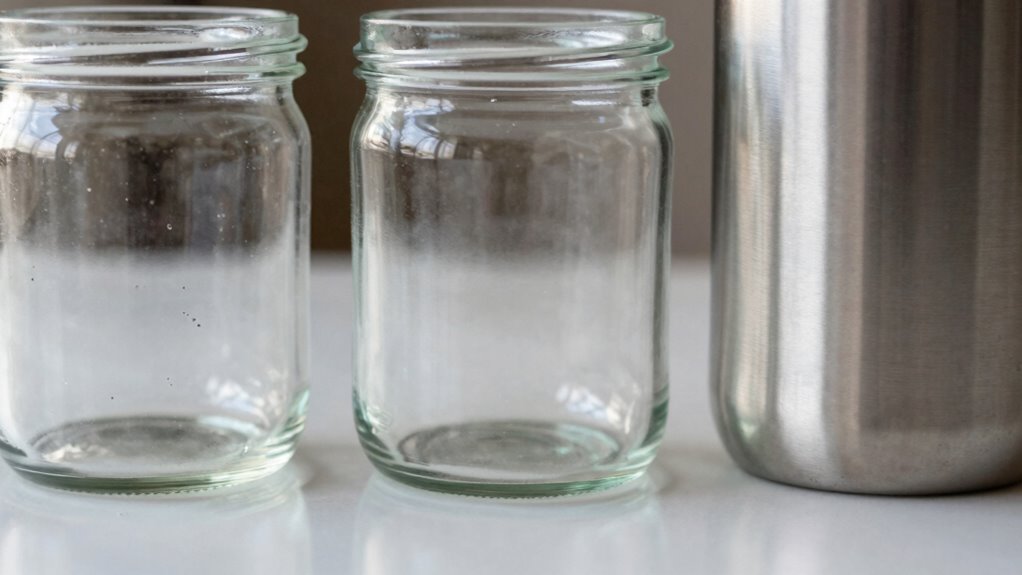
When considering long-term costs, it’s important to look beyond the initial price tags and evaluate how each material holds up over time. Glass, Tritan, and stainless steel each have different durability and maintenance costs that influence their overall value. Glass can be recycled endlessly, making it a sustainable choice, but its fragility can lead to replacement expenses. Tritan, a plastic alternative, offers impact resistance but may degrade over time, affecting its longevity. Stainless steel is highly durable, resistant to corrosion, and easy to clean, which lowers replacement costs. Additionally, consider the manufacturing impact, as materials with lower environmental footprints can save you money indirectly through eco-friendly practices.
Long-term savings depend on durability and eco-friendliness of glass, Tritan, and stainless steel materials.
- Material recycling potential affects long-term sustainability and costs
- Manufacturing impact influences overall environmental and financial value
- Durability reduces replacement frequency and associated expenses
Are These Jar Materials Eco-Friendly and Sustainable?

Glass, Tritan, and stainless steel each have distinct environmental impacts that influence their sustainability. Glass is highly eco friendly packaging because it’s recyclable without loss of quality and can be reused multiple times. It also requires sustainable manufacturing processes to minimize energy consumption. Tritan, a BPA-free plastic, offers durability but is made from fossil fuels, raising concerns about its eco footprint. Recycling Tritan is possible but less common, reducing its sustainability appeal. Stainless steel is long-lasting and fully recyclable, making it a sustainable choice if produced responsibly. Overall, glass and stainless steel tend to be more eco friendly, especially when reused and recycled, while Tritan’s sustainability depends on how it’s manufactured and disposed of. Your choice impacts environmental preservation and resource conservation.
Which Jar Material Is the Best Choice for Your Needs?

Choosing the right jar material depends on your specific needs and priorities. Consider what matters most—whether it’s material aesthetics, durability, or ease of use. If you prefer a sleek, modern look, Tritan offers a clear, lightweight appearance that mimics glass. For a classic, timeless vibe, glass jars excel in aesthetics and can be easily cleaned and recycled. Stainless steel provides a durable, sleek finish that’s resistant to odors and damage, ideal for active lifestyles. Your user preferences also influence your choice; if you value transparency and a clean look, go for glass. For convenience and impact resistance, Tritan and stainless steel are better options. Ultimately, select the material that aligns with your style, usage habits, and environmental considerations.
Frequently Asked Questions
How Do Temperature Changes Affect Each Jar Material?
Temperature changes cause thermal expansion in all jar materials, but they react differently. Glass can crack or shatter if exposed to sudden temperature shifts due to its low insulation properties. Tritan plastic resists thermal expansion better, maintaining its shape and strength, while stainless steel handles temperature variations well without cracking, thanks to its excellent insulation properties. You’ll find stainless steel most durable for temperature fluctuations, followed by Tritan, with glass being the most sensitive.
Are Tritan Jars Bpa-Free and Food-Safe?
You’ll be glad to know Tritan jars are BPA-free and food-safe, making them a reliable choice—like a fortress protecting your snacks. Unlike traditional plastics, Tritan’s transparency and durability don’t raise BPA concerns or compromise food safety. When you choose Tritan, you’re opting for a material tested to meet strict safety standards, ensuring your food stays fresh and safe without worrying about harmful chemicals.
Can Stainless Steel Jars Retain Odors Like Glass or Tritan?
Stainless steel jars generally don’t retain odors like glass or Tritan, making them easier to clean and maintain. However, if you don’t clean them thoroughly, they can develop lingering smells over time, especially with strong or flavored contents. To prevent odor retention and tackle cleaning challenges, rinse your stainless steel jar immediately after use, use warm water and mild soap, and occasionally deep clean with baking soda or vinegar.
Which Jar Material Is Best for Microwave Use?
Think of your jar as a brave soldier in a microwave battlefield. For microwave safety and heat resistance, glass jars are your best bet—they withstand high temperatures without warping or releasing harmful chemicals. Tritan offers decent heat resistance but isn’t as robust, while stainless steel isn’t microwave-friendly at all. So, if you plan to microwave, glass jars are your safest choice, ensuring safety and durability in every heated moment.
How Do Each Material’s Weight Impact Portability?
You’ll notice that jar weight considerably impacts portability ease. Glass jars tend to be heavier, making them less convenient to carry around. Tritan jars are lighter, boosting portability without sacrificing durability. Stainless steel jars are often the heaviest, which might make them less ideal for on-the-go use. Consider your needs; lighter jars improve ease of transport, while heavier ones offer sturdiness if weight isn’t a concern.
Conclusion
Choosing the right jar isn’t just about what lasts today—it’s about what stands the test of time. Will glass’s timeless clarity and fragility win you over, or will Tritan’s resilience surprise you? Maybe stainless steel’s durability holds the key. The decision isn’t easy, and the best choice depends on your needs. But one thing’s certain: your perfect jar might be closer than you think—if you just look a little deeper. Are you ready to find out?