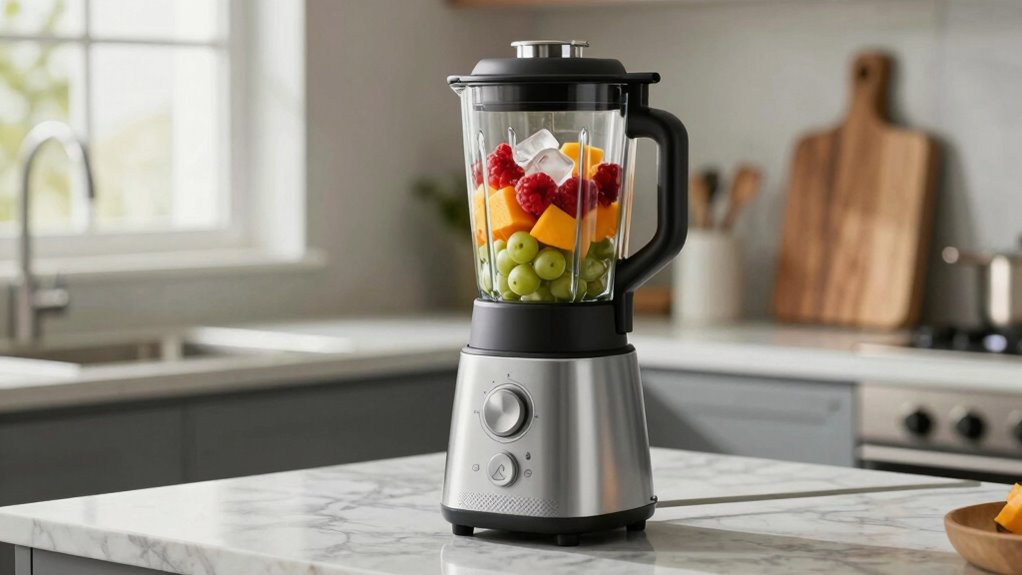

Wattage isn’t the only thing that determines a blender’s power. While higher wattage might seem more powerful, factors like motor design, blade quality, and build construction play bigger roles in performance. A well-engineered motor, sharp blades, and sturdy materials can make a big difference, regardless of wattage. To truly understand a blender’s capabilities, it helps to look beyond wattage—exploring these other key factors will show you what really matters.
Key Takeaways
- Wattage alone doesn’t determine blending performance; motor design and efficiency are more impactful.
- Blade quality and shape significantly affect blending results regardless of wattage.
- Motor durability and brand reputation are better indicators of a blender’s true power.
- Speed settings and control features influence texture and protect motor longevity.
- Real-world tests and reviews provide more accurate performance insights than wattage ratings alone.
What Really Matters When Choosing a Blender
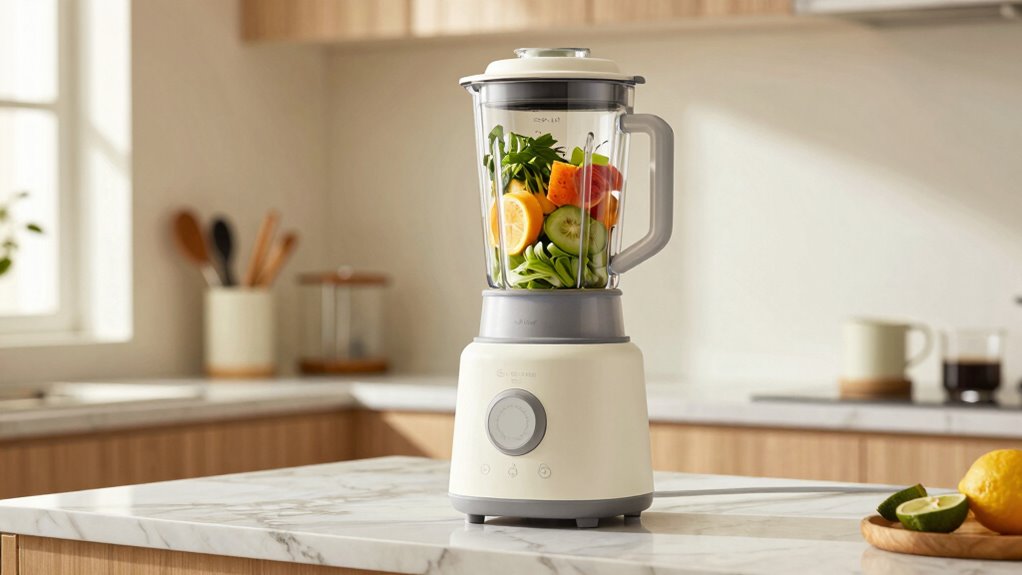
When choosing a blender, it’s easy to get distracted by flashy features or high wattage, but what truly matters are the blades’ quality, motor strength, and overall durability. You should also consider motor noise; a quieter motor means less disruption in your kitchen. Energy efficiency is equally important because it helps save electricity and reduces your environmental impact. A powerful yet efficient motor can blend smoothies smoothly without wasting energy. Durability ensures your blender will last through daily use, saving you money in the long run. Additionally, proper heat buffering techniques can prevent overheating during extended use, ensuring consistent performance and extending the lifespan of your blender. Recognizing performance consistency can help you select a model that maintains its power over time. Understanding motor design can also influence how well your blender performs under various conditions, ensuring reliable operation over years of use. Moreover, selecting a blender with easy maintenance features can make cleaning and upkeep more straightforward, prolonging its effective lifespan.
Why Wattage Isn’t the Best Measure of Blender Power
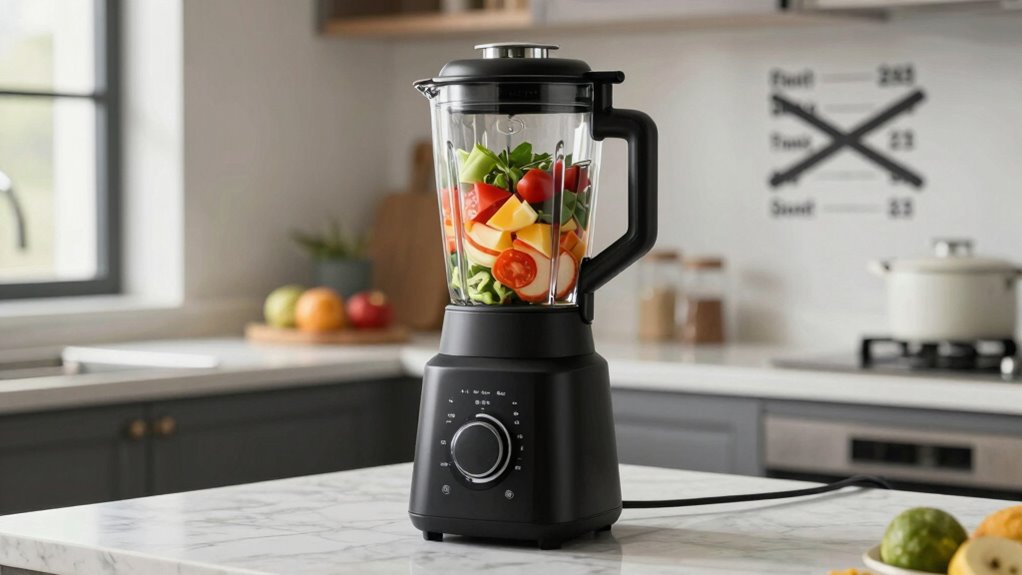
Although wattage is often used to gauge a blender’s power, it doesn’t tell the whole story. A higher wattage doesn’t necessarily mean better performance. Motor noise can be be a better indicator; quieter motors usually suggest quality engineering and effective design, rather than just raw power. Additionally, brand reputation matters—trusted brands typically produce blenders with balanced power and durability, ensuring consistent results without excessive noise or overheating. Relying solely on wattage can be misleading, as two blenders with similar numbers might perform very differently. Instead, consider how the motor operates, its noise level, and the manufacturer’s reputation. These factors give you a clearer picture of a blender’s true power and reliability, rather than just focusing on wattage alone. For a more accurate assessment, look into product testing and reviews, which can reveal how well a blender performs in real-world conditions. Also, understanding motor efficiency can help distinguish between models that deliver consistent performance without unnecessary energy consumption. Recognizing performance metrics beyond wattage allows consumers to make better-informed choices. Moreover, engineering design plays a crucial role in translating motor power into effective blending performance. Analyzing component quality can further reveal how well a blender maintains performance over time.
How Blade Design and Materials Affect Blending
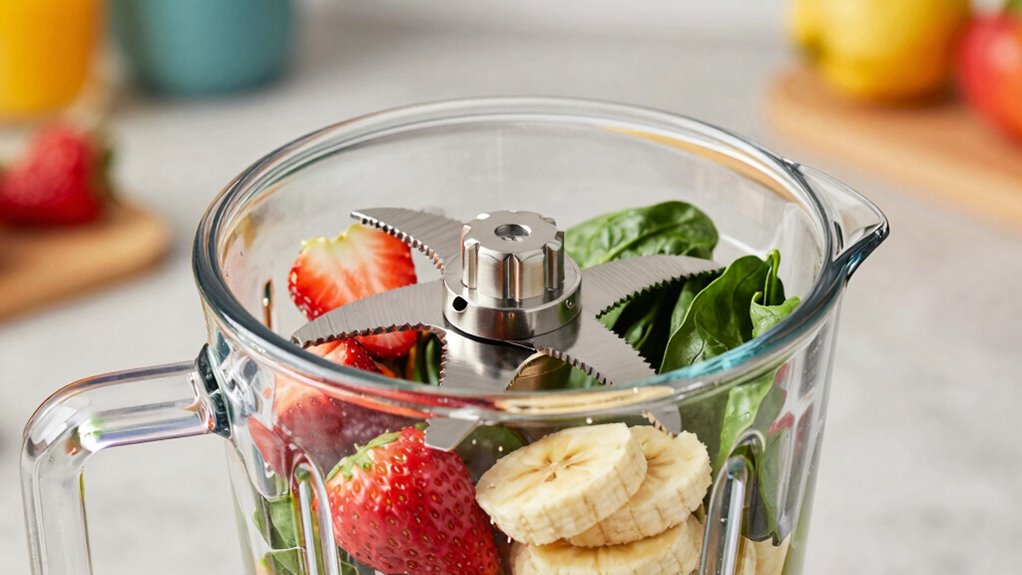
The design and materials of blender blades directly influence how effectively your appliance blends ingredients. Sharp, well-angled blades improve blade efficiency, ensuring thorough mixing and smoother results. Durable materials like stainless steel resist corrosion and wear, extending blade lifespan and maintaining performance over time. The shape of the blades also matters: wider blades handle larger chunks, while narrower ones target finer blending. Additionally, selecting blades made from vetted materials ensures safety and durability during use. Choosing blades with the right blade shape can enhance the effectiveness of your blending depending on your specific needs. Proper blade maintenance also plays a crucial role in preserving performance and extending blade life. Using blades with optimized design can further improve blending efficiency and reduce strain on the motor. Incorporating material selection principles can further optimize blade longevity and safety during operation.
Does Motor Quality Make a Difference?
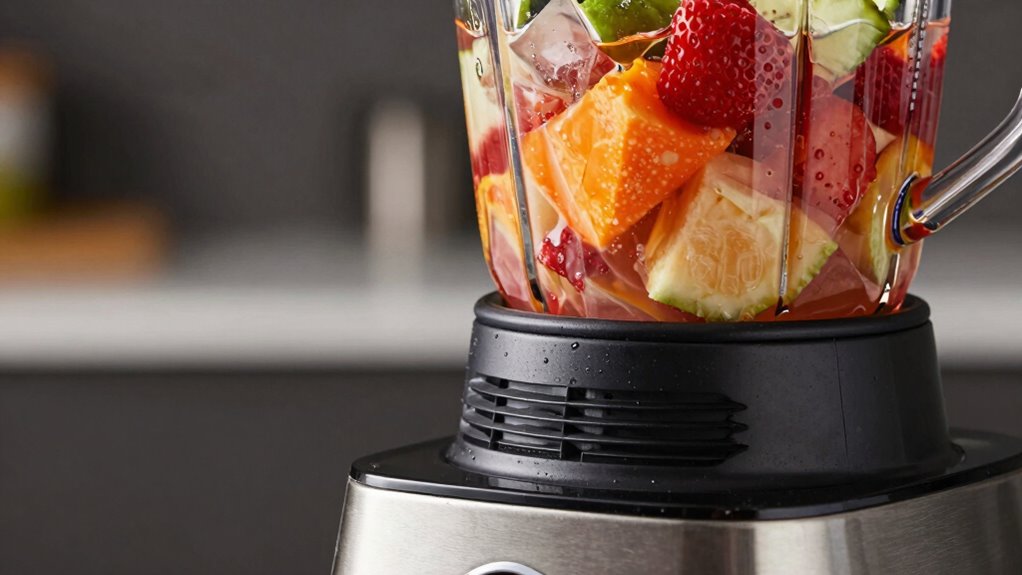
Blender blades can only do so much if the motor isn’t up to the task. A high-quality motor enhances durability, ensuring it can handle frequent use without burning out. Cheaper motors often lack robust construction and may fail prematurely, leading to costly replacements. When evaluating a blender, consider the manufacturing standards behind the motor—well-made motors adhere to strict quality controls, making them more reliable and long-lasting. A durable motor maintains consistent performance over time, even with tougher ingredients. Additionally, motor quality is often a reflection of the overall craftsmanship and adherence to traditional manufacturing techniques, which can significantly impact the longevity of your appliance. Well-crafted motors are more likely to be built with robust components, increasing their resilience under demanding conditions. While wattage provides some insight, it’s not the full story; motor quality directly impacts how well your blender performs and how long it will last. Investing in a blender with a well-made motor can save you money and frustration in the long run.
What Do Blender Speed Settings Do?
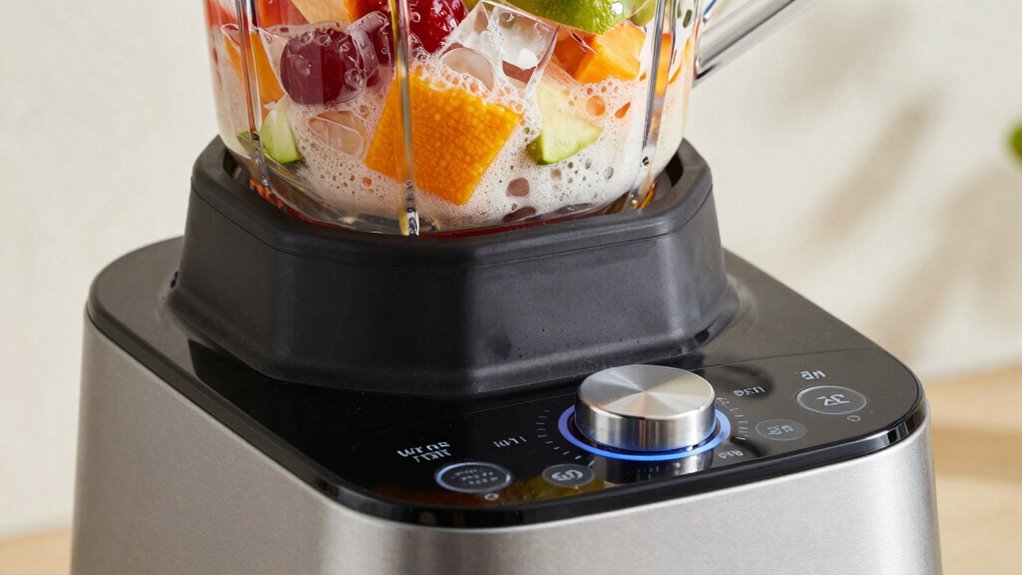
Your blender’s speed settings control how fast the blades spin, which directly impacts blending power. Higher speeds break down ingredients more thoroughly, resulting in smoother textures, while lower speeds preserve chunkiness. Understanding these settings helps you achieve the perfect consistency every time. Proper use of safety tips, like avoiding DIY tool hazards, ensures safe operation during your blending projects. Additionally, selecting the appropriate speed can help prevent overheating motor components, extending the lifespan of your blender. Recognizing how speed control mechanisms function allows for more precise and effective blending performance. Knowing how different blender wattages contribute to blending efficiency can further improve your results and appliance longevity. Moreover, understanding blender design features can influence your choice of models for specific tasks.
Adjusts Blade Speed
Adjusting the blade speed on your blender controls how quickly the blades spin, directly impacting the texture and consistency of your mixture. Higher speeds increase blade efficiency, allowing tougher ingredients to break down more easily, while lower speeds help with gentle mixing. The settings also influence motor responsiveness; a faster spin prompts the motor to react quickly and smoothly, ensuring consistent blending. Precise control over blade speed lets you tailor the process for different textures, from chunky salsas to silky smoothies. Keep in mind, the right speed setting improves overall performance by maximizing blade efficiency and ensuring the motor responds appropriately. This control helps you achieve better results regardless of wattage, emphasizing that speed settings are key to effective blending.
Controls Blending Power
Speed settings on a blender directly control the power delivered to the blades, determining how forcefully they rotate and how effectively ingredients are processed. Higher speeds increase blending power, but they also impact motor durability and noise levels. Using the right setting can extend your blender’s lifespan by avoiding unnecessary strain on the motor. Additionally, understanding blender wattage helps you choose appliances that match your blending needs and avoid overloading the motor. Properly managing blender performance ensures optimal results and longevity of your device.
Consider these factors:
- Lower settings reduce noise and motor wear during simple tasks like stirring liquids.
- Medium speeds balance power and motor safety for most blending needs.
- High speeds maximize blending power, but can cause increased noise and potential wear if used excessively.
Adjusting speed settings allows you to control blending power precisely, avoiding overtaxing the motor and ensuring consistent results without compromising longevity.
Affects Texture Outcomes
When you select different speed settings on your blender, you directly influence the texture of your ingredients. Lower speeds gently blend softer items, preserving some chunkiness, while higher speeds create smooth, creamy textures by breaking down ingredients thoroughly. Motor efficiency plays a role here, as more efficient motors can maintain consistent power without overheating, ensuring stable textures. Additionally, faster settings tend to produce increased noise levels, which can be a consideration if you’re blending frequently or in quiet environments. By adjusting speed settings carefully, you control how finely ingredients are processed, impacting the final texture of your dish. Understanding these settings helps you achieve desired results without relying solely on wattage or power.
Why Build Quality and Stability Are Important
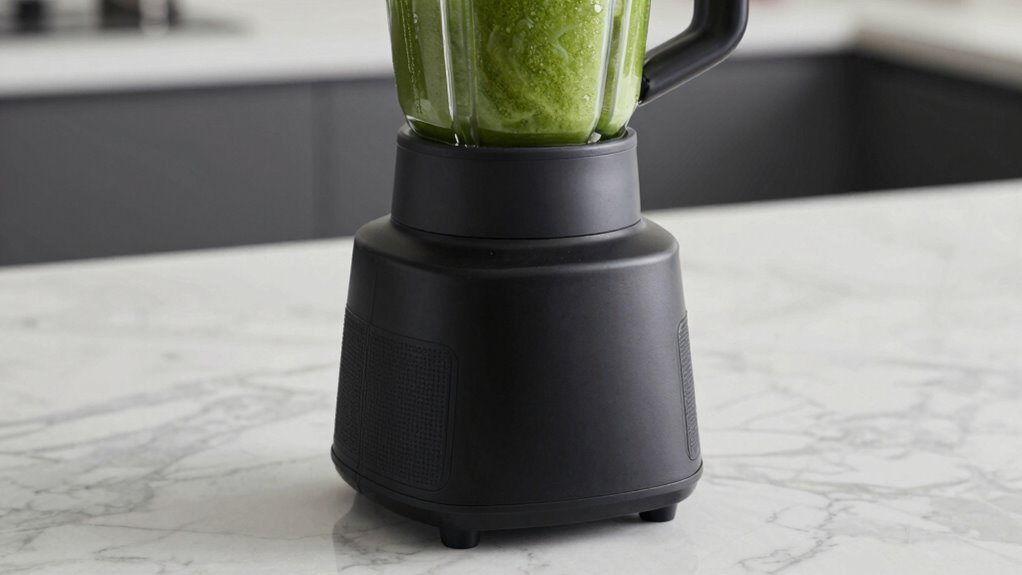
The build quality and stability of a blender directly impact its performance and longevity. A sturdy build ensures it can handle frequent use without breaking down. When evaluating a blender, focus on:
- Build durability, which means choosing models with robust construction and resistant components.
- Material strength, especially in the jar and blades, to prevent cracks or warping under stress.
- Overall stability, including a non-slip base that keeps the blender steady during operation.
A well-constructed blender resists wear and tear, reducing repair costs and extending its lifespan. Prioritizing these factors means you’re investing in a reliable appliance that performs consistently, regardless of how often you blend or what ingredients you use.
How to Evaluate a Blender’s Performance Beyond Wattage
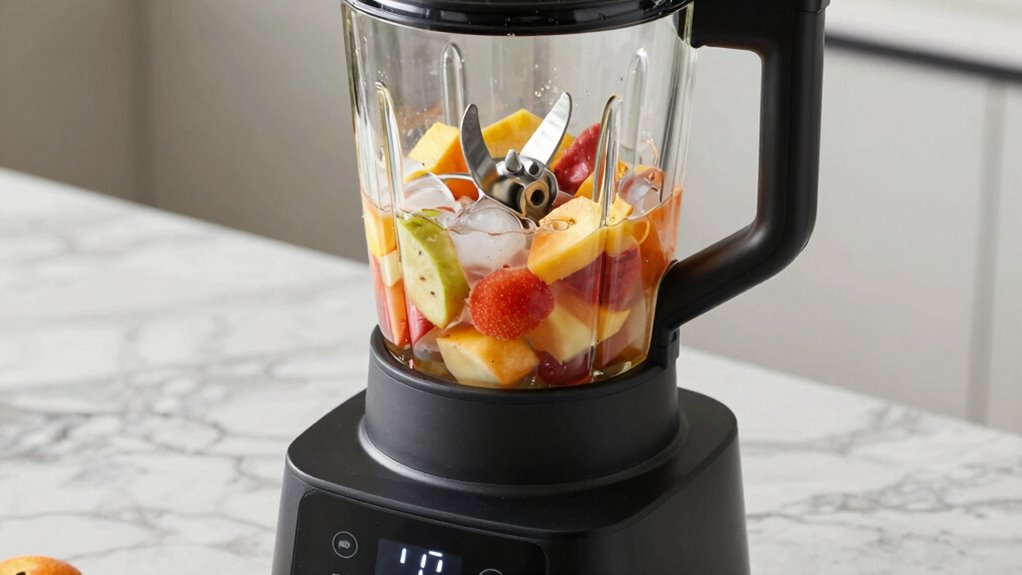
While wattage offers a quick gauge of a blender’s power, it doesn’t tell the whole story about performance. To truly evaluate a blender’s effectiveness, focus on its actual performance during use, such as how well it handles tough ingredients or blends smoothly. Pay attention to its power consumption—models with lower energy efficiency might use more power for the same task, increasing your utility bills. Look for features like variable speed controls and pulse functions, which give you better control and optimize energy use. Reading reviews and expert tests can reveal how efficiently a blender operates in real-world scenarios. Ultimately, a high-performing blender balances sufficient power with energy efficiency, ensuring you get the results you want without wasting electricity.
Common Blender Power Myths Debunked
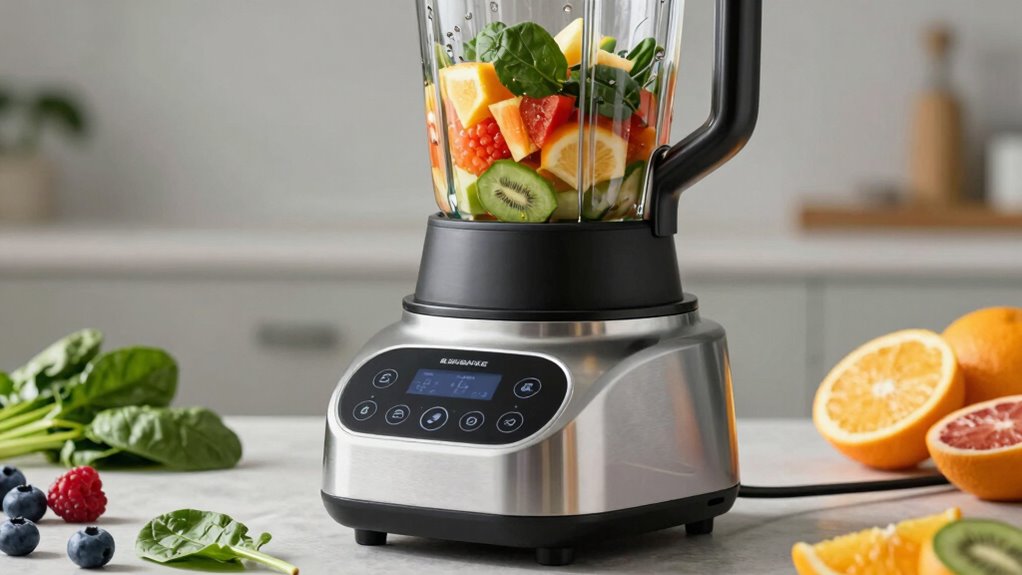
Many people assume wattage is the main indicator of a blender’s power, but that’s not always true. Blenders can have similar wattages yet perform very differently depending on their design. Let’s clear up these common misconceptions and understand what really matters.
Wattage Isn’t Everything
Wattage alone doesn’t determine a blender’s performance, despite common misconceptions. Many assume higher wattage equals better blending, but other factors matter more. For example, the motor’s durability influences how long your blender can operate efficiently without overheating or wearing out. A well-built motor from a reputable brand ensures consistent power over time. Additionally, the overall design and quality of the blades influence blending effectiveness. Consider these key points:
- Motor durability – a sturdy motor maintains performance longer.
- Brand reputation – trusted brands often produce more reliable, longer-lasting blenders.
- Blade quality – sharp, durable blades improve blending consistency regardless of wattage.
Focusing on these aspects offers a more precise gauge of a blender’s true power than wattage alone.
Blenders Vary in Power
You might assume that all blenders with similar wattage deliver the same performance, but in reality, their power can vary markedly. Factors like motor size play a vital role; a larger motor often means more blending power, even if the wattage is comparable. Additionally, brand reputation influences quality—well-known brands tend to use better components and engineering, resulting in more consistent performance. Some brands optimize motor design to maximize efficiency, meaning their blenders might outperform others with higher wattage but smaller or less advanced motors. Don’t rely solely on wattage when choosing a blender. Instead, consider motor size and the manufacturer’s reputation to gauge true power and reliability. This guarantees you get a blender that meets your needs, not just one with a high number on the label.
Tips for Picking a Blender That Handles Your Recipes
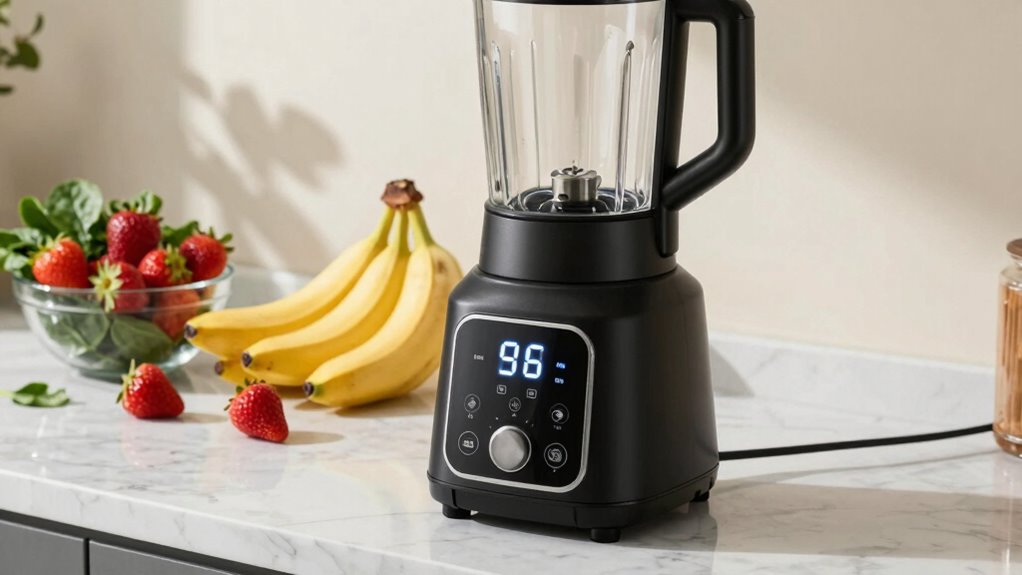
Choosing the right blender starts with understanding your specific recipe needs. Consider how often you’ll blend tough ingredients or delicate textures. To guarantee your blender meets these demands, keep these tips in mind:
- Prioritize motor durability: A sturdy motor lasts longer and handles frequent use without overheating.
- Look for aesthetic appeal: A sleek design complements your kitchen decor and makes blending more enjoyable.
- Match power with purpose: For heavy-duty tasks like crushing ice or nut butters, select a blender with sufficient wattage and robust components, not just high wattage alone.
Frequently Asked Questions
Can a Lower Wattage Blender Outperform a Higher Wattage Model?
Yes, a lower wattage blender can outperform a higher wattage model. Motor efficiency plays a big role here, as a more efficient motor uses power better, delivering strong performance without high power consumption. It means you don’t always need the highest wattage to get great blending results. Instead, look for models with efficient motors that maximize performance while keeping power consumption low.
How Does the Motor’s Design Influence Blending Efficiency?
Ever wonder why some blenders seem more powerful despite lower wattage? It’s all about motor design and blade engineering. A well-crafted motor delivers ideal torque, while smart blade design maximizes efficiency by cutting through ingredients smoothly. These factors work together to boost blending performance, making your appliance more effective without needing excessive wattage. So, focus on how the motor and blades are engineered rather than just the wattage alone.
What Role Do Blender Jar Materials Play in Performance?
Your choice of jar material considerably impacts blending performance. A glass jar offers durability and easy cleaning, producing a smoother blending texture, while a plastic jar is lightweight and less prone to breakage but may scratch over time, affecting texture. The material influences how well blades cut through ingredients, ultimately affecting the consistency and quality of your blends. Picking the right jar can make your blending more efficient and enjoyable.
Are There Specific Features That Indicate a Durable Blender?
Ever wonder what makes a blender durable? You should look for high-quality blender blade quality and sturdy jar construction, which are key. Do the blades feel sharp and robust? Is the jar made from thick, shock-resistant material? These features guarantee longevity and performance. A well-built blender doesn’t rely solely on wattage; instead, it combines durable blades with tough jar construction for lasting reliability.
How Important Is Ease of Cleaning in Blender Selection?
Ease of cleaning is essential when choosing a blender because it saves you time and effort. You want maintenance simplicity, so look for blenders with removable blades and dishwasher-safe parts. Consider models with fewer crevices and smooth surfaces, making cleaning easier. A blender that’s simple to clean encourages regular upkeep, helping it stay in good condition longer and ensuring it continues to perform well for all your blending needs.
Conclusion
Remember, wattage alone doesn’t determine a blender’s performance—blade design, motor quality, and build matter just as much. Did you know that a well-designed 500-watt blender can outperform a 1,000-watt model? So, don’t get caught up in numbers. Focus on how the blender feels in your hand, its stability, and how it handles your favorite recipes. Choosing wisely means more satisfying blends and better results every time.