
To maximize your rechargeable device’s battery life, avoid letting it fully drain and keep charges between 20% and 80%. Use original or certified chargers, unplug once fully charged, and prevent heat exposure by charging in a cool, dry environment. Regularly calibrate your battery and enable smart charging features. By following these habits, you’ll extend your battery’s healthy lifespan and enjoy better performance over time. Keep exploring to learn more tips for ideal battery care.
Key Takeaways
- Keep charge levels between 20% and 80% and avoid frequent full charges to minimize battery wear.
- Use original or certified chargers and unplug devices once fully charged to prevent overcharging.
- Charge in cool, dry environments at room temperature to reduce chemical reactions that degrade the battery.
- Regularly calibrate your battery by fully charging and discharging every few months for accurate battery reporting.
- Enable smart charging features that stop charging at 80% to extend overall battery lifespan.
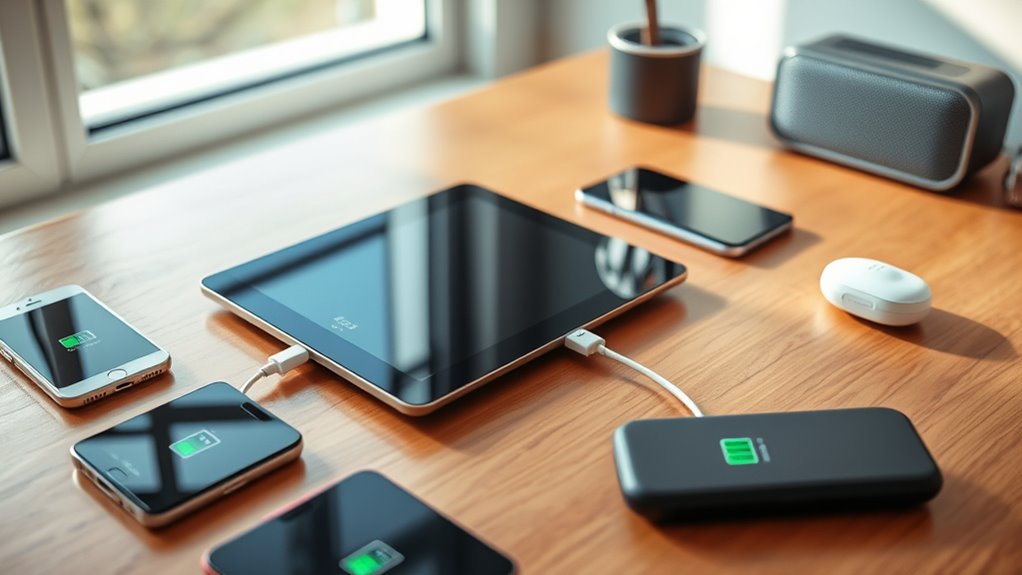
Rechargeable appliances have become essential in everyday life, offering convenience and portability. Whether you’re using a cordless vacuum, a wireless speaker, or a smart home device, keeping these appliances in top shape depends largely on how well you manage their batteries. Proper battery maintenance isn’t just about occasional care; it’s about establishing consistent habits that prolong your device’s lifespan. Your charging habits play a vital role here. When you understand how to charge your appliances correctly, you help prevent battery degradation and guarantee peak performance over time.
Proper battery care extends your device’s lifespan and maintains optimal performance.
First, avoid letting your batteries drain completely before recharging. Deep discharges can strain the battery, especially with lithium-ion technology common in most modern appliances. Instead, aim to recharge when your device reaches around 20-30% capacity. This habit reduces stress on the battery and minimizes the risk of capacity loss. Also, avoid constant top-ups—frequently charging your device from 80% to 100% might seem harmless, but it can accelerate battery wear. A good rule of thumb is to keep your device’s charge level between 20% and 80%, which helps maintain healthy battery chemistry.
Another key aspect of battery maintenance involves paying attention to how and when you charge. Use the original charger or a certified alternative that matches the device’s voltage and current specifications. Using incompatible chargers can cause irregular charging cycles, leading to faster battery deterioration. Additionally, don’t leave your appliance plugged in for extended periods after it reaches full charge. Overcharging can generate heat and strain the battery, reducing its capacity over time. If your device has a smart charging feature, enable it to automatically stop charging once full, or unplug it once you’re done.
Temperature also impacts battery health. Keep your rechargeable appliances in a cool, dry environment, especially during charging. High temperatures speed up chemical reactions inside the battery, hastening capacity loss. Conversely, charging in extremely cold conditions can temporarily reduce battery performance and cause stress. Ideally, charge your appliances at room temperature for the best results.
Being aware of battery chemistry can help you better understand how different factors affect your device’s longevity. Lastly, periodically calibrate your battery by fully charging and then discharging it once every few months. This process helps your device’s software accurately report the remaining battery life and can prevent unexpected shutdowns. Remember, consistent, mindful charging habits and proper battery maintenance are your best tools to maximize your rechargeable appliances’ lifespan. By paying attention to these details, you’ll enjoy longer-lasting devices, fewer replacements, and better overall performance.
Frequently Asked Questions
How Do Temperature Changes Affect Rechargeable Battery Longevity?
Temperature changes, especially thermal cycling and temperature extremes, can substantially impact your rechargeable battery’s longevity. When exposed to high heat or freezing conditions, the battery’s chemical stability decreases, causing faster capacity loss. Frequent thermal cycling stresses the battery, leading to quicker wear. To maximize lifespan, avoid exposing your device to extreme temperatures and keep it within a moderate range. Proper care helps prevent damage caused by thermal stresses and prolongs your battery’s effective life.
Is It Better to Fully Discharge Before Recharging?
You don’t need to fully discharge your rechargeable battery before recharging. Instead, regular partial discharge cycles help maintain accurate battery calibration, ensuring peak performance. Fully discharging can strain the battery and reduce its lifespan. To maximize longevity, recharge your device when it reaches around 20-30%. This approach minimizes stress from deep discharge cycles, keeping your battery healthier longer and avoiding unnecessary wear caused by complete discharges.
Can Using Incompatible Chargers Damage the Battery?
Ever wondered if using incompatible chargers can harm your device? The answer is yes—charger compatibility is vital for battery safety. When you use a charger not designed for your appliance, it can deliver the wrong voltage or current, risking damage to the battery. Always check the manufacturer’s recommendations to guarantee you’re using the correct charger, which helps protect your device’s battery and prolong its lifespan.
How Often Should I Calibrate My Rechargeable Appliance’s Battery?
You should calibrate your rechargeable appliance’s battery every 3 to 6 months, depending on usage. This involves fully cycling the battery—charging it to 100% then discharging it completely—to maintain accurate capacity readings. Proper calibration timing helps your device manage power efficiently, preventing premature battery wear. Regular battery cycling ensures your appliance’s battery stays healthy, so you get ideal performance and longer lifespan from your rechargeable device.
What Are Signs of Battery Degradation Beyond Normal Wear?
Is your battery whispering secrets? When you notice a drop in battery capacity, it’s a sign of degradation. You might find your device drains faster, or it takes more charging cycles to reach full. Unexpected shutdowns and inconsistent performance also point to worn-out batteries. Keep an eye on these signs, and you’ll catch battery health issues early, ensuring your appliance stays reliable longer.
Conclusion
By following these tips, you’ll keep your rechargeable appliances running smoothly, like a well-tuned engine. Remember to avoid overcharging, keep batteries at moderate temperatures, and use them regularly. Treat your devices with care, and they’ll repay you with longer-lasting power and performance. Think of your rechargeable appliances as delicate plants—you need to nurture them properly to see them thrive. With these simple habits, you’ll maximize your battery life and enjoy their benefits even longer.