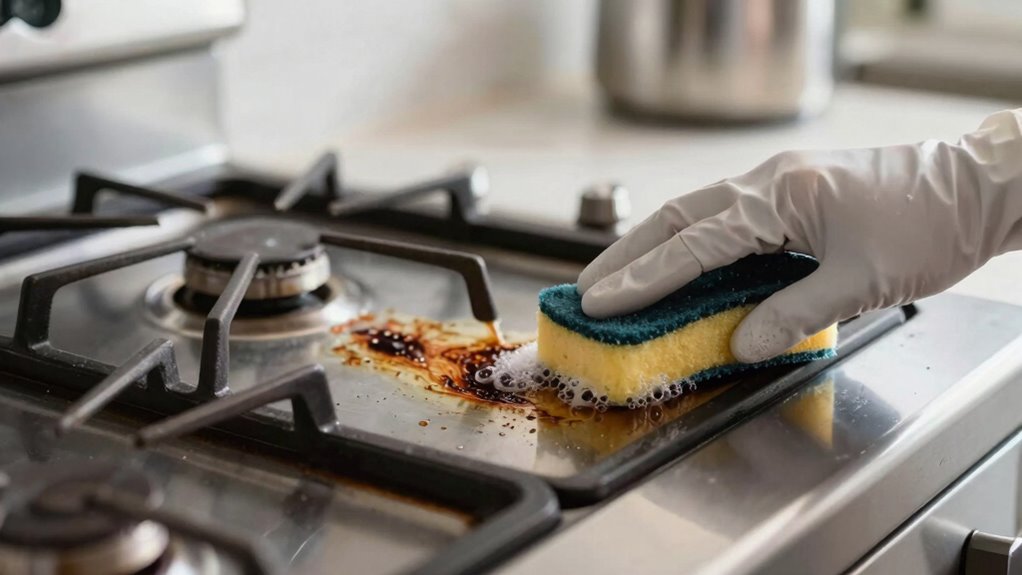

To clean burnt-on residue without damaging your appliance coatings, start by applying a paste made of baking soda and water or vinegar. Let it sit for 15-20 minutes to loosen grime. Use a soft, non-abrasive sponge or cloth to gently scrub the area. If residues persist, try lemon juice with baking soda or repeat the process. Consistent, gentle cleaning helps maintain your appliance’s coating and longevity—discover more effective techniques below.

Get cleaning gear delivered free — and shop member deals
- Fast, free delivery on millions of items
- Access to Prime Big Deal Days deals on October 6–7
- Prime Video, Amazon Music and more included
Key Takeaways
- Use a paste of baking soda and water or vinegar, apply gently, and let sit to loosen residue without abrasion.
- Test cleaning solutions on a small, hidden area to prevent coating damage before full application.
- Employ non-abrasive sponges or soft cloths to scrub burnt-on residue carefully.
- For stubborn stains, repeat eco-friendly treatments like lemon and baking soda without excessive scrubbing.
- Avoid harsh chemicals; prioritize natural solutions to protect delicate appliance coatings.
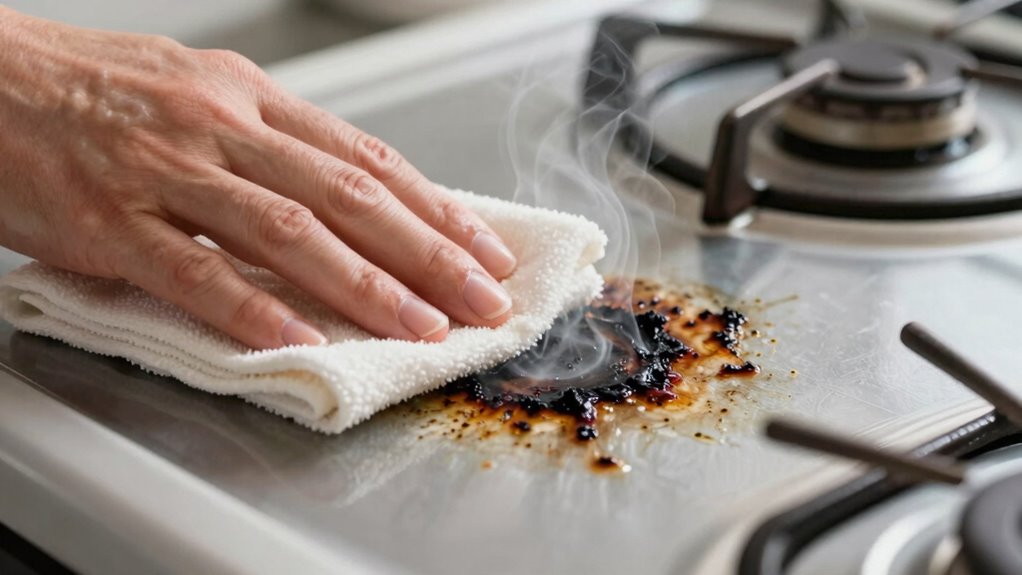
Burnt-on residue can be stubborn and frustrating to remove, but with the right approach, you can restore your cookware and surfaces to their original state. When tackling burnt-on stains, it’s important to prioritize eco-friendly cleaning methods that are safe for both your appliances and the environment. Harsh chemicals might seem tempting, but they can damage delicate coatings and leave harmful residues behind. Instead, opt for natural solutions like baking soda, vinegar, or lemon juice, which are effective and gentle.
Before you start, make sure to follow safety precautions. Wear gloves to protect your skin from potentially irritating substances, and work in a well-ventilated area to avoid inhaling fumes. If your appliance has specific cleaning instructions, review them to prevent accidental damage. Always test a small, inconspicuous area first to see how the surface reacts to your chosen cleaning method. This step helps you avoid unintended harm to the coating or finish. Additionally, understanding how to maintain safe and stylish living spaces can make cleaning more effective and less risky. Incorporating eco-friendly cleaning habits contributes to sustainable home care, which benefits both your environment and your household. Being mindful of how cleaning products interact with appliance surfaces can also prolong their lifespan.
To remove burnt-on residue safely, start by sprinkling baking soda over the affected area. Add a small amount of water or vinegar to create a paste, then let it sit for about 15-20 minutes. The gentle abrasiveness of baking soda helps lift burnt deposits without scratching sensitive surfaces. For stovetops or cookware, you can also pour vinegar directly over the residue, letting it bubble and loosen the grime. Use a non-abrasive sponge or cloth to gently scrub the area, avoiding steel wool or harsh brushes that could damage coatings. Proper cleaning techniques are essential for maintaining the longevity of your appliances. Keeping your cleaning routine mindful of appliance coatings can further prevent damage and extend the life of your appliances.
If residue persists, repeat the process or try alternative eco-friendly cleaning solutions like a mixture of lemon juice and baking soda. Lemon’s natural acidity helps break down tough stains while leaving a fresh scent. For appliances with more delicate coatings, always stick to soft sponges and avoid excessive scrubbing. Patience is key—sometimes, multiple gentle applications yield the best results without risking surface damage. Consistent use of eco-friendly methods also reduces the buildup of harmful residues over time, making future cleanings easier. Using gentle abrasive methods can help preserve the integrity of your appliance coatings.
natural appliance cleaner for burnt-on residue
As an affiliate, we earn on qualifying purchases.
As an affiliate, we earn on qualifying purchases.
Frequently Asked Questions
Can I Use Harsh Chemicals to Remove Burnt-On Residue?
You shouldn’t use harsh chemicals to remove burnt-on residue because of chemical risks and appliance safety concerns. These chemicals can damage coatings, pose health hazards, or cause corrosion. Instead, opt for gentle, natural solutions like baking soda and vinegar, which are safe for most appliances and effective at breaking down residue without risking damage. Always follow manufacturer instructions to keep your appliance in good condition and guarantee safety.
How Long Should I Soak the Appliance for Best Results?
For the best results, soak the appliance for about 15 to 30 minutes, depending on the severity of the residue. The ideal timing allows the cleaning solution to loosen burnt-on grime without damaging the surface. Keep an eye on the soaking duration, as longer times may risk harm. After soaking, gently scrub or wipe away the residue, ensuring you don’t use harsh abrasives that could harm the coating.
Is It Safe to Use Abrasive Scrubbers on Coated Surfaces?
You shouldn’t use abrasive scrubbers on coated surfaces because they can damage the protective coatings, making your appliance vulnerable to further damage. Instead, opt for gentle cleaning methods that preserve the finish and keep your appliance looking new. Using soft sponges or cloths minimizes the risk of scratches and maintains the integrity of the protective coatings, ensuring a longer-lasting, beautifully maintained appliance.
What Natural Remedies Are Effective for Tough Residue?
Herbal solutions and citrus extracts are effective natural remedies for tough residue. You can make a paste with baking soda and herbal tea or use citrus-based cleaners like lemon or orange oil, which break down stubborn buildup gently. Apply the solution, let it sit for a few minutes, then wipe with a soft cloth. These methods help remove residue without damaging your appliance’s delicate coatings.
Can I Prevent Future Burnt-On Buildup Easily?
Think of your appliance as a garden that needs regular care to stay lush. By practicing preventive maintenance and committing to regular cleaning, you stop burnt-on buildup before it takes root. Wipe spills promptly, avoid high heat, and use gentle cleaners. These small, consistent efforts act like watering your garden—keeping it vibrant and healthy, so future messes are less likely to develop and easier to manage.
non-abrasive sponge for delicate surfaces
As an affiliate, we earn on qualifying purchases.
As an affiliate, we earn on qualifying purchases.
Conclusion
Now that you know these foolproof tricks, you can banish burnt-on residue faster than a superhero saves the day! No more scrubbing nightmares or risking damage to your precious appliances. With these simple steps, your appliances will shine brighter than a diamond in a fireworks display. Say goodbye to stubborn stains and hello to a squeaky-clean, flawless kitchen. Get ready to impress everyone with your cleaning superpowers—your appliances have never looked so spectacular!
eco-friendly stovetop cleaning paste
As an affiliate, we earn on qualifying purchases.
As an affiliate, we earn on qualifying purchases.
baking soda and vinegar cleaning kit
As an affiliate, we earn on qualifying purchases.
As an affiliate, we earn on qualifying purchases.
Fall Picks
fall essentials
As an affiliate, we earn on qualifying purchases.