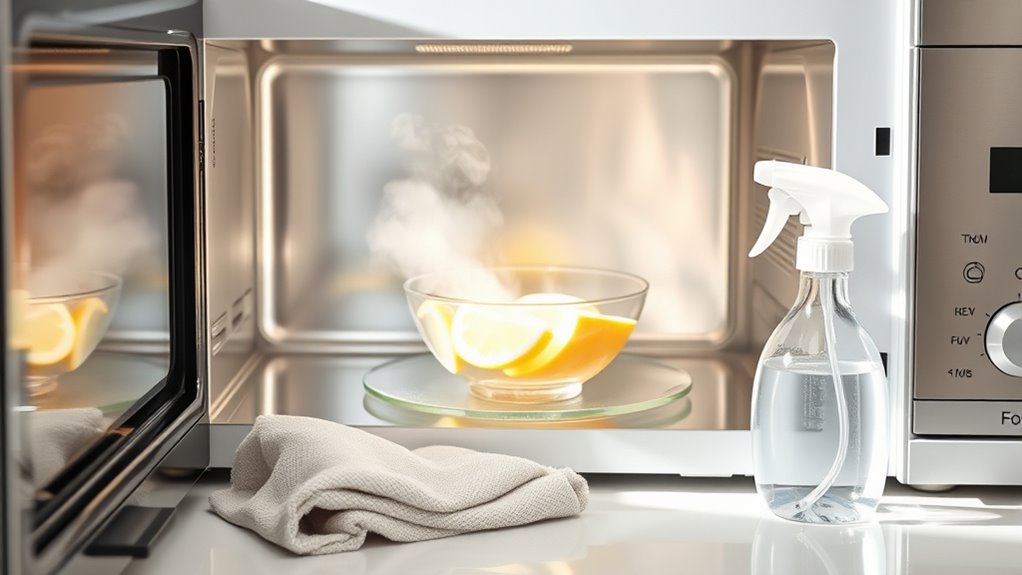

To clean your microwave without harsh chemicals, use a mixture of equal parts water and white vinegar in a microwave-safe bowl. Microwave it on high for about five minutes, then carefully wipe the interior with a soft cloth or sponge to loosen grime and odors. For stubborn stains, gently scrub with a baking soda and water solution. Use natural ingredients regularly for a safe, effective clean—if you want to discover more tips, keep exploring.

Get cleaning gear delivered free — and shop member deals
- Fast, free delivery on millions of items
- Access to Prime Big Deal Days deals on October 6–7
- Prime Video, Amazon Music and more included
Key Takeaways
- Use a microwave-safe bowl with equal parts water and white vinegar, then steam for five minutes to loosen grime naturally.
- Wipe interior surfaces with a soft cloth or sponge after steaming to remove loosened food and stains.
- For stubborn spots, apply a baking soda-water paste and gently scrub with a damp cloth.
- Regularly clean door seals and turntable with warm, soapy water to prevent buildup and odors.
- Avoid harsh chemicals; stick to natural agents like vinegar and baking soda for safe, eco-friendly cleaning.
Keeping your microwave clean is essential for maintaining its efficiency and preventing unpleasant odors. When you prioritize eco-friendly techniques, you’re not only protecting the environment but also guaranteeing your appliance stays in top shape. Regularly cleaning your microwave is a key part of appliance maintenance, helping it run smoothly and last longer. You don’t need harsh chemicals to achieve a spotless, fresh-smelling microwave. Instead, simple, natural solutions can do the job effectively while being gentle on your appliance and safe for your household.
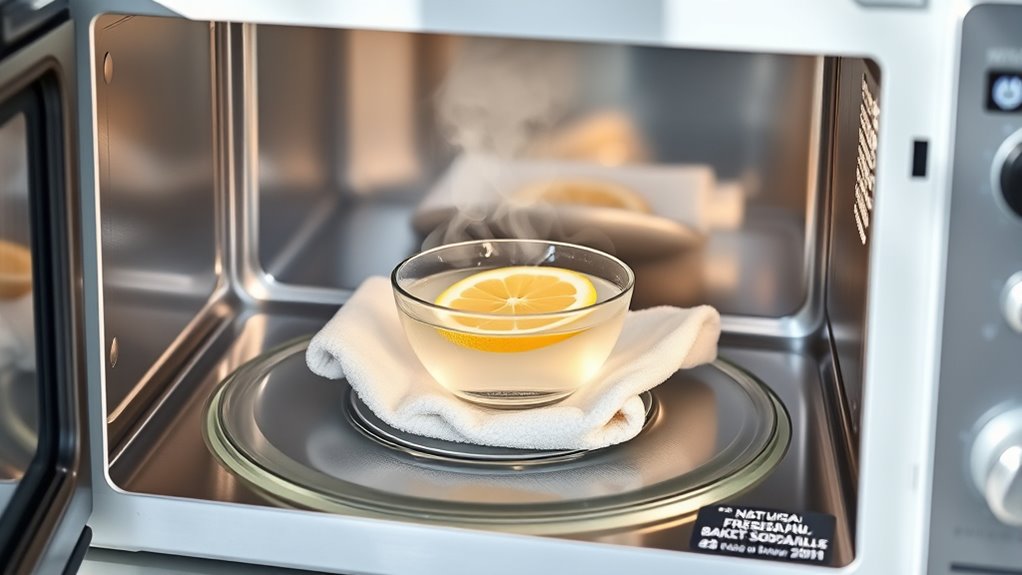
Start by mixing equal parts of water and white vinegar in a microwave-safe bowl. Vinegar is a natural disinfectant and deodorizer, making it ideal for eco-friendly cleaning. Place the bowl inside your microwave and run it on high for about five minutes. The steam generated will loosen grime and food splatters, making it easier to wipe away. After the timer stops, carefully remove the bowl (it will be hot) and use a soft cloth or sponge to wipe down the interior. The vinegar steam also helps eliminate lingering odors, leaving your microwave smelling fresh.
Mix water and vinegar, microwave on high for five minutes, then wipe clean for an eco-friendly fresh-smelling microwave.
For stubborn stains or dried-on food, dip a soft cloth or sponge into a mixture of baking soda and water to create a gentle abrasive. Gently scrub the affected areas without scratching the surface. Baking soda is an excellent eco-friendly cleaning agent that absorbs odors and breaks down grease naturally. Avoid using harsh scrubbing pads, which can damage the interior surfaces. Once you’ve cleaned the interior thoroughly, use a damp cloth to wipe away any residue, and then dry with a clean towel.
To keep your microwave in top condition, consider routine appliance maintenance like cleaning the turntable and door seals. Remove the turntable and wash it with warm soapy water, then dry completely before reinserting. Check the door seals for any crumbs or debris and wipe them gently, ensuring a good seal to prevent food splatters from escaping. Maintaining these parts prolongs the lifespan of your microwave and guarantees it functions efficiently.
Finally, avoid using chemical cleaners or abrasive scrubbers that can harm the interior surfaces or release harmful fumes. Natural ingredients like vinegar and baking soda are just as effective, safer for your family, and better for the environment. Using proper maintenance techniques can extend the life of your appliance and improve its performance. By adopting these eco-friendly techniques regularly, you’ll keep your microwave in excellent condition, uphold good appliance maintenance, and enjoy a kitchen free of lingering odors and grime. With a little effort and natural solutions, your microwave will stay clean, efficient, and safe for everyday use.
As an affiliate, we earn on qualifying purchases.
Frequently Asked Questions
Can I Use Vinegar to Clean My Microwave?
Yes, you can use vinegar to clean your microwave and eliminate odors. Simply mix equal parts vinegar and water in a microwave-safe bowl, then run it for a few minutes. The steam loosens grime and neutralizes odors. Afterward, wipe down the interior with a clean cloth. This natural cleaning technique is effective, safe, and avoids harsh chemicals, leaving your microwave fresh and spotless.
Is Baking Soda Safe for Microwave Cleaning?
Yes, baking soda is safe for microwave cleaning. Its benefits include effectively neutralizing odors and breaking down grime without harsh chemicals. Many worry about safety, but baking soda benefits make it a gentle, non-toxic option. Just mix a small amount with water, steam your microwave, and wipe away residue. You’ll find baking soda safety and benefits make it an ideal, eco-friendly cleaner for your microwave.
How Often Should I Clean My Microwave?
You should clean your microwave at least once a week to maintain ideal Microwave maintenance and prevent buildup. If you notice spills or splatters, clean them promptly to avoid stains and odors. Regular Cleaning frequency keeps your appliance running efficiently and extends its lifespan. By sticking to this routine, you’ll ensure your microwave stays fresh, hygienic, and always ready for use without relying on harsh chemicals.
Are There Natural Alternatives to Commercial Cleaners?
Yes, there are natural alternatives to commercial cleaners. Think of natural ingredients as your eco-friendly knights fighting grime without harsh chemicals. You can use vinegar, lemon juice, or baking soda for a safe, effective clean. Simply mix vinegar with water, or scrub with a baking soda paste. These eco-friendly solutions cut through grease and deodorize, making your microwave sparkle while being gentle on the environment and your health.
Can I Clean the Microwave Door With a Cloth?
Yes, you can clean the microwave glass door with a cleaning cloth. Dampen the cloth with a mixture of water and a natural cleaner like vinegar or lemon juice. Gently wipe the microwave glass, making sure to remove any smudges or fingerprints. Use a dry part of the cloth to buff the glass to a streak-free shine. Regular cleaning with a soft cloth keeps your microwave door clear and spotless.
natural microwave cleaning spray
As an affiliate, we earn on qualifying purchases.
As an affiliate, we earn on qualifying purchases.
Conclusion
Now that you know how to clean your microwave gently and effectively, you can keep it shining like a beacon of cleanliness. Just as a lighthouse guides ships safely home, your careful care guarantees your appliance stays in top shape, free of harsh chemicals and grime. Remember, a clean microwave isn’t just about looks—it’s about preserving its spirit and function. With these simple steps, your kitchen remains a sanctuary of freshness and health.
baking soda for microwave cleaning
As an affiliate, we earn on qualifying purchases.
As an affiliate, we earn on qualifying purchases.
As an affiliate, we earn on qualifying purchases.
Fall Picks
fall essentials
As an affiliate, we earn on qualifying purchases.