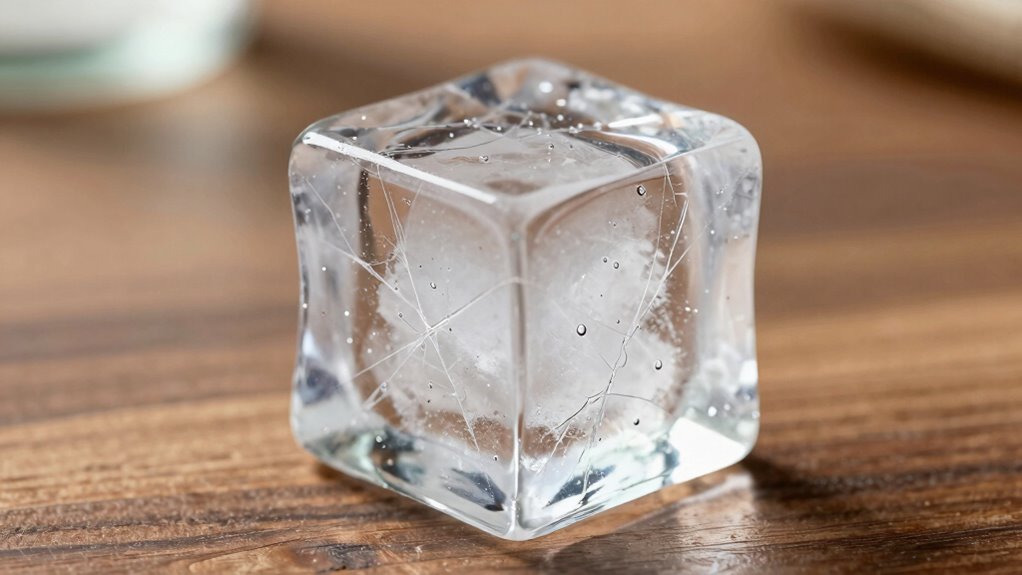

Cracks in your clear ice cubes often happen because of rapid freezing, temperature fluctuations, or trapped air and impurities that weaken the structure. To prevent this, use slow, controlled freezing, filter your water, and handle the cubes gently. Proper molding and insulation help create stronger, clearer ice that resists cracking. Keep these tips in mind, and you’ll discover how to make beautiful, crack-free ice every time.
Key Takeaways
- Rapid freezing traps air bubbles and impurities, creating internal stress that causes cracks in clear ice cubes.
- Uneven crystal growth during quick freezing results in weak spots and internal fractures.
- Sudden temperature changes during freezing induce thermal stress, leading to cracks.
- Using impure or unfiltered water introduces impurities that weaken the ice structure and promote cracking.
- Proper slow freezing, insulated environment, and gentle handling help prevent cracks and produce clearer, stronger ice cubes.
What Causes Cracks in Clear Ice Cubes at Home?
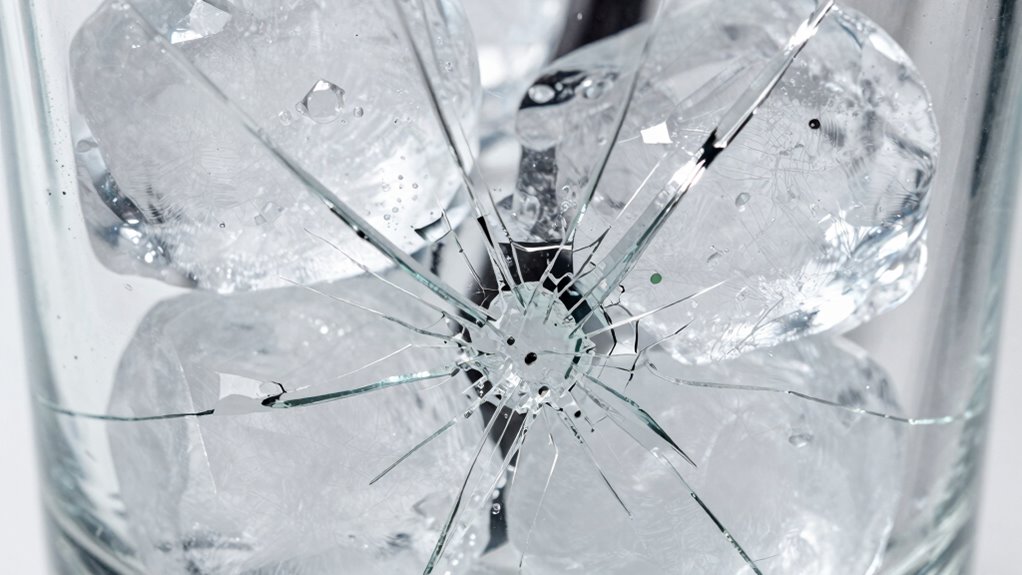
Cracks in clear ice cubes often happen because of uneven freezing or temperature changes during the freezing process. When water freezes, ice crystal formation occurs, and impurities can interfere with this process. Using pure water promotes uniform crystal growth, reducing internal stress that leads to cracking. If water contains minerals or dissolved solids, it disrupts even freezing, causing cracks as the ice expands unevenly. Additionally, rapid freezing can trap air bubbles and impurities, weakening the structure. To prevent cracks, ensure your water is as pristine as possible and freeze slowly and evenly. Proper water purification and controlled freezing are essential for crack-free, clear ice cubes. Moreover, using a temperature-controlled freezer can help maintain consistent conditions, further reducing the risk of cracking. Controlling freezing conditions is also crucial for achieving perfectly clear ice. Implementing slow freezing techniques can also significantly improve the clarity and structural integrity of your ice.
How Do Temperature Fluctuations Weaken Ice?
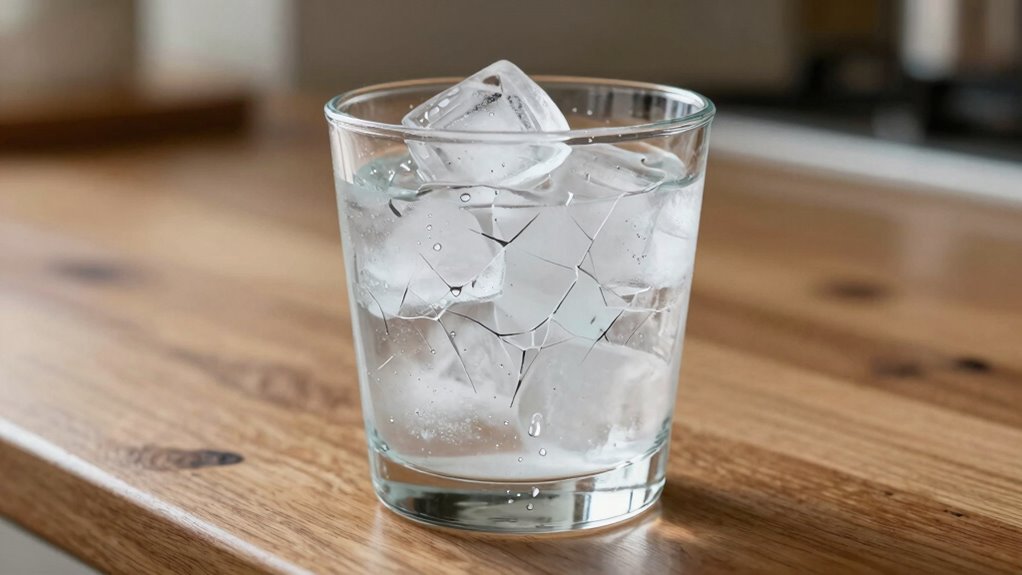
Temperature fluctuations weaken ice because they cause the ice to expand and contract repeatedly, putting stress on its structure. This process, known as thermal expansion, creates internal pressure that can lead to cracks. When the temperature drops, the ice contracts; when it rises, it expands. Over time, this constant cycle causes structural stress, weakening the overall integrity of your ice cubes. Repeated expansion and contraction create microfractures, further compromising the ice’s clarity and strength. Internal stress accumulates, leading to cracks. Uneven temperature changes intensify structural stress. Weak points develop where cracks are more likely. thermal expansion can also cause the formation of bubbles within the ice, which further weakens its structure. Consistent fluctuations reduce ice’s ability to stay clear and intact, especially when combined with ice crystal formation processes that can be affected by temperature variations. Additionally, these fluctuations can promote microfracture development, accelerating the deterioration of the ice’s structure over time.
How Water Quality Affects Ice Strength
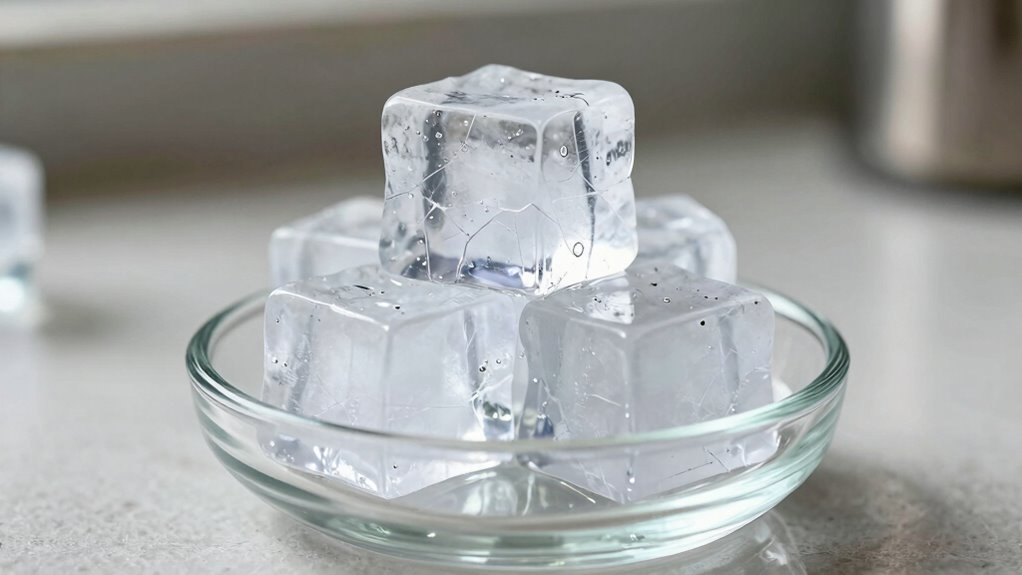
The quality of your water directly impacts how strong your ice will be. Impurities like minerals and air can weaken the ice’s structure, making it more prone to cracking. Using pure water from a reliable source helps you create clearer, more durable ice. Additionally, understanding how the best water quality can improve ice resilience ensures longer-lasting, crack-resistant cubes. Incorporating proper filtration techniques can further remove impurities that compromise ice strength, leading to more resilient cubes. Ensuring your water is free from common contaminants can further enhance the strength and clarity of your ice. Choosing filtration methods that effectively remove impurities can make a significant difference in ice durability. Being aware of water mineral content can help you select the ideal water for ice-making, ultimately improving its longevity and appearance.
Impurities Weaken Ice Structure
Have you ever noticed how ice made from tap water sometimes melts faster or feels weaker? That’s because impurity effects can compromise crystal integrity, making the ice less solid. When impurities like minerals or metals are present, they disrupt the uniform structure of the ice crystals. This causes weaknesses that lead to cracking or faster melting. To understand this better, consider:
- Impurities create weak points within the ice
- Contaminants hinder proper crystal formation
- Poor water quality results in more visible cloudiness
- Crystals with impurities are less durable
- Clean water promotes stronger, clearer ice
- Water filtration can significantly improve ice quality by reducing impurities that weaken crystal structure. Using water treatment methods ensures the water used is free of impurities, leading to more resilient ice crystals. Additionally, water quality directly impacts the overall strength and clarity of your ice. Improving water purity through proper filtration can make a noticeable difference in ice durability and appearance. Proper water testing can also help identify specific contaminants that may be affecting your ice’s strength.
Water Source Determines Purity
The purity of your water source directly impacts the strength and clarity of the ice you make at home. Water purity determines how free your ice is from impurities that can cause cracks or cloudiness. If your water contains contaminants like minerals, chlorine, or organic matter, they can weaken the ice structure, increasing the contaminant impact and leading to cracks or uneven melting. Using filtered or distilled water reduces these impurities, resulting in clearer, stronger ice cubes. Tap water with high mineral content or added chemicals can compromise ice quality, making it more prone to cracking. By choosing a cleaner water source, you guarantee your ice is both visually appealing and durable, preventing unwanted cracks and improving your overall ice-making results. Additionally, understanding water quality can help you identify which sources are best for producing resilient ice, especially considering regional variations such as those found in Northeast – These Fifty States. Considering regional water mineral content can further optimize your ice quality and durability. For example, water mineral content varies widely across regions, affecting the overall strength of your ice. Incorporating knowledge of water mineral composition can aid in selecting the ideal water source for consistently durable ice.
Why Rapid Freezing Creates Weak Points in Ice

When you freeze water quickly, it causes stress inside the ice that can lead to weak spots. This rapid process also creates uneven crystal formations, making the ice less uniform. As a result, these weak points can cause the ice to crack or break more easily.
Rapid Freezing Creates Stress
Rapid freezing causes stress in ice because it forces water molecules to solidify quickly, trapping air bubbles and impurities along the way. This process creates internal stress within the ice, as different parts expand and contract unevenly. The rapid temperature change prevents the crystals from forming uniformly, leading to weak points. When the ice experiences thermal expansion, these stress concentrations weaken its structure. As a result, cracks form more easily during handling or melting. To minimize this, slow freezing allows molecules to settle gradually, reducing internal stress and preventing weak spots.
- Faster freezing traps more bubbles and impurities
- Uneven crystal growth causes internal stress
- Rapid cooling increases thermal expansion issues
- Weak points develop where stress concentrates
- Slower freezing promotes stronger, clearer ice
Uneven Crystal Formation
Because ice forms quickly during rapid freezing, the crystal structure develops unevenly, leading to weak spots. This results in inconsistent crystal sizes and irregular formation uniformity, which compromises crystal consistency. When freezing too fast, the outer layers solidify before the inside, trapping air bubbles and creating internal stress points. These weak spots make the ice more prone to cracking. To visualize this, consider the following:
| Freezing Speed | Crystal Formation | Result |
|---|---|---|
| Rapid | Uneven crystals | Weak points, cracks |
| Slow | Uniform crystals | Strong, clear ice |
| Moderate | Moderate consistency | Less crack-prone |
Slower freezing promotes even crystal growth, improving overall quality and durability.
Weak Points Develop
Freezing ice quickly causes the outer layers to solidify before the interior has a chance to form proper crystal structures. This rapid process traps air pockets and creates weak points, making your ice more prone to cracking. As the surface cools faster, surface tension pulls the outer shell tight, but internal stresses develop when the inside freezes later. Variations in air pressure can cause tiny fractures to form, further weakening the structure. These weak points can expand as temperature fluctuates, leading to cracks. To avoid this, slow freezing allows crystals to grow uniformly, reducing internal stresses. Understanding how rapid freezing impacts the integrity of your ice can help you make clearer, crack-free cubes at home.
- Faster freezing traps air and creates stress points
- Surface tension causes uneven shell formation
- Air pressure fluctuations promote fractures
- Internal stresses lead to cracks over time
- Proper freezing balances crystal growth and strength
How Proper Molding and Handling Prevent Cracks
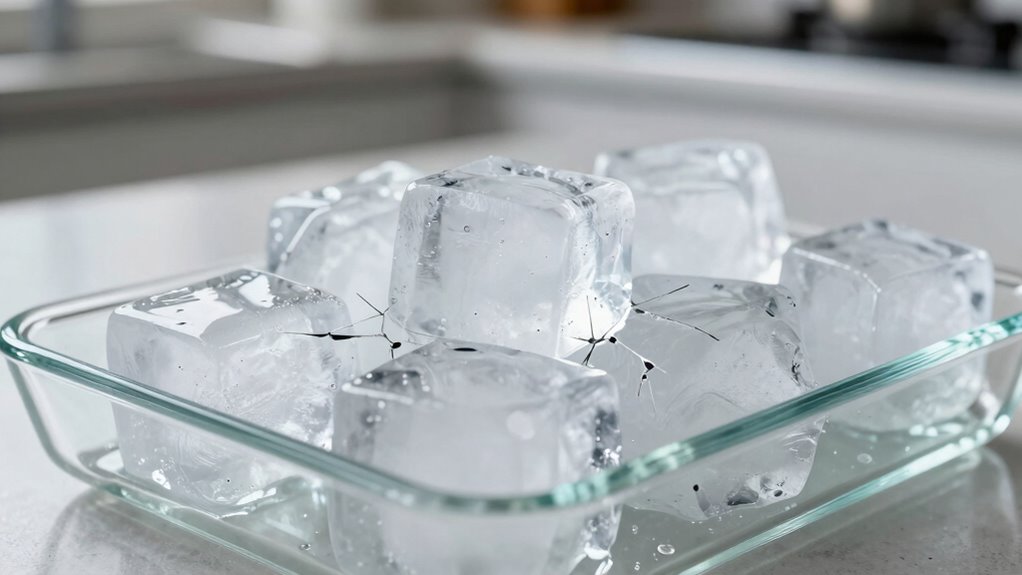
Proper molding and careful handling are essential to prevent cracks in your clear ice. Choosing the right mold is vital; select one that distributes the water evenly and allows for slow freezing. Avoid overfilling or using flimsy molds that can flex or break. When handling your ice, use gentle techniques—lift cubes carefully and avoid sudden temperature changes, like exposing cold ice to hot water or hot surfaces. Keep your molds stable during freezing, placing them on a flat, level surface to prevent stress points. Patience is key—don’t rush the freezing process or try to remove the ice too early. By selecting appropriate molds and practicing gentle handling techniques, you greatly reduce the risk of cracks and ensure clear, pristine cubes every time.
Preparing Water and Freezing Conditions for Crack-Free Ice
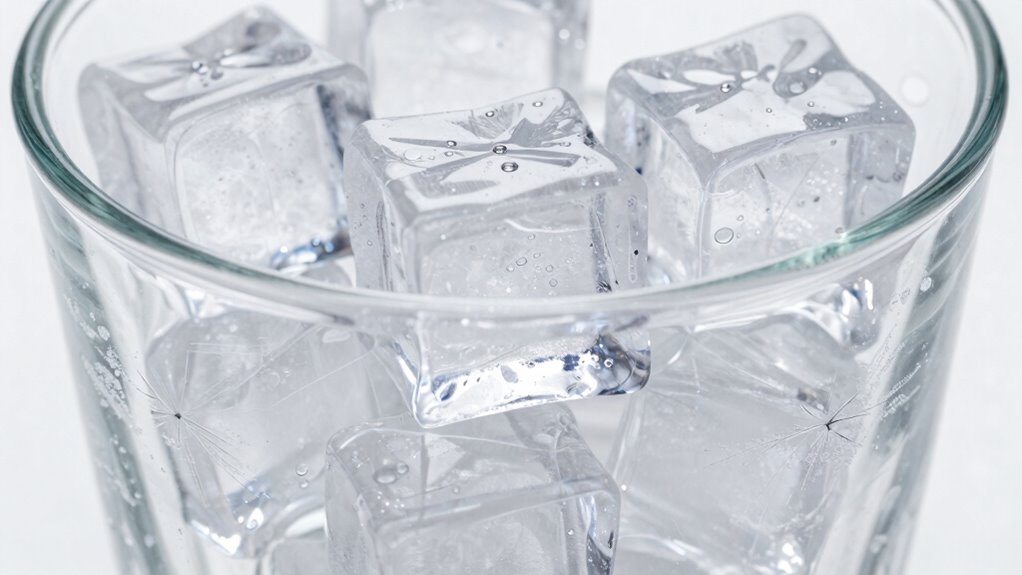
Start with purified water to reduce impurities that cause cracks. Keep the freezing temperature steady and controlled to guarantee even cooling. Avoid rapid freezing, as it can create stress and lead to cracks in your ice.
Use Purified Water
Using purified water is essential for making clear, crack-free ice at home. By focusing on water purification, you remove impurities that can cause cloudiness and cracks during freezing. Proper impurity removal ensures your ice cubes are transparent and structurally sound. Start with high-quality water sources and consider filtration methods to eliminate minerals, sediments, and dissolved gases. Using purified water minimizes the risk of trapped air and uneven freezing, which often lead to cracks. Remember, the cleaner your water, the better your ice will look and hold together.
- Choose filtered or distilled water over tap water
- Remove dissolved gases before freezing
- Avoid using hard water with mineral deposits
- Use a slow freezing process for better clarity
- Maintain consistent freezing temperatures
Control Freezing Temperature
Controlling the freezing temperature is key to achieving clear, crack-free ice. The freezing point of water can vary slightly based on impurities and pressure, so maintaining a consistent environment enhances thermal stability. Use a freezer set just below 32°F (0°C), but avoid freezing too rapidly, which can cause cracks. By stabilizing the temperature around the freezing point, you allow the water to freeze slowly and evenly. This gradual process reduces internal stresses that lead to cracks. Keep the freezer at a steady temperature, avoiding frequent door openings or temperature fluctuations. Proper thermal stability ensures the ice freezes uniformly, resulting in clearer, more solid cubes. Adjusting your freezer to maintain a consistent freezing point is essential for crack-free, professional-looking ice.
Avoid Rapid Freezing
To prevent cracks, it’s essential to avoid freezing water too quickly. Rapid freezing traps air and impurities, increasing stress and causing cracks. Controlling the freezing speed helps produce clearer, crack-free ice. You can achieve this by using purified water with low mineralization, which freezes more uniformly. Lowering the freezer temperature slightly or insulating the water container slows down the process, reducing internal pressure. Avoid filling molds to the brim, allowing room for expansion. Patience is key—slower freezing minimizes stress on the ice. Remember, the less mineralization in your water, the smoother the freezing process. By managing freezing speed and water quality, you’ll create clearer, crack-free ice cubes that enhance your drinks and presentation.
Tips for Filling Molds and Removing Ice Safely
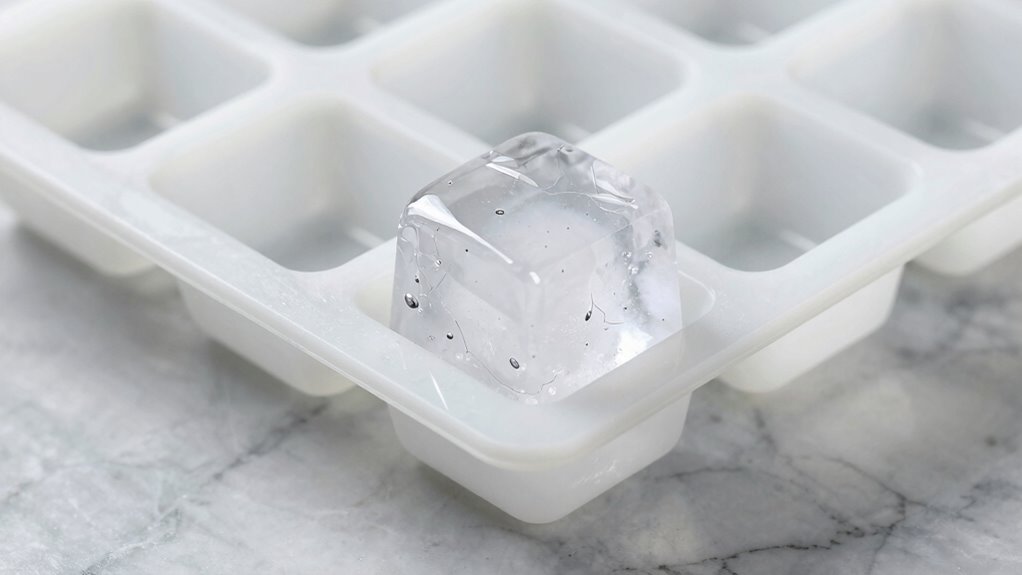
Filling molds correctly guarantees your ice freezes evenly and comes out easily. To assure proper mold filling, pour water slowly to avoid air bubbles, leaving a small space at the top. Use filtered water for clearer ice and avoid overfilling. When it’s time for ice removal, don’t force the cubes out; instead, gently twist or flex the mold to loosen the ice. If needed, run warm water over the outside of the mold for a few seconds to loosen stubborn cubes. Always handle the mold carefully to prevent cracks or fractures. Proper mold filling and gentle ice removal help you achieve clear, crack-free ice with minimal effort, making sure your cubes come out perfectly shaped and ready for your drinks.
How to Store and Maintain Your Ice for Maximum Clarity
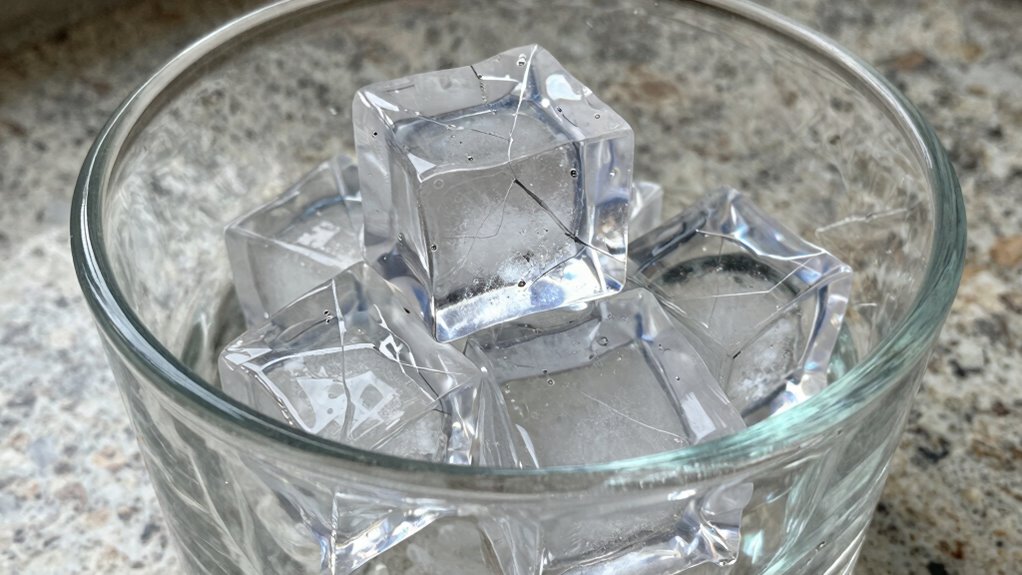
Storing your ice properly is key to maintaining its clarity and quality. Effective ice preservation relies on smart storage techniques that prevent cloudiness and cracking. Keep your ice in an airtight container to avoid absorbing freezer odors and reduce melting. Use a dedicated freezer compartment, preferably colder, to slow sublimation. Wrap ice in plastic or paper towels to protect against freezer burn. Avoid frequent temperature changes that cause expansion and contraction, leading to cracks. Consider stacking ice on a flat surface to prevent uneven melting. Proper storage ensures your clear ice stays pristine, enhances your drinks, and prolongs its aesthetic appeal.
Proper ice storage preserves clarity, prevents cracks, and keeps your drinks pristine.
- Use airtight containers for minimal exposure to air and odors
- Keep freezer temperature consistent for optimal preservation
- Wrap ice to prevent moisture loss and cracking
- Avoid stacking ice cubes loosely to prevent damage
- Store in a dedicated, colder freezer section
Troubleshooting Common Causes of Cracked Ice Cubes

Cracked ice cubes often result from sudden temperature changes or improper handling during freezing. When the ice forms too quickly, uneven crystal formation occurs, creating weak points that crack under pressure. Ensuring consistent temperatures helps maintain proper crystal formation, resulting in denser ice with fewer cracks. If the water is too warm or freezes too rapidly, the crystals become irregular and fragile. Additionally, low ice density caused by improper filling or rapid freezing increases the likelihood of cracks. To troubleshoot, avoid sudden temperature shifts and handle the tray gently. Using purified or filtered water can also promote uniform crystal formation, leading to stronger, crack-resistant ice cubes. Proper freezing techniques and attention to water quality are key in preventing cracks and achieving clear, durable ice.
Simple Steps to Make Crack-Resistant Clear Ice at Home
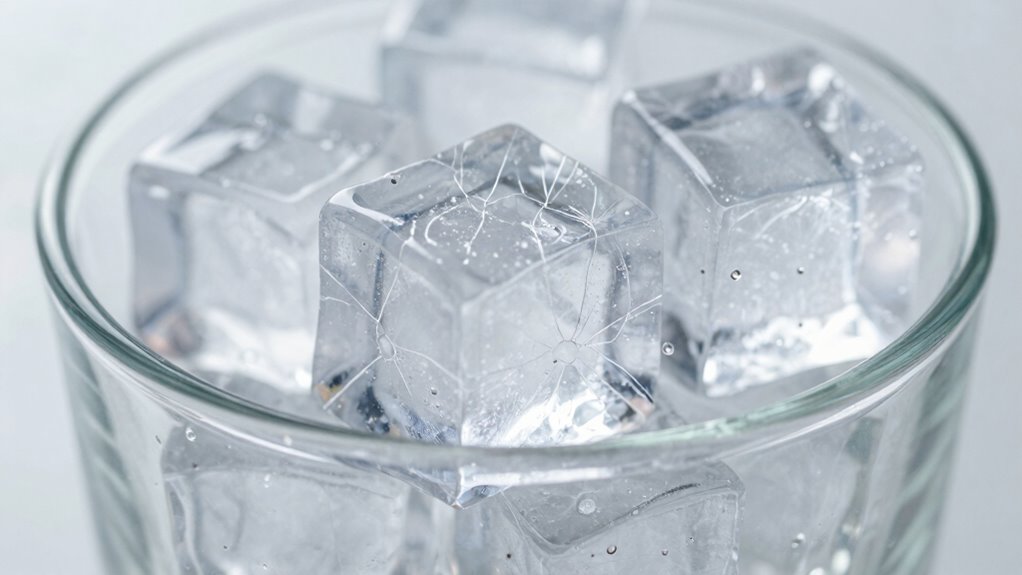
To make crack-resistant clear ice at home, start by using purified or filtered water, which helps eliminate impurities that can cause cracks. Clearer ice forms through a slow freezing process, similar to commercial freezing techniques used in ice sculpting. This minimizes trapped air and internal stress, reducing the chance of cracking. Use a controlled environment to freeze your water gradually, allowing the ice to develop uniformly.
- Use directional freezing methods, like insulating the sides and bottom, to encourage vertical freezing.
- Avoid disturbing the ice during the freezing process.
- Opt for smaller batches to ensure even freezing.
- Store the ice in airtight containers to prevent temperature fluctuations.
- Consider using specialized ice molds designed for clarity and strength, mimicking commercial ice sculpting techniques.
Frequently Asked Questions
Can Mineral Deposits in Water Cause Ice Cracks?
Yes, mineral deposits in water can cause ice cracks by disrupting the ice structure. When minerals like calcium or magnesium are present, they create tiny imperfections within the ice as it freezes. These imperfections act as stress points, making the ice more prone to cracking when you handle or move the cubes. To prevent this, use filtered or distilled water to reduce mineral content and improve the clarity and integrity of your ice.
Does Humidity Affect the Likelihood of Ice Cracking?
A dry bed makes a good night’s sleep, and in this case, low humidity reduces the moisture impact on your ice. Humidity effects can cause ice cracking because increased moisture can lead to uneven freezing and internal stress. When humidity is high, trapped moisture expands as it freezes, increasing crack chances. So, controlling humidity helps maintain clear, crack-free ice by minimizing moisture-related stresses during freezing.
Are There Specific Molds That Reduce Crack Formation?
Yes, choosing molds with specific design features can help reduce cracks. Look for silicone molds with flexible material, which allows even expansion and contraction during freezing, minimizing stress. Molds with rounded corners and thicker walls also distribute pressure more evenly. These mold materials and design features work together to prevent cracking, ensuring clearer, more durable ice cubes for your drinks.
How Does the Size of the Ice Cube Influence Cracking?
Imagine a delicate glass sculpture; larger ice cubes tend to be more prone to cracking because their increased size means more internal stress and uneven melting. Bigger ice cube size amplifies the cracking tendency, as they take longer to freeze uniformly and are more susceptible to pressure from temperature fluctuations. To minimize cracking, opt for smaller, more evenly frozen cubes, which are less likely to develop internal stress and crack.
Can Adding Salt or Other Additives Prevent Ice Cracks?
Adding salt or other additives to water can reduce ice cracks by altering the water’s freezing point, creating a more uniform freeze. Salty water, for example, slows down crystal formation, which minimizes stress and cracking. However, keep in mind that additives can affect the clarity and taste of your ice. Use small amounts carefully, as excessive additives might cause cloudiness or unwanted flavors.
Conclusion
By understanding how temperature changes and water quality affect your ice, you can prevent cracks and enjoy crystal-clear cubes. Did you know that using purified water reduces cloudiness and weak spots by up to 70%? With proper freezing techniques and careful handling, you’ll produce stronger, crack-free ice every time. Take these simple steps to upgrade your home ice game—your drinks will stay colder, clearer, and more satisfying.