
Using the right water for your coffee makes a big difference in flavor and brewing consistency. Tap water varies in mineral content and impurities that can affect taste and damage your equipment. Filtered water strikes a balance by removing harmful impurities while keeping essential minerals. Distilled water, however, lacks minerals, potentially resulting in dull flavors. Understanding how each water type interacts with your grind and temperature can help you brew better coffee—discover how to optimize your process next.
Key Takeaways
- Tap water contains minerals and impurities that can affect flavor, equipment, and extraction consistency.
- Filtered water removes chlorine and sediments, balancing mineral content for optimal brewing and equipment longevity.
- Distilled water lacks minerals, potentially leading to flat flavors and uneven extraction in coffee brewing.
- Mineral content influences water’s interaction with coffee grounds, affecting grind size, flow rate, and brew temperature.
- Choosing the right water depends on balancing mineral levels to enhance flavor while preventing equipment buildup.

If you want your coffee to taste truly exceptional, paying attention to the water you use is vital. Water quality impacts every aspect of brewing, from flavor clarity to overall balance. One key factor is ensuring you use water at the right brew temperature, which generally hovers around 195°F to 205°F. Too hot, and you risk extracting bitter compounds; too cold, and your coffee won’t fully develop its flavors. But temperature alone isn’t enough. You also need to focus on grind consistency, which plays a fundamental role in how water interacts with your coffee grounds. When your grind is uniform, water flows evenly through the coffee, extracting the right amount of flavor without over- or under-extraction.
Achieve perfect coffee by controlling brew temperature and grind consistency for optimal flavor extraction.
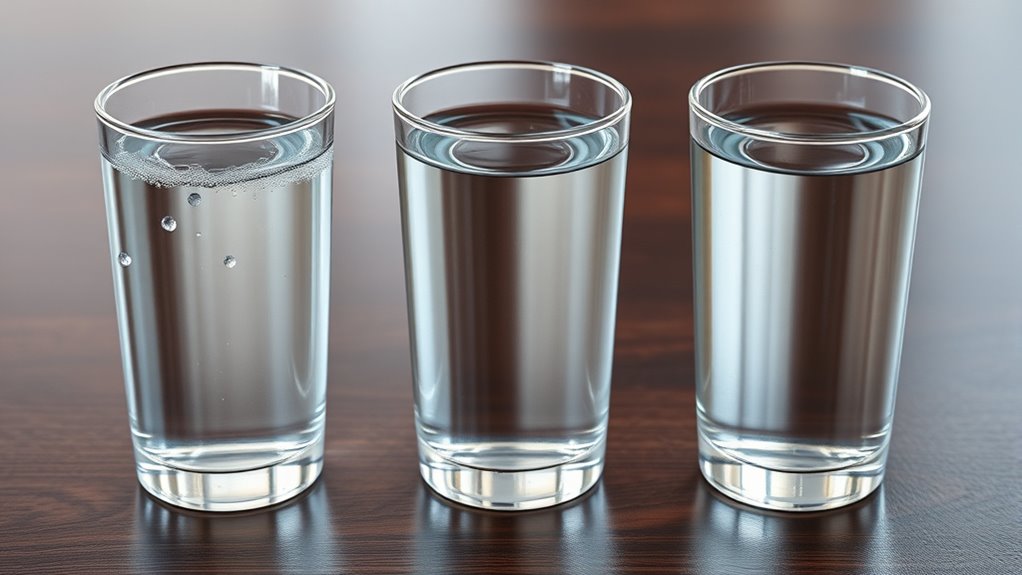
Now, consider how different water sources influence these factors. Tap water often contains minerals and impurities that can alter the brew temperature and affect grind consistency. Hard water, rich in calcium and magnesium, can lead to mineral buildup in your coffee maker, making it harder to maintain consistent temperature and grind flow. Softened tap water, while less mineral-heavy, may lack the minerals necessary for ideal extraction, resulting in flat or dull flavors. Filtered water, on the other hand, usually strikes a good balance. It removes chlorine, sediments, and some impurities that can interfere with taste and equipment longevity, while preserving beneficial minerals that help maintain proper brew temperature and grind consistency. Additionally, using proper water filtration can help prevent mineral buildup and equipment issues over time.
Distilled water offers a different experience. It’s pure and free of minerals, which might sound ideal, but it can actually hinder flavor development. Without minerals, water struggles to extract the full spectrum of flavors from your coffee beans, leading to a flat or one-dimensional cup. Plus, because distilled water is highly conductive, it can cause uneven heating in your brewing device, impacting the brew temperature stability. So, while it’s free of impurities, distilled water isn’t always the best choice if you want a rich, balanced cup.
Ultimately, the water you choose interacts with your grind consistency and brew temperature to shape your coffee’s flavor. Tap water might require adjustments in grind size or brewing time to compensate for mineral content. Filtered water offers a reliable middle ground—clean enough to avoid off-flavors but mineral-rich enough to support proper extraction. Distilled water, while pure, may call for added minerals or flavor enhancers for the best results. By understanding these dynamics, you can fine-tune your brewing process and enjoy coffee that truly showcases the beans’ potential.
Frequently Asked Questions
Does Mineral Content Affect Coffee Flavor?
Yes, mineral content considerably affects your coffee flavor. A proper mineral balance enhances flavor and helps extract the best aroma from your beans. Too many minerals can cause off-flavors, while too few may result in weak taste. Filtered water often offers better flavor enhancement because it balances minerals effectively. Distilled water lacks minerals, making your coffee flat, while tap water’s mineral content varies and can impact taste unpredictably.
Is Distilled Water Too Pure for Brewing Coffee?
Distilled water is like a blank canvas—too pure for brewing coffee. Its high water purity strips away minerals that enhance flavor and improve brewing efficiency. Without those minerals, your coffee might taste flat and lack complexity. While it’s pure, it can hinder extraction, making your brew less vibrant. For better flavor and brewing results, consider water with balanced mineral content instead of overly distilled water.
How Does Water Ph Influence Coffee Extraction?
You’ll find that water pH influences coffee extraction because a balanced pH level, around 6.5 to 7, enhances extraction efficiency. If the water is too acidic or alkaline, it can skew flavors and reduce extraction quality. Maintaining proper pH balance helps reveal the coffee’s full flavor potential, ensuring a smoother, more vibrant cup. Adjusting water pH can make a noticeable difference in your brewing results.
Can Tap Water Cause Coffee Machine Damage?
Imagine your coffee machine as a delicate garden; tap water, often rich in minerals, can be like harsh weather that harms your plants. Water hardness leads to mineral buildup inside your machine, causing wear and tear. Over time, this can damage the components, reducing efficiency. To protect your investment, consider filtered or distilled water, which helps prevent mineral buildup and keeps your coffee machine running smoothly and longer.
What Water Temperature Is Ideal for Brewing?
You should aim for a brew temperature of around 195-205°F (90-96°C) for maximum extraction efficiency. This temperature range ensures you extract the best flavors from your coffee without over-extracting bitter compounds. If your water’s too hot, you risk burning the coffee, while too cool water results in weak flavor. Maintaining the right brew temperature helps you achieve a balanced, flavorful cup every time.
Conclusion
Choosing the right water can drastically improve your coffee’s flavor. Did you know that water quality can influence up to 98% of your brew’s taste? Using tap, filtered, or distilled water each has its benefits, but filtered water often strikes the perfect balance—removing impurities while retaining minerals. So, next time you brew, remember that better water equals better coffee. Small changes in your water choice can lead to a noticeably richer, more satisfying cup.