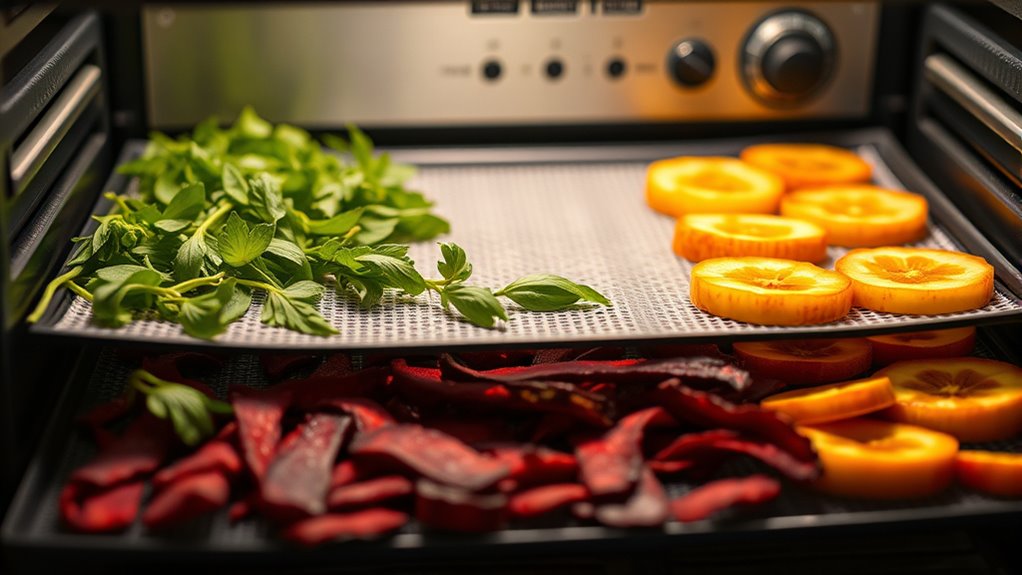

To properly dry herbs, set your dehydrator to 95-115°F to preserve flavor and nutrients. For jerky, use 145-160°F to guarantee safety and eliminate bacteria. Fruits should be dried at 125-135°F to prevent a leathery texture and maintain flavor. Adjusting the temperature according to each type is key to quality and safety. If you want to master these settings and get the best results, keep exploring how different foods require specific temps.

Get cleaning gear delivered free — and shop member deals
- Fast, free delivery on millions of items
- Access to Prime Big Deal Days deals on October 6–7
- Prime Video, Amazon Music and more included
Key Takeaways
- Herbs should be dehydrated at 95°F to 115°F to preserve oils and color.
- Jerky requires a higher temperature of 145°F to 160°F for safety and bacteria elimination.
- Fruits are best dried at 125°F to 135°F to prevent texture issues and flavor loss.
- Proper temperature control prevents spoilage, mold, and ensures quality for each food type.
- Post-drying storage in airtight, cool, dark places maintains freshness and extends shelf life.
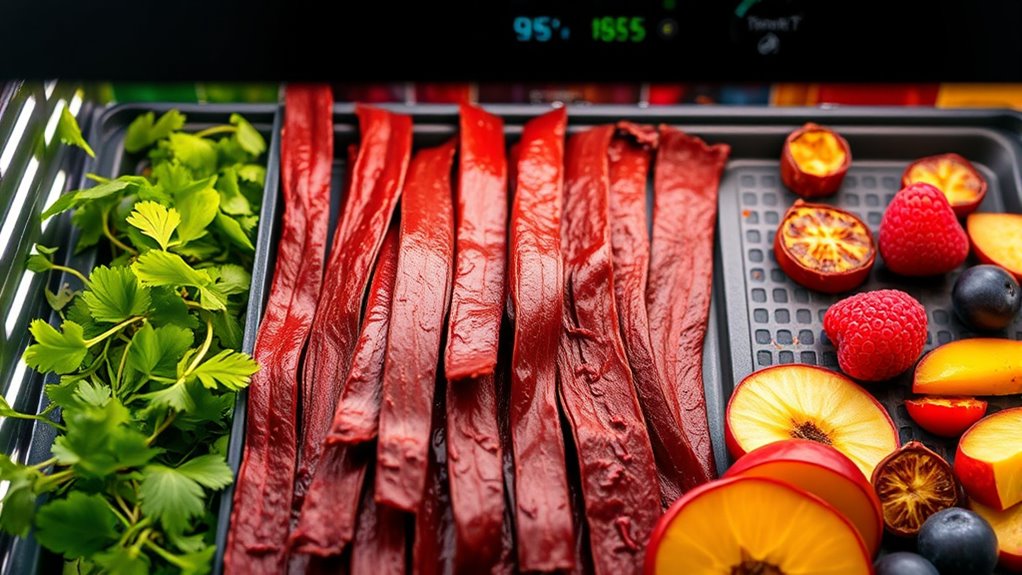
Choosing the right dehydrator temperature is essential for preserving the quality and safety of your dried foods. When you’re drying herbs, jerky, or fruit, each requires a specific temperature to guarantee they’re properly preserved without losing flavor or nutrients. Temperature control influences not only the drying process but also how you handle marinating techniques beforehand and how you store your finished products. Getting these settings right helps you avoid spoilage, bacterial growth, and mold, making your dried foods safe and enjoyable.
Choosing the right dehydrator temperature ensures safe, flavorful, and high-quality dried foods.
For herbs, lower temperatures around 95°F to 115°F are ideal. You want to preserve their aromatic oils and vibrant colors, which can be damaged by higher heat. Drying herbs at the right temperature ensures they retain their flavor and medicinal qualities. When preparing herbs, consider marinating techniques that enhance their flavor; soaking them in olive oil, vinegar, or herbal infusions before drying can add layers of taste. Just remember, after drying, proper storage methods are crucial. Keep herbs in airtight containers in a cool, dark place to maintain their potency and prevent moisture from creeping in. Proper storage extends their shelf life and preserves their freshness.
Jerky requires a higher temperature, typically between 145°F and 160°F. This range is necessary because it ensures bacteria are killed during the drying process, which is critical for safety. When making jerky, marinating techniques are often used—marinating strips of meat in salty, spicy, or sweet mixtures helps tenderize the meat and add flavor. The marinade also acts as a protecting layer against bacteria, but the dehydration process must reach the right temperature to make the jerky safe to eat. Once dried, store jerky in an airtight container or vacuum-sealed bag to keep it fresh and prevent moisture from re-entering, which could cause spoilage.
Additionally, understanding the importance of temperature regulation can significantly improve your drying results and food safety. Fruits are best dried at even lower temperatures, around 125°F to 135°F. This prevents them from becoming overly leathery or losing their delicate flavors. When drying fruit, marinating techniques like dipping slices in lemon juice or fruit concentrates can help preserve color and add sweetness. Proper storage methods are necessary here as well; dried fruit should be kept in airtight containers away from direct sunlight and humidity. This prevents moisture absorption, which can lead to mold or fermentation.
In all cases, adjusting your dehydrator’s temperature according to the type of food you’re drying is key to achieving the best results. Proper marinating techniques enhance flavor, while suitable storage methods extend shelf life. Paying attention to these details ensures your dried herbs, jerky, and fruit not only taste great but stay safe and fresh for longer.
food dehydrator for herbs and fruit
As an affiliate, we earn on qualifying purchases.
As an affiliate, we earn on qualifying purchases.
Frequently Asked Questions
How Do Humidity Levels Affect Dehydration Times?
Higher humidity levels slow down dehydration times because they make humidity control more challenging. When moisture in the air is high, your dehydrator has to work harder to remove moisture from food, increasing total drying time. To guarantee proper moisture removal, maintain low humidity levels, which help speed up dehydration and prevent spoilage. Keeping humidity low is essential for efficient dehydration and preserving the quality of your herbs, jerky, and fruit.
Can I Dehydrate Multiple Food Types Simultaneously?
Yes, you can dehydrate multiple food types simultaneously, but you should consider food group compatibility to prevent flavor transfer and maintain dehydration process efficiency. Place items with similar moisture levels and drying times together, like herbs and fruit, which often require lower temperatures, separate from jerky. Keep airflow unobstructed and rotate trays if needed, ensuring each food type dries evenly without cross-contamination.
What Safety Precautions Are Needed During Dehydration?
You need to prioritize food safety by thoroughly cleaning your dehydrator and utensils before use to prevent cross-contamination. Always wash hands and sanitize surfaces to avoid bacteria transfer. Use proper temperatures for different foods—high enough to kill bacteria but not so high that it affects quality. Store dried foods in airtight containers, label them clearly, and keep raw and cooked foods separate to guarantee safety during dehydration.
How Does Altitude Influence Dehydrator Temperature Settings?
Did you know that at high altitudes, dehydration efficiency drops by up to 20%? You should adjust your dehydrator temperature settings accordingly. Altitude adjustments help compensate for lower air pressure, ensuring your food dries thoroughly and safely. Without these tweaks, you risk under-drying or spoilage. Always increase your dehydrator temperature slightly at higher elevations to maintain proper dehydration and prevent bacteria growth.
Are There Specific Preservatives Recommended for Dehydrated Herbs?
For herb preservation, you generally don’t need preservatives, but using dehydrator additives like antioxidants such as ascorbic acid can help maintain color and flavor. If you’re concerned about mold or bacteria, consider natural preservatives like rosemary or thyme. Always guarantee herbs are fully dried before storage to prevent spoilage. These practices help extend shelf life and preserve the herbs’ aroma and potency effectively.
jerky dehydrator with temperature control
As an affiliate, we earn on qualifying purchases.
As an affiliate, we earn on qualifying purchases.
Conclusion
Now that you know the ideal dehydrator temps for herbs, jerky, and fruit, you can confidently customize your drying process. Remember, maintaining the right temperature guarantees your herbs retain flavor, your jerky stays tender, and your fruit keeps its sweetness. It’s almost like a rhythm—adjusting the heat, waiting patiently, and enjoying the perfect results. Trust your instincts, stay consistent, and soon you’ll master dehydrating like a pro. Happy drying!
As an affiliate, we earn on qualifying purchases.
As an affiliate, we earn on qualifying purchases.
Fall Picks
fall essentials
As an affiliate, we earn on qualifying purchases.