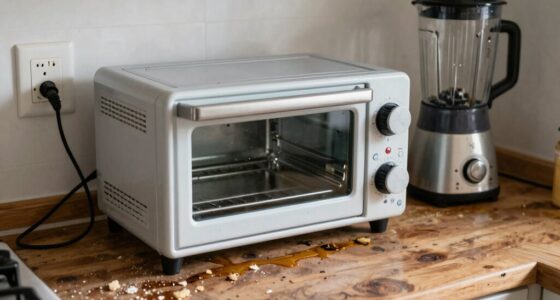

To clean and descale your coffee machine naturally, start by unplugging it and removing any parts that can be cleaned. Fill the water reservoir with a mix of equal parts white vinegar or citric acid solution and water. Run a brewing cycle without coffee, then let it sit for 15-20 minutes. Follow up with several water rinses to fully clear out residues. For more tips on keeping your machine in top shape, keep exploring these simple, eco-friendly methods.

Get cleaning gear delivered free — and shop member deals
- Fast, free delivery on millions of items
- Access to Prime Big Deal Days deals on October 6–7
- Prime Video, Amazon Music and more included
Key Takeaways
- Use natural descaling solutions like diluted white vinegar or citric acid to dissolve mineral deposits safely.
- Fill the water reservoir with the solution and run a brewing cycle without coffee grounds.
- Let the solution sit for 15-20 minutes to loosen stubborn buildup before rinsing.
- Run multiple clean water cycles afterward to thoroughly remove any residual solution.
- Wipe external parts and removable components with a microfiber cloth for a complete, eco-friendly clean.

Regularly cleaning and descaling your coffee machine is essential to guarantee it brews great-tasting coffee and lasts longer. Over time, mineral deposits from water build up inside the machine, affecting both flavor and performance. To tackle this naturally, you need the right cleaning tools and descaling solutions. You don’t have to rely on harsh chemicals; natural options work just as well and are better for your health and the environment.
Regular cleaning and descaling keep your coffee machine flavorful, efficient, and eco-friendly.
Start by gathering your cleaning tools—these can include soft brushes, microfiber cloths, and a small cup or container. These tools help you reach tricky spots without damaging your machine. For descaling solutions, you can opt for natural ingredients like white vinegar or citric acid. White vinegar is a powerful, inexpensive option that dissolves mineral buildup efficiently. Citric acid, found in lemons or as a powder, also works well and leaves a fresh scent. Remember, when using vinegar, dilute it with water—about a 1:1 ratio—to prevent any damage to your machine’s components.
Before you begin, make sure the machine is unplugged and cooled down. Fill the water reservoir with your chosen descaling solution. If you’re using vinegar, mix equal parts of vinegar and water. Turn on the machine and run a brewing cycle without coffee grounds. This process helps break down the mineral deposits inside the pipes and boiler. After the cycle completes, let the solution sit for about 15-20 minutes to give it time to work on stubborn buildup. During this waiting period, you can use your cleaning tools to gently scrub removable parts like the filter basket and drip tray, removing any coffee oils or residues.
Next, run a clean water cycle to rinse out the vinegar or citric acid. You may need to repeat this step a couple of times to ensure no lingering taste remains. For thorough cleaning, wipe down external surfaces with a microfiber cloth. Pay attention to the water reservoir, carafe, and other removable parts—these can harbor mold and grime if neglected. Regularly cleaning with natural descaling solutions not only preserves the flavor of your coffee but also extends the lifespan of your machine. Incorporating proper home appliance maintenance techniques can further improve your machine’s longevity and performance.
In addition to descaling, use your cleaning tools to inspect and clean any filters or small parts that can trap residue. Doing this monthly keeps your coffee fresh and your machine running efficiently. Natural descaling and cleaning are simple, cost-effective, and eco-friendly ways to maintain your coffee machine, ensuring each cup tastes just as good as the first.
natural coffee machine descaling solution
As an affiliate, we earn on qualifying purchases.
As an affiliate, we earn on qualifying purchases.
Frequently Asked Questions
Can Natural Cleaning Methods Harm My Coffee Machine’s Components?
No, natural cleaning methods typically won’t harm your coffee machine’s components. They use gentle ingredients that avoid harsh chemical reactions, reducing the risk of component damage. However, if you use overly aggressive natural cleaners or improper dilution, you might cause damage or leave residues. Always follow recommended natural cleaning recipes and instructions to guarantee your machine stays in good condition without risking harm to its parts.
How Often Should I Descale My Coffee Machine Naturally?
You should descale your coffee machine naturally every 1-3 months, depending on your water hardness and usage. Following a natural maintenance schedule helps prevent buildup without harming your machine. Regular descaling reduces mineral deposits, keeps your coffee tasting fresh, and extends your machine’s lifespan. Keep an eye on your machine’s performance, and if you notice slower brewing or scale buildup, increase your descaling frequency accordingly.
Are There Any Natural Descaling Agents Suitable for All Coffee Machine Types?
Absolutely, citric acid and vinegar are your best bets for natural descaling agents suitable for all coffee machine types! They’re powerful enough to banish scale buildup but safe if used correctly—just dilute vinegar to guarantee vinegar safety and prevent damage. Citric acid is super effective, eco-friendly, and gentle on your machine. So, yes, these natural options work universally, making your coffee taste fresh and your machine last longer.
What Are the Signs That My Coffee Machine Needs Descaling?
You’ll notice your coffee machine needs descaling when the water flow slows down or your coffee tastes off. If you have hard water, mineral deposits build up faster, causing clogs and reduced efficiency. Look for signs like longer brewing times or visible scale around the water reservoir. Regularly checking water hardness and mineral deposits helps you catch the need for descaling early, keeping your machine running smoothly.
Is There a Natural Way to Prevent Mineral Buildup in My Coffee Maker?
Think of your coffee maker as a garden needing regular care. To prevent mineral buildup naturally, you should focus on water quality and filter replacement. Use filtered or distilled water to reduce minerals, and change the water filter as recommended. This keeps mineral deposits at bay, ensuring your machine runs smoothly and your coffee tastes fresh. Consistent maintenance is your best defense against hard water’s stubborn mineral buildup.
white vinegar coffee maker cleaner
As an affiliate, we earn on qualifying purchases.
As an affiliate, we earn on qualifying purchases.
Conclusion
So, after all that effort, you’ve successfully cleaned and descaled your coffee machine—ready to brew that perfect cup. Who would’ve thought that the secret to delicious coffee was just a mix of vinegar and patience? Ironically, the very process that seems so mundane keeps your machine running smoothly, saving you from costly repairs or bitter brews. Now, sit back, enjoy your freshly cleaned coffee, and marvel at how something so simple can make such a difference.
citric acid descaler for coffee machine
As an affiliate, we earn on qualifying purchases.
As an affiliate, we earn on qualifying purchases.
eco-friendly coffee machine cleaning kit
As an affiliate, we earn on qualifying purchases.
As an affiliate, we earn on qualifying purchases.
Fall Picks
fall essentials
As an affiliate, we earn on qualifying purchases.