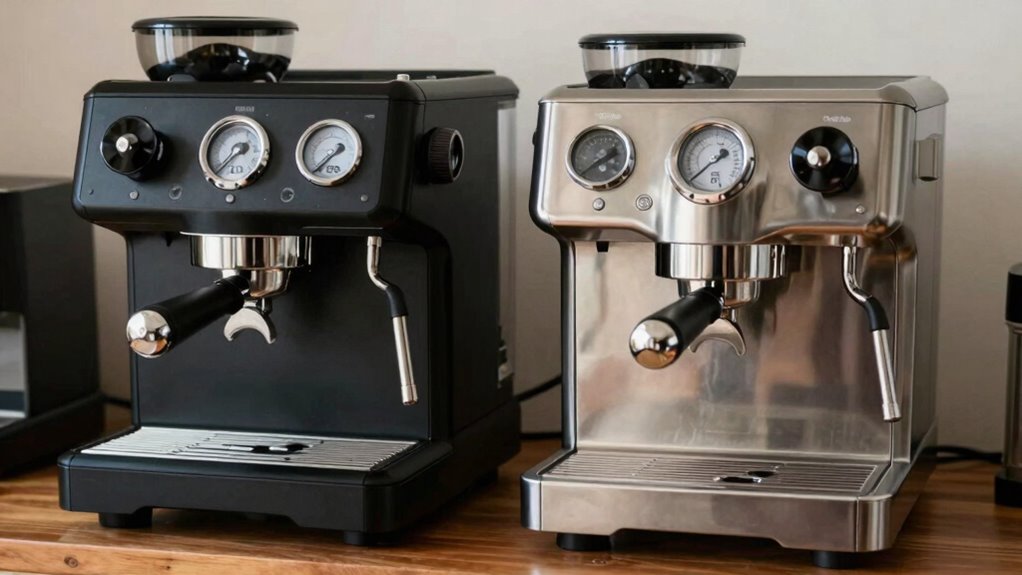
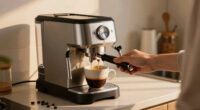
A dual boiler machine allows you to brew espresso and steam milk simultaneously, making it faster and more precise for frequent drinks. A single boiler combines both functions into one chamber, which means waiting to switch between tasks but is more affordable and compact. If you make many drinks daily, a dual boiler is worth it. To discover which setup fits your brewing style best, keep exploring the differences and benefits.

Get cleaning gear delivered free — and shop member deals
- Fast, free delivery on millions of items
- Access to Prime Big Deal Days deals on October 6–7
- Prime Video, Amazon Music and more included
Key Takeaways
- Dual boilers allow simultaneous brewing and steaming, increasing efficiency for frequent, high-volume drink preparation.
- Single boilers are more compact and affordable, suitable for occasional use or limited space.
- Dual boilers offer precise temperature control for both brewing and steaming, ensuring consistent quality.
- Single boilers require switching between functions, leading to longer wait times and slower workflow.
- Dual boilers are larger and more expensive, while single boilers are ideal for beginners and space-constrained environments.
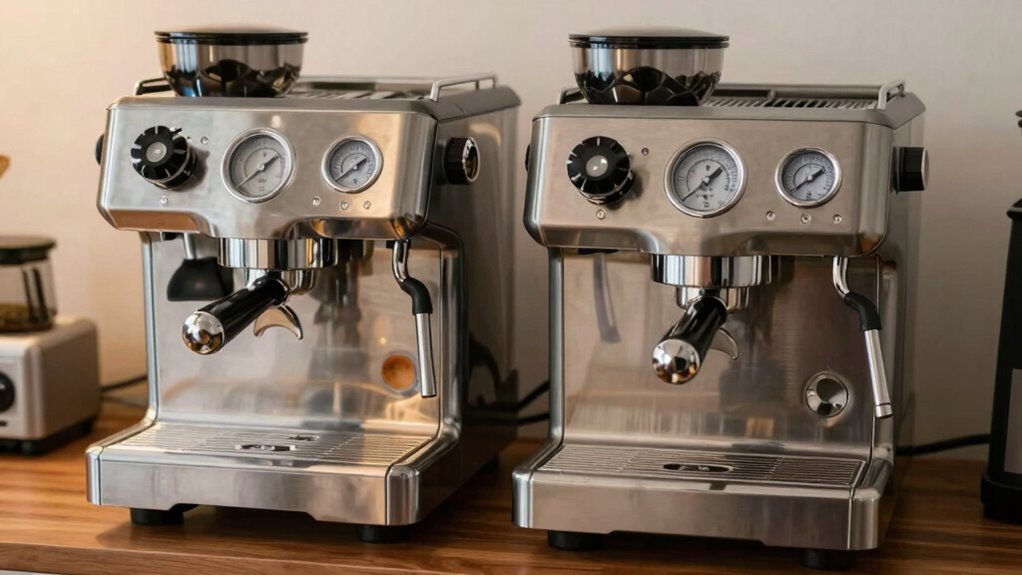
When choosing an espresso machine, understanding the difference between dual boiler and single boiler systems is essential. Your decision impacts how smoothly your home barista experience unfolds, especially when it comes to milk steaming and temperature control. With a dual boiler setup, you get two separate chambers—one dedicated to brewing espresso and the other to steaming milk. This means you can steam milk to the perfect temperature without affecting the brewing process. You won’t have to wait for the machine to cool down or heat up between tasks, making your workflow more efficient. The precise temperature control in a dual boiler system ensures that each component operates at peak levels, giving you consistent results every time. This setup is particularly advantageous if you enjoy making lattes or cappuccinos regularly, as it allows you to switch seamlessly from brewing to steaming without sacrificing quality. Additionally, dual boilers often come with advanced temperature regulation features, further enhancing your brewing precision. Moreover, many dual boiler machines include automated features that simplify operation for home users, making professional-quality drinks more accessible.
On the other hand, single boiler machines combine both functions into one chamber. This design requires you to alternate between brewing and steaming, which can slow down your process. When you want to steam milk, you’ll need to turn off the espresso brewing process, wait for the boiler to heat up again, and then proceed. This back-and-forth can be frustrating if you’re aiming for efficiency or multiple drinks in quick succession. However, single boilers tend to be more affordable and compact, making them appealing if space and budget are considerations. They often have less sophisticated temperature control, which can sometimes lead to slight fluctuations that affect both milk steaming and espresso extraction. Still, with practice, you can achieve good results, especially if you’re not making multiple drinks in a row.
In addition, advancements in boiler technology have improved the performance of single boiler machines, making them more capable than ever for home use. Your choice hinges on how often you make espresso-based drinks that require milk steaming. If you frequently prepare multiple beverages, a dual boiler machine’s ability to maintain steady temperature control and streamline milk steaming is a clear advantage. It provides the flexibility to produce high-quality espresso and perfectly textured milk without delays. Conversely, if you’re just starting out or make espresso infrequently, a single boiler model might suffice, offering decent performance at a lower price point. Ultimately, understanding these differences helps you match your home setup with your brewing habits, ensuring you get the most consistent, enjoyable coffee experience possible.
As an affiliate, we earn on qualifying purchases.
Frequently Asked Questions
Which Type Is More Energy-Efficient for Home Use?
A single boiler espresso machine is generally more energy-efficient for home use. It consumes less energy because it heats water on demand and doesn’t need to keep two separate boilers warm constantly. This means better power efficiency and lower energy consumption overall. If you’re looking to save on electricity bills, a single boiler system is a practical choice, especially for occasional or moderate coffee brewing.
Can a Single Boiler Machine Make Multiple Drinks Quickly?
Think of a single boiler machine as a well-trained juggler, capable of quickly switching between drinks. It can make multiple drinks fast by heating water in the reservoir and using its steam wand efficiently. However, it may need brief pauses to adjust temperature. While it can serve multiple drinks swiftly, it might not match the speed and consistency of a dual boiler setup, especially when steaming milk and pulling shots simultaneously.
How Do Maintenance Costs Compare Between Dual and Single Boilers?
You’ll find that maintenance costs are generally higher for dual boiler machines because they have more complex components, which means more frequent maintenance and potentially higher repair costs. In contrast, single boiler machines usually have lower maintenance frequency and costs due to their simpler design. When comparing costs, consider that dual boilers might require more upkeep, but they can also save you time, making the higher costs worthwhile for serious home baristas.
Are Dual Boilers More Durable Than Single Boilers?
Dual boilers are generally more durable than single boilers because they handle milk steaming and temperature stability better. With separate boilers, you experience less wear and tear since each boiler focuses on its specific task. You’ll notice more consistent steam pressure and temperature, reducing strain on the components. This setup prolongs the machine’s lifespan, especially if you frequently make milk-based drinks, making dual boilers a more reliable choice for home baristas.
Is There a Significant Difference in Brew Quality?
Yes, there’s a noticeable difference in brew quality. Dual boilers offer better flavor consistency and temperature stability, allowing you to brew espresso at the ideal temperature without fluctuations. This results in richer, more balanced flavors. Single boilers can struggle to maintain consistent temperature during brewing, which might affect taste. If you prioritize precision and top-tier flavor, a dual boiler provides a clear advantage for your home espresso experience.
As an affiliate, we earn on qualifying purchases.
Conclusion
Choosing between a dual boiler and a single boiler really comes down to your brewing style. Sure, dual boilers might seem costly, but if you’re serious about espresso quality and efficiency, the investment pays off. Think you won’t notice the difference? Once you experience consistently perfect shots with quick steam, you’ll never go back. So, don’t settle for less—upgrade your home setup and elevate your coffee game today!
As an affiliate, we earn on qualifying purchases.
professional coffee maker with dual boilers
As an affiliate, we earn on qualifying purchases.
As an affiliate, we earn on qualifying purchases.
Fall Picks
fall essentials
As an affiliate, we earn on qualifying purchases.