The taste difference most people miss between flat and conical burrs lies in how they preserve and highlight delicate aromas. Conical burrs generate less heat and crush beans gently, helping to retain subtle flavors and nuances. Flat burrs produce a more uniform grind, which can emphasize brightness and clarity. Your choice impacts flavor complexity and brightness; continue exploring how these design differences can release your perfect cup.
Key Takeaways
- Conical burrs generate less heat, preserving delicate aromatics and resulting in brighter, more nuanced coffee flavors.
- Flat burrs produce a more uniform grind, leading to consistent extraction and a balanced, fuller-bodied taste.
- The gentle grinding action of conical burrs minimizes flavor degradation of aromatic compounds.
- Flat burrs can cause slight heat buildup, potentially dulling brightness and reducing flavor clarity.
- Overall, conical burrs often reveal more subtle flavor nuances that flat burrs may obscure due to heat and grind uniformity.
How Flat and Conical Burrs Differ in Design and Function

While both flat and conical burrs are designed to grind coffee beans consistently, their shapes influence how they operate. Flat burrs have a horizontal, disc-like shape, which creates a uniform grind size, but they often require more frequent maintenance due to heat buildup and bean trapping. Conical burrs, with their cone-shaped design, tend to be gentler on the beans and generate less heat, reducing the need for frequent maintenance. The burr material also impacts durability and cleaning; ceramic burrs last longer and resist odors, while stainless steel burrs are more durable but may require more careful cleaning. Overall, understanding how burr shape and material influence maintenance frequency helps you choose the right grinder for consistent, high-quality coffee.
How Burr Shape Affects Grind Consistency and Brew Quality

The shape of your burrs directly impacts the consistency of your grind and, ultimately, the quality of your brew. Flat burrs typically produce more uniform particle sizes because their shape guarantees even grinding. Conical burrs, on the other hand, often generate a slightly broader grind distribution, which can influence extraction. The burr material also plays a role; durable materials like steel or ceramic maintain sharpness longer, helping sustain grind consistency over time. Regular maintenance routines, including cleaning and sharpening, are essential to prevent burr dulling and uneven grinds. Well-maintained burrs ensure your grinder operates smoothly, preserving the desired grind uniformity. In turn, this consistency leads to better extraction and a more balanced, flavorful cup of coffee. Additionally, burr geometry can influence the efficiency of the grinding process and the heat generated during operation, which affects bean preservation and flavor. Proper burr alignment is also crucial for maintaining consistency and preventing uneven grind sizes, further enhancing brew quality. Moreover, grind size distribution can be affected by the burr shape, impacting how evenly the coffee extracts during brewing. Ensuring precise burr calibration is vital for achieving optimal grind consistency and flavor. Proper alignment and adjusting grind settings complement the burr shape’s influence and optimize overall brewing results.
How Grind Size Impacts Flavor Extraction in Your Coffee

The grind size you choose directly affects particle size uniformity, which influences how evenly your coffee extracts. If the particles vary too much, some flavors may over-extract while others under-extract, leading to an imbalanced taste. Adjusting your grind guarantees a consistent extraction rate, revealing the full flavor potential of your brew. By understanding the importance of consistent particle size, you can better achieve harmony in your coffee’s flavor profile. Additionally, maintaining extraction consistency helps prevent bitterness and sourness, ensuring a more balanced cup. Recognizing the significance of uniform grind size can also improve your brewing results and overall coffee experience.
Particle Size Uniformity
Particle size uniformity plays a vital role in how evenly your coffee extracts, directly affecting flavor quality. When your grind has consistent particle sizes, the grind particle distribution ensures each particle interacts with water similarly, leading to balanced extraction. Uniformity minimizes over-extraction of fine particles and under-extraction of larger ones, preventing bitterness or sourness. Flat burr grinders typically produce a more consistent particle size, enhancing uniformity. In contrast, conical burrs may generate a slightly wider grind particle distribution, which can introduce variability in extraction. Achieving optimal particle size uniformity allows you to control the brew process more precisely, resulting in a richer, more nuanced flavor profile. Paying attention to grind consistency is key to revealing the full potential of your coffee’s taste.
Extraction Rate Variations
Grind size directly influences how quickly and efficiently flavors are extracted during brewing. Smaller particles increase surface area, speeding up extraction, while larger particles slow it down. This is where burr material and maintenance routines matter. A burr made from durable material like ceramic or stainless steel maintains consistent grind size longer, ensuring steady extraction rates. Regular cleaning prevents buildup that can alter grind size and extraction. Use this table to understand how grind size affects flavor:
| Grind Size | Extraction Speed | Flavor Profile |
|---|---|---|
| Fine | Fast | Strong, bold, intense |
| Medium | Moderate | Balanced, nuanced |
| Coarse | Slow | Light, delicate, bright |
Proper upkeep ensures your burrs stay sharp, providing consistent, ideal extraction rates for the best flavor. Consistent grind quality is essential for achieving optimal flavor extraction.
Why Conical Burrs Help Preserve Aromas and Nuance
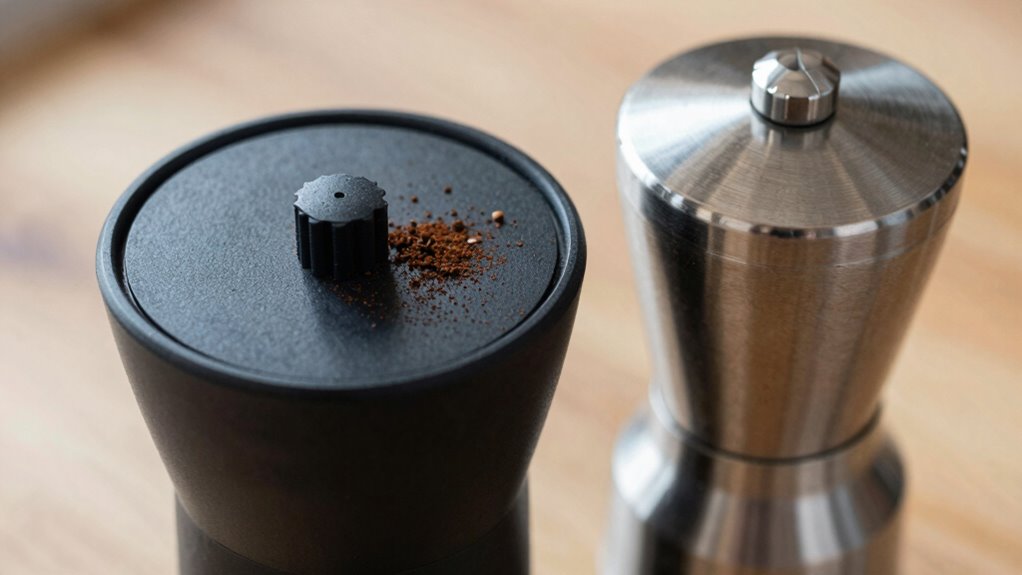
Because conical burrs crush beans more gently than flat burrs, they better preserve the delicate aromas and nuanced flavors in your coffee. Their gentle grinding process minimizes heat and friction, which helps maintain aroma preservation and prevents flavor degradation. This gentle grinding also reduces the risk of uneven extraction, ensuring a more consistent flavor profile. Additionally, the heat generation during grinding is significantly lower with conical burrs, further protecting aromatic compounds. This results in a richer, more complex cup that captures subtle notes often lost with harsher grinding methods. Imagine:
Conical burrs gently grind beans, preserving delicate aromas and complex flavors for a richer coffee experience.
- The scent of fresh fruit and floral hints lingering longer in your cup
- Nuance enhancement revealing layers of chocolate, berry, or spice
- An overall cleaner, brighter taste profile that highlights the coffee’s true character
- Consistent grind size that contributes to more even extraction and flavor integrity
- The grinding process itself is less likely to generate excessive heat, further protecting aromatic compounds
- A precise grind that allows for better control over extraction and flavor development
The Flavor Profiles You Can Expect From Flat Burr Grinders
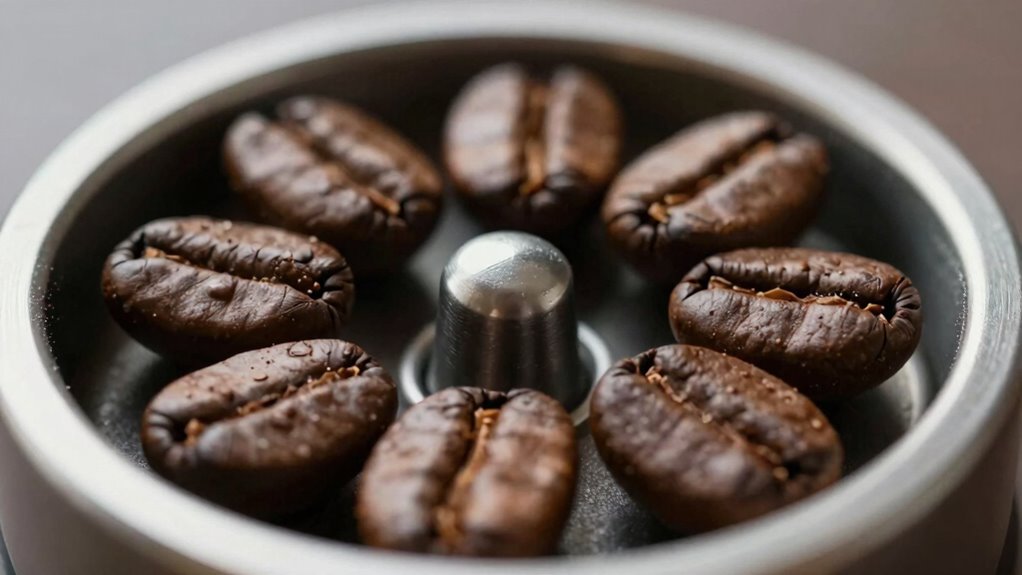
Flat burr grinders tend to produce a more uniform grind size, which directly influences the flavor clarity and consistency of your coffee. This uniformity allows you to extract specific flavor notes more accurately, often highlighting brighter, cleaner profiles with crisp acidity and well-defined aromas. The burr material, whether ceramic or stainless steel, impacts the grinder’s durability and how well it maintains sharpness over time, affecting your flavor outcomes. Proper maintenance routines, like regular cleaning, prevent buildup that can dull the burrs or cause uneven grinding, ensuring consistent flavor extraction. With a flat burr grinder, you can expect a balanced, predictable flavor profile that emphasizes clarity and nuance, making it ideal if you’re after a clean cup with distinct taste layers.
How Grinding Heat Changes Your Coffee’s Taste and How to Minimize It
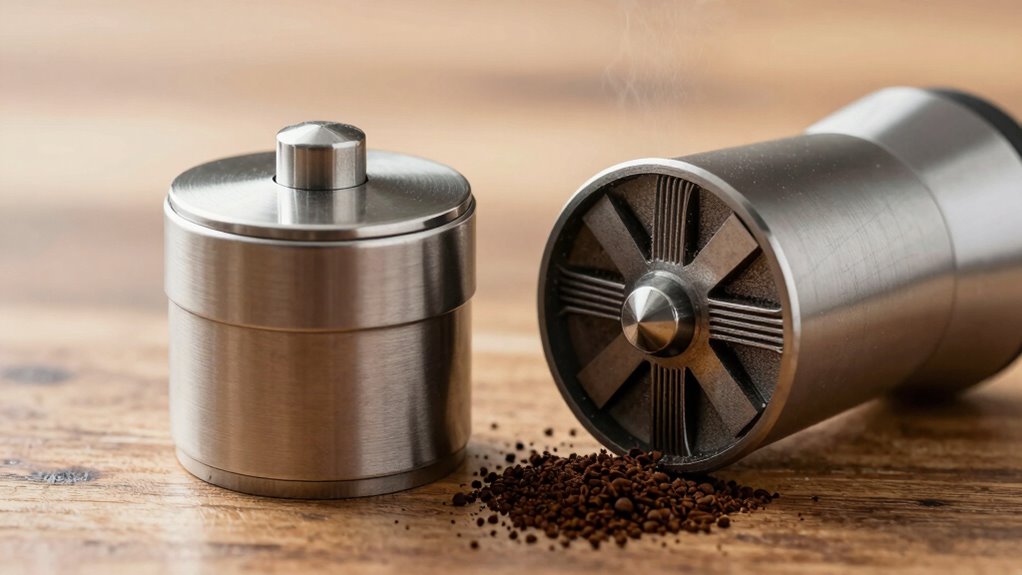
When you grind coffee, heat is generated through friction, and if this heat becomes too high, it can alter the beans’ delicate flavor compounds. Excessive heat can lead to over-extraction, making your coffee taste burnt or bitter. To minimize heat buildup, consider the burr material—stainless steel or ceramic burrs tend to produce less heat—and keep your grinder well-maintained. Regular maintenance routines, like cleaning out old grounds and calibrating grind settings, ensure efficient operation and reduce unnecessary friction. Visualize:
Heat from grinding can harm coffee flavor; maintain your grinder to keep grounds fresh and flavorful.
- Coffee grounds warming to an uncomfortable temperature
- Residue buildup causing uneven grinding
- Burrs overheating during prolonged use
Additionally, understanding grinding heat and its effects can help you select the best equipment for preserving your coffee’s flavor.
Does Burr Type Influence Brew Strength and Body?
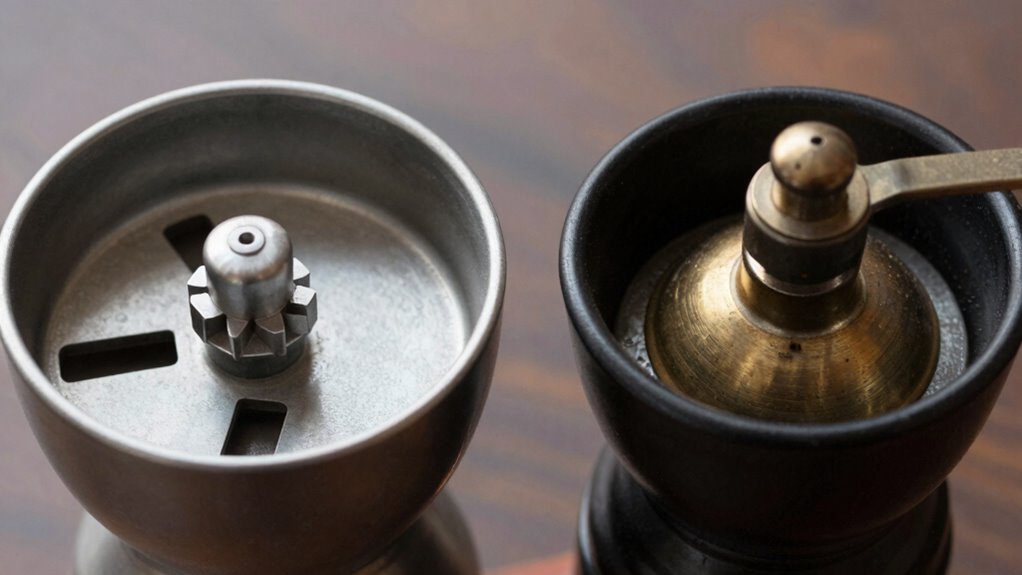
The type of burr you choose can directly influence your coffee’s strength and body. A consistent grind size guarantees even extraction, which influences flavor and mouthfeel. Understanding how burr design affects these factors helps you tailor your brew to your desired strength and richness. Additionally, different burr types can impact how well you can dial in your grind for optimal extraction grind consistency, ultimately affecting the overall taste and texture of your coffee. Recognizing burr design differences allows you to select the best grinder for your preferred brewing method and desired flavor profile, as burr shape plays a key role in grind uniformity and efficiency. Moreover, the material composition of the burrs can also influence durability and how well the grinder maintains consistent performance over time. The manufacturing process also contributes to the precision and quality of the burrs, further affecting your coffee experience.
Grind Consistency and Strength
Although both flat and conical burrs are designed to produce uniform grounds, their shape substantially impacts grind consistency and, consequently, brew strength and body. Flat burrs tend to offer more consistent grind size, which helps control brew time and results in a balanced extraction. Conical burrs, while still precise, can produce slightly varied grind sizes, leading to subtle differences in brew strength. This variation influences the coffee’s body and flavor profile. Visualize:
- A uniform, even layer of grounds for consistent extraction
- Slightly irregular grind particles that affect flow rate
- The way grind size impacts the overall strength and richness of your brew
Choosing the right burr type can help you achieve your preferred brew strength by maintaining steady grind size and predictable brew time.
Body and Flavor Extraction
Burr type can directly influence the body and flavor extraction of your coffee. Flat and conical burrs often produce different grind sizes, which affect how water interacts with the grounds. A consistent grind size is vital for ideal extraction, but the burr shape also impacts the brew strength and body. Conical burrs tend to produce a slightly coarser grind that allows for a smoother extraction, emphasizing body and nuanced flavors. Flat burrs, on the other hand, often create a more uniform grind, leading to a more balanced extraction and potentially a fuller body. Additionally, coffee freshness plays a role; fresher beans contain more volatile compounds, which can enhance body and flavor regardless of burr type. Ultimately, your choice of burr can subtly shape the richness and depth of your coffee.
Which Burr Shape Delivers Better Clarity and Brightness in Your Coffee?

When it comes to extracting bright, clear flavors from your coffee, the shape of your burr can make a noticeable difference. Conical burrs often produce a cleaner, more vibrant cup because their design minimizes heat and preserves delicate aromatics. Flat burrs, while consistent, may generate more heat, potentially dulling brightness. The burr material also plays a role—stainless steel tends to hold up well for maintaining clarity over time. To keep your grinder delivering ideal brightness, follow maintenance tips like regular cleaning to prevent buildup that can dull flavors. Visualize a conical burr gently slicing through beans, preserving their lively notes, versus flat burrs that might crush beans more uniformly but risk heat buildup. Additionally, burr geometry influences how evenly beans are ground, impacting flavor brightness and clarity. Proper grinder calibration is essential to ensure consistent grind size and optimal flavor extraction, ultimately enhancing the clarity and brightness of your brewed coffee.
Practical Tips for Choosing Flat or Conical Burrs Based on Your Tastes

When choosing between flat and conical burrs, consider how you prioritize flavor clarity and brightness, as each shape can bring out different nuances. Think about grind consistency and uniformity, since your brewing method benefits from a certain level of precision. Additionally, understanding wall art trends such as digital frames or interactive murals can inspire your coffee space aesthetic, creating a more enjoyable brewing environment. Finally, match your grinder to your preferred brewing style to guarantee ideal results and a satisfying coffee experience.
Flavor Clarity and Brightness
If you prioritize clarity and brightness in your coffee’s flavor profile, understanding how flat and conical burrs influence these qualities can help you make the right choice. Flat burrs typically produce a more uniform grind, enhancing flavor clarity by minimizing uneven extraction. Conical burrs, with their slower, less aggressive grind, often preserve brighter notes and nuanced flavors. To maximize brightness, use blooming techniques to release volatile aromatics and store your coffee properly with airtight containers, protecting delicate flavors. Visualize:
- Sparkling streams of coffee flowing smoothly through your pour-over
- Bright, citrusy notes shining through each sip
- The crisp, clean taste that highlights the coffee’s origin and freshness
Choosing the right burr type aligns with your flavor goals, especially if brightness is your priority.
Grind Consistency and Uniformity
Choosing between flat and conical burrs largely depends on your preference for grind consistency and uniformity. Flat burrs typically produce better grind size uniformity because their design guarantees more consistent particle sizes, which leads to even extraction. Conical burrs, on the other hand, tend to offer more particle distribution consistency, with a slightly broader range of grind sizes. If you value a highly uniform grind for precision brewing, flat burrs are often the better choice. However, if you prefer a more forgiving grind with some natural variation, conical burrs can suit your taste. Ultimately, think about how important particle consistency is to your brewing process, and choose the burr type that aligns with your desired grind quality.
Brewing Method Compatibility
Your brewing method plays a pivotal role in determining which burr type suits you best. If you prefer quick, daily brewing, a conical burr grinder might be ideal due to its lower grinder noise and easier burr maintenance. For precise control over grind size, especially in methods like espresso or pour-over, flat burrs excel with their uniform grind. Visualize:
- A busy kitchen with a conical grinder quietly whirring in the background
- An espresso enthusiast tweaking grind size with flat burrs for perfect extraction
- A user swapping burrs effortlessly during regular burr maintenance sessions
Consider how often you’ll clean and maintain your grinder, as flat burrs generally require more attention. Also, think about noise levels—conical burrs tend to be quieter, making them better suited for early mornings or shared spaces.
How Burr Design Unlocks Hidden Flavors in Your Coffee

The design of a burr grinder directly influences how coffee beans release their full range of flavors. A well-designed burr, whether flat or conical, guarantees consistent size and minimal heat during grinding, preserving delicate aromatics. Proper burr maintenance keeps your grinder functioning at its best, preventing stale or uneven grounds that hide subtle taste notes. Grinder ergonomics also matter; an easy-to-use, well-balanced machine encourages regular cleaning and adjustments, revealing hidden flavors in your beans. The shape and arrangement of the burrs dictate how uniform the grind is, affecting extraction and flavor clarity. By choosing the right burr design and maintaining it properly, you allow your coffee’s complex flavor profile to shine, unveiling nuances that would otherwise remain hidden.
Frequently Asked Questions
Are Conical or Flat Burrs Easier to Clean and Maintain?
You’ll find conical burrs easier to clean and maintain because their design allows for easier access to the burrs and less buildup of coffee grounds. Flat burrs, with their larger size and more complex grind consistency, can be trickier to clean thoroughly. Regular cleaning keeps both types performing well, but conical burrs tend to require less effort, making maintenance simpler for your coffee routine.
Which Burr Type Is More Durable Over Time?
Like a trusty old pair of shoes, conical burrs tend to be more durable over time. They handle burr wear better, making them ideal if you want longer intervals between maintenance. Flat burrs may require more frequent cleaning and replacement, but they offer sharper, more precise grinding. You’ll find that conical burrs generally need less maintenance, keeping your grinder running smoothly and consistently longer.
Do Different Burr Shapes Require Different Grinding Techniques?
Yes, different burr shapes require different grinding techniques. With flat burrs, you might need to adjust your grind size for better grind consistency, ensuring uniform particles for ideal flavor extraction. Conical burrs often handle a wider range of grind settings more easily. Understanding these nuances helps you achieve better flavor extraction and consistency, so you can fine-tune your grind to match your brewing method, resulting in a better coffee experience.
How Do Burr Materials Affect Flavor Preservation?
Your choice of burr material considerably impacts flavor retention. Metal burrs, like stainless steel, often preserve delicate coffee flavors better because they are durable and produce consistent grinds. Ceramic burrs offer excellent flavor retention as well, since they don’t heat up during grinding, preventing flavor loss. By selecting high-quality burr material, you guarantee your coffee’s rich, nuanced taste stays intact, resulting in a more enjoyable brewing experience.
Can Switching Burr Types Improve My Coffee’s Aroma and Taste?
Imagine your coffee’s aroma as a symphony waiting to be heard. Switching burr types can indeed improve your coffee’s aroma and taste by influencing burr shape impact—flat or conical. Conical burrs often preserve more delicate oils, enhancing aroma, while flat burrs provide consistent grind size for richer flavor. Experimenting with different shapes can open new layers of flavor, elevating your coffee experience to a sensory masterpiece.
Conclusion
Choosing between flat and conical burrs can truly elevate your coffee experience. For instance, if you prefer brighter, more nuanced brews, a conical grinder might be your best bet. Imagine brewing a pour-over with freshly ground conical burrs, revealing delicate floral notes you never noticed before. By understanding how each burr type influences flavor, you can tailor your grinder to uncover the full potential of your beans and enjoy richer, more satisfying coffee every time.