

To prevent hair wrapping around your vacuum’s brush roll, regularly check and clean the brush after each use, removing any loose or long hair with scissors or a seam ripper. Using tools like specialized attachments, keeping filters clean, and adjusting the height setting to suit your floor can also help reduce hair buildup. Consistently maintaining your vacuum not only keeps it running smoothly but also prolongs its lifespan — learn more tips below.
Key Takeaways
- Regularly inspect and remove hair from brush rolls using scissors or a seam ripper.
- Use specialized tools or attachments designed for effective hair removal during cleaning.
- Prevent hair wrapping by brushing or detangling long hair before vacuuming.
- Keep filters clean and replace them regularly to maintain optimal suction and reduce hair buildup.
- Employ brush roll covers or guards and adjust vacuum height settings to minimize hair wrapping.
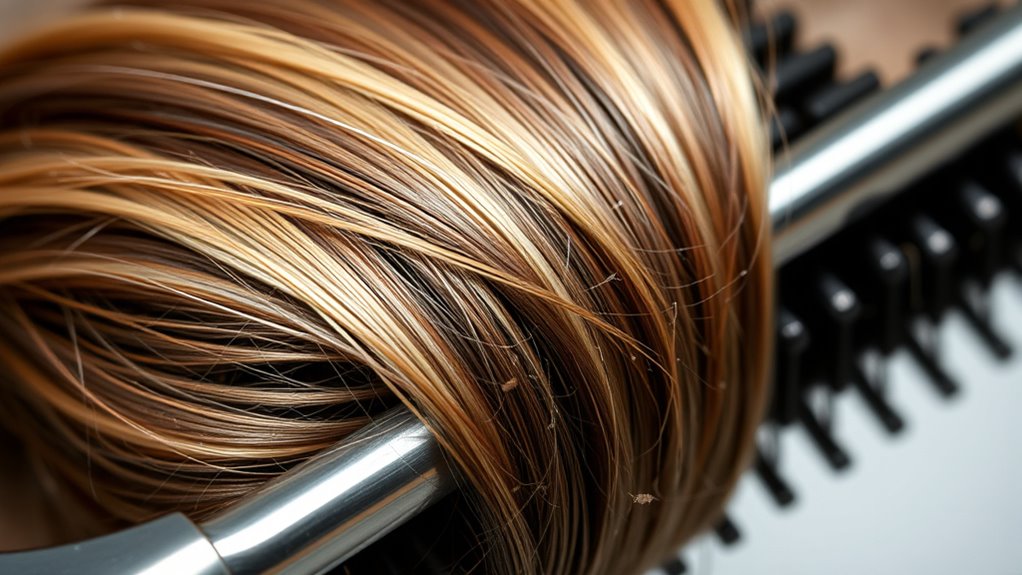
Have you ever noticed hair wrapping around your brush rolls and wondered why it happens? It’s a common issue, especially if you have long or thick hair, and it can be frustrating to deal with. The main reason is that loose hairs tend to cling to the brush roll as you vacuum or clean, especially if your hair sheds frequently. Over time, this buildup can affect the vacuum’s performance, making it less effective at cleaning and increasing the risk of damage. The key to preventing this is understanding how to manage hair removal and maintain your product properly. Regular upkeep not only keeps your vacuum working smoothly but also extends its lifespan.
Hair wrapping around brush rolls is common, especially with long or thick hair; regular cleaning helps prevent damage and enhances performance.
When it comes to avoiding hair wrap, one of the most effective strategies is to perform routine product maintenance. This means frequently checking and cleaning the brush rolls, especially after vacuuming spaces with a lot of hair or pet fur. Use scissors or a seam ripper to carefully cut away hair tangled around the brush, preventing it from wrapping further during use. Many vacuums come with a removable brush roll or brush bar, making hair removal simpler. By keeping these parts free of hair, you reduce the chances of buildup that can cause blockages or motor strain. Additionally, inspecting the brush and nearby components helps ensure no debris is left to hinder the vacuum’s suction.
Another tip is to contemplate using tools designed for hair removal. Combing or brushing long hair before cleaning can notably decrease the amount of loose hair that ends up on your brush rolls. Some vacuums also have specialized tools or attachments that help dislodge hair more easily. Keeping your vacuum’s filters clean is equally important because clogged filters can reduce airflow, making hair removal from the brush less effective and putting extra strain on the motor. Regularly replacing or cleaning filters is a simple step that supports overall product maintenance. Furthermore, understanding the importance of lifestyle factors such as hair shedding patterns can help you anticipate and better manage hair buildup on your vacuum parts.
To prevent hair wrap, you might also try using a brush roll cover or guard if your vacuum model offers one. These accessories act as a barrier, catching hair before it wraps around the brush. Additionally, adjusting the vacuum’s height setting to appropriate levels for your flooring type can reduce the amount of loose hair and debris that gets pulled into the brush area. Ultimately, consistent attention to hair removal and routine maintenance will keep your brush rolls clear, ensuring your vacuum continues to perform at its best. By staying vigilant and proactive, you’ll minimize hair wrap issues and prolong the life of your appliance, making cleaning less of a chore.
Frequently Asked Questions
How Often Should I Check for Hair Wraps on My Brush Rolls?
You should check your brush rolls for hair wraps at least once a week. Incorporate this into your maintenance schedule to prevent buildup and guarantee ideal performance. Regular hair removal frequency helps keep the brushes clean and functioning properly. If you notice more hair accumulating, increase your check-ins to twice a week. Staying consistent prevents larger issues and keeps your equipment running smoothly.
Are There Specific Tools to Remove Hair From Brush Rolls?
Removing hair from your brush rolls is like untangling a delicate web. Use specialized hair removal tools or a detangling brush to gently lift hair from the rollers. These tools, often with fine teeth or rubber tips, make the job easier and prevent damage. Regularly using a detangling brush or a dedicated hair removal tool guarantees your brush rolls stay clean, functioning smoothly, and help you maintain peak performance.
Can Hair Wraps Damage the Motor or Internal Parts?
Hair wraps can potentially cause motor damage or internal wear if left unchecked. When hair accumulates and becomes tangled, it puts extra strain on the motor as it struggles to operate efficiently. Over time, this can lead to overheating, increased wear on internal parts, and even motor failure. To prevent this, regularly remove hair buildup and avoid letting wraps get too tight, ensuring your device stays in good working condition.
What Types of Hair Are Most Prone to Wrapping on Brushes?
Curly, thick, and coarse hair types are most prone to wrapping on brushes because their hair properties make them more likely to tangle and cling. These hair types tend to have more texture and volume, increasing the chances of wrapping around brush rolls. To prevent this, regularly detangle and use appropriate styling tools. Keep your brushes clean and dry to minimize hair buildup and reduce wrapping issues.
Are There Preventive Coatings or Treatments to Reduce Hair Buildup?
Yes, you can use preventive coatings or anti-hair treatments to reduce buildup on brush rolls. These coatings create a slick surface that minimizes hair adhesion, making cleanup easier. Apply anti-hair treatments regularly, especially if you have curly or fine hair that’s prone to wrapping. Combining these treatments with routine maintenance helps prevent hair wrap issues and keeps your equipment running smoothly.
Conclusion
To keep your brush rolls hair-free, regular cleaning and prevention are key. Remove hair promptly and consider using a brush cover or detangling spray. Remember, a stitch in time saves nine—staying proactive prevents bigger messes later. With a little effort, you’ll keep your equipment running smoothly and extend its lifespan. Keep up with maintenance, and you’ll enjoy hassle-free cleaning every time. After all, a clean tool is a happy tool!