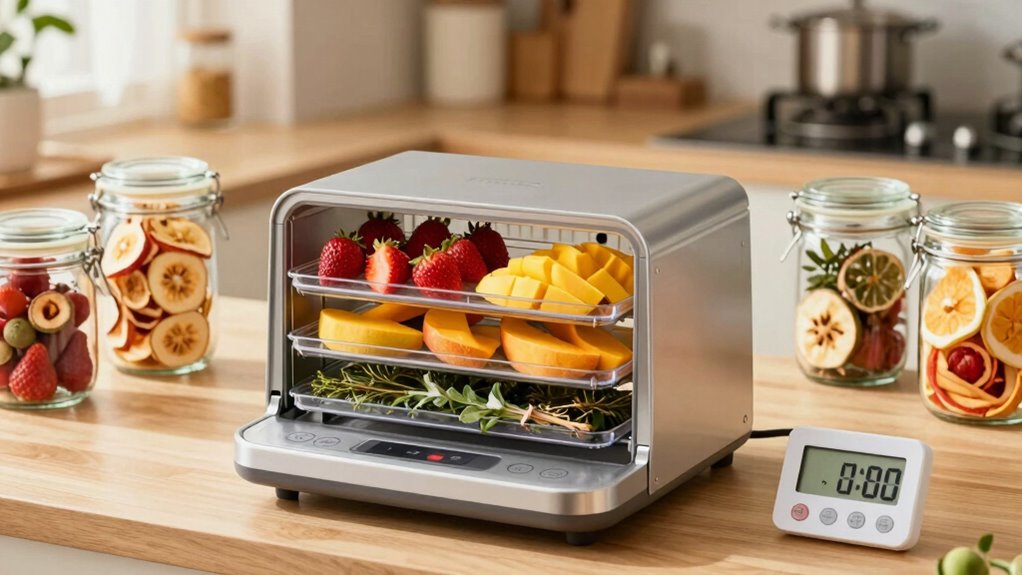

Proper prep and storage are vital for successful home freeze-drying. Always thoroughly clean and select quality ingredients, cut foods uniformly, and blanch vegetables to prevent spoilage. Use airtight packaging and store in cool, dark environments with controlled humidity. Regularly check your equipment and organize your stockpile with clear labels and proper rotation. Attention to these details helps maximize freshness and shelf life. If you’re keen to master these tips, you’ll find valuable insights ahead to keep your foods at their best.
Key Takeaways
- Proper washing, peeling, and uniform cutting of foods ensure even drying and prevent spoilage during home freeze-drying.
- Fully drying foods before sealing and using airtight packaging are crucial to avoid moisture and mold issues.
- Store freeze-dried items in cool, dark, and low-humidity environments with vacuum-sealed containers for maximum shelf life.
- Label and organize your stockpile with date and type to facilitate rotation and reduce waste.
- Regularly check equipment calibration and storage conditions to maintain food quality and extend shelf life.
Why Proper Prep Is Key to Successful Home Freeze-Drying
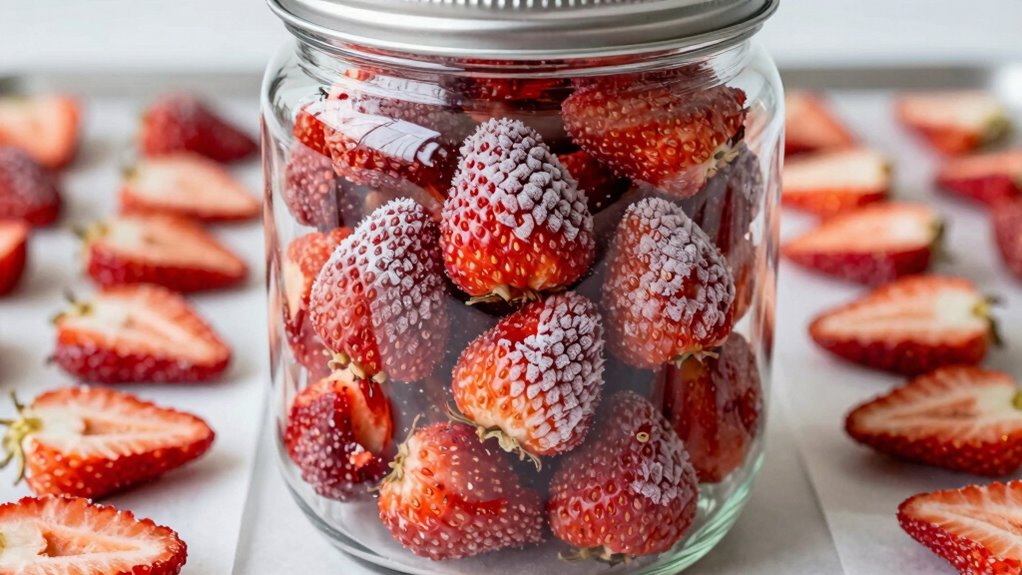
Proper preparation is vital for successful home freeze-drying because it guarantees your food maintains quality and safety throughout the process. Making certain food safety starts with thoroughly cleaning and selecting fresh, high-quality ingredients. Properly prepared foods reduce the risk of contamination and spoilage during drying and storage. Using the right packaging materials is equally important; moisture-proof, airtight containers protect your freeze-dried foods from humidity and pests. Clear, durable packaging also helps maintain the food’s texture, flavor, and nutritional value. Skipping proper prep can lead to spoilage, compromised safety, or degraded quality. Taking time to prepare your ingredients correctly and choosing suitable packaging materials ensures that your home freeze-dried foods stay safe, fresh, and enjoyable for longer periods. Additionally, understanding food safety standards can help you make informed decisions about handling and storing your preserved foods. Paying attention to hygiene practices during prep can further reduce the risk of contamination and ensure a successful freeze-drying experience. Incorporating proper storage techniques further enhances the longevity and quality of your preserved foods, especially considering the importance of precise temperature control in preserving food integrity. Incorporating knowledge about gelato flavors and their storage needs can also be beneficial if you plan to include frozen desserts in your preserved foods.
How to Choose and Prepare Foods for Freeze-Drying
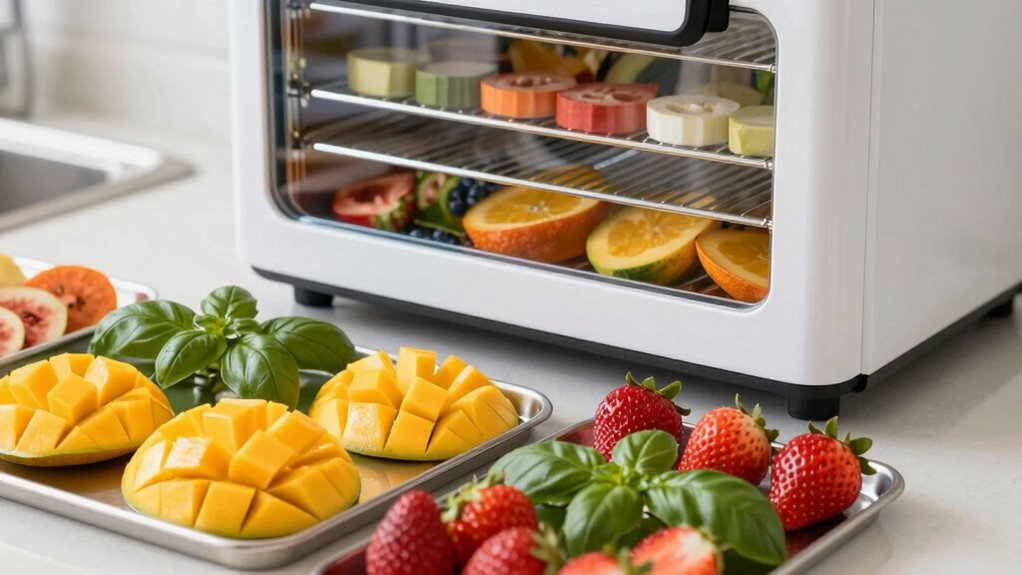
Choosing the right foods for freeze-drying starts with selecting fresh, high-quality ingredients. Fresh produce and meats retain more nutrients during the process, ensuring your preserved foods stay nutritious. Wash and peel fruits and vegetables to remove dirt and surface bacteria, which helps guarantee nutrient retention. Cut foods into uniform pieces to promote even drying and prevent spoilage. Blanch vegetables briefly to deactivate enzymes that can cause flavor loss over time, boosting flavor enhancement. Avoid overly watery or soft foods, as they can complicate the freeze-drying process. Proper preparation, including removing excess moisture and preparing foods in manageable portions, assures efficient drying while preserving both flavor and nutrients. Additionally, understanding food safety protocols helps prevent contamination and spoilage during storage, ensuring your dried foods remain safe to eat over time. Using appropriate storage containers and maintaining a clean environment during processing further enhances the longevity and safety of your preserved foods. This careful selection and prep set the foundation for successful home freeze-drying.
Common Mistakes to Avoid When Freeze-Drying at Home
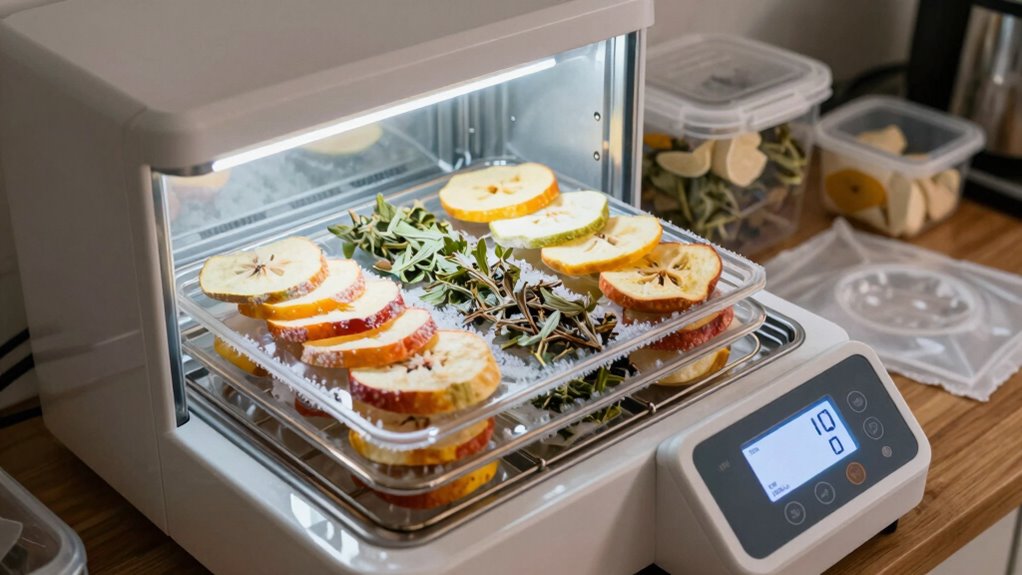
Are you aware of the common mistakes that can sabotage your home freeze-drying efforts? One major mistake is overhydration risks, which happen if foods aren’t properly prepared or dried thoroughly. Too much moisture can lead to spoilage or mold during storage. Additionally, choosing the wrong packaging material can compromise your efforts; non-airtight containers or materials that aren’t moisture-proof allow air and humidity to re-enter, ruining your freeze-dried foods. Many beginners overlook these details, thinking the process is foolproof. To avoid these pitfalls, guarantee foods are adequately prepped and fully dried before sealing. Use appropriate packaging materials, like vacuum-sealed bags or moisture-resistant containers, to maintain long-term freshness. Proper precautions prevent spoilage and help preserve the quality of your freeze-dried foods. Ensuring proper storage techniques is crucial for maintaining food quality over time, especially when considering natural preservation methods that can complement your freeze-drying process. Being aware of food safety protocols can further safeguard your stored foods against contamination and deterioration. Additionally, maintaining a consistent humidity level in storage areas can significantly extend the shelf life of your freeze-dried items, and implementing proper ventilation can help control humidity and prevent mold growth.
Best Storage Methods to Keep Your Freeze-Dried Foods Fresh
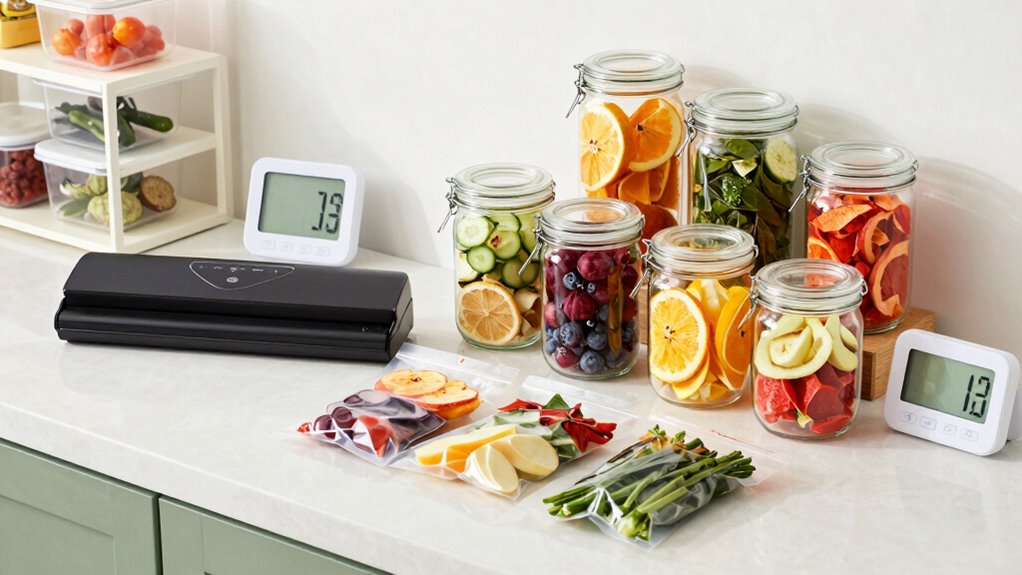
To keep your freeze-dried foods fresh, vacuum sealing is one of the most effective methods you can use. Ensuring ideal storage conditions, like a cool, dark, and dry environment, also helps preserve their quality. Paying attention to these storage techniques will extend the shelf life and maintain the flavor of your foods. Incorporating smart home safety features, such as leak detectors and air quality monitors, can further protect your stored foods from environmental hazards. Additionally, considering proportions in packaging can optimize space and reduce the risk of crushing or damage during storage. Properly organizing your pantry with labeled containers and designated zones can make inventory management easier and prevent accidental damage. Understanding battery inverter generators and their capacity options can help you choose appropriate backup power solutions for your storage needs. Understanding affiliate disclosure policies can guide you in choosing trustworthy storage products and accessories.
Vacuum Sealing Efficiency
Have you ever wondered how to keep your freeze-dried foods fresh for longer? Vacuum sealing is one of the most effective ways to do this. It removes excess air, which helps prevent oxidation and spoilage. When you vacuum seal your foods, you also improve moisture control, stopping any residual moisture from causing mold or freezer burn. Make certain to use high-quality vacuum bags designed for food storage, as they create a tight seal that lasts. Proper sealing minimizes exposure to oxygen and humidity, keeping your foods crisp and nutritious for months. Additionally, double-check the seal after vacuuming to ensure there are no leaks. This simple step considerably extends the shelf life of your freeze-dried foods and preserves their flavor and texture. Using reliable storage gear can further enhance the preservation process, ensuring your foods stay fresh for years to come. Incorporating oxygen absorbers can also help remove residual oxygen inside the package, further prolonging freshness. For optimal results, consider the storage environment to keep your foods in a cool, dark place that slows degradation. Being mindful of storage conditions can make a significant difference in maintaining quality over time.
Optimal Storage Conditions
Vacuum sealing greatly extends the shelf life of your freeze-dried foods, but proper storage conditions are equally important to maintain their freshness. To optimize storage, focus on moisture control and temperature regulation. Keep your foods in a cool, dark place away from direct sunlight, as heat accelerates spoilage. Use airtight containers or vacuum-sealed bags to prevent moisture infiltration that can cause rehydration or mold. Store in a low-humidity environment to avoid moisture buildup. Consistent temperatures, ideally between 50-70°F (10-21°C), help preserve texture and flavor. Regularly check stored foods for signs of moisture or spoilage. Understanding storage environments is crucial for long-term preservation. Additionally, considering environmental impact when choosing storage materials can contribute to more sustainable practices. Proper storage techniques can also prevent pest infestation and contamination. By following these guidelines, you ensure your freeze-dried foods remain fresh, flavorful, and safe for long-term storage.
Shelf Life and Tips for Rehydrating Your Freeze-Dried Foods
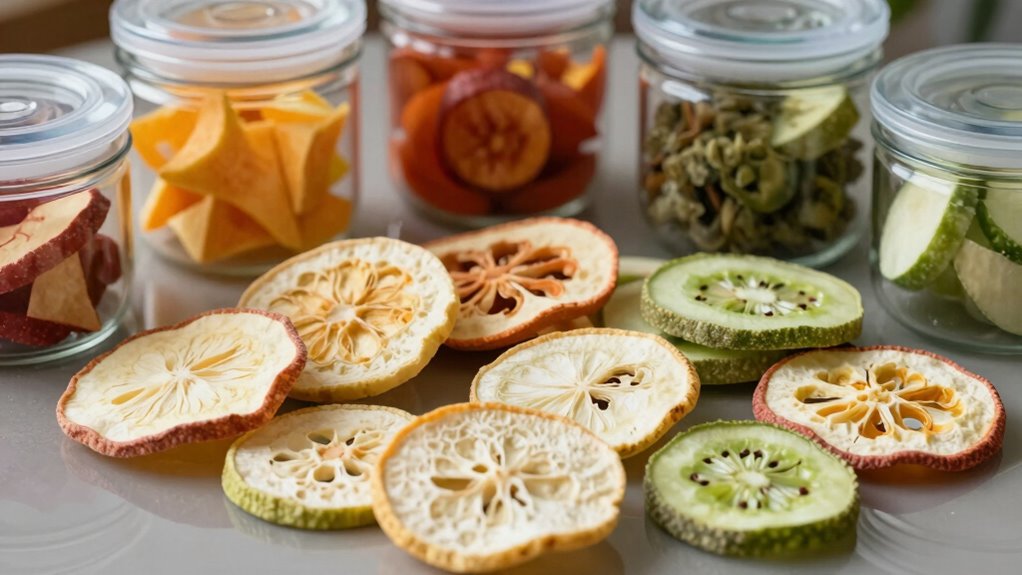
Properly stored freeze-dried foods can last for years, making them a reliable option for long-term meals and emergency supplies. When stored correctly, they preserve flavor remarkably well, so your meals stay tasty over time. To rehydrate effectively, use clean, cold or warm water, and allow the food to sit until it reaches the desired texture. Patience is key—rushing can compromise texture retention. For excellent results, add water gradually and stir gently to evenly rehydrate. Keep in mind that some foods rehydrate better than others, so experiment to find the best method for each. Proper rehydration ensures your foods maintain their original flavor and texture, making your homemade freeze-dried foods just as enjoyable as fresh.
How to Maintain Your Freeze-Dryer for Long-Term Use
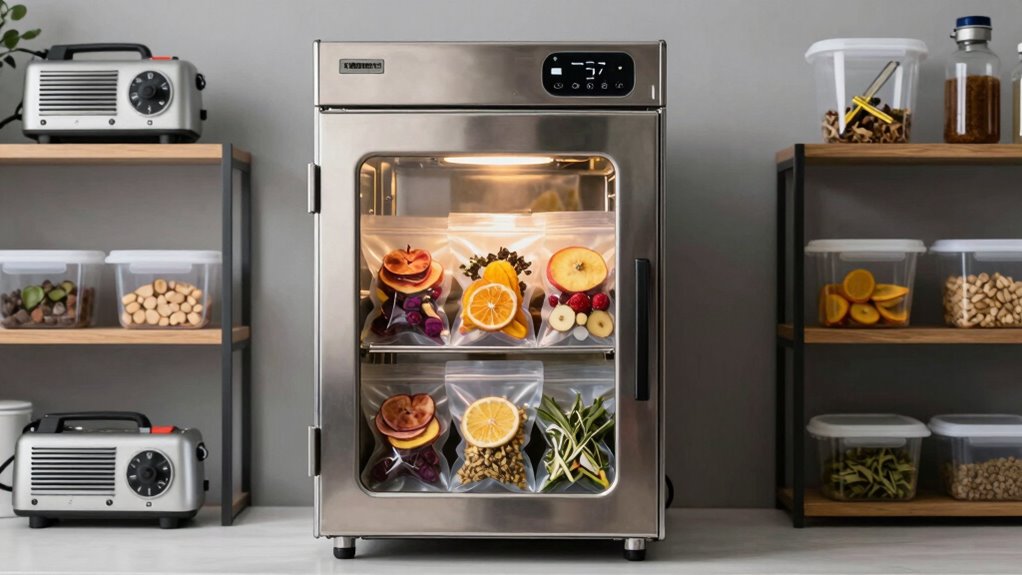
To keep your freeze-dryer running smoothly for years, you need to perform regular maintenance checks. Proper storage of parts and components also helps prevent damage and guarantees reliable performance. By staying on top of these tasks, you’ll extend your freeze-dryer’s lifespan and maintain ideal results.
Regular Maintenance Checks
Regular maintenance checks are essential to keep your freeze-dryer functioning efficiently over the long term. Performing seasonal checks ensures that components like seals and filters remain in good condition. Additionally, regularly calibrate the equipment to maintain ideal vacuum levels and temperature accuracy. Here are four key steps:
- Inspect door seals for cracks or wear, replacing if needed.
- Clean filters and vents to prevent dust buildup.
- Schedule seasonal checks to verify the vacuum pump’s performance.
- Calibrate sensors and controls to ensure consistent drying cycles.
Staying on top of these maintenance tasks helps prevent unexpected breakdowns and extends your freeze-dryer’s lifespan, making your home food preservation efforts more reliable and effective.
Proper Storage Techniques
Maintaining your freeze-dryer during periods of inactivity is key to guaranteeing it stays in top condition. Proper storage involves keeping dried foods in airtight containers to prevent moisture and contamination. Store your equipment in a clean, dry environment with stable temperature control to avoid damage. Avoid temperature fluctuations that can cause condensation or spoilage. Use the table below to emphasize storage considerations:
| Storage Environment | Container Type | Temperature Control |
|---|---|---|
| Cool, dry place | Airtight containers | Consistent, moderate |
This setup preserves food quality and prolongs your freeze-dryer’s lifespan. Regularly check seals and storage conditions, especially during long-term storage, to guarantee optimal performance. Proper storage is essential for safe, high-quality results in home freeze-drying.
Troubleshooting Common Freeze-Drying Problems
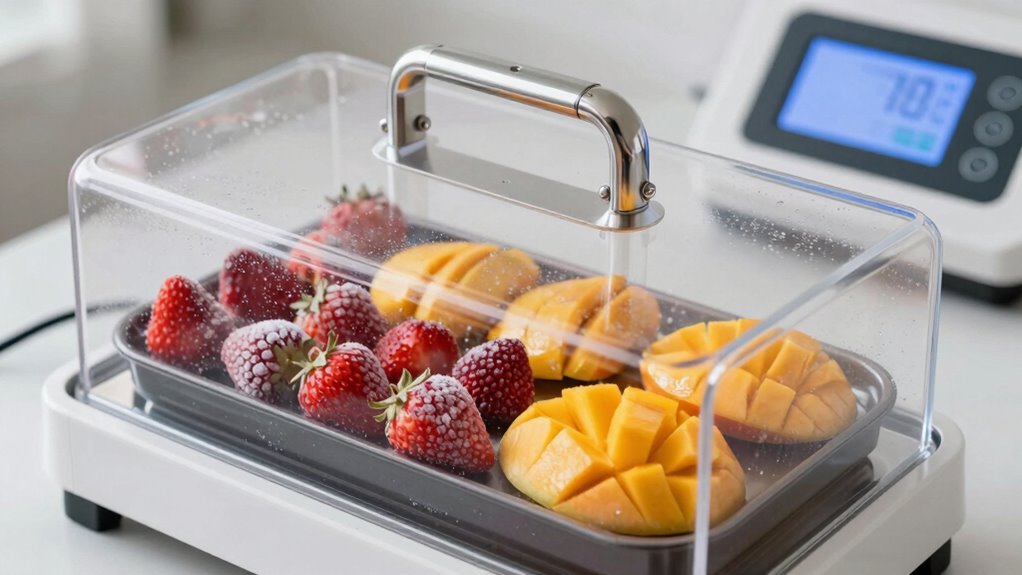
Even with careful preparation, freeze-drying at home can sometimes lead to problems. Common issues often stem from moisture control or equipment calibration errors. To troubleshoot effectively, consider these points:
Even with proper prep, home freeze-drying can face issues from moisture or calibration errors.
- Excess moisture: If your food feels damp or shows signs of ice crystals, you might need better moisture regulation during the process.
- Inadequate vacuum: Poor vacuum levels can prevent proper sublimation, leading to soggy or partially dried food.
- Incorrect equipment calibration: Ensure your freeze-dryer is calibrated correctly; inaccurate temperature or pressure settings compromise drying.
- Uneven drying: Items dried unevenly may require repositioning or rotating trays to promote consistent moisture removal.
Addressing these issues improves your results and prevents spoilage.
Organizing and Labeling Your Freeze-Dried Food Stockpile

Organizing and labeling your freeze-dried food stockpile is essential to guarantee quick access and maintain food quality over time. Consistent labeling helps you easily identify contents, expiration dates, and batch numbers, which is vital for effective inventory management. Use clear, legible labels with consistent formatting to avoid confusion. Arrange your stockpile by type or usage frequency, keeping older items at the front for first-in, first-out rotation. Regularly update your inventory list to track quantities and expiration dates. This system minimizes waste and ensures you always know what’s available. Proper organization reduces stress during emergencies and makes meal prep smoother. By maintaining labeling consistency and a well-managed inventory, you’ll keep your freeze-dried food fresh, accessible, and ready when you need it.
Frequently Asked Questions
What Are the Safest Methods for Storing Freeze-Dried Foods Long-Term?
To store freeze-dried foods safely long-term, you should vacuum seal them to remove moisture and oxygen, which helps prevent spoilage. Use airtight containers to protect against humidity and pests. Store your sealed packages in a cool, dark place, away from direct sunlight and temperature fluctuations. This combination guarantees your freeze-dried foods stay fresh and nutritious for years, making them reliable emergency supplies or everyday pantry staples.
How Can I Tell if My Freeze-Dried Food Has Spoiled?
Imagine opening your freeze-dried food and finding a soggy, moldy surprise—that’s how you’ll know it’s spoiled. Check packaging integrity; any holes or leaks mean air and moisture got in. Do a visual inspection: look for discoloration, clumping, or unusual odors. If anything seems off, discard it. Relying on your senses and packaging integrity helps prevent eating spoiled food, even if it’s tempting to overlook small signs.
Are There Foods That Shouldn’t Be Freeze-Dried at Home?
You shouldn’t freeze-dry toxic foods or dairy products at home. Toxic foods, like certain mushrooms or spoiled items, can pose health risks if not properly processed, while dairy products tend to spoil quickly and don’t freeze-dry well, risking contamination. Avoid attempting to freeze-dry these, as improper handling can lead to foodborne illnesses. Stick to fruits, vegetables, and meats that are safe and suitable for home freeze-drying.
How Does Humidity Affect the Shelf Life of Freeze-Dried Foods?
Humidity impact can considerably reduce the shelf life of your freeze-dried foods. When moisture enters storage, it compromises the dryness, leading to potential spoilage or mold growth. That’s why moisture control is essential; use airtight containers and desiccants to keep humidity out. Properly managing humidity ensures your freeze-dried foods stay fresh longer, maintaining quality and safety. Keep storage cool, dry, and airtight for ideal preservation.
What Are the Best Ways to Rehydrate Freeze-Dried Meals Quickly?
To rehydrate freeze-dried meals quickly, use instant rehydration techniques like adding hot water directly to your meal and letting it sit for just a few minutes. For quick soaking, cover the food with hot water, stir, and wait 3-5 minutes. Stir occasionally to guarantee even absorption. Using hot water speeds up the process, making your meal ready faster without sacrificing flavor or texture.
Conclusion
Think of your freeze-drying journey like tending a garden—you plant, nurture, and harvest with care. When you prep and store properly, your food preservation efforts flourish, providing nourishment long after the harvest. I once overlooked storage and lost a batch of perfect strawberries; don’t let that happen to you. With the right techniques, your freeze-dried foods will stay fresh and vibrant, ready to revive at a moment’s notice. Your pantry’s future is in your hands—tend it well.