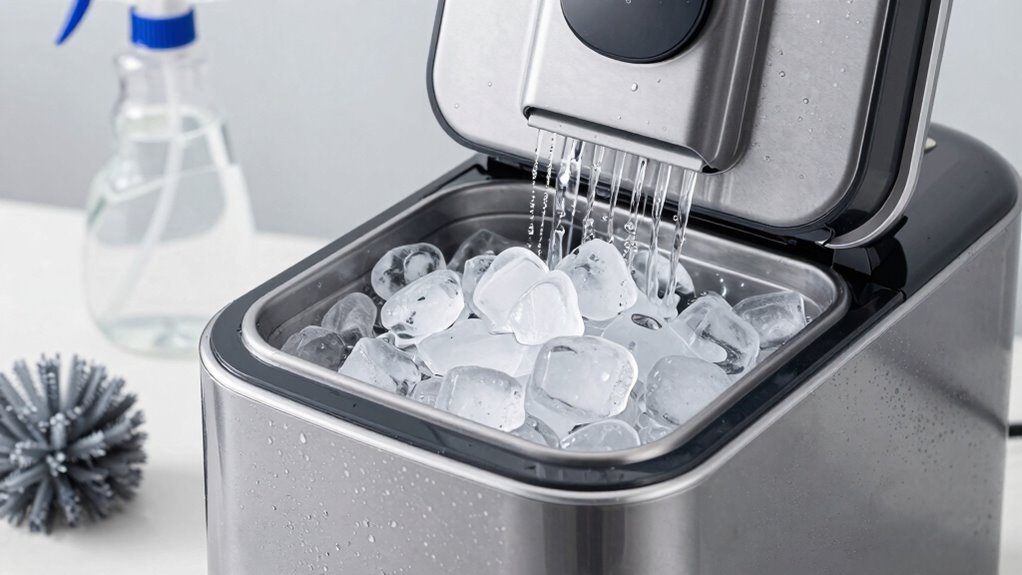

Nugget ice makers can get gross quickly if you don’t clean them regularly, as moisture encourages bacteria, mold, and mineral buildup. To keep yours fresh, unplug the machine, remove ice, and scrub the bin with a vinegar-water solution. Rinse thoroughly and wipe down all accessible parts. Establish a routine cleaning every 3 to 6 months, and use filtered water to prevent mineral deposits. If you’re ready to learn step-by-step instructions, keep exploring!
Key Takeaways
- Regularly unplug the ice maker, remove old ice, and clean all removable parts with a vinegar-water solution.
- Deep clean internal components and ice bin monthly using a vinegar rinse to prevent bacterial buildup.
- Use filtered or softened water to reduce mineral deposits and decrease the risk of microbial contamination.
- Maintain routine filter replacements every 2-3 months and inspect water lines for clogs or buildup.
- Keep the appliance dry when not in use and clean surfaces regularly to prevent mold, slime, and foul odors.
Why Nugget Ice Gets Gross and How to Spot the Signs

Nugget ice can become gross over time because it’s exposed to moisture, bacteria, and mold that thrive in damp environments. As bacteria growth occurs, you might notice a foul odor developing around your ice maker or lingering in your freezer. This odor is a clear sign that bacteria and mold are taking hold, which can compromise the ice’s freshness. Over time, the ice may also develop a cloudy appearance or a slimy texture, indicating bacterial buildup. If you see any of these signs, it’s a sign that your nugget ice is no longer hygienic and needs attention. Recognizing these signs early helps prevent health issues and ensures your ice remains clean, fresh, and safe to use. Regularly cleaning your ice maker and maintaining proper hygiene can help prevent these issues from occurring. Additionally, understanding indoor air quality factors like moisture and microbial growth can help you identify potential risks before they affect your ice or overall health. Being aware of microbial growth in your environment can further aid in maintaining a hygienic ice-making process. Maintaining proper hygienic conditions is essential for preventing the spread of bacteria and mold in your ice maker.
Preparing Your Nugget Ice Maker for Cleaning
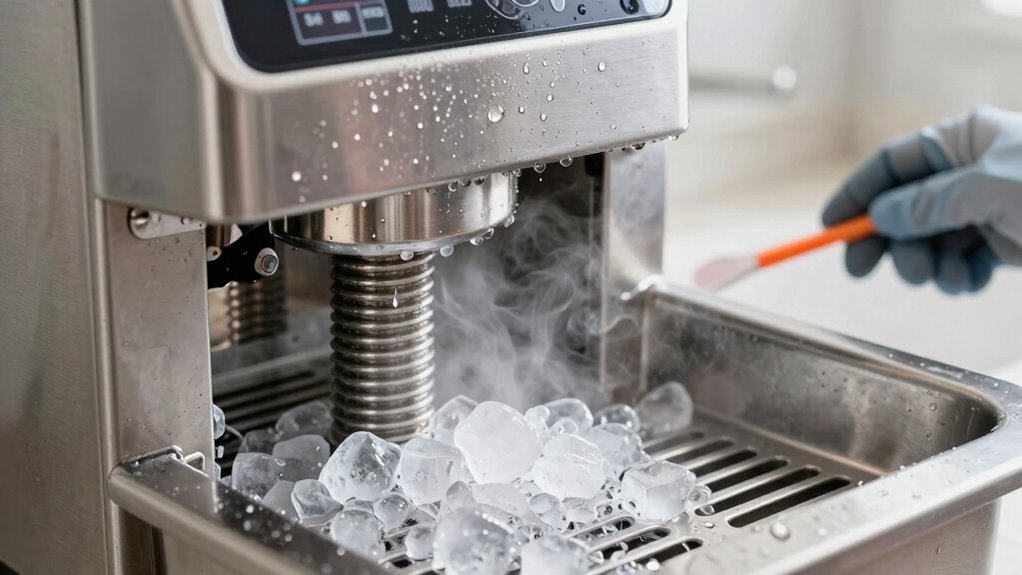
Before you start cleaning your nugget ice maker, it’s important to prepare it properly to guarantee the process goes smoothly. Begin by unplugging the machine and removing any remaining ice, ensuring the ice texture is clear of debris. Gather your cleaning tools, such as soft cloths, brushes, and non-abrasive sponges, to avoid scratching surfaces. Check the water reservoir and drain to ensure they’re empty and accessible. Inspect the ice bin for any buildup or residue. Removing loose debris and wiping down the interior will make the cleaning process more effective. Proper preparation prevents cross-contamination and guarantees you can thoroughly clean all surfaces, setting the stage for a deep clean that keeps your nugget ice fresh and safe. Additionally, familiarizing yourself with the cleaning routine specific to your ice maker model can improve the efficiency of the process and extend the appliance’s lifespan. Consulting the user manual can help clarify specific cleaning steps and precautions. To further ensure hygiene, consider regular maintenance to keep your ice maker in optimal condition and prevent buildup over time. Understanding the contrast ratio of your ice maker can also help you identify any irregularities in ice quality and appearance.
How to Deep Clean Your Nugget Ice Maker in Easy Steps

Deep cleaning your nugget ice maker is essential for maintaining its performance and ensuring the ice stays fresh. Proper ice machine maintenance prevents buildup of mold, slime, and mineral deposits that can affect ice quality. Start by unplugging the unit and removing all removable parts. Use cleaning tools like a soft brush or cloth to scrub the ice bin and any accessible components. Prepare a cleaning solution with equal parts water and white vinegar, then run it through the ice-making cycle or manually rinse internal parts. Let the vinegar solution sit for about 15 minutes to break down scale and residue. Rinsing thoroughly with clean water is crucial to eliminate any lingering vinegar and debris, preventing microbial growth. Regular deep cleaning keeps your ice machine in top shape and your ice tasting fresh. Incorporating proper maintenance techniques ensures your ice maker remains hygienic and efficient over time. Additionally, monitoring scale buildup helps prevent clogs and prolongs the lifespan of your appliance.
Tips to Prevent Mold, Slime, and Mineral Buildup

To prevent mold, slime, and mineral buildup in your nugget ice maker, you should establish a regular cleaning routine and keep the unit dry when not in use. Good water quality is essential, as minerals in hard water can cause buildup that affects ice texture and taste. Using filtered or softened water reduces mineral deposits and keeps ice clearer and crunchier. Keep the interior dry and wipe down surfaces after use to prevent moisture from lingering, which can encourage mold growth. Regularly inspect and clean any filters or water lines to maintain water quality. Avoid leaving water in the reservoir for extended periods, as stagnant water promotes slime and bacterial growth. Additionally, maintaining proper indoor air quality and humidity levels can help reduce excess moisture that contributes to mold and bacterial growth inside the appliance. Ensuring proper ventilation can also help prevent excess humidity from building up around the unit. Proper storage practices, such as drying the unit thoroughly before long-term storage, can further inhibit bacterial development. Implementing a routine cleaning schedule can significantly extend the lifespan of your ice maker and keep it functioning optimally. With consistent maintenance, you’ll enjoy clean, fresh-tasting nugget ice free from unwanted buildup.
How Often Should You Clean Your Nugget Ice Maker?
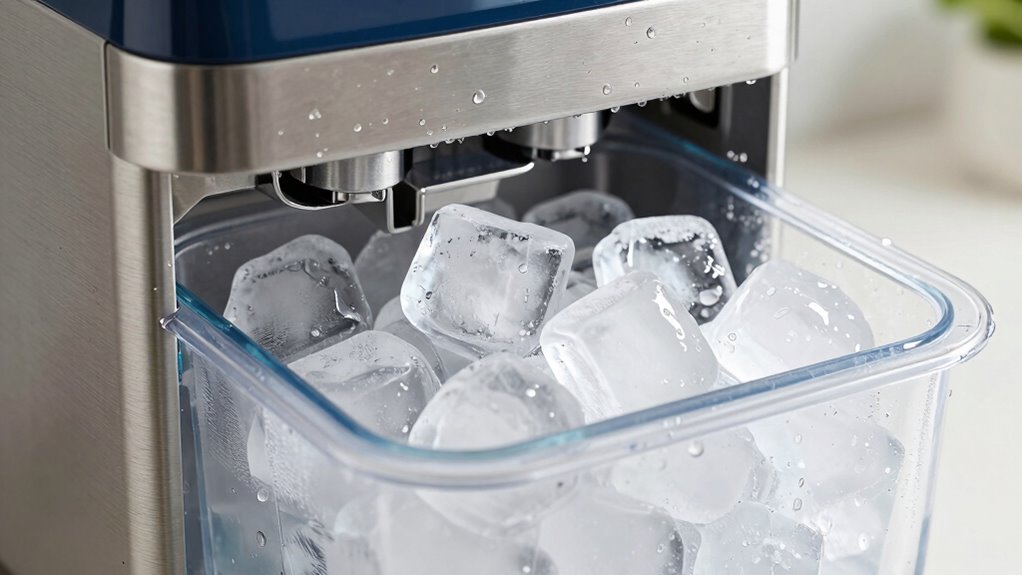
Regular cleaning is essential to keep your nugget ice maker functioning ideally and producing high-quality ice. You should clean your ice maker every three to six months, depending on usage and water quality. Regular maintenance prevents mold, slime, and mineral buildup, especially around the ice storage area where moisture accumulates. Be sure to check and replace water filtration as recommended by the manufacturer, typically every 2-3 months, to ensure clean, fresh water and prevent blockages. Consistent cleaning also helps remove bacteria and debris that can compromise ice taste and safety. If you notice unusual odors or ice clumping, it’s a sign to clean your unit sooner. Proper maintenance extends your ice maker’s lifespan and keeps your ice crisp and clean. Incorporating free floating debris can also help maintain optimal ice production and quality. Additionally, understanding the importance of preventative maintenance can help you avoid costly repairs and ensure your ice maker operates smoothly over time. Regular inspections for mineral buildup will further help in maintaining the efficiency of your unit. Incorporating a cleaning schedule and routine checks can significantly enhance the longevity and performance of your ice maker. Moreover, using descaling solutions can effectively remove mineral deposits and improve overall operation.
Troubleshooting Common Cleaning Problems and When to Call a Professional
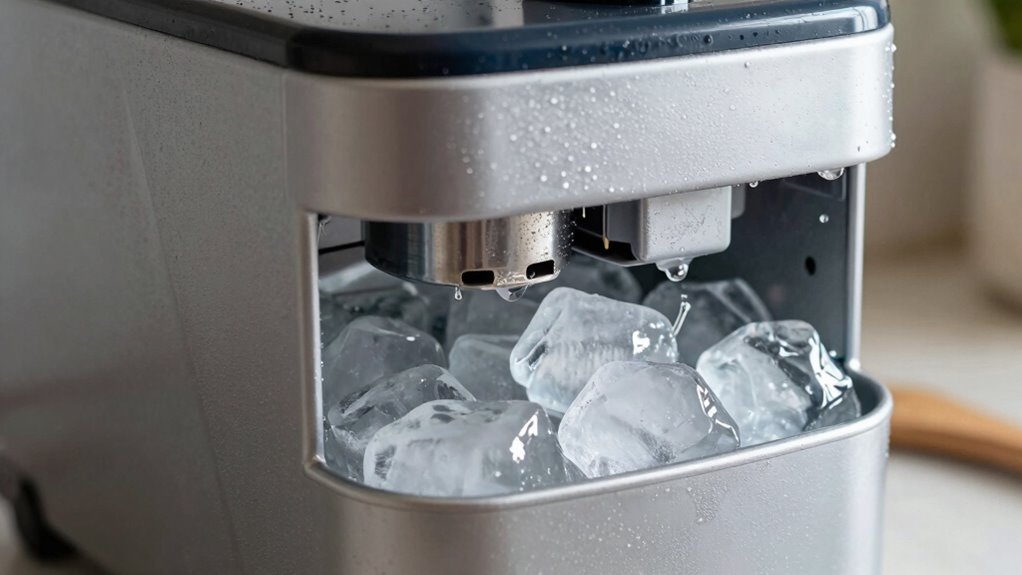
Even with a consistent cleaning routine, certain problems can still arise that you might not be able to resolve on your own. If your nugget ice maker isn’t producing clean ice, check the ice machine filters—they may be clogged or dirty, reducing efficiency. Water hardness can also cause mineral buildup, leading to cloudy or sticky ice and scaling inside the machine. If cleaning doesn’t improve performance or if you notice persistent odors, it’s time to call a professional. Experts can inspect for deeper issues like faulty water valves or internal blockages. Regularly replacing filters and managing water hardness can prevent many problems, but when issues persist despite your efforts, seeking professional help guarantees your ice maker stays in top shape and continues producing fresh, clean nugget ice. Additionally, understanding home soundproofing techniques can help reduce noise distractions if your appliance is located in a shared or sensitive space. Maintaining proper water quality and addressing underlying issues early can also help extend the lifespan of your ice maker and improve its overall performance. To further ensure your machine stays in optimal condition, consider checking regional water hardness levels in your area, which can significantly impact cleaning needs and maintenance routines.
Frequently Asked Questions
Can I Use Household Cleaning Products to Clean My Nugget Ice Maker?
You shouldn’t use household cleaners on your nugget ice maker because they can damage the machine and reduce cleaning effectiveness. Instead, opt for a mixture of vinegar and water or specialized ice maker cleaning solutions. These are safe and effective for removing buildup without harming your appliance. Always follow the manufacturer’s instructions for cleaning to make certain your nugget ice stays fresh and sanitary.
How Do I Prevent Bad Odors From Developing in My Ice Maker?
To prevent bad odors in your ice maker, guarantee proper airflow by keeping vents clear of dust and debris, avoiding airflow blockage. Regularly clean the interior to prevent mold buildup, especially in hard-to-reach areas. Use a mixture of vinegar and water for routine cleaning, and keep the ice bin dry when not in use. These steps help eliminate odors and keep your ice fresh and clean.
Is It Safe to Use Vinegar for Cleaning My Nugget Ice Machine?
Yes, using vinegar for cleaning your nugget ice machine is generally safe if used properly. Vinegar safety is well-established for household cleaning, and cleaning with vinegar effectively removes mineral buildup and odors. Just dilute it with water—about one part vinegar to two parts water—and run the machine through a cleaning cycle. Rinse thoroughly afterward to confirm no vinegar taste remains, keeping your ice safe and fresh.
What Are the Signs That My Ice Maker Needs Professional Servicing?
If your ice maker suddenly starts making unusual noises or you notice ice buildup that won’t melt away, it’s time to call in a pro. These signs often point to mechanical issues or blockages that simple cleaning can’t fix. Don’t ignore these clues—they could lead to more costly repairs if left untreated. Trust a professional to diagnose and restore your machine’s performance before the problem worsens.
Can Mineral Deposits Damage My Nugget Ice Maker Over Time?
Yes, mineral deposits like calcium buildup and mineral accumulation can damage your nugget ice maker over time. These deposits clog components, impairing efficiency and potentially causing leaks or motor strain. To prevent this, regularly descale your machine with a vinegar solution or commercial descaler. Keeping mineral levels in check and cleaning frequently guarantees your ice maker stays in top shape and produces clean, tasty ice without damage.
Conclusion
Keeping your nugget ice maker clean is the key to preventing it from becoming a breeding ground for mold and slime. Follow the routine, stay on top of maintenance, and you’ll keep your ice fresh and sparkling. Remember, an ounce of prevention is worth a pound of cure—don’t wait until things get truly gross. With a little effort, you’ll enjoy clean, delicious ice whenever you need it, no matter what.