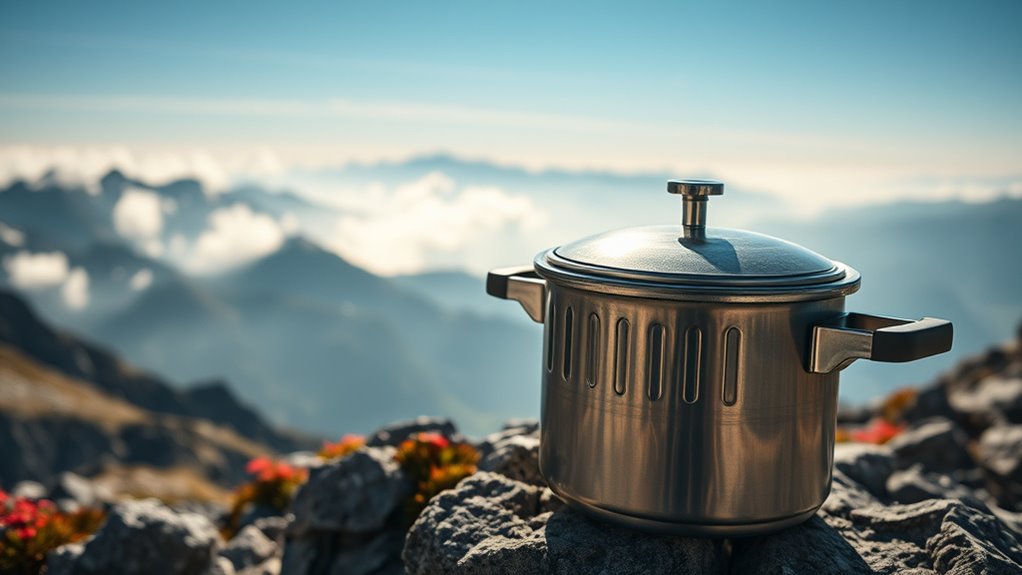

At high altitude, your pressure cooker needs adjustments because lower atmospheric pressure causes water to boil at lower temperatures. To get consistent results, increase the cooking time by about 5-10% or raise the pressure setting if your cooker allows it. If you can’t modify pressure, just extend the cooking duration accordingly. These tips help ensure your food cooks properly despite the thinner air. Keep exploring for detailed strategies to optimize your altitude cooking success.
Key Takeaways
- Increase pressure cooker cooking times by 5-10% per 1,000 ft elevation to compensate for lower boiling temperatures.
- Use adjustable pressure settings to raise internal pressure, helping water boil at higher temperatures at altitude.
- If pressure settings are fixed, extend cooking durations accordingly to ensure thorough doneness.
- Monitor recipes closely and adjust based on experience, since altitude affects cooking efficiency.
- Consider recalibrating your pressure cooker for high-altitude use to maintain consistent results.
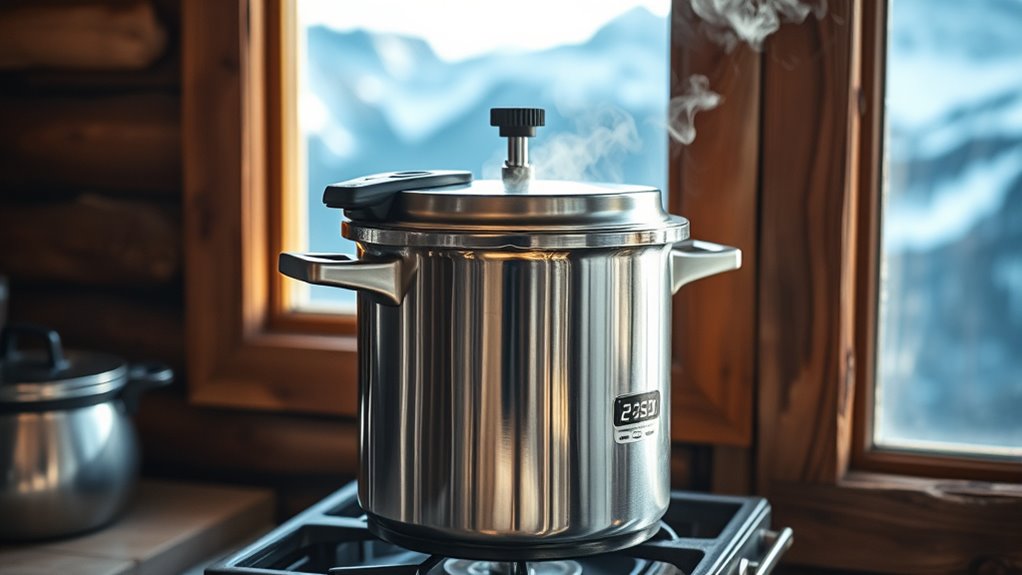
Ever wondered why your pressure cooker seems to take longer to cook at higher elevations? The answer lies in how altitude impacts cooking time. As you ascend, the atmospheric pressure drops, which directly affects how your pressure cooker operates. Since pressure cookers rely on building a specific pressure to raise boiling points and cook food faster, lower atmospheric pressure means they need to work harder to reach those suitable cooking conditions. This is where altitude adjustments come into play. To guarantee your meals turn out well, you need to modify your pressure cooker’s settings or cooking time based on the elevation you’re at.
At higher elevations, the reduced atmospheric pressure causes water to boil at lower temperatures. For example, at sea level, water boils at 212°F (100°C), but at 7,500 feet, it may boil around 198°F (92°C). Because of this, foods take longer to cook thoroughly, even if you’re using a pressure cooker. You might notice that recipes calibrated for sea level don’t turn out as expected when you’re in the mountains. To compensate, you have to make altitude adjustments to your cooking time. Typically, you’ll need to increase the cooking time by a certain percentage—often around 5% to 10% for every 1,000 feet above sea level.
Adjusting your pressure cooker isn’t just about cooking time; it also involves setting the correct pressure level. Many pressure cookers have adjustable pressure settings, so you can increase the pressure to compensate for the lower atmospheric pressure. By doing so, you help the cooker reach a higher internal pressure, which raises the boiling point of water and speeds up cooking. If your model lacks adjustable settings, simply extending the cooking time is necessary. For example, if a recipe at sea level calls for 30 minutes, you might need to cook it for about 33-35 minutes at 5,000 feet elevation.
Frequently Asked Questions
How Do I Calibrate My Pressure Cooker for Altitude Changes?
To calibrate your pressure cooker for altitude changes, start by adjusting the pressure settings based on your local altitude. Use calibration techniques like testing with water to verify it reaches the correct pressure at a specific temperature. Keep notes of your adjustments, and fine-tune as needed. This way, you effectively account for altitude adjustments, ensuring your cooking times and results stay consistent regardless of elevation.
Are There Specific Recipes Better Suited for High-Altitude Cooking?
Ever wonder if your favorite dishes can be elevated at high altitude? You’ll find altitude-specific recipes and gourmet adjustments make a difference, especially for delicate items like risottos or baked goods. These recipes are tailored to handle lower boiling points and reduced air pressure, ensuring perfect results. Using altitude-specific recipes helps you avoid undercooking or overcooking, making your pressure cooker’s performance at high altitude both reliable and delicious.
How Does Altitude Affect Pressure Cooker Safety Features?
At high altitude, pressure cooker safety features are vital for altitude safety. You need to regularly check the pressure release valve to make sure it functions properly, as reduced air pressure can affect its performance. Always follow manufacturer guidelines for altitude adjustments, and never bypass safety mechanisms. Proper maintenance and awareness of pressure release are key to safe cooking, helping you avoid accidents and guarantee your pressure cooker operates reliably at high elevations.
Can I Use My Standard Pressure Cooker at High Elevations?
Yes, you can use your standard pressure cooker at high elevations, but you’ll need to make altitude adjustments. Elevated altitudes require longer cooking times because water boils at lower temperatures. Be sure to increase your cooking times accordingly and monitor your pressure cooker’s pressure levels. This way, you guarantee your meals cook thoroughly and safely, despite the altitude differences affecting standard cooking times.
What Troubleshooting Tips Exist for Pressure Cooker Issues at Altitude?
Think of troubleshooting your pressure cooker at altitude like tuning a fine instrument. First, check the steam release valve to make sure it’s not clogged or stuck. Next, inspect the gasket for cracks or wear, replacing if needed. These small steps help maintain proper pressure, preventing issues like leaks or undercooking. Regularly maintaining your cooker keeps it performing smoothly, no matter how high you climb!
Conclusion
So, when you’re cooking at high altitudes, remember that timing is your trusty sidekick—adjust it just like a seasoned chef. Don’t forget, the pressure cooker’s magic is in its ability to adapt, turning tough ingredients tender and soups flavorful. Think of it as your culinary Swiss Army knife—versatile and reliable. With these tips, you’ll conquer altitude cooking like a pro, all while channeling a bit of that old-world charm. Happy cooking!