
TL;DR
Robotic vacuum cleaners are most useful for frequent upkeep: they can collect everyday dust, crumbs, and hair while you do something else. Compare cleaning results, navigation, hair handling, maintenance costs, and privacy for your home; a map, high suction figure, or self-emptying dock alone does not guarantee a hands-off clean.
A robot vacuum can finish its route while you’re making dinner, but that doesn’t mean it has cleaned every corner—or picked up the charging cable you forgot on the floor. Robotic vacuum cleaners are built to take on frequent, everyday mess, and the right model can make floors feel noticeably less dusty between deeper cleans.

Get cleaning gear delivered free with Prime
- Fast, free delivery on millions of items
- Prime Video, Amazon Music and more included
- Member-only deals all year
This guide explains what the machines do well, where they still struggle, and how to compare them against the realities of your home. You’ll learn why navigation, brush design, upkeep, and privacy matter alongside suction, and how to decide whether a vacuum-and-mop combo or self-emptying dock is worth paying for.
Think of a robot as a small maintenance cleaner, more like a regular sweep than a full weekend clean. If you have stairs, thick carpets, or frequent spills, you’ll still want another way to handle those jobs.
Use a robot vacuum for repeated upkeep of everyday dust, crumbs, and hair; keep another tool for stairs and deep cleaning.
Compare results on your actual floor types because suction ratings alone don’t predict cleaning quality.
A mapped route does not guarantee reliable avoidance of cords, toys, or other small objects.
Count replacement bags, filters, brushes, mop pads, and batteries when estimating long-term cost.
Check data collection and cloud requirements if your model uses maps, cameras, or app controls.
What a Robot Vacuum Can Really Take Off Your Hands
A robotic vacuum cleaner is a small, battery-powered vacuum that travels across floors on its own, using sensors or a camera to navigate while brushes and suction collect debris. It’s most useful for frequent floor upkeep: dust, crumbs, and loose hair that build up day after day. It doesn’t automatically replace a full-size vacuum.
The main advantage is repetition. A robot can run on a schedule, picking up small amounts before they accumulate into a more noticeable mess. That can mean fewer quick sweeps and a floor that feels cleaner between full vacuuming sessions. The tradeoff is that each run is suited to ordinary, spread-out debris; it may not notice a spill that needs attention or spend extra time on a dirty patch unless the model supports targeted cleaning.
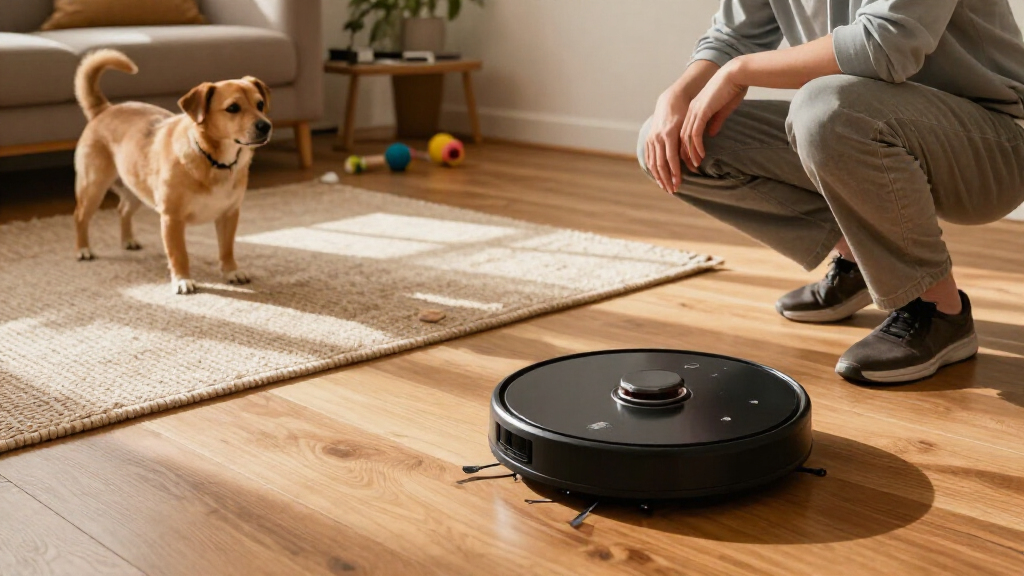
That distinction matters in a real home. Imagine you have a dog that leaves fine hair across the kitchen every morning. A scheduled run can pick up much of that daily layer before it drifts under the table, but it won’t carry itself upstairs to clean the carpeted landing or reach deep into an armchair. You still have to prepare the floor and take care of jobs outside its reach.
Basic models move in semi-random patterns; more capable models map rooms and let you choose where they clean. Room selection can make cleaning more convenient, especially when you want to handle the kitchen after dinner without running the whole house. But a planned route does not mean every spot gets the same attention: chair legs, tight gaps, and clutter can interrupt coverage. A robot can spend half its run working around dining chairs, just as a hand vacuum can miss crumbs tucked against a cabinet toe-kick.
A useful way to think about the robot is as an automatic broom that also vacuums. Like a scheduled delivery, it saves effort by repeating a simple job; it doesn’t know that today’s mess needs special attention. If you want regularly cleared floors and don’t expect it to tackle stairs or heavy cleaning, it may be a helpful addition.
Products Worth Considering

Roborock Q7 M5+ Robot Vacuum and Mop with Self-Emptying Dock

Levoit Vital 200S-P Smart Air Purifier for Large Rooms (Up to 1875 sq ft)

Ring Alarm 14-Piece Home Security Kit
As an affiliate, we earn on qualifying purchases.
Which Features Actually Predict a Cleaner Floor?
Cleaning quality depends on how the robot contacts the floor, moves through the room, and handles what it finds—not suction figures alone. Brush contact, airflow, filtration, edge reach, and surface type all matter, so a strong headline number can’t tell you how well a model will clean your rug.
For example, a robot might collect cereal from smooth tile but leave crumbs embedded in a thick hallway carpet. A different model could do better on that carpet because its brush design or cleaning behavior suits the pile. Check tests on floors like yours, rather than assuming a single performance claim applies everywhere. This matters because performance is a combination: suction has to pull debris up, the brush has to loosen or guide it, and the robot has to pass over the area effectively. Weakness in one part can limit the whole result.
| What to compare | Why it matters at home |
|---|---|
| Navigation | Mapped rooms can support room selection and no-go zones; the layout and sensors affect how well the map works. |
| Brush design | Hair may wrap around brush rolls; some rubber rollers aim to reduce tangles, but results vary. |
| Floor handling | Low-pile rugs may be manageable, while thick pile, fringes, dark surfaces, and height changes can cause trouble. |
| Dock and supplies | Automatic emptying can cut down on bin trips, while bags and replacement parts add recurring cost. |
Navigation determines how consistently the robot covers a space, while obstacle avoidance determines whether it recognizes and works around things on the floor. Mapping quality depends on the layout, lighting, furniture, and sensors. A LiDAR map can help the robot follow planned routes, but a map is not a promise that it will avoid every cable, shoe, or toy. Even a good route can leave missed areas where chairs or narrow passages interrupt movement. A dock that empties the bin may save you from frequent trips to the trash, but it adds bags or other parts to the ongoing cost. Independent results for your floor types offer a better buying clue than feature count alone.
How to Set Up a Robot So Its First Run Goes Smoothly
Before the first run, clear small hazards, open the rooms you want cleaned, and check the robot’s boundaries and mapping. A few minutes of preparation can prevent the familiar scene of a robot humming happily in place, tangled in a phone charger. Preparation improves the odds; it doesn’t guarantee the machine will recognize every obstacle.
- Pick up cables, toys, and loose objects. A charging cord beside the sofa can snag a brush or stop a run.
- Check rugs and thresholds. Secure loose fringes, and see whether the robot can cross the height changes in your home.
- Start with accessible rooms. Open doors and move chairs enough to give the robot a reasonable path.
- Set boundaries where needed. Use no-go zones around stairs, fragile items, or areas its sensors don’t handle reliably.
- Watch an early run. Notice where it gets stuck or misses debris, then adjust the room or map.
Say your first test run is in a living room with a dark rug, dining chairs, and a low sofa. You might find the rug’s fringe catches the brush while the sofa blocks the robot from reaching a dusty strip. Seeing those problems early helps you decide whether to change the room, adjust the map, or choose a different machine.
Cameras and other sensors can help identify shoes, cords, and other objects, but obstacle avoidance is imperfect. A mapped robot can still bump into or miss a small item. Treat smart avoidance as an aid, and keep pickup part of your regular routine.
Will a Robot Handle Your Rugs, Pets, and Messes?
Many robot vacuums can pick up everyday pet hair and debris from hard floors and low-pile carpet, but their results vary with hair length, carpet pile, and how much has accumulated. Thick rugs, fringes, and difficult debris can be a different story. If those features describe your home, check tests for the specific model and surface. The surface matters because a robot has limited weight, brush reach, and time: loose hair on tile is easier to collect than debris pressed down into a deep pile.
Consider a household with a shedding cat and a flat-weave rug in the entryway. Regular runs may collect loose hair before it gathers into soft clumps, but long strands can wrap around the brush. Some models use rubber rollers to reduce tangles; you may still need to remove hair by hand, particularly after a heavy shed. Running the robot more often can reduce how much hair builds up between passes, though it also means checking brushes more frequently.
A robot can also struggle with stairs, upholstery, corners, and debris that needs concentrated suction or a particular cleaning angle. Those limits help clarify what “handles pet hair” really means: a model may be useful for loose hair across accessible floors while doing little for fur embedded in a sofa or packed into carpet. Think of it like brushing crumbs off a countertop: quick sweeps keep the surface tidy, but a sticky spill calls for a more focused tool and a little elbow grease.
A robot vacuum is best judged by the chores it reduces, not by whether it can do every vacuuming job.
Frequency helps, too. A short run that picks up yesterday’s pet hair may work better for your household than waiting until a thick layer has built up. If your main problem is deep carpet cleaning or hair packed into upholstery, keep a conventional vacuum for those tasks. In practice, the robot’s value depends on whether the time it saves on accessible floors outweighs the brush checks and manual cleaning those surfaces still need.
Is a Vacuum-and-Mop Combo Worth the Extra Spend?
A combination robot can handle vacuuming and light, fresh surface dirt with a damp mop, which can make routine floor care easier. It is not a substitute for scrubbing dried-on spills or washing a heavily soiled floor. The useful question is whether you want a machine to refresh your floors often, not whether it can replace a manual mop.
Picture a week of breakfast crumbs and faint shoe marks on tile. A combo model that runs regularly may help with the loose debris and leave the tile looking fresher. If a splash of dried juice has hardened beside the table, the damp pad may glide over it without removing the sticky patch. You’ll still need to scrub that spot yourself. This difference is about the kind of cleaning: a robot can repeatedly collect light soil, while dried residue usually needs pressure, targeted attention, or cleaning solution.
Some models lift or detach a mop when they reach carpet, and newer systems may offer more involved docks that wash and dry mop pads or refill water tanks. Those features can reduce hands-on steps, though they vary by model. Look closely at carpet handling and how the dock manages clean and dirty water before deciding what convenience is worth. If the mop remains damp over carpet, or the robot fails to recognize a rug edge, the combo can create an extra problem instead of saving effort.
There’s a tradeoff in the extra system: mop pads, water tanks, and dock components add more parts to maintain. A dock that washes pads may save you from rinsing them after each run, but it still needs cleaning and may use more water and supplies. If your home is mostly tile and you want frequent light mopping, a combo may suit you. If you have little hard flooring or expect a deep scrub, put your budget toward the vacuum performance you need and keep mopping separate.
What Maintenance and Ongoing Costs Should You Expect?
Even a self-emptying robot needs regular care: its filters, brushes, sensors, wheels, and dust path can collect dirt or hair. Automatic emptying reduces one chore; it doesn’t make the vacuum maintenance-free. Mop models may also need fresh water, clean pads, and attention to the dock’s water system. This upkeep affects both cleaning quality and convenience: a clogged filter or wrapped brush can weaken pickup, while a dirty sensor can make navigation less reliable.
For instance, a robot that runs daily in a home with two long-haired pets may need its main brush cleared more often than one cleaning a quiet apartment with hardwood floors. Check the brush after a few early runs to learn your home’s pattern. A filter that stays clogged or a brush covered in hair can undermine cleaning even if the robot still completes its route. In that case, the completed run can create a false sense that the floor was cleaned well.
Include ongoing supplies in the purchase decision. Replacement bags, filters, brushes, mop pads, and batteries can add cost over time, while a self-emptying dock may need bags or other care of its own. Compare replacement part availability and warranty terms before buying; a robot is less useful if wear parts are hard to source. The cheapest model up front may cost more to keep usable if its parts are expensive or difficult to find.
- Empty the bin or replace the dock bag when it fills.
- Clean hair and debris from brushes and wheels.
- Check filters and sensors periodically.
- Follow the manufacturer’s schedule for replacement parts and battery care.
Battery runtime is an estimate, not a fixed promise. The cleaning mode, floor type, route, and recharge-and-resume behavior affect how long a job takes. A large, cluttered home may need the robot to recharge midway, so check whether it can resume cleaning if a single run matters to you. A longer advertised runtime is less useful if the robot takes an inefficient route or needs frequent intervention; consider whether it can finish your usual areas reliably.
How to Choose a Robot That Fits Your Home and Privacy Needs
Choose a robot by starting with the mess you want to reduce, then compare the features tied to that job. Your floors and room layout should guide the choice more than a long feature list. A small apartment with hard flooring has different needs from a large, carpeted house with pets and scattered toys. This order helps keep the decision practical: if a robot can’t manage your main surfaces or fit through your home’s paths, an impressive app or dock won’t solve the mismatch.
If you mostly want to control daily dust, look for a model that performs well on your floors and can follow a useful schedule. If pet hair is the main issue, inspect brush design and hair-handling results. If you want to clean specific rooms, check whether mapping, room selection, and no-go zones work in a way that suits your layout. Each feature addresses a different inconvenience, so pay for the ones that remove a recurring task rather than assuming a larger feature list means a better fit.
Connected models may store maps or use cameras. Before buying, check what data the robot collects, where processing happens, how long data is retained, and whether limited cloud connectivity is possible. Maps can reveal room layouts, and camera data may show objects inside the home, so the privacy terms tell you what convenience costs in data sharing. Someone who wants app-based room selection may accept a connected model; someone who prefers minimal data sharing may favor a simpler setup, if the model supports the needed controls.
Don’t assume that every device needs Wi-Fi for every task. On some models, basic cleaning can work without it, while app setup, scheduling, remote control, mapping, or software updates may rely on an internet connection. Read the manufacturer’s details, since those features and requirements vary. The practical question is which controls you would lose offline: if you depend on room-by-room schedules, a model with limited offline support may be frustrating even if its vacuuming is strong.
Before purchase, compare cleaning results on relevant floors, navigation and obstacle handling, maintenance costs, spare parts, privacy terms, and warranty. That checklist is more useful than asking which model has the most features. The best fit is the one that reduces a recurring chore without creating a larger upkeep or data concern.
Key Facts to Remember Before You Buy
The most useful fact about robot vacuums is simple: they work best as maintenance cleaners that run often, not as universal replacements for deep cleaning. If you remember that, features like suction claims, mapped routes, and self-emptying docks are easier to judge against your actual home. Each feature solves a narrower problem: suction helps move debris, mapping organizes where the robot goes, and a dock can reduce how often you empty the bin.
Suppose your kitchen collects crumbs every evening. A scheduled robot can reduce the daily sweep, but if cereal regularly lands between a cabinet and a narrow gap, its route and brush reach matter more than a headline suction number. And even a well-mapped robot may need the floor cleared of cables first. The useful question is whether it consistently handles the mess you get most often, not whether it can finish a route on paper.
- Suction alone doesn’t predict results. Brush contact, airflow, navigation, and floor type contribute to cleaning.
- A map is not obstacle-proof. Cords and small objects can still stop a run or go unnoticed.
- Self-emptying still needs care. Brushes, filters, sensors, bags, and mop parts require attention.
- Mopping is usually light maintenance. Dried spills and heavy soil may need manual cleaning.
- The full cost goes beyond purchase. Supplies, replacement parts, and battery availability matter.
These distinctions help you compare real capabilities instead of treating every new feature as a guarantee. A model can be excellent at routine pickup and still be the wrong choice for thick carpet, difficult thresholds, or stairs. Match the machine to the jobs you want to reduce, then consider whether its ongoing care and limits fit your routine.
Frequently Asked Questions
Are robot vacuums worth buying?
They can be worth it when you want frequent, scheduled floor upkeep with less daily effort. They’re less suited as your only vacuum if you need deep carpet cleaning, regular stair cleaning, or lots of upholstery care.
Do robotic vacuum cleaners work on carpets and rugs?
Many handle low-pile carpets and rugs, but thick pile, fringes, dark surfaces, and large height changes may cause trouble. Look for independent tests on flooring like yours before you buy.
Can a robot vacuum pick up pet hair?
Many models collect everyday pet hair, particularly on hard floors and low-pile carpets. Hair can wrap around brush rolls, so check the brush design and expect to clear it periodically, especially during a heavy shed.
Do robot vacuums need Wi-Fi?
Some can do basic cleaning without Wi-Fi, but app setup, mapping, schedules, remote control, or software updates may need an internet connection. Requirements vary by model, so check which controls work offline before buying.
How often should I run a robot vacuum?
It depends on foot traffic, pets, floor type, and noise tolerance. Frequent short runs can help control everyday debris; a busy home with shedding pets may need more regular attention than a quiet home with mostly hard floors.
Can a robot vacuum replace a regular vacuum?
Usually not completely. A conventional vacuum remains useful for stairs, upholstery, corners, heavy debris, and deeper cleaning, while a robot can handle repeatable floor upkeep.
Are robot vacuum-mop combos effective?
They can help with light, fresh surface dirt when they run regularly. Most are not designed to scrub dried-on spills or heavily soiled floors like a manual mop or floor-cleaning machine.
Conclusion
Buy a robot vacuum for the chore you want to make smaller: the steady drift of crumbs, dust, and hair across the floors you use most. Match its brushes, route planning, and upkeep needs to your home, and keep a conventional vacuum or mop for stairs, deep carpet, and dried spills.
Clear the cables, set a sensible schedule, and let the robot handle the daily sweep. Your floors may not sparkle like a freshly scrubbed show home, but the dust bunnies will have fewer quiet corners to gather in.